Categories

Category: Medical Practice

Whose Cancer Is It, Anyway?

By “KNOT TELLING”

flying cadeuciiI recently read a blog by Dr. Danielle Ofri in the New York Times “Well” blog about how as a physician she learned to respect the patient’s wishes even when they contradict her professional inclinations. It’s called Doctor Priorities vs Patient Priorities.”

She writes that the patient is looking through a “wide-angle lens” that takes in the whole of his life while the doctor’s lens is “narrowly focused on the disease that pose[s] the gravest and most immediate risk”. She saw her challenge as entering into dialogue with her patient in order better to understand the wider perspective of his whole life and to work with him to find the most acceptable way to deal with his disease.

If only Dr. Ofri were an oncologist. If only she were my oncologist. My last appointment with my onco, Dr. G, was a disaster. Not only have I not been back to her, I have not gone to any oncologist since then. Part of that is because I don’t want any treatment at this time; that’s still true.

But if I am going to be very honest, and I try to be that always, it is also because of that disastrous appointment with Dr. G.

First of all, she would not respect my decision not to have any more chemo and refused to order any scans unless I would a priori agree to chemo if she decided it was indicated. She also mocked me. It took a long time for me to tell that second bit. In fact, from that day in August 2013 until just recently—seven months!—I only told one or two other people about what happened.

The evening of that last appointment, Dr. G called me at home to continue the argument. I found myself apologizing for causing her distress. Yes, I know that’s ridiculous, but that is how I react to being bullied. Borrowing the words of a friend who really gets it, I apologize to others for their hurtful behavior and then I internalize it. I haven’t talked about Dr. G mocking me because I feel ashamed.
Continue reading…

Rebooting Primary Care From the Bottom Up

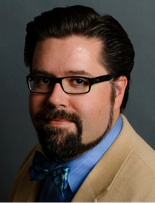
By ZUBIN DAMANIA

Zubin DamaniaFor the better part of a decade, I practiced inpatient hospital medicine at a large academic center (the name isn’t important, but it rhymes with Afghanistan…ford).

I used to play a game with the med students and housestaff: let’s estimate how many of our inpatients actually didn’t need hospitalization, had they simply received effective outpatient preventative care. Over the years, our totals were almost never less than 50%.

For my fellow math-challenged Americans: that’s ONE HALF! Clearly, if there were actually were any incentives to prevent disease, they sure as heck weren’t working.

In a country whose care pyramid is upside down—more specialists than primary care docs, really?—we’re squandering our physical, emotional, and economic health while spending more per capita than anyone else. Four percent of our healthcare dollars go towards primary care, with much of the remaining 95% paying for the failure of primary care. (The missing 1%? Doritos.)

Worse still, the oppressive weight of our non-system’s dysfunction falls disproportionately on the shoulders of our primary care providers—the very instruments of our potential salvation. To them, there’s little solace (and plenty of administrative intrusion) in the top-down reform efforts of accountable care organizations and “certified” patient-centered medical homes.

But what about a bottom-up, more organic effort to reboot healthcare? A focus on restoring the primacy of human relationships to medicine, empowering patients and providers alike to become potent, positive levers on a 2.8 trillion dollar economy? What if we could spend twice as much on effective, preventative primary care and still pull off a net savings in overall costs, improvements in quality, and increased patient satisfaction?

What if George Lucas had just quit after the original Star Wars series? Wouldn’t the world have been better without Jar Jar Binks?

While the latter question is truly speculative, the former ones aren’t. We’re trying to answer them in Las Vegas (hey now, I’m being serious) at Turntable Health, where we’ve partnered with Dr. Rushika Fernandopulle and Cambridge, MA based Iora Health.

We aim to get primary care right by doing the following:

Continue reading…

What a Physician-Led ACO Can Teach Us about Getting It Right

By FARZAD MOSTASHARI & ANNA MARCUS

Farzad MostashariSeveral of the provisions included within the Affordable Care Act in 2011 designate Accountable Care Organizations (ACOs) as formal, contractual entities.

However, in the real world ACOs come in a variety of shapes and sizes.

When compared to larger, hospital-sponsored ACOs, rural and small physician-led ACOs face a tough challenge, because despite limited resources they need to come up with substantial upfront capital and infrastructure investment to establish a strong ACO foundation.

To help ease this burden, 35 ACOs were selected to participate in the Advanced Payment Model ACO demonstration through a grant program from the Center for Medicare and Medicaid Innovation (CMMI). The grants provided a portion of upfront capital to determine whether or not this financial assistance would help ease the startup burden for smaller ACOs, and increase their success rate.

One of those 35 organizations includes the central Florida-based Physicians Collaborative Trust ACO, LLC (PCT-ACO). They are participants in the January 2013 Medicare Shared Savings Program (MSSP) ACO cohort, along with 106 other ACOs.

Larry Jones, PCT-ACO’s CEO, describes his personal mission as an effort to “preserve and protect the independent practice of medicine.” For over 25 years he has been advocating for physicians through their efforts to organize, negotiate with health plans, and other challenges.

Continue reading…

SuperDocs and Quality Talks: Notes from the Annual Meeting of the Society of Hospital Medicine

By BOB WACHTER

Bob Wachter

I’m just back from the annual meeting of the Society of Hospital Medicine and, as usual, I was blown away. I’ve not seen a medical society meeting that is remotely like it.
As Win Whitcomb, who co-founded SHM, wrote to me, the meeting is “a mix of love, deep sense of purpose, community, mission, changing-the world, and just plain sizzle,” and I completely agree. I was also amazed by the size: having hosted the first hospitalist meeting in 1997, with about 100 people, seeing an audience of 3,600 fill a Las Vegas mega-ballroom was just plain awesome.

This enthusiasm did not equal smugness. Folks know that change is the order of the day, and with it will come upheaval and some unpleasantness. But the general attitude I sensed at the meeting was that change is likelier to be good for patients – and for the specialty – than bad. Whether this will ultimately be true is up in the air, but the mindset is awfully energizing to be around.

Here, in no particular order, is my take on a few of the issues that generated hallway buzz during the SHM meeting.

The Closing of Hospitals

While much is uncertain in the era of health reform, the number of hospitals is clearly going to shrink, perhaps by a lot. A healthcare system that tolerated the inefficiency of having two mediocre 125-bed hospitals in adjacent towns will no longer do so: one 200-bed hospital will be left standing when the dust settles.

If that.

The betting is that 10-20% of hospital bed capacity will be taken out of the system in the next few years. It could be even more, depending on the answers to several questions. Will electronic monitoring and telemedicine allow increasing numbers of sick patients to be cared for at home or in sub-acute settings?

Will payments for non-hospital care (home care, SNFs) be enough to expand their capacity to care for acutely ill patients?

Will ACOs, bundling, and other similar interventions truly flourish? Will a shift to population health and a new focus on wellness make a dent in the prevalence of chronic disease?

These are just some of the known unknowns.

Continue reading…

Open Notes: Is Sharing Mental Health Notes with Patients a Good Idea?

By MICHAEL KAHN

flying cadeuciiWould allowing patients to read their mental health notes provide more benefits than risks?

In a recent article in JAMA  my colleagues and I argue that it would.  While transparent  medical records are gaining favor in primary care settings throughout the country through the OpenNotes initiative, there has been reluctance to allow patients to see what their treaters say about their mental health issues. While this reluctance is understandable and deserves careful consideration, we suggest that several benefits could result from patients reading their mental health notes.

First of all, accuracy would be enhanced  by allowing patients to cross-check what their clinicians say about their symptoms, medication doses, and so forth. Second, allowing patients to review assessments and treatment decisions privately might help to promote a richer dialogue between patient and clinician. Third, patients might learn that their clinician sees them more as a complete person, rather than as a collection of symptoms.

Many patients silently fear that their treater  “will think I’m crazy/whining/lazy/boring”; seeing in print that the treater does not see them  that way—and in fact recognizes and documents their strengths—can be an enormous relief and might therefore enhance the therapeutic alliance.

Clinicians have their own worries about transparent mental health notes that must be considered. Will patients feel objectified by the medical language commonly used in documentation? Will they break off treatment if they don’t like what they read? Will too much time be spent wrangling over details of what has been documented? Will vulnerable patients be psychologically harmed by reading their notes? Although our article briefly addresses these issues, only a trial of transparent mental health notes will provide the data needed to assess them.

Such a trial has just begun at the Beth Israel Deaconess Medical Center in Boston. Culminating many months of careful planning by my colleagues in the ambulatory psychiatry clinic, the Social Work department, as well as the OpenNotes team, we began a pilot project of transparent notes in our psychiatry clinic on March 1. So far almost all clinicians have chosen to participate in the project, and have identified 10% of their caseloads to be included. It’s too early to gauge results yet, but we hope to more fully evaluate the effects of making mental health notes fully transparent to our patients.

Michael W. Kahn, MD is an assistant professor of psychiatry at Harvard Medical School and Harvard Medical Faculty Physician at Beth Israel Deaconess Medical Center (BIDMC). 

Going after the Wrong Doctors

By FORD VOX

A recent ProPublica expose co-published with the Boston Globe typifies a growing gotcha genre of health journalism that portrays doctors as the enemy in a struggle for honesty and openness in medicine.

These reports make unfounded leaps in their efforts to subject doctors to levels of skepticism once reserved for politicians and lawyers. They’re going to end up doing patients a disservice.

For this particular hunting expedition ProPublica set its sights on Dr. Yoav Golan, an infectious diseases specialist caring for patients at Tufts Medical Center in Boston who also works with pharmaceutical companies developing antibiotics.

But in its zeal to argue how physicians like Golan are corrupting medicine through their industry partnerships, ProPublica went to press without an iota of evidence Golan is corrupt.

A close look at Golan’s impressive career suggests quite the contrary and raises questions about ProPublica’s claim to objectivity.

Yoav Golan is a remarkably bad choice for anyone who hopes to use him as a poster boy of pharma-physician malfeasance.

As Tufts said in a statement in response to the ProPublica story, Golan enjoys international respect in the infectious diseases community and has assisted the development of “two important antibiotics, including the first antibiotic developed in the past 25 years to treat the growing threat of deadly C. difficile.”

(Disclosure: I held an academic appointment at Tufts for one year when I was practicing in Boston, but in another department and I never met Golan before this story.)

That antibiotic, fidaxomicin, is pricey, and you’d think an industry shill would liberally advise its use. Yet Golan and his team advised a Tufts committee setting internal standards for its use that the hospital should heavily restrict the drug. “We were very active in making sure it’s not used in pathways where it’s not cost effective,” Golan told me.

Continue reading…

Fatal Error

By ROB LAMBERTS

Fatal Error

The janitor approached my office manager with a very worried expression.  “Uh, Brenda…” he said, hesitantly.

“Yes?” she replied, wondering what janitorial emergency was looming in her near future.

“Uh…well…I was cleaning Dr. Lamberts’ office yesterday and I noticed on his computer….”  He cleared his throat nervously, “Uh…his computer had something on it.”

“Something on his computer? You mean on top of the computer, or on the screen?” she asked, growing more curious.

“On the screen.  It said something about an ‘illegal operation.’  I was worried that he had done something illegal and thought you should know,” he finished rapidly, seeming grateful that this huge weight lifted.

Relieved, Brenda laughed out loud, reassuring him that this “illegal operation” was not the kind of thing that would warrant police intervention.

Unfortunately for me, these “illegal operation” errors weren’t without consequence.  It turned out that our system had something wrong at its core, eventually causing our entire computer network to crash, giving us no access to patient records for several days.

The reality of computer errors is that the deeper the error is — the closer it is to the core of the operating system — the wider the consequences when it causes trouble.  That’s when the “blue screen of death” or (on a mac) the “beach ball of death” show up on our screens.  That’s when the “illegal operation” progresses to a “fatal error.”

The Fatal Error in Health Care 

Yeah, this makes me nervous too.

We have such an error in our health care system.  It’s absolutely central to nearly all care that is given, at the very heart of the operating system.  It’s a problem that increased access to care won’t fix, that repealing the SGR, or forestalling ICD-10 won’t help.

It’s a problem with something that is starts at the very beginning of health care itself.

The health care system is not about health.

Continue reading…

How Should Doctors Get Paid?

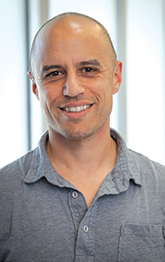
Hans Duvefelt

By HANS DUVEFELT

It’s a strange business we are in.

I can freeze a couple of warts in less than a minute and send a bill to a patient’s commercial insurance for much more money than for a fifteen minute visit to change their blood pressure medication.

I can see a Medicaid or Medicare patient for five minutes or forty-five, and up until now, because I work for a Federally Qualified Health Center, the payment we actually receive is the same.

I can chat briefly with a patient who comes in for a dressing change done by my nurse, quickly make sure the wound and the dressing look okay and charge for an office visit. But I cannot bill anything for spending a half hour on the phone with a distraught patient who just developed terrible side effects from his new medication and whose X-ray results suggest he needs more testing.

As a primary care physician I get dozens of reports every day, from specialists, emergency rooms, the local Veterans’ clinic and so on, and everybody expects me to go over all these reports with a fine-toothed comb.

A specialist will write “I recommend an angiogram”, and we have to call his office to make sure if that means he ordered it, or that he wants us to order it.

An emergency room doctor orders a CT scan to rule out a blood clot in someone’s lung and gets a verbal reading by the radiologist that there is no clot. But the final CT report, dictated after the emergency room doctor’s shift has ended, suggests a possible small lung cancer.

Did anyone at the ER deal with this, or is it up to me to contact the patient and arrange for followup testing? All of this takes time, but we cannot bill for it.

Most people are aware these days that procedures are reimbursed at a higher rate than “cognitive work”, but many patients are shocked to hear that doctors essentially cannot bill for any work that isn’t done face to face with a patient. This fact, not technophobia, is probably the biggest reason why doctors and patients aren’t emailing, for example.

Continue reading…

The Problem of Pain: When Best Medical Advice Doesn’t Equal Patient Satisfaction

By KAREN S. SIBERT


The problem of pain, from the viewpoint of British novelist and theologian C. S. Lewis, is how to reconcile the reality of suffering with belief in a just and benevolent God.

The American physician’s problem with pain is less cosmic and more concrete. For physicians today in nearly every specialty, the problem of pain is how to treat it responsibly, stay on the good side of the Drug Enforcement Administration (DEA), and still score high marks in patient satisfaction surveys.

If a physician recommends conservative treatment measures for pain–such as ibuprofen and physical therapy–the patient may be unhappy with the treatment plan. If the physician prescribes controlled drugs too readily, he or she may come under fire for irresponsible prescription practices that addict patients to powerful pain medications such as Vicodin and OxyContin.

Consider this recent article in The New Republic: ”Drug Dealers Aren’t to Blame for the Heroin Boom. Doctors Are.” The writer, Graeme Wood, faults his dentist for prescribing hydrocodone to relieve pain after his wisdom tooth extraction.

As further evidence of her misdeeds, he says, first she “knocked me out with propofol–the same drug that killed Michael Jackson.” Wood uses his experience–which sounds as though it went smoothly, controlled his pain, and fixed his problem–to bolster his argument that doctors indiscriminately hand out pain medications and are entirely to blame for patient addiction.

But what happens to doctors who try not to prescribe narcotics for every complaint of pain, or antibiotics for every viral upper respiratory infection? They’re likely to run afoul of patient satisfaction surveys. Many hospitals and clinics now send a satisfaction questionnaire to every patient who sees a doctor, visits an emergency room, or is admitted to a hospital.

The results are often referred to as Press Ganey scores, named for the company that is the leading purveyor of patient satisfaction surveys. Today these scores wield alarming power over physician incentive pay, promotion, and contract renewal.

Now hospital payments are at risk too.

Continue reading…

How to Avert a Doctor Shortage

By MICHAEL D. RICH

Anticipating a growing, aging population and the anticipated demands of those newly insured under the Affordable Care Act, the Association of American Medical Colleges estimates that the United States will face a shortage of 130,000 physicians just over a decade from now.

This projected shortage, which also has been recognized by the federal government and some academics, could mean limited access to care for many Americans, plus longer wait times and shorter office visits for those who do find a doctor.

But like treating an illness, heading off the doctor shortage could hinge on early detection and intervention. And as research at RAND and elsewhere has shown, the treatment options should go beyond the standard prescriptions of training more doctors or reducing care for patients.

A RAND analysis issued last fall concluded that increased use of new models of medical care could avert the forecasted doctor shortage. These models would expand the roles of nurse practitioners, physician assistants, and other non-doctors.

One option is “medical homes,” which are primary care practices in which a personal physician leads a team of others — advanced practice nurses, physician assistants, pharmacists, nutritionists — in overseeing the delivery of individuals’ health care needs, roughly comparable to a dentist overseeing hygienists. By drawing on a broader mix of health care providers, this team approach lessens reliance on the physicians themselves.

Medical homes currently account for about 15 percent of primary care nationally. Research on their efficacy is continuing. A RAND report released in February found mixed results for a major pilot effort of the new model and offered suggestions for improvement. Still, if medical homes continue to gain traction and grow to nearly half of primary care, the nation’s projected physician shortage could shrink by 25 percent.

Another approach is nurse-managed health centers, which are clinics managed and operated by nurses who provide primary care and some specialty services. They are typically affiliated with academic health centers, but operate without physicians. If nurse-managed health centers were to account for 5 percent of primary care, up from just 0.5 percent today, the anticipated doctor shortage could, again, fall by 25 percent.

Continue reading…