Categories

Category: Medical Practice

If Marketing Is so Dangerous, Should Medical Schools Be Doing so Much of It?

By RICHARD GUNDERMAN

flying cadeuciiBeginning about 5 years ago, many US medical schools introduced severe restrictions on marketing activities by pharmaceutical companies and medical device manufacturers.

These measures often prohibited representatives of such firms from entering patient care areas and even medical school facilities, with the exception of tightly controlled training activities, and then by appointment only.  In some cases, medical schools have issued outright bans against industry support of educational activities.

What is the rationale behind such actions?  It boils down to a concern that industry funding may inappropriately influence both medical education and patient care.  For example, a physician visited by an industry representative might be more likely to prescribe one of the firm’s drugs.  In announcing a ban on such activities, one school likened the industry to Don Juan, worrying that physicians might prescribe drugs because they were “seduced by industry,” and not because “it’s best for the patient.”

There is evidence that even physicians who believe their decision making is not biased by marketing are in fact affected by it.  Moreover, a good deal of such marketing is not exactly purely scientific.  A perusal of medical journals reveals a plethora of full-page ads featuring slogans such as:

“Simplicity is clear information at your fingertips,” and highlighting images such as a physician walking down a hallway with a tiger, describing the featured drug as a “powerful partner.”

Such marketing is not inexpensive.  Placing a full-page ad in a medical journal typically costs around $4,000.  On the other hand, as an air traveler I have come across a number of slick full-page airline magazines ads touting medical schools and their affiliated hospitals.

These cost on average $24,000.

Continue reading…

Why the Phrase “Noncompliant Patient” Bothers Me, And Should Probably Bother You Too ..

By ELAINE KHOONG

Screen Shot 2014-05-23 at 3.19.04 PM

“Patient noncompliance.” I wasn’t very familiar with this term until I started my clinical rotations. But after just the first week, I started noticing that health care providers throw this phrase around all time.

We particularly like using it as an excuse. Why did this diabetic patient require a foot amputation? Why does this patient come in monthly with congestive heart failure exacerbation? Why did this patient suffer a stroke? It’s often simply attributed to patient noncompliance.

What bothers me the most about this phrase, though, is how it’s often stated with such disdain. We act as if it’s incomprehensible that someone would ignore our evidence-based recommendations. If the patient would only bother to listen, he or she would get better. If we were patients, we would be compliant.

But that’s simply not true. We are no different from our patients. We practice our own form of noncompliance. It’s called guideline non-adherence.

Despite the fact that many guidelines are created after systematic reviews and meta-analyses – processes we would never have time to go through ourselves – we, like our own patients, are often noncompliant.

Research on guideline adherence has been around since guidelines started becoming prominent in the early 1990s. Despite the many studies and interventions to improve guideline adherence, the rates of guideline adherence still remain dismally low.

I find this particularly disconcerting. Despite my own interest in research, it makes me question the value of research. Why do we spend millions of dollars to find a better intervention that does not change how most providers deliver health care?

Continue reading…

The NFL’s Conflicted Relationship With Doctors

By ARTHUR CAPLAN

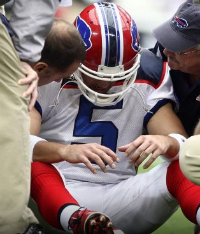
NFL injuryToo often doctors, trainers and other health care professionals who work for professional sports teams are accountable only to their teams and, especially, team owners. To keep their jobs they have to keep coaches, general managers, fans and billionaire investors happy.

This situation has created an intolerable ethical mess in which athletes’ health is too often their lowest priority. It is time to fix that.

Concussions are giving professional football, hockey and other sports a huge headache these days. The implication is that the NFL, NHL and their doctors long knew that “getting your bell rung” was bad for an athlete’s brain but said nothing.

Now a group of former NFL players are suing the league claiming that they were given powerful painkillers and anti-inflammatory drugs to keep them on the field. They say no one ever warned them about the long-term dangers of addiction, horrible side-effects or playing injured while drugged to withstand pain.

The eight plaintiffs, led by 1985 Superbowl champions Richard Dent, Jim McMahon and Keith Van Horne, say the league “recklessly and negligently created and maintained a culture of drug misuse, substituting players’ health for profit.”

Team doctors and trainers “were handing out drugs like it was Halloween candy,” says the group’s attorney Steve Silverman. Among the drugs said to be given freely were Toradol, Percocet, Vicodin, Ambien, Prednisone and Lidocaine. The eight players estimate they were given “hundreds, if not thousands” of pills through the course of their careers.

None of this comes as a surprise to sports fans, especially those of a certain age, who remember the NFL, NHL, MLB, NASCAR, FIFA, pro cycling and NBA of the ’70s, ’80s and ’90s when doctors and trainers kept athletes going at any cost with any pill, salve, injection, bandage, device or inhaler they could get their hands on.

“Just win, baby” was the guiding ethical principle of the era and doctors and trainers put aside their oaths and codes to make sure stars played, their team won, the fans were happy and the owners renewed their contracts for another season.

Continue reading…

Because Cancer.

By “KNOT TELLING”

flying cadeuciiDo not tell me how to feel!

For those who may not read through to the end, here is the take home: you do not get to tell me how to feel or what my attitude should be, no matter who you are.

Sure, it’s more comfortable for me and the people around me when I’m have a positive attitude, but that does not mean that I have to live “all bliss all the time” like some insane American cable television station. Being positive does not mean pretending that nothing is wrong because… cancer, people!

A young woman who, I think, just turned twenty-two posted this on her Facebook page: “That’s the thing about pain. It demands to be felt.” She knows what she is talking about, by the way.

It does no good to pretend that emotional pain does not exist. It does no good to pretend that it’s not there. The only way I’ve ever found to get through pain is to recognize it, sit with it, walk through it to the other side. Sometimes that process leaks out into the environment and then I don’t smile prettily at everyone around me. Sometimes I’m snotty and bitchy and generally not one of Jesus’ little sunbeams. Sorry about that, but… cancer, people!

Here’s another news flash. A positive, determined attitude will not cure cancer, no matter what the popular media tell you. The following quotations are from the American Cancer Society:

In 2010, the largest and best-designed scientific study to date was published. It looked at nearly 60,000 people, who were followed over time for a minimum of 30 years. This careful study controlled for smoking, alcohol use, and other known cancer risk factors. The study showed no link between personality and overall cancer risk. There was also no link between personality traits and cancer survival.

[…]

Continue reading…

Scope of Practice: Playing at the Top of My License?

By KAREN S. SIBERT

flying cadeuciiThe Institute of Medicine in 2010 famously recommended that nurses should be encouraged to practice “to the full extent of their education and training.”Often, you’ll hear people advocate that every healthcare worker should “practice at the top of their license”.

What this concept is supposed to mean, I think, is that anyone with clinical skills should use them effectively and not spend time on tasks that can be done by someone with fewer skills, presumably at lower cost.

So I would like to know, please, when I’ll get to practice at the top of my license?

As a physician who specializes in anesthesiology at a big-city medical center, I take care of critically ill patients all the time.

Yet I spend a lot of time performing tasks that could be done by someone with far less training.

Though I’m no industrial engineer, I did an informal “workflow analysis” on my activities the other morning before my first patient entered the operating room to have surgery.

I arrived in the operating room at 6:45 a.m., which is not what most people would consider a civilized hour, but I had a lot to do before we could begin surgery at 7:15.

First, I looked around for a suction canister, attached it to the anesthesia machine, and hooked up suction tubing. This is a very important piece of equipment, as it may be necessary to suction secretions from a patient’s airway. It should take only moments to set up a functioning suction canister, but if one isn’t available in the operating room, you have to leave the room and scrounge for it elsewhere in a storage cabinet or case cart.

This isn’t an activity that requires an MD degree. An eight-year-old child could do it competently after being shown once.

Continue reading…

Early ACA Data Shows No Wave of Sick Patients

By JOSH GRAY & IYUE SUNG

Screen Shot 2014-05-19 at 9.30.09 AM
Since launching ACAView, our joint initiative between the Robert Wood Johnson Foundation (RWJF) and athenahealth, in early April, open enrollment under the Affordable Care Act (ACA) has closed for 2014 and The White House has issued final numbers: eight million people enrolled through the marketplace and five million outside the marketplace. Add another three million enrolled in Medicaid or the Children’s Health Insurance Program (CHIP) and the total number of people enrolled under the ACA’s individual mandate is close to 16 million.

Since some of these enrollees had previous forms of insurance coverage, it is important to estimate overall reductions in the number of uninsured. RAND estimates that 9.3 million more Americans have insurance in Q1 of 2014, compared to Q3 of 2013, but these figures exclude the surge of enrollments in the last half of March. The Congressional Budget Office (CBO) estimates 12 million net newly insured people through either the marketplace or Medicaid (including 1 million who lost insurance), but these estimates exclude enrollments outside the marketplace.

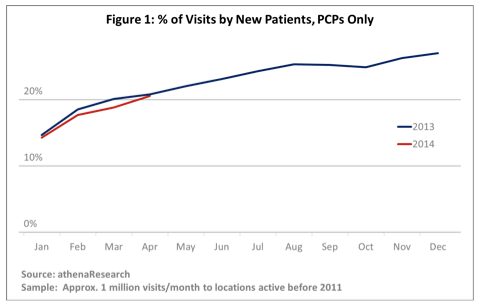
In short, “newly insured” and “enrollment numbers” are counted in different ways and can be confusing. But let’s conservatively assume that the number of net new insured individuals is roughly nine million, or 2.8% of the population.  Are these new beneficiaries having a measurable impact on medical practices?Continue reading…

Developing Physician Culture in New Risk Models

By CRAIG TANIO

flying cadeuciiThere is a saying that “culture eats strategy for lunch.” Never has this been truer than when looking at primary care or physician group delivery system innovation.  Health care industry leaders must invest more time creating and scaling the right culture as they innovate.

There has been a great deal of controversy on the ability of the Primary Care Medical Home (PCMH) to impact total medical costs. Critics have noted that PCMH is adding additional costs to the structure without systematically demonstrating improvement in total costs and quality.

A great deal of time has been spent debating the proper structures, processes and financial incentives that are necessary to create value in physician-led-risk or shared-savings models. However, I suspect the real issue is that culture is a major driver of performance, and it has not been systematically measured or managed.

At ChenMed, we have developed a primary-care-led model focused on the care of seniors with multiple and chronic health conditions.  Funded through full-risk arrangements with Medicare Advantage plans, we outlined an overview of the original Miami-based model in Health Affairs last year [1].

Over the last three years, we have scaled the model from five centers in Miami to 36 centers in eight markets in the Southeast and Midwest.  This has required us to adjust our model in ways that allow it to readily scale. We have been able to make the fundamental economics work while rapidly scaling the medical practice, and are actively working on innovations to improve value every day.

One of the foundations of our strategy is getting the physician culture right.  This is not easy to measure from a health services and policy research perspective.Yet, it matters a great deal from a practical and business perspective. McKinsey and Company has developed an influence model on how organizations create the right behavior and mindset shifts, which we have found useful [2].

Continue reading…

Harvard MOOC: Patient Safety and Quality with Ashish Jha

By ASHISH JHA

Ashish Jha

Last year, about 43 million people around the globe were injured from the hospital care that was intended to help them; as a result, many died and millions suffered long-term disability.  These seem like dramatic numbers – could they possibly be true?

If anything, they are almost surely an underestimate.  These findings come from a paper we published last year funded and done in collaboration with the World Health Organization.  We focused on a select group of “adverse events” and used conservative assumptions to model not only how often they occur, but also with what consequence to patients around the world.

Our WHO-funded study doesn’t stand alone; others have estimated that harm from unsafe medical care is far greater than previously thought.  A paper published last year in the Journal of Patient Safety estimated that medical errors might be the third leading cause of deaths among Americans, after heart disease and cancer.

While I find that number hard to believe, what is undoubtedly true is this:  adverse events – injuries that happen due to medical care – are a major cause of morbidity and mortality, and these problems are global.  In every country where people have looked (U.S., Canada, Australia, England, nations of the Middle East, Latin America, etc.), the story is the same.

Patient safety is a big problem – a major source of suffering, disability, and death for the world’s population.The problem of inadequate health care, the global nature of this challenging problem, and the common set of causes that underlie it, motivated us to put together PH555X.

It’s a HarvardX online MOOC (Massive Open Online Course) with a simple focus: health care quality and safety with a global perspective.

Continue reading…

Cheeseburger Please, and Make It a Double

Vik Khanna

By VIK KHANNA

Consider that for the last year or so, we have been treated a deluge of entreaties to reduce our salt intake, with the American Heart Association going so far as to claim that daily sodium intake should not exceed 1,500 mg. This puts it at odds with the Institute of Medicine, and now European researchers whose data indicates that the healthy range for sodium intake appears to be much higher.

Our conversation about  sodium, much like advice about purportedly evil saturated fats and supposedly beneficial polyunsaturated fats, exemplifies a national obsession with believing eating more or less of a one or a small number of nutrients is the path to nutritional nirvana.

A few weeks back, an international team of scientists did their level best to feed this sensationalistic beast by producing what’s become known since then as the meat-and-cheese study, because it damned consumption of animal proteins.

Continue reading…

The Cost of One Wild Night

By SAMMY TA

ticking clock
The clock read 9:30PM and in front of me was dozens of notes, PowerPoint slides, and practice exams to review before 8AM.

The all-too-familiar finals week all-nighter beckoned, and though I’ve had my fair share of experiences with studying until the sun rose, I decided to forgo the typical mug of coffee and take some over-the-counter caffeine pills instead.

My friend proclaimed that they would help more than any energy drink would. I laid out all my exam materials, popped in a couple caffeine pills, and strapped myself in for a wild night of allopatric speciation and coadaptation. A wild night did ensue, but there was no evolutionary biology involved.

Around 11:30PM, what could only be described as the worst headache of my life, detracted me from my desk and led me to the bathroom floor. I decided something needed to be done. Student services at the university health system were closed, so that only left me with the ER as an option.

An ER visit was outside the coverage of my standard student health insurance provided with tuition and I didn’t have a personal health insurance plan. I was wary of any costs that I might incur in the ER.

Instead of an ambulance, my best friend, Eric, drove me to the hospital.

Continue reading…