Categories

Category: Medical Practice

Really? Online Reviews Could Help Fix Medicine

By THOMAS LEE

Screen Shot 2014-06-04 at 10.36.41 AMA basic principle of health care is that everyone strongly favors transparency – for everyone but themselves.

“Sunshine is the strongest disinfectant” is the oft-used expression that supports putting information out in the open for all to see. That said, every stakeholder in health care gets a bit nervous about exposing their own data.

They are quick to cite the potential downsides – that patients will not be able to understand the limitations of the information, that risk adjustment will be inadequate to explain why their performance looks below average, that they may actually be below average.

No one gets as nervous about public reporting as my health care provider colleagues. We worry that everyone else may game the system, cherry-pick patients, or that we might lose patients if the data look less than perfect. It’s safe to say that number of physicians who hate the idea of public reporting is greater than the number who support it.

All of which makes it that much more fascinating that some provider organizations have recently begun putting all their patient experience data – including every patient comment about every doctor – on their Find-A-Doctor web sites. “Every” actually does mean every – the good, bad, and ugly (after removal of those that might violate patient confidentiality). And they are tied directly to the physician who delivered their care.

Why would they do this? The initial response from some commentators was that they were trying to “out-Yelp Yelp” – that is, control the information that was appearing about them on the Web. In truth, the initial idea was less about controlling information than providing more of it.

Rather than living with on-line comments generated by a small subset of patients motivated by who-knows-what to write in, organizations like the University of Utah decided that they would survey all patients electronically, and post all their comments.

And they would take the chance that more data would provide a better sense of the truth.

The University of Utah health care system was the first in the country to go down this road, and they were rewarded for their creativity and courage with a very pleasant surprise. The result over the last few years has been astounding improvement in their patients’ experience with their physicians.


Continue reading…

What a Nurse Taught Me about Checklists and the Doctor-Patient Relationship

By PETER PRONOVOST

Screen Shot 2014-06-02 at 6.14.14 PMShe hugged one daughter who was “a hugger” and avoided embracing the other daughter who wasn’t. She sat with the family, listened and supported them in their anguish.

Schwartz gave comfort to the family because she cares and has true empathy.

There’s no way that we could train her to care more. Yet too often, efforts by hospitals to improve the patient and family experience approach it purely as a technical challenge.

For instance, we provide scripts to health care professionals to help them navigate various situations, from what to say when walking into a patient’s room to service recovery when things haven’t gone as they wished.

We try to identify and broadly implement the practices that will best enhance patient experiences, such as rounding hourly in patient rooms to address pain management, bathroom visits and other needs.

These are well-intentioned and needed efforts to improve the patient experience. But they could very well backfire if we don’t simultaneously embrace the human element and tap into clinicians’ desire to be empathic healers and comforters.

I fear that we send the wrong message, for instance, when we simply hand detailed scripts to staff in low-performing units or hospitals. Subtly, we’re labeling them as someone who does not care adequately for patients, and that they need to be taught how to do better.

Here, we say, mouth these words and the patient and loved ones will believe that you care. Likewise, hourly rounding and other interventions will not be effective if we simply treat them as a box to be checked off.

Words are important, of course. And caregivers can certainly learn how to insert key words and phrases into their conversations with patients to show they care and open the door to more meaningful dialogue. However, health care is too complex and nuanced for a lengthy script to be useful.

Clinicians witness the extreme highs and lows of other people’s lives, yet like any job this becomes our everyday reality, with mundane documentation, meetings and bureaucracy. It’s easy to forget that “just like me” someone may be in the hospital for the first time, that their family members must take off work for an extended period of time to be with them, or that the outcome of their stay is a turning point in their family’s future.

When we lose sight of the connection with our common humanity, with our patients’ suffering, we can fail to connect with our patients’ needs for empathy as well as healing.  We can get so caught up in the tasks that we need to do that we don’t stop to care. While we think we are still delivering good care, patients perceive our frenzied state and decide it’s wiser not to raise valid concerns.

Continue reading…

What Twitter Tells Us about the War on Cancer

By BRIAN REID

asco 2014 entranceThe American Society of Clinical Oncology recently made public nearly all of the abstracts — more than 5,000 pieces of research — that were selected for the ASCO annual meeting, which kicked off in Chicago on the last day of May.

Sifting through those 5,000 abstracts would be an almost inhuman task: each abstract contains 2,000 characters. That’s 10 million characters of information about oncology created by experts that’s now available for the public to parse.

But as remarkable as the ASCO abstract drop is, that research is not the only overwhelming trove of communication on cancer created by doctors. One ASCO abstract (based on research by me and W2O colleagues Greg Matthews and Kayla Rodriguez) tells story of how, over the course of 2013, U.S. doctors tweeted about cancer 82,383 times. At 140 characters a tweet, that’s nearly 12 million characters.

We know there were 82,383 tweets because we counted them. Using our MDigitalLife database, which matches Twitter handles with verified profiles from the government’s physician database, we scanned all tweets by doctors for mentions of dozens of keywords associated with cancer over the course of calendar year 2013.

Continue reading…

Should Health Consumers Be Paid for Performance Too?

By MICHELLE SNYDER

flying cadeuciiMeaningful Use and Pay for Performance – two of the most talked about programs in healthcare IT over the past several years. They are both based on the premise that if you want to drive behavior change among providers and improve quality of care, you need to offer financial rewards to get results.

But what about the consumer? We have now entered a new era in healthcare where the consumer is rightfully front and center – AHIP is even calling 2014 the “Year of the Consumer.” Payers, and other population health managers, who until recently viewed consumers as claims, now want to “engage,” “motivate” and “delight” them.

The challenge, however, is that we are giving consumers more responsibility, but not making them accountable for the quality of care they provide for themselves.

As a country we have spent tens of billions of dollars on Meaningful Use incentives and Pay for Performance programs for clinicians. Providers need to demonstrate they are making the best choices for patients, being efficient and coordinating care.

They need to educate patients and give them access to information based on the belief that if patients are informed, they will take responsibility and action. Unfortunately, this seems like a “Field of Dreams” spinoff – “If we say it, they will act.”

However, that movie has a different ending. The intentions are good, but the flaw is that consumers don’t simply need more information. They need personalized guidance and support, and they need to feel like they have a financial stake in the game.

So the big question is – why aren’t we spending more time thinking about how the concepts behind “meaningful use” and “pay for performance” could be used as a way to get consumers engaged in their health? Yes, clinicians are important as they direct approximately 80 percent of the healthcare spend in our “sick-care” health system.

However, what most people do not realize is that 75 percent of healthcare costs are driven by preventable conditions like heart disease and type-2 diabetes. And while some consumers may throw up their hands and blame genetics for the majority of their health issues, it’s a fact that 50 percent of what makes us healthy is under our control – as opposed to 20 percent for genetics.

So what if we made wearable technologies such as FitBit more “meaningful” for the consumer?  Instead of just tracking steps, what if consumers were financially rewarded for taking steps to improve their health (pun intended) through health premium reductions, copay waivers or even gift cards?

Consider a scenario where an individual who was identified as being pre-diabetic and then took action to prevent the onset of diabetes. What if we required that proactive person to pay less in premiums than someone who was not taking any initiative to improve their health? That would clearly be very motivating.

Continue reading…

Socialized or Not, We Can Learn from the VA

By ART KELLERMANN

Art Kellerman RAND optimizedIn a post on the New York Times’ Economix blog not long ago, Princeton economics professor Uwe E. Reinhardt addresses the common characterization of the British health care system as “socialized medicine.” The label is most often used pejoratively in the United States to suggest that if anything resembling Great Britain’s National Health System (NHS) were adopted in the U.S., it would invariably deliver low-quality health care and produce poor health outcomes.

Ironically, Reinhardt notes, the U.S. already has a close cousin to the NHS within our borders. It’s the national network of VA Hospitals, clinics and skilled nursing facilities operated by our Veterans Healthcare Administration, part of the Department of Veterans Affairs. By almost every measure, the VA is recognized as delivering consistently high-quality care to its patients.

Among the evidence Reinhardt cites is an “eye-opening” (his words) 2004 RAND study from in the Annals of Internal Medicine that examined the quality of VA care, comparing the medical records of VA patients with a national sample and evaluating how effectively health care is delivered to each group (see a summary of that study).

RAND’s study, led by Dr. Steven Asch, found that the VA system delivered higher-quality care than the national sample of private hospitals on all measures except acute care (on which the two samples performed comparably). In nearly every other respect, VA patients received consistently better care across the board, including screening, diagnosis, treatment, and access to follow-up.

Continue reading…

Vendor Management Systems and the Commoditization of Physicians and Nurses

By VAL JONES


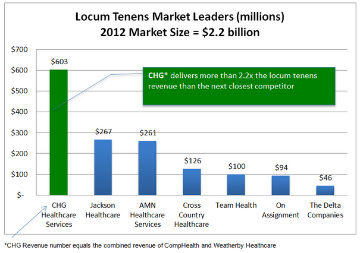
Locum Tenens market leaders

In a policy environment where quality measures and patient satisfaction ratings are becoming the basis for reimbursement rates, one wonders how VMS software is getting traction. Perhaps desperate times call for desperate measures, and the challenge of filling employment gaps is driving interest in impersonal digital match services? Rural hospitals are desperate to recruit quality candidates, and with a severe physician shortage looming, warm bodies are becoming an acceptable solution to staffing needs.

As distasteful as the thought of computer-matching physicians to hospitals may be, the real problems of VMS systems only become apparent with experience. After discussing user experience with several hospital system employees and reading various blogs and online debates here’s what I discovered:

1. Garbage In, Garbage Out. The people who input physician data (including their certifications, medical malpractice histories, and licensing data) have no incentive to insure accuracy of information. Head hunter agencies are paid when the physicians/nurses they enter into the database are matched to a hospital.

To make sure that their providers get first dibs, they may leave out information, misrepresent availability, and in extreme cases, even falsify certification statuses. These errors are often caught during the hospital credentialing process, which results in many hours of wasted time on the part of internal credentialing personnel, and delays in filling the position. In other cases, the errors are not caught during credentialing and legal problems ensue when impaired providers are hired accidentally.

Continue reading…

Personal Tech

By ROB LAMBERTS

Screen Shot 2014-05-29 at 11.46.26 AM

My 87 year-old father broke his hip this past weekend.  He was in Michigan for a party for his 101 year-old sister, and fell as he tried to put away her wheelchair.  The good news is that he’s otherwise pretty healthy, so he should do fine.

Still, getting old sucks.

During the whole situation around his injury, surgery, and upcoming recovery, one thing became very clear: technology can really make things much easier:

  • I communicated with all of my siblings about what was going on and gave my “doctor’s perspective” to them via email.
  • I updated friends and other family members via Facebook.
  • I have used social media to communicate cousins about what is going to happen after he’s discharged from the hospital and coordinate our plans.

All in all, tech has really made things much easier.

This reality is in stark contrast to the recent headline I read on Medscape: “Doctors are Talking: EHRs Destroy the Patient Encounter.”  The article talks about the use of scribes (a clerical person in the exam room, not a pal of the Pharisee) to compensate for the inefficiencies of the computer in the exam room.  Physician reaction is predictable: most see electronic records as an intrusion of “big brother” into the exam room.

To me, the suggestion to use a scribe (increasing overhead by one FTE) to make the system profitable is ample evidence of EMR being anti-efficient.

Despite this, I continue to beat the drum for the use of technology as a positive force for health care improvement.  In fact, I think that an increased use of tech is needed to truly make care better.  Why do I do so, in face of the mounting frustrations of physicians with computerized records?  Am I wrong, or are they?

Neither.  The problem with electronic records is not with the tech itself, it is with the purpose of the medical record.  Records are not for patient care or communication, they are the goods doctors give to the payors in exchange for money.  They are the end-product of patient care, the product we sell.  Doctors aren’t paid to give care, they are paid to document it.  Electronic records simply make it so doctors can produce more documents in less time, complying with ever-increasingly complex rules for documentation.

Continue reading…

Do We Really Need the VA?

By PAUL KECKLEY

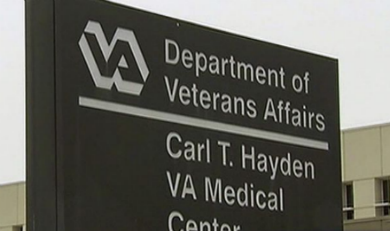
VA Phoenix Signage LG

Last Wednesday, President Obama called the much-publicized problems in the Veterans Affairs health system “disgraceful” as delays in care in at least 26 facilities grabbed media attention. In testimony before Senate and House Congressional committees, VA officials disclosed systemic misrepresentations about the timeliness of treatments in VA primary care clinics: rather than getting care within 14 days of request, many veterans appear to have waited 6-12 months to see a doctor, and some are alleged to have died while waiting.

In referencing a special report due this week that assesses the scope of the problem in the Department of Veterans Affairs, the President’s commitment to fix the problem was unequivocal: “I want to see what the results of these reports are and there is going to be accountability.”

As I have watched the VA storyline play out over the course of the past few weeks, I found myself asking questions the reporters weren’t:

Why do we need to operate a separate system of 820 clinics and 151 hospitals for Veterans?

Might the system of care for the 21 million it currently serves not be better coordinated through the U.S. health care system of 5200 public and private hospitals, 820,000 physicians, 1200 federally qualified health centers, 2000 community mental health clinics, 56,000 pharmacies and 1700 retail clinics? In most communities, there’s a surplus of beds.

In most communities, those with insurance can get doctors’ appointments and receive treatment. Veterans who lack private coverage, like those who are uninsured, have fewer choices. It is not a capacity issue: it is an economic issue.

And common sense suggests we might redeploy some the VA health administration’s $60.3B budget for better coordination with the private systems that already operate in our communities while reducing duplication of services and their associated costs.

Why don’t we get serious and fix the problem of access to primary care shortage once and for all? It’s not just a veterans’ problem. Those who live in poorer neighborhoods lack access.

Continue reading…

Download Two of These And Call Me In the Morning

By BRIAN LEVINE

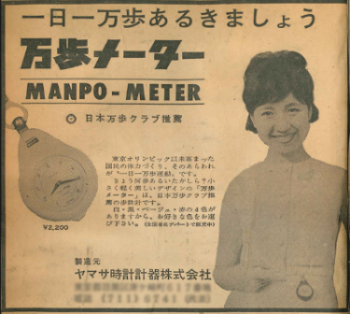
Manpo-Meter Take 2
When it comes to discussing exercise with friends, family and patients, it seems that many of us are at a loss for words. What kind of exercise should we recommend? How much exercise is enough? How much is too much? How do I know that my patient is actually exercising? How do I prescribe exercise?

According to the U.S. Department of Health and Human Services, U.S. adults should engage in moderately intense physical activity for a minimum of 150 minutes each week; this is equivalent to 30 minutes a day, 5 days per week [1]. While it is relatively easy to keep track of the duration and frequency of exercise, it is much more difficult to quantify the intensity of an activity, let alone ensure that the activity is “moderate” for the entire 30 minutes.

In fact, in a 2008 study of women’s understanding of “moderate-intensity” of physical activity as presented in the popular media, the authors found it is not enough to simply hear and read a description of physical activity, but that it requires practice [2].

So, what are we to do? Should we have our patients log their daily activities? Should we have our patients show us sign-in sheets from the local gym?

It turns out that the dilemma of how to quantify physical activity has been a hot topic for more than 50 years. In 1965, a Japanese inventor developed the first pedometer to give people the opportunity to meet measurable goals and, thus, increase their physical activity. The device was called the Manpo-Kei (meaning “10,000 steps meter”) and it was based on research by Dr. Yoshiro Hatano that demonstrated that 10,000 steps per day allowed for a proper balance between the traditional Japanese caloric intake and the activity-based caloric expenditure of walking approximately five miles per day (the average person’s stride length is approximately 2.5 feet long, therefore 2,000 steps/mile) [3].

Continue reading…

Tending to the Health Care Workers of America

By TIMOTHY HOFF

flying cadeuciiGiven the attention now paid to implementing national health reform, the bulk of which is now upon us as 7 million new individuals now have health insurance, one important issue remains largely ignored by policy makers and industry leaders–health care workers are very unhappy.

A 2012 national survey of 24,000 physicians across all specialties found that if given the choice, just over half of these doctors — only 54 percent — would choose medicine as a career again.  Fifty-nine percent of physicians in a 2013 survey could not recommend their profession to a younger person, and forty-two percent were dissatisfied in their jobs.  Forty percent of physicians in another 2013 national survey self-identified as burned out.

Nursing has gained the moniker of one of the least happy jobs in America, with nurses traditionally experiencing high rates of job dissatisfaction, burnout, and turnover.  Some of the reason for this malaise among our highest status health professionals has to do with the stressful, uncertain nature of health care work.

But it also is an outcome of the everyday worlds in which all health care workers now find themselves:  a world drenched in paperwork, packed patient schedules, and decreased control.  In short, the new world of health reform.

We are in the midst of a technological and business revolution in health care delivery. We are also on expanding patient demand in ways not seen in generations.  But we are not meeting the needs of health care workers, who are expected to produce at a higher level than ever before.

Continue reading…