Categories

Category: Medical Practice

The Legacy of the Tarceva Diva

By BRIAN LOEW

About three years ago, a new member of our Lung Cancer Survivors Support Community posted a message: she was taking Tarceva and wanted to discuss with fellow members everything about that cancer drug.

She titled her post, TARCEVA DIVAS AND DUDES DISCUSSION & SUPPORT. She saw a need to create a community within a community, and beginning with that modest post, she did it. She didn’t ask permission. She didn’t wait for us, or another member, to organize and lead a top-down discussion about Tarceva.

The ongoing discussion string became the place for our members to go to talk about Tarceva and next-generation lung cancer treatments.

The member became known by some as the Tarceva Diva, and for the purposes of this story, that’s what I’ll call her. This story is not specifically about Tarceva, or even about lung cancer, but instead, it’s a celebration of  an unsung hero who helped thousands of people.

There have been well over 8,000 posts in less than three years’ time–about 250 posts per month–in just that series of hundreds of “Divas and Dudes” discussion strings. That’s a constant, dedicated stream of treatment insights from-the-front-lines of people worldwide affected directly by lung cancer.

“WELCOME TO TARCEVALAND!!!” she’d proclaim to a new member, or “newbie.” She could insert humor into the discussions without making light of the seriousness of members’ illnesses. The activity in the Tarceva sub-community grew so quickly that the Tarceva Diva created another discussion topic, TARCEVA SIDE EFFECT BUSTERS, which created yet another resource for members.
Continue reading…

How Mayo Clinic Is Using iPads to Empower Patients

By Cook, Thompson, Dearani & Prinsen

Throughout the world, companies are embracing mobile devices to set customer expectations, enlist them in satisfying their own needs, and get workers to adhere to best practices. An effort under way at the Mayo Clinic shows how such technology can be used to improve outcomes and lower costs in health care.

Defining the care a patient can expect to receive and what the road to recovery will look like is crucial. When care expectations are not well defined or communicated, the process of care may drift, leading to unwarranted variation, reduced predictability, longer hospital stays, higher costs, poorer outcomes, and patient and provider dissatisfaction.

With all this in mind, a group at the Mayo Clinic led by the four of us developed and implemented a standardized practice model over a three-year period (2010-2012) that significantly reduced variation and improved predictability of care in adult cardiac surgery.

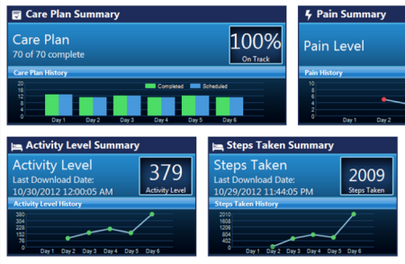
One of the developments that germinated in that effort was the interactive Mayo myCare program, which uses an iPad to provide patients with detailed descriptions of their treatment plans and clinical milestones, educational materials, and a daily “To Do” list, and to report their progress and identify problems to their providers.

Continue reading…

That Vitamin There Could Kill You

By JAMES SALWITZ

Once-upon-a-time, when a patient said they were taking a vitamin, most doctors would simply shrug their shoulders and say, “well, I guess its OK, it couldn’t hurt.”   There was little research to judge the affect of vitamin supplements, so there was no reason to take a stand.  That is no longer true.

Now we have published data on many vitamins and we can say that for most people they do not work.  More importantly, there is increasing research that says manufactured, chemically synthesized nutriment compounds in a pill, can be deadly.

For this reason, I am likely to ask my patients if they are taking a vitamin and, if so, which fabricated additive and how much.  Therefore, I asked Bill, while he was in the office receiving chemotherapy for Hodgkin’s disease, what alternative therapies he was using.

When he informed me that he swallowed a multivitamin (MVI), large doses of Vitamins C and E, as well as a B complex preparation, I advised him to stop.

To my astonishment he responded, “Well, you only want me to do that because you make a lot of money on chemotherapy, and vitamins might put you out of business.”

Bill’s response, he lack of trust in my advice, disturbs me at several levels.  He fails to understand and does not wish to learn the present state of science regarding nutrition. In addition, there is a major problem regarding his perception of my motivations and therefore the veracity of my guidance.

Let us be clear; in the absence of malnutrition, malabsorption and a few uncommon medical conditions, there is absolutely no reason to take a multivitamin.  They do not prevent or fix anything.  Originally developed for starving populations and hungry soldiers during the Second World War, they have no place in a society with access to a broad range of foods.

More importantly, there is increasing data that people taking a multivitamin may become less healthy.

Continue reading…

Doctors Without State Borders: Practicing Across State Lines

By ROBERT KOCHER

In the United States, a tangled web of federal and state regulations controls physician licensing.  Although federal standards govern medical training and testing, each state has its own licensing board, and doctors must procure a license for every state in which they practice medicine (with some limited exceptions for physicians from bordering states, for consultations, and during emergencies).

This bifurcated system makes it difficult for physicians to care for patients in other states, and in particular impedes the practice of telemedicine. The status quo creates excessive administrative burdens and like contributes to worse health outcomes, higher costs, and reduced access to health care.

We believe that, short of the federal government implementing a single national licensing scheme, states should adopt mutual recognition agreements in which they honor each other’s physician licenses.  To encourage states to adopt such a system, we suggest that the federal Center for Medicare and Medicaid Innovation (CMMI) create an Innovation Model to pilot the use of telemedicine to provide access to underserved communities by offering funding to states that sign mutual recognition agreements.

The Current System And Its Drawbacks

State licensure of physicians has been widespread in the United States since the late nineteenth century.  Licensure laws were ostensibly enacted to protect the public from medical incompetence and to control the unrestrained entry into the practice of medicine that existed during the Civil War.  However, it no longer makes sense to require a separate medical license for each state.

Today, medical standards are evidence-based, and guidelines for medical training are set nationally through the Accreditation Council for Graduate Medical Education, the Centers for Medicare and Medicaid Services’ Graduate Medical Education standards, and the Liaison Committee on Medical Education.  All U.S. physicians must pass either the United States Medical Licensure Examinations or the Comprehensive Osteopathic Medical Licensing Examination.

Although the basic standards for initial physician licensure are uniform across states, states impose a patchwork of requirements for acquiring and maintaining licenses. These requirements are varied and burdensome and deter doctors from obtaining the licenses required to practice across state lines.

Continue reading…

What A Green Three Ring Binder Says About the State of Meaningful Use and Health Information Exchange

By ROB CRONIN

The photo says it all.

The green notebook and pen represent the latest and greatest health IT innovations used by the hospital nurse to record my wife’s health information in the hours before her surgery to re-attach a fully torn Achilles tendon.

(Apologies for the cheeky intro and to my wife and anyone else for any HIPAA violations I may have committed in the capturing of this image).

It’s not that the hospital does not have an electronic health record.

They do – from a vendor widely considered a leader in the industry: Meditech. Same goes with the physician practice where she receives all her care and where her surgeon and primary care doctor are based.

They too have an EHR from another leading vendor: NextGen.

The problem? These systems are not connected. Thus, confirming the not so surprising news that health data interoperability has yet to make its debut in our corner of the NYC burbs.

Fortunately for my wife, she is well on her way to recovery (a bit more reluctant to juggle a soccer ball with her son in airport passenger lounges, but nevertheless feeling much better…and mobile). By everyone’s estimation – hers, mine, friends who suffered the same injury and friends who happen to be doctors – she received high quality care.

What’s more, we feel the overall patient experience at our physician practice and the hospital was quite good. That said, I cannot help but ask myself a series of ‘what ifs?’

What if…we forgot to mention a medication she was taking and there was a bad reaction with medication they administered as part of the surgery or afterwards?

What if… the anesthesiologist or surgeon couldn’t read the nurse’s handwriting?

What if the next time we go to the hospital, it is a visit to the emergency room and the attending clinicians have no ability to pull any of my family’s health records and we are not exactly thinking clearly enough to recall details related to medical history?

Continue reading…

Bigger Hospitals Mean Bigger Hospitals with Higher Prices. Not Better Care.

By SHANNON BROWNLEE & VIKAS SAINI

Hospitals are busily merging with other hospitals and buying up groups of doctors. They claim that size brings efficiency and the opportunity to deliver more “value-based” care — and fewer unnecessary services.

They argue that they have to get bigger to cut waste. What’s the evidence that bigger hospitals offer better value? Not a lot.

If you think of value as some combination of needed services delivered for the right price, large hospitals are no better than small hospitals on both counts.

The Dartmouth Atlas of Health Care and other sources have shown time and again that some of the biggest and best-known U.S. hospitals are no less guilty of subjecting patients to useless tests and marginal treatments.

Larger hospitals are also very good at raising prices. In 2010, an analysis for the Massachusetts attorney general found no correlation between price and quality of care.

A study published recently in Health Affairs offered similar results for the rest of the country: On average, higher-priced hospitals are bigger, but offer no better quality of care.

Continue reading…

I’m a Doctor. And This Stuff Even Confuses Me!!!

By THCBist

Extremely irate on the East Coast writes:

I’m a doctor. I have an MBA from a prestigious business school. I understand medical billing. Here’s a story for you that sums it all up.

After many years as an independent, my OBGYN recently joined a large physician group affiliated with a nationally known academic medical center.

(I’ll keep the name of the institution out of this since I like my OBGYN and several of my friends work at the medical center.)

Late last year I had a minor procedure at the academic medical center. My OBGYN handled the surgery. Everything went smoothly.

When the bill came I was charged a reasonable $600. This year I had to have a repeat of the same procedure. My OBGYN again performed the procedure. Same outcome. Same nurses. Same specialist. Same room. When my bill came in the mail I got the shock of my life. The total was four times as much as it had been a year earlier!!!! I had no idea.

My OBGYN’s office told me there is nothing they can do. Prices are set by the new academic medical center supergroup. As far as I can tell, the only thing that has changed is the sign over my doctor’s door.

What recourse do I have? What consumer protections does the ACA contain designed to prevent this kind of behavior?

I’m a doctor. I understand the issues involved. If I’m confused, how is the average consumer supposed to deal with this? This is extremely bad.

Lost in the health care maze? Having trouble with your health Insurance? Confused about your treatment options? Email your questions to THCB’s editors. We’ll run the good ones as posts.

Medical Students: The Anti-Millionaires

By DANIEL COLEMAN

A few months ago, CBS Moneywatch published an article entitled “$1 million mistake: Becoming a doctor.” Aside from the possibility that devoting one’s life to helping others might be considered a mistake, I was struck by the “$1 million” figure.

Was it actually that much? I mean, $1 million is a lot of money. When I was younger, millionaires seemed a rarefied breed. They drove expensive cars and had houses with names like “Le Troquet” or “Brandywine Vale.” The figure was supposedly calculated using the following factors:

  • The cost of school, inclusive of tuition, fees and insurance
  • The interest on the loans incurred to pay for the above items
  • The income lost by not working full-time for 10 years, assuming an average income of $50,000 per year

Before coming to medical school, I worked in the pharmaceutical industry. I even turned down a hefty promotion to start my education as soon as possible, rather than defer for a year or two.

Thus, my back-of-the-envelope calculations made it fairly obvious that, including benefits, bonuses, and potential promotions, my medical decision was not a $1 million mistake, but was more like a $1.3 million dollar disaster.

Of course, people tell me that I’ll be profitable and that I’m a good credit risk, but what I really am is one of a rarefied breed that drive economy cars and have houses with names like “Apt. #203.” What I really am is an anti-millionaire.

Continue reading…

Conversa Wants to Fill the Gap

MATTHEW HOLT

By MATTHEW HOLT

Conversa is a brand new company, aiming to fill the space between physician visits with easy and useful communications between doctors and patients. The logic is that most health care happens outside the exam room, but most of the effort of automating health care has been put into recording what happens in the medical setting, with little feedback or follow up from patients (HealthLoop is another company aiming at this space).

Why are we featuring Conversa? Well somewhat unusually for a Health 2.0 startup they come with buckets of experience. CEO West Shell was at the helm at Healthline, Product Head Phil Marshall built lots of tools at WebMD and Chief Marketer Anna-Lisa Silvestre was behind the roll out of probably the biggest patient portal ever at Kaiser Permanente.

I got all three of them on the video-line to tell me about Conversa.

[youtube]http://www.youtube.com/watch?v=UVD2f1VK24M&feature=youtu.be[/youtube]

Learn more about Conversa’s launch here.

Ode to the Fat Man

By SAURABH JHA

Here is a sweeping generalization: When doctors write for the lay public they tend towards tiresome self-flagellation.

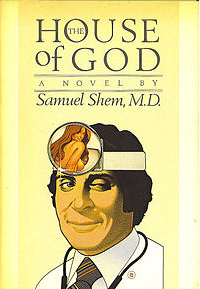
Samuel Shem’s House of God is an exception; a refreshing read.

Perhaps he wrote for physicians so he wrote with such open face honesty.

In today’s politically correct world, Shem would have been castigated as an ageist for his brilliant acronym, GOMER (Get out of My Emergency Room), for peri-ninety year olds with advanced dementia who are skirting that narrow zone between St. Peter’s Gate and fractured ribs post-CPR.

Time for a pronouncement for medical students: There are two things you must do before starting your internship. Pass your USMLEs and read House of God.

I have read Shem’s classic twice. I remember the Rules of House of God more reliably than I recall the names of the carpal bones.

My first read was a few days in to my internship in elderly care medicine. The hospital was a rickety establishment in Britain’s National Health Service, not quite the Best Medical School that Shem described. But I seemed to share the same clinical experiences as Roy Basch, Shem’s Gomer-phobic protagonist.

There was a deluge of Gomers on New Year’s Eve; the old practice of granny dumping. I had to justify admission by finding nitrates in their urine for suspected urinary tract infection (grandson attending New Year’s bash still does not have an ICD code), or the vaguest T wave changes on EKG (unstable angina is a useful bet in a 90 year old).

If medical taxonomy could not be clinically justified there was always “acopia.”

Shem was remarkably prescient.

Take rule 13:
“The delivery of good medical care is to do as much nothing as possible.”  This was before physicians were inserting stents through rock hard femoral arteries to give patients an aggregate of two extra hours of survival.

Basch’s elderly patients would do the best precisely because his caring was the least aggressive. He would occasionally forget to prepare them with laxatives for a barium enema, saving them from dehydration and its cascade.

If Shem realized in the seventies that nothing was more futile than an investigation leading to a futile treatment, God knows what he would have written today.

Continue reading…