Categories

Category: Medical Practice

The Oncologist’s List

By JAMES SALWITZ

Lists guide our lives.  Some are easy, even fun, like a menu or shopping list.  Some are simple tick-offs for work, like my wife’s honey-do list.  Others are frightening, like a draft list.

Some are melancholy, such as the inventory in a Will.  We are inspired by our bucket-list.  Finally, some are exciting, but stir conflict, like awedding invitation list.

I have a list, which makes me slightly anxious, a little depressed, and which takes modest courage to open up.  That is my patient’s list of daily X-ray reports.

Our Electronic Medical Record (EMR), as based around a home page or “Inbox.”  This is a continuously updated assembly of data and messages from our practice and patients.

There are medical orders to approve, questions from nurses and patients, billing inquiries, documents to sign, lab results and emergency alerts about patients in trouble.

Except for the drudgery of pushing through a pile of CMS documentation, those lists have scant emotional impact on me.  Not so the eighth list, just four from the bottom:  Radiology Documents.

These are the results delivered electronically of any MRI, CT scan, bone scan, chest X-ray or other imaging study, that I, or other doctors, have ordered on my patients.  Every 24 hours, between 15 and 30 new reports pop-up.

Opening this section I see three columns; the patient’s name, the date the test was performed, and the type of test.

One click on each line yields a neat, formatted, typed report. These are more than just data.  More than simple facts.  These are final, cold, hard answers to the biggest questions of all.

Is Sue’s cancer is responding to therapy? Does Pete’s shortness of breath mean “just” pneumonia or a blood clot, or has his kidney cancer has metastasized to his lungs?  Did Sid pull his back shoveling snow or is that sharp pain a vertebra fractured by prostate cancer?

Is Alan’s forgetfulness fatigue, Alzheimer’s or perhaps something more insidious, the bloom of glioma cells deep in his brain?
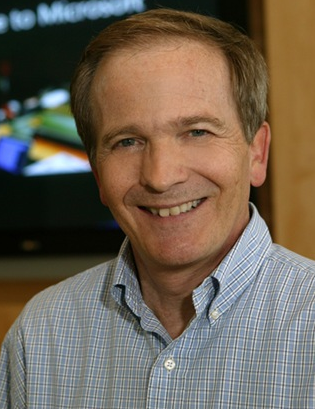
Continue reading…

Why the Creative Destruction of Healthcare May Not Be Such a Good Idea

By BILL CROUNSE

From childhood most of us remember the sage parental advice on how to deal with bullies–“sticks and stones can break my bones, but words can never hurt me”.

Of course, we all know that words do hurt, maybe not physically, but they certainly take a toll on our psyche.

These days in planning meetings at my own company, in articles I read on the web and at various tech industry conferences, I come across words and language that I know feel hurtful, or are at least disrespectful, to the health industry and the people who work there. I hear cavalier talk about the need to disrupt the healthcare industry.

Some thought leaders even say we will creatively destruct the healthcare industry. Consumers armed with technology will rise up, they say, and disrupt everything about the current state of healthcare.

Now imagine for a minute that you are a hospital executive, a doctor, a nurse or other clinician and you hear people who work outside your industry talking about disrupting or destructing it.

Imagine being told that consumers, patients, and tech companies will rise up and destroy your business.

There you are doing the best you can to make it through each day keeping your hospital or practice economically sound, dealing with the barrage of patients at your door, staying one step ahead of ever-increasing rules, regulations and rising costs, while those who’ve never worked a day in your world tell you they are going to disrupt and/or destroy it.

Even if there is a need to disrupt healthcare (and even many who work in the health industry might agree), nobody appreciates being told by some outsider that they know your business better than you do.

I don’t imagine my colleagues who work at Microsoft (or Google, or Apple, or Amazon) would appreciate being told by a hospital administrator or a doctor that they knew better how to run a tech company, or what ails the tech industry.

Nor do I think that most patients and consumers can really appreciate the amazing complexity of our healthcare system or the unbelievable pressures under which it operates these days.

Continue reading…

Commentology: Actually, High-Tech Imaging Can Be High-Value Medicine

By ROBERT MCNUTT & NORTIN HADLER

Our comments regarding this interesting blog,  and the comments to the blog, may seem tangential to the author’s points.

The blog and comments point, we think, to a confusing set of principles being considered, perhaps, out of context?

Those comments range from: ACOs will lead to better figuring out what is best (impossible) –  to mismatched information regarding a specific clinical case (reasonable).  What is striking is that we have medical students worrying about costs of care.

Instead, shouldn’t we be teaching them to understand the value of information for decision-making? Shouldn’t we be teaching them the concepts of co-dependent testing leading to all tests being less useful than we think?

Shouldn’t we be teaching students the concepts of decision-analysis, and thresholds, and patient’s being involved in the decisions? Shouldn’t we be teaching that it is better to know than to think we know? Shouldn’t we be doing studies rather than scratching at the “tragedy of the commons” (so many physicians feasting on the grassy fields of a sick patient)?

Continue reading…

The ACO Hypothesis: Farzad Mostashari Responds

By THCBist

Farzad Mostashari’s  post last week provoked a heated (to put it mildly) discussion between supporters and critics of the ACO model.

Farzad writes:

Commenters have raised several points regarding the early results of the Medicare Shared Savings Program that bear further discussion and clarification:

-The need for more details on the participants by name, along with their characteristics, actions, and outcomes.

I agree. We strongly encourage CMS to release more detailed information about the results of the program to date. As someone who’s been on the other side, I can attest however, that lack of transparency can occur despite the intentions of leadership, and even when there’s nothing to hide. CMS has taken great steps towards open data in recent years- unparalleled in its history (or in comparison to private sector payors and most states), but there is more work to be done to overcome institutional inertia, and concerns regarding the “privacy of providers”.

How is the MSSP different from an HMO?
A major similarity between managed care and “shared savings” programs is that physicians that make decisions about treatment, diagnostic, and referral options do have an incentive to reduce cost. I was trained in an era where we were not supposed to think about (or even be aware of) the cost implications of our care recommendations. I now believe that we need physician engagement in addressing the truly unsustainable rise in healthcare costs that threaten to bankrupt our nation.

However, policymakers have learned a few lessons from the backlash against managed care:

Quality Matters
Reducing cost cannot be the only outcome. In the MSSP, in the first year only can you qualify for savings simply by reporting quality measures. In future years, ACOs will have to not only reduce total cost but also perform well on measures of patient satisfaction, clinical quality, and utilization (such as ambulatory care sensitive admissions) to collect shared savings payments.

What about patient choice?
If the patient doesn’t like the care they’re getting, they can get care elsewhere. This is a sore point for many ACOs, especially those that have been successful in managed care arrangements, but the current regulations in no way limit patients’ ability to seek care elsewhere. MSSPs are required to notify patients that they have formed an ACO, and patients have the option of opting out of the sharing of their claims data with the ACO.

Shared Savings versus capitation
Finally, the MSSP program is indeed layered on top of fee-for-service payments (versus prospective payments/ capitation), and most MSSPs have opted for the “upside only” track for the first three years. We acknowledge that where the ACO includes a hospital sponsor, they must contend with “demand destruction” on their fee-for-service lines of business if they reduce procedures, admissions and emergency department visits. However, physician-led ACOs are not similarly encumbered, and this model provides them with a “safe” transitional path towards taking risk. It is also worth noting that “one-sided risk” during the riskiest early transition period would tend to reduce the likelihood of a physician having to choose between limiting needed care and going bankrupt.

Continue reading…

Med School: Can the Lecture!

By JAMES SALWITZ

Medical students frequently see patients with us in our office.   Their presence is welcome, if for no other reason than it makes us think young.

A second year student has been coming to our office for over a year and is excited about a future taking care of cancer patients.  She just completed the Hematology and Oncology section of lectures at the med school.  I asked her how it went.  “Frankly, “ she said, in the articulate way of the highly educated, “it sucked.”

I was astonished. How could such an exciting, complex and rapidly evolving field, yield teaching that would cause a motivated student to take such umbrage?   Too much information?  Too complex a topic?  Too much difficulty in the exams?  “No,” she said, it lacked “too” of anything.

It was not organized, not at the appropriate level, rambling and incomplete.  Without reviewing the critical information in texts and online, she would have learned little and the entire class would have failed the subsequent tests.

In a huff, wanting to assure that we not lose a crop of budding oncologists, I swore to find the cause of this didactic discord.  Surely, it must be possible to put together a set of clear, complete, cancer and blood lectures, so that the students were not only taught, but inspired.   Somehow, we would fix those lagging lectures.  But, then it occurred to me, why?

There are 141 medical schools in the United States, 2372 in the world. They teach 20,055 students in North America and hundreds of thousands around the globe.  In every school, every state, and country, they all teach about cancer.  In every school, cancer is the exact same disease.  On every continent, the possible treatments are the same. 

Therefore, why in the world do students listen to different lectures by different teachers on the exact same subject?

Why use the lecture hall format in medical school?  Why not find a few super-experts to write one perfect lecture, and then record that lecture one perfect time, given by a brilliant, inspiring, articulate educator (with translations)?

Continue reading…

Crowdsourcing the Kaiser Permanente Center For Total Health

By THCBist

Our friends at Kaiser Permanente asked us reach out THCB readers for help with a cool crowdsourcing project. The Kaiser innovation team is working on developing new content for The Kaiser Permanente Center For Total Health , KP’s shiny new 16,000 square foot exhibition and meeting space in downtown Washington D.C.

If you’re close enough to make the trip, we highly recommend that you stop by and take an hour or so to poke around a bit before submitting your suggestions.  Failing that, you can take the online interactive tour here.

If you’re a doctor, a med student, a designer, an entrepreneur, a patient – or if you just have a good idea –  we’d like to hear from you.  KP’s innovation team asked us to ask you four questions. You can answer one or you can answer them all.

1.  What is Total Health? In other words, what is health? What’s important to you?

2. What should total health look like when implemented? What innovations can be used to drive change in the healthcare system? What will healthcare look like in the future?

3.How should total health be supported? What can be done to make healthcare better? Smarter?  Both within the healthcare system? And in our own lives?

4. If you were designing an interactive wall to demonstrate total health to visitors what would you focus on. In other words, if you were designing an exhibition what would it look like? What would your message be? What would help educate the public? How would you get that message across? Yes, you can send us an picture.

Answers can be left in the comment thread below. If you prefer to submit a video response via YouTube send the link to ed****@***************og.com. or paste in the comments below.  Blog posts should be submitted to THCB editors at ed****@***************og.com

For the interactive design question, we asked THCB’s editors what they’d like to see. Here’s what we came up with on the back of our paper napkin:

Continue reading…

Patientgate: Why Patient Recordings Will Change Everything

By GLYN ELWYN

It’s 8.30 am, just before clinic opens. It is 2010. Dr Byte* checks an online forum, and something catches his eye.

A female patient is complaining about a doctor. Her posting has led to strident reactions from other doctors. Patients are taking her side. It looks ugly.

It turns out that the patient had asked her family doctor whether she could use her smartphone to record the encounter. Her doctor was apparently taken aback and had paused to gather his thoughts. He asked the patient to put her smartphone away, saying that it was not the policy of the clinic to allow patients to take recordings.

The patient described how the mood of the meeting shifted. Initially jovial, the doctor had become defensive. She complied and turned off her smartphone.

The patient wrote that as soon as the smartphone was turned off the doctor raised his voice and berated her for making the request, saying that the use of a recording device would betray the fundamental trust that is the basis of a good patient-doctor relationship.

The patient wrote that she tried to reason, explaining that the recording would be useful to her and her family. But the doctor shouted at her, asking her to leave immediately and find another doctor.

Some participants on the online forum expressed disbelief. But the patient then went on to state that she could prove that this had actually happened, because she actually had a recording of the encounter. Although she had turned off her smartphone, she had a second recording device in her pocket, turned on, that had captured every word.

Continue reading…

Why You Should Care about the New Accreditation Agreement for Osteopaths

By JOHN SCHUMANN

More than a century of American medical history was turned on its ear last week by the announcement that the groups that accredit medical residencies will unify their standards. Don’t be too hard on yourself if you failed to understand the significance (or notice at all).

But this should be viewed as good news across the land. As someone who trains doctors from both ‘traditions,’ I certainly welcome a more level playing field.

First, a little background:

Osteopathic physicians (those with a D.O., or Doctor of Osteopathy degree) have a history dating back to the 1800s. They comprise slightly more than 10% of practicing doctors in the United States. Currently, there are 35 osteopathic medical schools, compared with 135 ‘allopathic’ institutions, the kind that confer the M.D. (Doctor of Medicine) degree.

Though historically the two educational paths varied in principles and practice, there aren’t many remaining differences. Both disciplines now use biomedical science as their core.

Originally, osteopathy relied on manipulation of bones and joints to diagnose and treat illness.

This tradition, known as Osteopathic Manipulative Treatment (OMT), lives on in the osteopathic curriculum, though it’s now mostly used as an adjunct for treatment of chronic musculoskeletal conditions. Today, most D.O.s leave OMT behind after they finish their training.

Continue reading…

The OpenNotes Toolkit

By STEVE DOWNS

In writing about OpenNotes last summer, I argued that the practice of sharing clinicians’ notes with patients had moved beyond the question of whether it was a good idea (the landmark study published in Annals of Internal Medicine was pretty clear on that) to questions of how best to implement it.

As more organizations adopt the practice, it’s clear that we’re now in a phase of implementation, and experimentation with different approaches and learning.  Tom Delbanco, MD, one of the project leads, often compares open notes to a drug — it does have some side effects and some contraindications for some people and some circumstances — and we all need to understand those nuances.

To make it easier for health care organizations to offer the service to their patients, the OpenNotes project team has just released a new toolkit.

The toolkit focuses on two challenges:  helping organizations make the decision to implement open notes and helping organizations with all the steps involved in implementing open notes.

It includes a slide deck that lays out the results of the study and makes the case for implementation, a video profile of how a patient and her doctor have used the practice, profiles of the implementations at the pioneering sites, FAQs for clinicians and patients, and tips for clinicians on how to write open notes.

Please check it out and tell the OpenNotes team what you think:  is it valuable? How could it be better?

Continue reading…

The Open Notes Toolkit: Writing Fully Transparent Notes

By OPEN NOTES STAFF

Since HIPAA entitles virtually all patients to obtain copies of their complete medical records at any time, it is always best to write notes with the assumption that patients may read them.

However, as electronic portals provide patients with easy access to their records, clinicians may feel new pressure to be more mindful about how they write their notes. They may alter their approach to or even omit sensitive information to avoid worrying patients unnecessarily. They may try to balance clinical and non-technical language to avoid confusing patients; they may feel they need more time to write notes that patients can read.

They may be concerned about how patients might choose to share their notes, including posting a clinician’s note on Facebook, medical forums, or other social media.

Most doctors in the OpenNotes study found that they generally didn’t need to change how they wrote their notes. Patients did not expect doctors to write notes aimed specifically at them and were grateful simply to have a window into their medical record.

However, a minority of doctors reported that they changed how they documented potentially sensitive topics. These included mental health, obesity, substance abuse, sexual history, elder, child or spousal abuse, driving privileges, or suspicions of life-threatening illness. These are not new dilemmas, but they gain urgency in an era of shared visit notes.

Recommendations

Unless you believe a conversation might harm your patient, a good rule of thumb is to write about things you discussed with your patients (and conversely, to talk about content you will write about). Many clinicians already follow this practice, and some choose to dictate notes with their patients present.

When documenting sensitive behavioral health issues, we recommend trying to describe behaviors descriptively, rather than labeling them or suggesting judgments. We also suggest highlighting the patient’s strengths and achievements alongside his/her clinical problems. This can help the patient gain a broader context within which to consider his or her illness and tackle difficult behavioral changes.

Continue reading…

