Categories

Category: Mike Magee

The Pandemic Risk of “What I’ve Never Seen Before”

By MIKE MAGEE

The world of medical science largely closed ranks last month in defense of Tony Fauci. Dr. Fauci had been hauled before the Senate Homeland Security Committee to face hostile entrapment by long time critique Senator Rand Paul of Kentucky. Taking no chances, his lawyers had the former head of NIH’s Infectious Disease division plead the 5th to avoid entrapment, fines, and even imprisonment.

It has been five years since Dr. Fauci appeared on MSNow (formerly MSNBC) and encourage viewers to “keep an open mind” when it came to “gain-of-function” research and the origins of the Covid pandemic. Since then, a 2025 WHO report stated “As things stand, all hypotheses must remain on the table.” That includes the possibility that the viral tragedy resulted from the inadvertent release of a genetically engineered virus from the Wuhan, China, laboratory of Shi Zhengli, a virologist trained at the University of North Carolina.

The risky experiments, termed “gain-of-function” studies, were justified as super-secure, safe, predictive, and preventive. Shi returned to her labs in 2018 and 2019 with grant funding from the National Institute of Allergy and Infectious Disease and the Department of Defense via an intermediary, the New York based non-profit EcoHealth Alliance,whose funding was retracted in 2024.

Their coordinator-in-chief was one Peter Daszak. Daszak is known for adopting militarized terms in the battle against global infectious diseases. In 2020 he wrote in the New York Times, “Pandemics are like terrorist attacks: We know roughly where they originate and what’s responsible for them, but we don’t know exactly when the next one will happen. They need to be handled the same way — by identifying all possible sources and dismantling those before the next pandemic strikes.”

Daszak’s argument that risks involved in Shi Zhengli’s Wuhan bat virus research were justified as defensive and preventive was convincing enough to the NIH and the Department of Defense that his EcoHealth Alliance was funded from 2013 to 2020 (contracts, grants, subgrants) to the tune of well over $100 million – $39 million from Pentagon /DOD funds, $65 million from USAID/State Dept., and  $20 million from HHS/NIH/CDC.

Daszak’s position within the scientific community was controversial. In fact, in 2014, a group of concerned scientists called the Cambridge Working Group issued this statement: “Accident risks with newly created ‘potential pandemic pathogens’ raise grave new concerns. Laboratory creation of highly transmissible, novel strains of dangerous viruses, especially but not limited to influenza, poses substantially increased risks. An accidental infection in such a setting could trigger outbreaks that would be difficult or impossible to control.”

All of this, it seems, would be “old news” except for last week’s dramatic announcement that “For the first time, scientists have used artificial intelligence to create new kinds of viruses, raising hopes for medical advances while also raising the disturbing possibility that the technology could someday be used to invent dangerous pathogens.”

It has been 23 years since scientists first constructed a synthetic viral genome. But Evo, a creative science AI newcomer, produced by OpenAI has apparently broken new ground – on its own. Well not completely. Its’ masters primed the pump by feeding the AI engine with nine trillion nucleotides (the human genome has 3 billion) obtained from millions of diverse species.

The scientific engineers focused down on a well-known virus that is generally active primarily in attacks on the bacteria, E-coli. It’s called Phi X-174. It has been utilized for some time in genetic engineering exercises. But in this case, it (along with some 15,000 close chemical relatives), was feed into Evo with the instruction to create new novel viruses of its own. 

Continue reading…

Good News: Teen Pregnancies Hit New Low In the US

By MIKE MAGEE

Last week, policy wonks from the right and the left, finally found a topic they could agree on – Kids are no longer having (as many) kids.

Specifically, teen pregnancies dropped an additional 10% in the US in 2025. This is an acceleration of a trend which began two decades ago. Teen births peaked in America in 1991 with 62 births per 1000 girls/women age 15 to 19. In 2025, the rate was below 12 per 1000, a drop of 80%, with the majority of that (72%) occurring since the 2008 Great Recession.

Obviously, this is “good news” for these young women according to Congressional reports. And most agree the causes are multifactorial, and include gains in health education, declines in sexual activity in youth, access to contraception and the Plan B pill, and expanded economic and professional opportunities for women in society.

But for societies worldwide, leaders look on with angst as the birth rates in their nations have broken through the replacement line, with deaths exceeding births. This “replacement rate” is roughly 2.1 births per woman. The CDC recently reported that without immigration, the 2023 total fertility rate was only 1.6 births per woman (1,616 per 1000 women over a lifetime).

Since 2007, trend lines have pointed decidedly downward. In that year, there were 4,316,233 births in the U.S. In 2025, American women gave birth to only 3,606,400 newborns (a 23%) decline.

Continue reading…

Good News on the HIV Front

By MIKE MAGEE

In a 1996  JAMA editorial Nobel Laureate Joshua Lederberg MD wrote “Our fight with microbes is far from over …odds are tipped in their favor…they outnumber us a billion fold, and mutate a billion times more quickly…pitted against microbial genes, we humans mainly have our wits.”

Now three decades later, our scientists remain in a “battle of wits” with this amazing viral foe, but even without a vaccine, have maintained a slide edge for humanity. Experts recently confirmed that we are unlikely to have a vaccine bullet by 2030. And it’s not because we haven’t tried. There have been more than 250 official HIV vaccine trials, with fewer than 10 making it past the safety threshold to test efficacy – and the best performer only had a moderate success rate in triggering some immunity in 31%.

HIV is just a bad actor according to Professor Anna Durbin at the Bloomberg School of Public Health at Johns Hopkins. To start with, it embeds its chemistry in the host’s DNA genome, blurring the boundaries between “self” and “non-self.” Most of our successful vaccines focus in on a protein portion of the virus envelop or capsule. But the HIV virus has a “glycan shield” – a protein envelope that incorporates around 95 different sugar molecules which shield or disguise the viral protein from detection by our immune system. As one expert described it, “The immune system’s antibodies approach the virus and effectively see a blurry cloud of sugars rather than the vulnerable protein underneath.”

The second problem is the virus’s “sloppy gene duplication” is riddles with mutations. This yields dozens of different versions each with endless subtype variations. This is not typical disciplined viral behavior. Today’s measles viral genome for example is nearly identical to its late 20th century version.

And finally, HIV’s favorite target for invasion is the CD4 lymphocyte, otherwise known as the “Helper T-cell.” That happens to be the cellular key that unlocks our entire immune apparatus. This virus effectively decapitates the lead generals of our defensive force. And yet, we’re gaining on the virus. How have we done it?

First, by focusing on two “work-arounds” that trigger “passive immunity” without the help of our own immune machinery. Three decades ago, breakthrough discoveries first offered a glimmer of hope in the form of antiretroviral medications. With a variety of different combined therapy approaches, HIV/AIDS emerged as “no longer a death sentence,” but a chronic disease, like diabetes, that could be managed. In the modern era, this effective approach has spawned PrEP, or “Pre-exposure Prophylaxis,” – a preventive regimen for HIV negative individuals who are at risk of contracting HIV.

Continue reading…

Don’t Bury The Lead – AI Assisted Measures of Thymic Health Point to a “Fountain of Youth.”

By MIKE MAGEE

In its final summary of the landmark paper in Nature this past month, the authors led with this statement: “This study underscores the highly personalized nature of thymic health and emphasizes the previously unrecognized possible critical role of maintaining thymic health to preserve an agile, adaptive immune response that will accommodate long-term well-being and longevity.”

The articles clinical significance was rapidly rebroadcast by a range of popular science publications like Scientific American. Its March 18th headline read “This overlooked organ may be more vital for longevity than scientists realized.”  Mass General publications trumpeted, “Long Dismissed in Adult Health, the Thymus May Be Critical for Longevity and Cancer Treatment.” And global outlets went a step further with “Once dismissed as biologically obsolete after adolescence, the thymus is now being reclassified as a central regulator of immune aging, with new evidence linking its health to survival, cancer resistance, and how the human body ages itself.”

In their own Abstract, the authors of the Nature publication were somewhat more reserved, and yet the message is still remarkably consequential. They write, “These findings reposition the thymus as a central regulator of immune-mediated ageing and disease susceptibility in adulthood, highlighting its potential as a target for preventive and regenerative strategies to promote healthy ageing and longevity.”

But what intrigued me in the case above was barely mentioned by reviewers so excited by the primary clinical findings. My question was, “How did they measure thymic functionality?” The short answer is, they measured it with the help of an AI deep learning system.

As the authors explained, “In this study, we investigated the impact of thymic functionality, here called thymic health, in adults… For quantification of thymic health, we developed a deep learning system using an independent dataset of 5,674 individuals to determine compositional radiographic characteristics of the thymus as a proxy for its functionality. The system takes a CT scan as input and provides the automatic continuous thymic health estimate as output….We applied the system to prospectively collected data from a total of 27,612 individuals from two cohorts, including 2,581 participants in the FHS and 25,031 participants in the NLST… For outcome analyses, participants were categorized as low, average or high thymic health based on the bottom 25%, middle 50% and top 25% of the population.”

This new methodology to demonstrate different levels of thymic functionality turned out to be groundbreaking when cross-referenced with decades long longitudinal databases. Association with cardiovascular disease and lung cancer; history of smoking, obesity, and high HDL levels; disabilities, morbidity and mortality; sex and age all reinforced that prolonged functionality of the thymus correlated with both health and longevity.

Continue reading…

Dyslexia Comes Back To Bite President Trump

By MIKE MAGEE

This past week, Donald Trump decided to get into a war of words with a person with dyslexia. His target was the Governor of California, Gavin Newsom, who has struggled with the learning disability since the age of 5.

The President’s action was premeditated and intended to take the potential Democratic 2028 Presidential contender down a peg. It got pretty personal pretty fast. Trump was direct as is his way. He said simply, “Everything about him is dumb.”

In response, the governor broadened the conversation to include young Americans with the condition with these targeted words of encouragement, To every kid with a learning disability: don’t let anyone — not even the President of the United States — bully you. Dyslexia isn’t a weakness. It’s your strength.”

Trump seemed surprised by the blowback from his “dumb” remark. It drew a stern rebuke from the Yale Center for Dyslexia and Creativity which reminded the President that approximately 20% of the US population is challenged by some form of this condition.

Fellow dyslectic, author and political commentator, Molly Jong-Fast,  quickly connected the political dots to current events: “Mr. Trump is a bully, but beyond that he tries to flatten things. Sometimes voters respond to this flattening, this simplification of complicated issues, but ultimately his refusal to see nuance in things, his inability to plan ahead, to see second- or third-order effects is his undoing (see: this war he has gotten us into).”

As the Yale experts put it, “Reading is complex. It requires our brains to connect letters to sounds, put those sounds in the right order, and pull the words together into sentences and paragraphs we can read and comprehend. People with dyslexia have trouble matching the letters they see on the page with the sounds those letters and combinations of letters make. And when they have trouble with that step, all the other steps are harder.”

Neuroscientists couldn’t agree more. Language is indeed complicated.  At least five areas have been identified as role players in coordinating human capacity for language and speech.

Continue reading…

Assault on Scientific Integrity Is “Fundamentally Problematic.”

By MIKE MAGEE

This past week, U.S. District Court Judge Judge Brian E. Murphy, dealt Trump and RFK Jr. a severe blow. Not mincing word, he voided HHS vaccine schedule changes and labeled the action an assault on scientific integrity that was “fundamentally problematic.”

In early December, 2025, President Trump directed HHS Secretary Robert Kennedy to review the standing childhood immunization schedule. That schedule has historically guided the state school-entry requirements for vaccines as well as mandating no out-of-pocket costs to parents from vaccine insurers.

The order had followed Kennedy’s summary dismissal of all members of the CDC’s Advisory Committee on Immunization Practices replacing them with a suspect group of vaccine skeptics without any peer review.

Professional organizations, including the American Academy of Pediatrics and the American Medical Association quickly challenged the action in court.

Judge Murphy suspended the appointment of 13 of the 15 new vaccine panel members, and stated that only 6 of the 125 “even under the most generous reading, have any meaningful experience in vaccines.” The swift rebuke followed the evaluation of the new RFK Jr. appointed group’s work output by an independent coalition of scientific researchers which documented 60 misleading or false segments and vaccine claims in their inaugural December meeting.

AAP President Andrew Racine M.D. was quick to applaud the court’s decision, stating ““This decision effectively means that a science-based process for developing immunization recommendations is not to be trifled with and represents a critical step to restoring scientific decision-making to federal vaccine policy that has kept children healthy for years.”

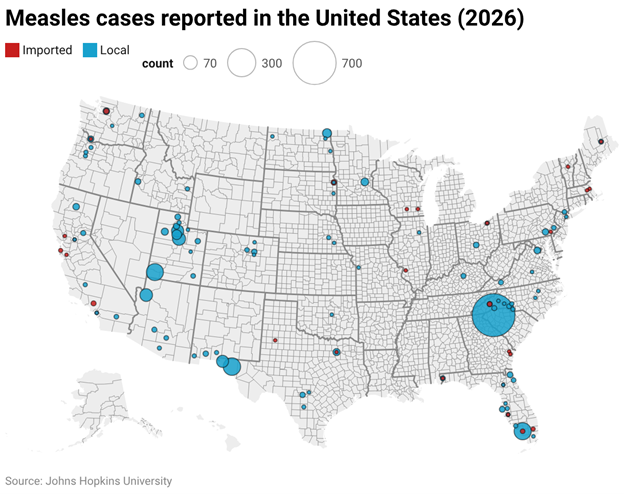
The action couldn’t come soon enough according to state Public Health officials across the country who have been struggling to turn around a Measles epidemic tied to lax vaccination rates.

Continue reading…

Liberal Arts Education As a Counterbalance To Trumpian AI

By MIKE MAGEE

What’s wrong in the social science realm of health? Consider for example the mental health crises affecting teens across the nation, or the sharp decline in relationships and child bearing in young adult men and women, or the attack on vaccine policy by the wayward Kennedy, or the attempted dismantling of ACA health insurance coverage for millions, or the outright cruelty of ICE agents toward citizens and legal aliens, or the callous attitude toward Middle East casualties of soldiers and civilians by the President and the “Secretary of War”… and I could go on.

How should our nation begin to address these grievances? With our grandchildren either in or fast approaching higher education, I’ve been making a related case (as I see it) for the value and importance of a liberal arts education. In a strange way, Trump, in his attacks on the law and democracy, has instigated a resurgence of interest in history, philosophy, religion, political science, literature and the arts – even in this age of fantastical AI exuberance.

My own alma mater has been steadfast in its vision. As they state on their own website, “The liberal arts education at Le Moyne is rooted in the Jesuit tradition, which emphasizes the education of the whole person and the search for meaning and value as integral parts of an intellectual life. This commitment to a liberal arts education allows students to develop a broad range of skills and knowledge, fostering ethical leadership, service, and a commitment to social justice. The college’s Core Curriculum is central to its mission, ensuring that all students receive a thorough education in the liberal arts, which includes knowledge across multiple disciplines and the confidence to engage in intellectual inquiry as members of a global community.”

In simpler terms, LeMoyne’s front page headlines “We strive for greatness always through the eyes of goodness.” I thought of this last week as I watched James Talarico’s speech accepting his Democratic Primary nomination for Senate in Texas. In part explaining his convincing victory numbers as a result of his ability to attract a large turnout of Democrats, Independents, and Republicans, he issued what will certainly be his rallying cry: The people of this state have given this country a little bit of hope, and a little bit of hope is a dangerous thing.”

Who is in danger? Talarico has tagged not only billionaires, but especially Christian Nationalists who he says “divide us by party, by race, by gender, by religion so that we don’t notice that they’re defunding our schools, gutting our health care and cutting taxes for themselves and their rich friends. It is the oldest strategy in the world: Divide and conquer. But we will not be conquered.”

This week CUNY Political Scientist, Peter Beinart, laid out a remarkable opinion piece in the New York Times, leaning heavily on liberal arts to make a convincing case against empire building and king Trump. In opposing  national sovereignty and international law conventions, he spotlights the President’s source of guidance – My own morality. My own mind. Its the only thing that can stop me.”

Beinart bolsters his case against Trump by digging deep into our own history, political science, literature and religion. Included in the journey are President William McKinley (intent on Caribbean Empire building), and his opponent, William Jennings Bryan, who claimed McKinley’s action “is not a step forward toward a broader destiny; it is a step backward, toward the narrow views of kings and emperors.” John Quincy Adams appears in 1821 stating such purposeful aggressions would undermine “the fundamental maxims of American policy (and) would insensibly change (democratic practice) from liberty to force.”

Others come forward as well including Frederick Douglass, Henry David Thoreau, Ralph Waldo Emerson, W.E.B. Du Bois, John Kenneth Galbraith. Taken into account Beinart’s impressive essay and Talarico’s acceptance speech, side by side in a short 24 hours, reminds us all that the soul of our democracy requires health, unity, and the capacity to awaken “our better angels.”

To paraphrase the LeMoyne motto, our greatness must flow from our goodness. The core of a well educated electorate is knowledge, wisdom, and values. In its absence, we are left with ignorance, greed, and hatred.

Mike Magee MD is a Medical Historian and regular contributor to THCB. He is the author of CODE BLUE: Inside America’s Medical Industrial Complex. (Grove/2020)

Will AI Solve Immunology’s Debate Over “Self vs. Non-Self?”

By MIKE MAGEE

In 1872, English mathematician and sometimes poet, Augustus de Morgan, wrote this catching rhyme: “Great fleas have little fleas upon their backs to bite ‘em, And little fleas have lesser fleas, and so ad infinitum.”

This truism about competition among species for access to nutrition and reproduction could have come in handy to Napoleon 60 years earlier when he tragically underestimated his enemies will to live. It wasn’t so much the stubborn Russians as it was microbes that were his undoing.

When he launched his invasion with a staggering force of 615,000 men, 200,000 horses, and 1,372 mobile guns, he appeared unstoppable. But on his way to Moscow, (according to Tolstoy’s account of the misadventure in “War and Peace”) he lost 130,000 men to Shigella dysentery. Confronted with harsh weather and a Russian force that refused to engage in defense of Moscow, Napoleon lost 2/3 of his remaining retreating force to Typhus, carried by Rickettsia prowazekki, housed in body lice embedded in his soldiers rancid clothing.

Under more favorable circumstances, the soldiers immune systems would have been their ally. Human bioengineering has evolved side by side with pathogenic microbes determined to chemically out smart their human hosts.

Humans rely on innate and adaptive mechanisms to detect and destroy pathogens. But to do so while sparing their own cells, they must be able to distinguish self from non-self. And they must adapt and remember, producing long-lived immune cells and protein receptors that allow them to “capture” and destroy repeat offenders.

If the system experiences a breakdown in self-tolerance, the protective processes may over-shoot and result in a chronic inflammatory response that destroys healthy tissues and marks the emergence of auto-immune diseases.

One special circumstance where immuno-tolerance is both normal and essential is maternal self-suppression during pregnancy which allows two separate immunologic organisms to survive intimate relations side-by-side.

Continue reading…

Amodei Believes “AI-Enabled Autocracy” Could Be Imminent

By MIKE MAGEE

Last month, Dario Amodei, CEO of Anthropic, did it again – scaring the bejesus out of societal leaders worldwide with warnings that their grip on security and governance of human populations is dangerously close to AI extinction.

Amodei’s opening paragraph in his article titled “The Adolescence of Technology” wastes no time getting the reader’s attention. He writes, “There is a scene in the movie version of Carl Sagan’s book Contact where the main character, an astronomer who has detected the first radio signal from an alien civilization, is being considered for the role of humanity’s representative to meet the aliens. The international panel interviewing her asks, ‘If you could ask [the aliens] just one question, what would it be?’ Her reply is: ‘I’d ask them, How did you do it? How did you evolve, how did you survive this technological adolescence without destroying yourself?’”

Now, I should be clear. I was already nervous. As a Medical Historian, preparing for a major lecture on the birth of Immunology this Spring, I’ve been researching the field. What am I looking for? The same thing I always find missing when exploring the frontiers of scientific progress – historical context. In most cases, facts and figures abound, but their impact on the complex web of human relations over the years is often missing.

Amodei is attempting to provide that context in real time. Real times include headlines like this one from the New York Times: “ICE Already Know Who Protesters Are “ from AI powered facial recognition technology . But Amodei’s concerns are more fundamental. The challenge for him is the speed of change with generative AI which he clearly states is alarming. As he says, “Because AI is now writing much of the code at Anthropic, it is already substantially accelerating the rate of our progress in building the next generation of AI systems. This feedback loop is gathering steam month by month, and may be only 1–2 years away from a point where the current generation of AI autonomously builds the next.”

Clearly with Musk’s recent DOGE foray in mind, Amodei lays out a pretty plausible modern day vulnerability. He says, “It is somewhat awkward to say this as the CEO of an AI company, but I think the next tier of risk is actually AI companies themselves. AI companies control large datacenters, train frontier models, have the greatest expertise on how to use those models, and in some cases have daily contact with and the possibility of influence over tens or hundreds of millions of users.”

Getting a bit more specific without outright naming Musk-controlled Grok and X, Amodei leaves little doubt who he’s referring to when he says, “Some AI companies have shown a disturbing negligence towards the sexualization of children in today’s models, which makes me doubt that they’ll show either the inclination or the ability to address autonomy risks in future models.”

At one point during the ICE offenses last month, a legal observer in Portland, Maine, filming an ICE agent, was approached by the agent who had just filmed her car and was now filming her face. Asking why he was doing that, the ICE agent replied, “Cuz we have a nice little database and now you’re considered a domestic terrorist. So have fun with that.”

The activities of the past month, and the unprovoked murders of two innocent US citizens make Amodei’s final warning prescient. He says, “Current autocracies are limited in how repressive they can be by the need to have humans carry out their orders, and humans often have limits in how inhumane they are willing to be. But AI-enabled autocracies would not have such limits.”

Mike Magee MD is a Medical Historian and regular contributor to THCB. He is the author of CODE BLUE: Inside America’s Medical Industrial Complex. (Grove/2020)

Indiana – It is the best of times, and the worst of times

By MIKE MAGEE

“Hoosiers receive heroes’ welcome in return to Bloomington” screamed last week’s ESPN headline, as IU claimed top spot in college football nationwide. It’s been awhile since sports elevated that state’s mood.

In his classic review of the famous movie, “The Hoosiers,” Roger Ebert writes, “This is a movie about a tiny Indiana high school that sends a team all the way to the state basketball finals in the days when schools of all sizes played in the same tournaments and a David could slay a Goliath. That’s still the case in Indiana.”

That final sentence came to mind last month, as the Midwestern state with a population of around 7 million (17th in the nation)  punched above its political weight and landed headlines like this one on December 11, 2025 in The Hill “Indiana Senate rejects new House map, defying Trump.”

Some facts were clear: Twenty-one Indiana state senators had joined all 10 Democratic state senators to defeat a proposed redistricting map that would have assured a gain of 2 additional House of Representative seats for Republicans in the 2026 mid-term elections. But most political pundits misread why they did it, and ignored a crucial economic report from 10 months earlier that informed their actions. More on that in a moment.

First a bit of history. A century ago, Eli Lilly Jr. (grandson of the founder of the famous pharmaceutical giant Lilly & Co.) cut a deal with the University of Toronto to be the sole supplier of their life-saving drug – insulin. Headquartered in Indianapolis, Indiana, they were ideally positioned because the state’s three economic pillars were manufacturing, agriculture, and health sciences.

To secure adequate supply of insulin was both a scientific and logistic challenge of historic proportions. Eli Jr.’s focus on line manufacturing helped. Raw material demands required the design of a refrigerated railway support system dead ending at Lilly manufacturing sites. This was made necessary since purifying 8 ounces of insulin required two and a half tons of beef or pork pancreas readily available from state farms. Sourcing the raw materials locally was not a problem. At the time, 86% of the state’s lands were controlled by 195,786 farming families committed to farming (including livestock management and slaughter houses).

Fast forward a century and the state remains heavily dependent on its tripartite pillars – manufacturing, agriculture and health sciences. That was the message broadcast with great political effect on April 15, 2025 in a first ever economic forecast update from Muncie, Indiana, the home of Ball State University and its’ well-respected Center for Business and Economic Research led by Michael J. Hicks, PhD. For over 50 years CBER has published “data-rich, nonpartisan research relevant to communities and businesses throughout Indiana.” Their reputation is built on one word – trust.

Continue reading…