Categories

Category: Medical Practice

A Doctor’s Guide to Botched Executions

By KAREN S. SIBERT

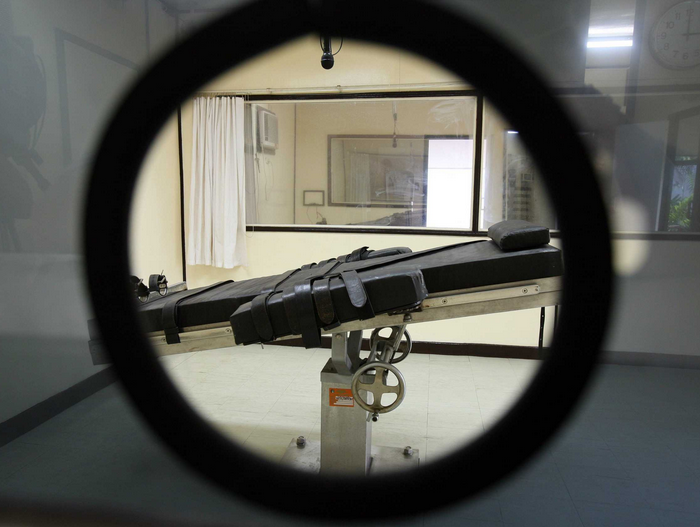
lockett execution chamber
I give what could be lethal injections for a living.

That’s right. Nearly every day I give someone an injection of midazolam, vecuronium, and an IV solution containing potassium chloride–the three drugs in the “cocktail” that was supposed to kill convicted murderer Clayton Lockett quickly and humanely in Oklahoma.

Here’s the difference between an executioner and me. I use those medications as they are intended to be used, giving anesthesia to my patients, because I’m a physician who specializes in anesthesiology. Midazolam produces sedation and amnesia, vecuronium temporarily paralyzes muscles, and the right amount of potassium chloride is essential for normal heart function. These drugs could be deadly if I didn’t intervene.

My job is to rescue the patient with life support measures, and then to reverse the drugs’ effects when surgery is over. The “rescue” part is critical. When Michael Jackson stopped breathing and Dr. Conrad Murray didn’t rescue him in time, propofol–another anesthesia medication–turned into an inadvertently lethal injection.

When anesthesia medications are used in an execution, of course, no one steps in to rescue the inmate. This gives new meaning to the term “drug abuse”. In my opinion, the whole concept of lethal injection is a perversion of the fundamental ethics of practicing medicine.

Not for amateurs

Though lethal injection is supposed to be more humane than the electric chair or the gas chamber, often it doesn’t work as planned. Mr. Lockett died on April 29 after the injection of midazolam, vecuronium, and potassium chloride into his system. It is unclear from media reports how much of which drug he actually received. Apparently, prison staff had difficulty finding a vein.

The drugs were injected, they thought, into the large femoral vein in Mr. Lockett’s groin, which should have killed him within moments.
Continue reading…

The Doctor Crisis

By JACK COCHRAN, MD & CHARLES C. KENNEY

the doctor crisis photoDoctors get blamed a lot these days — blamed for aversion to change, for obstructing innovation, and for being self-centered. This familiar litany asserts that in the nation’s drive to transform health care, physicians are part of the problem.

While it is undeniable that doctors are part of the problem in some places, it is equally undeniable that they are leading innovation in many places and must be part of the solution everywhere.

We may well be in the midst of the most unsettling era in health care and that turbulence is bone-jarring to physicians. We argue that there is a doctor crisis in the United States today – a convergence of complex forces preventing primary care and specialty physicians from doing what they most want to do: Put their patients first at every step in the care process every time.

Barriers include overzealous regulation, bureaucracy, liability burden, reduced reimbursements, and poorly designed care delivery systems.

On the surface the notion of a doctor crisis seems altogether counterintuitive. How could there be a “crisis’’ afflicting such highly educated, well-compensated members of our society?

But the nature of the crisis emerges quite clearly when we listen to doctors. Ask about the environment in which they practice and you hear words such as “chaos,’’ “conflict,’’ and “dysfunction.’’ Based on deep interviews with doctors throughout the country, the research firm Harris Interactive reports that a majority of physicians are pessimistic about their profession; a profession Harris describes as “a minefield’’ where physicians feel burned out and “under assault on all fronts.’’

Have terms this extreme ever been used to characterize the plight of physicians in our nation? Burnout, chaos, conflict, dysfunction, minefield, under assault. How can the nation transform its health care system under such disturbing conditions?

Continue reading…

A Modest Proposal: Charting Day

By JEFF GOLDSMITH

flying cadeuciiAt the end of March, Congress decreed a year-long postponement of the implementation of ICD-10, a remarkably detailed and arcane new coding scheme providers would have been required to use in order to get paid by any payer in the US (“bitten by orca” is but one of the sixty thousand new codes ).

The year postponement gives caregivers and managers a little more time to prepare for a further unwelcome increase in the complexity of their non-patient care activities.

In the spirit of Jonathan Swift, who famously proposed in 1729 that the Irish sell their children as a food crop to solve the country’s chronic poverty problem , I have a suggestion about how to cope with the steady rise in complexity of the medical revenue cycle.

Beginning when ICD-10 is implemented, there should be no patient care whatsoever on Fridays, permitting nurses and physicians to spend the entire day catching up on their charting and documentation, and other administrative activities.

Physicians, nurses, and others involved in patient care already spend at least a day a week of their time on this process now, but it is interspersed within the patient care workflow, constantly distracting clinicians and interrupting patient interaction.

Hospitals are solving this problem with a medieval remedy:  scribes who follow physicians around and enter the required coding and “quality” information into the patient’s electronic record on tablets.   Healthcare might be the only industry in economic history to see a decline in worker productivity as it automated.

Continue reading…

Higher Workloads and Fewer Nurses? Not a Recipe for Patient Protection and Affordable Care.

By MARK GRABAN

flying cadeuciiIn further celebration of Nurses Week, it’s worth discussing this TIME article about the “Killer Burden on Nurses” under the Affordable Care Act.

The point I’m raising and highlighting here is not meant to be political or partisan, but really one about nursing workloads, management decisions, and what’s right for patients.

We’ve seen recently that American healthcare spending is UP about 10%(the biggest increase in spending since 1980) – mainly due to newly insured patients getting care. The point is to get people care and treatment, but maybe the law should have been called the “More People Getting Healthcare Act?” That’s a noble goal.

From the TIME article, an opinion piece written by a nurse from California:

“… I worry that the switch may compromise the quality of the care our patients receive.”

The nurse talks about patients who are sicker due to not getting good healthcare previously. These patients require more attention and more nursing time.

In any workplace, the staffing levels should be set based on the total workload. Using “number of patients” is not a good basis, since the acuity of patients (and the resulting workloads) aren’t equal. Not every patient is the same.

Hospitals, due to other industries, do a really poor job of “industrial engineering” work that would establish the right staffing levels based on workloads.

Continue reading…

A Declaration of Independence Is Only the Beginning

By JOHN HAUGHOM

flying cadeuciiOn April 29, Dr. Daniel Croviotto published an editorial in the Wall Street Journal, “A Doctor’s Declaration of Independence,” in which he argued that it is time to “defy healthcare mandates issued by bureaucrats not in the healing profession.”

Dr. Croviotto does a good job of articulating his frustration with the increasingly burdensome bureaucracy and regulations placed on care. Many physicians and nurses share his frustration. I once did, until I saw a way out of the cynicism and frustration – a way that can improve the quality and lower the cost of care for all Americans.

No matter how misguided we think the federal government is in its electronic health record mandate or other requirements, simply defying mandates as Dr. Croviotto proposes is not  likely to accomplish much. Those who signed the Declaration of Independence knew it was only an initial step toward ridding the country of tyranny. They had to create a new vision for a better, more effective government.

Similarly, the medical profession needs to move beyond cynicism to create a vision for a better, more effective healthcare system.

Continue reading…

Dad, You Have to Inhale

By JAMES SALWITZ

marijuana cancer patientsMy wife calls them “hand-me-ups”…  things we inherit from our kids.  My ex-fashionable shirt that my son wore in college.Our semi-vegetarian diet my daughter adopted in high school. The dog at my feet that came visiting for the weekend, three years ago.

Our lives are enhanced and modified by the most unexpected of teachers, our children. The mentoring of our progeny keeps those of graying years at least partially youthful.  Still, I was astonished to hear this week, the words, “Dad, you need to starting doing drugs.”

The “dad” being addressed is 93 years old and has advancing cancer. He is tired, nauseas, anxious and sleeps poorly.  Though he likely has a number of months to live, he has become withdrawn.  Despite my usual medical brew, his incapacitating symptoms are without palliation.

Dad is miserable.  Enter his daughter with the solution.  The “drug” she is talking about is the treatment de jour, marijuana.

How did this happen?  We raise our kids to be good, honest, mature citizens; we drive them to soccer, suffer through years of homework (do you remember dioramas?), and do the whole college obsessive-compulsive tour thing.  In addition, above all, we beg our offspring to stay away from pot, pills and addictive mind-altering potions.

Now they turn on us, pushing ganja in our time of need. How did we go wrong?  Actually, it is we that missed a great opportunity.

50% of Americans have inhaled marijuana at some point in their lives.  More than 25 million of our neighbors have used it within the last year.  Those that imbibe are of a decidedly younger demographic.  The oldest citizens, especially those of the Greatest Generation, are much less likely to have experience with cannabis.

Fortunately, once again, youth presents the solution.

Continue reading…

The End of Antibiotics. Can We Come Back from the Brink?

By TOM FRIEDEN

Tom Frieden CDCAntibiotic resistance — bacteria outsmarting the drugs designed to kill them — is already here, threatening to return us to the time when simple infections were often fatal. How long before we have no effective antibiotics left?

It’s painfully easy for me to imagine life in a post-antibiotic era. I trained as an internist and infectious disease physician before there was effective treatment for HIV, and I later cared for patients with tuberculosis resistant to virtually all antibiotics.

We improvised, hoped, and, all too often, were only able to help patients die more comfortably.

To quote Dr. Margaret Chan, Director General of the World Health Organization: “A post-antibiotic era means, in effect, an end to modern medicine as we know it.”

We’d have to rethink our approach to many advances in medical treatment such as joint replacements, organ transplants and cancer therapy, as well as improvements in treating chronic diseases such as diabetes, asthma, rheumatoid arthritis and other immunological disorders.

Treatments for these can increase the risk of infections, and we may no longer be able to assume that we will have effective antibiotics for these infections.

Last September, CDC published our first report on the current antibiotic resistance threat to the United States.

The report conservatively estimates that each year, at least 2 million Americans become infected with bacteria resistant to antibiotics, and at least 23,000 die.  Another 14,000 Americans die each year with the complications of C. difficile, a bacterial infection most often made possible by use of antibiotics. WHO has just issued their report  on the global impact of this health threat.

It’s a big problem, and one that’s getting worse. But it’s not too late. We can delay, and even in some cases reverse the spread of antibiotic resistance.

Continue reading…

How Much Will It Cost to Let Me Die?

By JABARIS SWAIN

flying cadeuciiIt was probably the most awkward question I had been asked before, and I did not have an answer…

He was a middle-aged gentleman, neatly dressed—very simple and unassuming. He blended like a lifeless statue in the waiting area. What sparked my notice of him was his accompanying robust file, crammed with familiar pink discharge slips from the ED.

He was clearly what we call a “frequent flyer”, but this would be his first visit in our surgical clinic.

I escorted him into the assessment room, exchanging the usual salutations as he edged unto the exam table, wincing with discomfort. His chief complaint read, “acute abdominal pain and constipation x 1 week.”

Vying to understand more about his issue, I asked, “Sir, how long have you had this problem?” Embarrassed, he lowered his head.

Silence.

I retreated and instead remarked, “Ok. Let’s start from today. Where do you have the most pain?”

Tenderly, his frail digits unbuttoned his shirt, exposing a wasted torso, which hoisted an extraordinarily distended abdomen. It appeared rigid and tense. I reached out to gently palpate it to confirm the realism of my observations. He flinched.  His stoic affect instantly collapsed into an aching frown.

Tears welled in his eyes. Something terrible was going on inside. Cancer.

He needed to be admitted and surgery would be very likely, if not too late. I was aplomb in my explanation of his condition, feeling proud of my thoroughness and precision. Yet, seemingly unengaged, he politely interrupted and asked, “How much will it cost to let me die?”

I paused.  It was probably the most awkward question I had been asked before, and I did not have an answer. During my training, I was taught to order tests wisely, to avoid superfluous exams and to minimize inefficiency of resources; in spite of this, I had not ever stopped to think about cost in this context.

In my mind, it was my duty to provide the best, quality care to extend life, foremost. Yet, his concern was different. How much would it cost to die?

Nothing.

Continue reading…

Doximity Raises $54 Million. But What Value Will They Add?

By JOSH HERIGON

Screen Shot 2014-05-04 at 5.43.36 PMLast week’s news that Doximity has raised another $54 million got me thinking ..

On one hand, I’m glad to see these guys continue to raise money and continue their development.

On the other hand, I’m disappointed that we don’t have a better physician-centric social network. While they have been successful at signing up doctors, it seems (at least anecdotally) few are engaging with the network.  I have connected with many of my classmates and some physicians I know on the network. I have never interacted with any of them through Doximity.

The article quotes LinkedIn co-founder and Doximity board member , Konstantin Guericke:

I think a lot of doctors will have a LinkedIn profile and Doximity profile. But the key is which part is really going to get ingrained in their lives.

The key question is—what value does Doximity provide over other, non-physician centric social networks? More plainly, what is going to make me open up Doximity on my iPhone instead of my favorite Twitter client?

The current answer to that question is: nothing.

In their smartphone app, the news feed features medical journal articles from the likes of NEJM, JAMA, Lancet, etc. It is unclear exactly how these are selected, but quite clear they are not tailored to my interests.  Twitter, on the other hand, provides a constant stream of thoughts and articles related to my interests because of the people I’ve chosen to follow.

Continue reading…

Medical Devices and Patient Safety: A Promising Path Forward

By Daniel, Gardina & Strait

flying cadeuciiIn an era of sophisticated information technology and rapid communication, the medical device community lags far behind other fields in its ability to alert patients about safety concerns.

For example, auto manufacturers and government regulators are able to quickly identify potential safety concerns by linking reports of crashes, malfunctions and defects with individual vehicle identification numbers (VINs).

They can then communicate recalls to affected customers by using their VIN. Manufacturers will issue notifications via mail or e-mail, or offer customers the ability to search the manufacturer’s website using their VIN.

In health care, drugs are tracked using a system established in the 1970s called National Drug Codes (NDCs). The 10-digit NDCs are assigned to all manufactured medications. The code tracks the vendor, product, and package code, which can then be captured in electronic health records and the FDA’s national database.

Unfortunately, we do not yet have a similar national system that can identify and communicate potential concerns for the tens of millions of patients with implantable devices such as pacemakers, glucose meters, artificial joints, and defibrillators.

Patients are bombarded by news stories about device recalls, but unless they have access to information about the exact make and model of their device, they have no way of knowing if they should be concerned. Since most medical device procedures take place in a hospital, a patient’s health care providers may also lack this critical, sometimes life-saving information.

The patient is then burdened with the task of tracking down their specialist or surgeon, in hopes that they documented the specific device information.

Clearly, the current health care information infrastructure does not yet support a robust surveillance system.

Continue reading…