Categories

Category: Medical Practice

More Evidence That Patient Centered Medical Homes Don’t Work

By AL LEWIS

A state the size of Vermont claiming savings of $120,000,000 through a patient-centered medical home (PCMH) program should raise eyebrows.

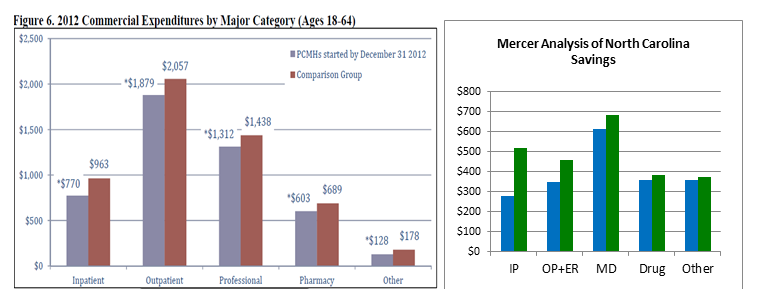
North Carolina made similar claims about its PCMH model, only to have the results so thoroughly debunked that consulting firm, Milliman, was forced to retract its key assertion.

I expect more from Vermont, if only because I’m a Democrat and Vermont has turned so “blue” that in 2008 John McCain received only 10,000 more votes than Calvin Coolidge garnered in 1924.  However, it turns out red states don’t have a monopoly on invalid PCMH data.

A brief summary of the Vermont Blueprint for Health, as described in the enabling legislation, would be: “a program for integrating a system of healthcare for patients, improving the health of the overall population…by promotion health maintenance, prevention, and care coordination and management.”

This is to be achieved by emphasizing the usual suspects — patient-centered medical homes and various support mechanisms for them.   The idea is to achieve “a reduction in avoidable acute care (emergency visits and inpatient admissions).”

Growth in participation has been phenomenal. In 2009, only a few practices and a dozen employees were involved, so we can call that the baseline year.  The report’s findings take us through 2012, by the end of which two-thirds of the state’s primary care practices (104) and population (423,000) were involved, along with 114 full-time employees.

The State’s Analysis

Through the end of 2012, the state — by using the classic fallacy (also embraced by the wellness industry) of comparing participants to non-participants — was able to show savings of $120,000,000 and a double-digit ROI.


Continue reading…

Where the ACOs Are

PETER UBEL

By PETER UBEL

The Affordable Care Act established several programs to promote the formation of Accountable Care Organizations.

These ACOs are a relatively new way of organizing healthcare delivery, in which healthcare providers join together – perhaps across physician groups and hospitals – to care for a population of patients, and are then held accountable both for the cost and quality of the care they deliver to those patients.

This accountability cuts both ways – if they spend too much money on such patients and provide low quality of care, they might face financial repercussions, but if they offer high quality at a lower than expected cost, they might be rewarded with part of those cost savings.

A recent study gives us a glimpse of where the ACOs are forming in the United States. You will see they are not being formed everywhere, but instead are heavily concentrated in the southern and eastern United States:

The study also shows that these organizations are disproportionately made up of large, nonprofit healthcare systems, but not ones classified as public hospitals.

Continue reading…

Hospital Acquired Infections: How Do We Reach Zero?

By PETER PRONOVOST

This week, the U.S. Centers for Disease Control and Prevention issued two reports that are simultaneously scary and encouraging.

First, the scary news: A national survey conducted in 2011 found that one in every 25 U.S. hospital patients experienced a healthcare-associated infection. That’s 648,000 patients with a combined 722,000 infections.

About 75,000 of those patients died during their hospitalizations, although it’s unknown how many of those deaths resulted from the infections, the CDC researchers reported in the New England Journal of Medicine.

On the bright side, those numbers are less than half the number of hospital-acquired infections that a national survey estimated in 2007. And a second report issued this week found significant decreases in several infection types that have seen the most focused prevention efforts on a national scale.

Noteworthy was a 44 percent decrease in central line-associated bloodstream infections (CLABSI) between 2008 and 2012, as well as a 20 percent reduction in infections related to 10 surgical procedures over the same time period.

These infections were once thought to be inevitable, resulting from patients who were too old, too sick or just plain unlucky. We now know that we can put a significant dent in these events, and even achieve zero infections among the most vulnerable patients.

At Johns Hopkins, we created a program that combated CLABSI in intensive care units through a multi-pronged approach—implementing a simple checklist of evidence-based measures while changing culture and caregivers’ attitudes through an approach called the Comprehensive Unit-based Safety Program (CUSP). The success was replicated on a larger scale across 103 Michigan ICUs and then later across most U.S. states, withimpressive results.

These and similar successes have changed caregivers’ beliefs about what is possible, and inspired more efforts to reach zero infections.

What will it take to attain this goal—or at least get much closer?

Continue reading…

How PCORI’s Research Will Answer the Real World Questions Patients Are Asking

By JOE SELBY

As a physician, I know the challenge of helping patients determine which health care options might work best for them given their personal situation and preferences.

Too often they — and their clinicians — must make choices about preventing, diagnosing and treating diseases and health conditions without adequate information. The Patient-Centered Outcomes Research Institute (PCORI) was created to help solve this problem — to help patients and those who care for them make better-informed health decisions.

Established by Congress through the Patient Protection and Affordable Care Act as an independent research institute, PCORI is designed to answer real-world questions about what works best for patients based on their particular circumstances and concerns. We do this primarily by funding comparative clinical effectiveness research (CER), studies that compare multiple care options.

But more research by itself won’t improve clinical decision-making. Patients and those who care for them must be able to easily find relevant evidence they can trust. That’s why our mandate is not just to fund high-quality CER and evidence synthesis but to share the results in ways that are meaningful to patients, clinicians and others.

We’re also charged with improving the methods used in conducting those studies and enhancing our nation’s capacity to do such research.

We will be evaluated ultimately on whether the research we fund can change clinical practice and help reduce the variations and disparities that stand between patients and better outcomes. We’re confident that the work we’re funding brings us and the audiences we serve closer to that goal.

Recently, some questions have been raised in health policy circles about our holistic approach to PCORI’s work. That view holds that direct comparisons of health care options — especially those involving high-priced interventions — should be the dominant if not sole focus of PCORI’s research funding approach as a path to limiting the use of expensive, less-effective options.

We agree that discovering new knowledge on how therapies compare with one another is a critical mandate of PCORI and is essential to improving the quality and effectiveness of care.  However, ensuring that patients and those who care for them have timely access to and can use this knowledge, so that they can effectively apply it to improve their decisions, is also very important.

Continue reading…

Actually, It’s a Great Time to Be a Doctor

By JEFFREY WEISZ

Is this a good time to be a physician? Absolutely! In fact, I believe there has never been a better time to practice medicine. I hold this belief despite the barrage of negative comments and predictions from doomsayers remarking on the sorry state of health care in its current state.

Before I tell you why I’m so optimistic, I’d like to acknowledge one fact: practicing medicine is more complex and difficult than ever, however, this fact doesn’t dampen my enthusiasm. There is no doubt that over the past two decades a great many changes in the health care environment have consumed doctors’ time, distracted us from our core task of providing care, and impacted our incomes.

Meanwhile, patients’ expectations of the health care industry and of their physicians are changing. An increasing number of people want more involvement in their own health care and want to partner with their physician. So it is not hard to understand how practicing medicine can feel more challenging than ever.

For example: results from a national survey reported in the Archives of Internal Medicine in 2012 indicated that US physicians suffer from more burnout than other American workers.

Burnout, in this report, was defined by “loss of enthusiasm for work, feelings of cynicism, and a low sense of personal accomplishment”; 45.8% of responding physicians had at least 1 of these symptoms.

So why am I so optimistic?

Because when I read these survey results, and others like them, bureaucracy and complexity are often cited as the reasons why physicians are unhappy. Not patient care.

While these factors (bureaucracy and complexity) can momentarily take physicians away from their passion of practicing medicine, it is the passion of a physician, precisely, that fuels my optimism for the state of health care today.

Continue reading…

TED 2014: Flip the Clinic!

By MICHAEL PAINTER

First, let’s get the plug out of the way, shall we? Here’s the deal: The Robert Wood Johnson Foundation has a new initiative, Flip the Clinic—and we want you to join us.

We’re launching the new Flip the Clinic site this week. Here’s the trailer. Please take a look, and then let me know what you think:

[vimeo=89722532]

So, what’s with all this flipping business?  What’s all this talk about health conversations?

Continue reading…

The Note Taker’s Dilemma

By SAURABH JHA

The year is 2020, or sometime in the future when the healthcare system is better, much better. Patients have access to their medical notes, are encouraged to read the notes regularly and ask physicians relevant questions. This is to facilitate patient-centered participatory medicine (PCPM), previously known as shared decision making. In fact, note reading by patients is now a quality metric for CMS.

The CEO of the Cheesecake Hospital Conglomeration, one of the hospital oligopolies, has set up a Bureau for Transparency and Protection of Patients from Complex Medical Terminology. The goal is to risk manage troublesome medical writing that could result in poor satisfaction scores, complaint or a lawsuit.

Mr. Upright (MU) is the Inquisitor General for the bureau. He has called the author (SJ), a repeat offender, to his office to discuss elements of his medical record keeping.

Disclaimer: Any resemblance to future events is purely coincidental. The narration is merely a reflection of the author’s paranoid affect and a tendency to believe in conspiracy theories.

MU: Dr. Jha, you’ve been summoned because your open medical notes do not meet the standards for empathy and compassionate care and seem devoid of a reflection on the complex interplay between social determinants of health.

SJ: Has a patient complained?

MU: No. But that’s what the bureau is trying to prevent. We protect patients from physicians. Actually, we protect physicians from their most dangerous enemy: themselves.

Continue reading…

What Makes a Good Doctor? And Can We Measure It?

By ASHISH JHA

I recently spoke to a quality measures development organization and it got me thinking — what makes a good doctor, and how do we measure it?

In thinking about this, I reflected on how far we have come on quality measurement.  A decade or so ago, many physicians didn’t think the quality of their care could be measured and any attempt to do so was “bean counting” folly at best or destructive and dangerous at worse.  Yet, in the last decade, we have seen a sea change.

We have developed hundreds of quality measures and physicians are grumblingly accepting that quality measurement is here to stay.  But the unease with quality measurement has not gone away and here’s why.  If you ask “quality experts” what good care looks like for a patient with diabetes, they might apply the following criteria:  good hemoglobin A1C control, regular checking of cholesterol, effective LDL control, smoking cessation counseling, and use of an ACE Inhibitor or ARB in subsets of patients with diabetes.

Yet, when I think about great clinicians that I know – do I ask myself who achieves the best hemoglobin A1C control? No. Those measures – all evidence-based, all closely tied to better patient outcomes –don’t really feel like they measure the quality of the physician.

So where’s the disconnect?  What does make a good doctor?  Unsure, I asked Twitter:

good doctor twitter

Over 200 answers came rolling in.
Continue reading…

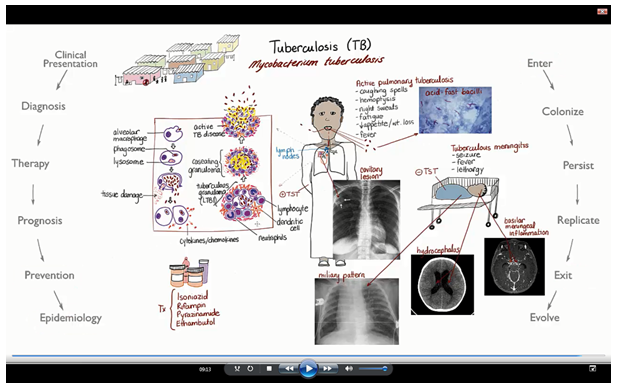
TED2014: Grandmother Avatar with TB Beckons Medical Education Her Way

By MICHAEL PAINTER

Why should I be in the same room with these people?

That’s one of the many smart questions participants posed at a Stanford Medical School meeting I attended last weekend.  If I had been daydreaming (I’d never do that), I might have thought the question was for me. You see, the participants were a handpicked set of national medical education experts, folks nominally from the status quo medical-education-industrial complex—the very thing we’re trying to change.

You might think that they embodied that dreaded status quo.  I’m happy to report they did not—not even close.  I’m also relieved to tell you that the question (in spite of my paranoia) wasn’t for me. Instead, it was one of many challenges these thoughtful, passionate teachers tossed at each other.

“Why are we in the room?” was a challenge to each other. Why and when should teachers be in the same room with the learners?

When you think about it, that’s actually a central question if you’re attempting to use online education to flip the medical education experience.  It’s also a brave one if you’re a teacher: justify the time you spend with your students.

Continue reading…

McNutt-Hadler Credo for Value-Laden Medical Decision Making

By ROBERT MCNUTT & NORTIN HADLER

Robert McNutt and Nortin  Hadler respond to med student Karan Chhabra’s  original post,  “Actually, High Tech Imaging Can Be High Value Medicine” and the resulting discussion thread.

Thank you for your comments. First, we are happy you are so interested in medical practice and how to do it better. Please do not think for one second that our comments are critical of you.

However, since you persist in thinking that money matters, that you have the right to think that way during your care of a patient, and that economic principles help patients, let’s look again at this issue you have raised.

Nearly 20 years ago, Hadler published his first “Four Laws of Therapeutic Dynamics” (JOEM 1997; 39:295-8):

1) .    The Death Rate is One per Person

2) .    Never Poke a Skunk

3) .   There has Never been a Quack without a Theory

4) .   Institutions Die; People Live

Now we present, for the first time ever, the econometric corollaries, the McNutt-Hadler Credo for Value-laden Medical Decision Making:

1) Don’t think of money; think of what the money buys. No patient should be offered a pig-in-a-poke.

2) Don’t think for one moment that medical pricing is rational, let alone market driven. Medical pricing is designed to serve the greed of stakeholders, greed that seems to know no ethical boundaries. Caveat emptor is no match for “common practice” The only way the “consumer” stands a chance is if there are physicians committed to explaining the basis for clinical decisions in an unbiased, transparent, and ethical fashion.

3) If it doesn’t benefit the patient, we don’t care if they give it away – don’t prescribe or order it. (For example, no stable in-patient should have any of the following tests: amylase or lipase; any test for iron deficiency other than the ferritin; CRP, BNP, MRI after a CT of the head, or any chronic care medicine like a statin, iron tablet, heart healthy diet in a cancer patient, vitamin, a blood pressure medicine that costs more than the cheapest alternative, a non-generic medicine that is available in generic form, enteric coated aspirin, or bone scans in women looking for osteoporosis)

Continue reading…