Categories

Category: Health Policy

Growing Up in the Era of Work-Hour Restrictions

By DANIELLE JONES

Danielle Jones

In 2008, the IOM study on resident work hours came out and in the years that followed the Accreditation Council for Graduate Medical Education (ACGME) subsequently implemented a gamut of “recommendations.”

As a medical student, I remember thinking it was a much needed change – why wouldn’t it be a good idea to improve patient safety and decrease resident fatigue?

Alas, as a newly minted intern growing up in the era of work-hour regulations, it’s become apparent that many of these changes may actually make life harder without achieving their main goal of improving patient care.

The 80-hour work week cap is fine; it’s been in effect on its own since 2003 and overall it seems to have made residency more humane. Most programs have found reasonable ways to limit work hours to this full-time-times-two amount, at least when hours are averaged over four-week periods.

However, the additional bullet point “recommendations” from 2010 seem to play out very differently in real life than they do on paper. Many of them seem to be arbitrary lines drawn in political sands hiding behind a facade of patient safety, but that’s another blog for another time.

So, what do the bullet point regulations look like in the hospital?

They look like: Interns can’t work 24-hour shifts. 

So, what used to be a two-and-a-half shift weekend turns into a four shift weekend. At a four intern/year program like mine, that means instead of two people splitting the weekends and having a post-call day after 24 hours on, one intern is committed to night-float six nights/week for a month while the remaining three interns take the three leftover weekend shifts.

The result: Fewer hours at a time in the hospital, but more working days in a row and more days/month away from your family.

Continue reading…

An Unfunded Mandate For Behavioral Health

By EDMUND BILLINGS

flying cadeuciiWhy politics, parity and performance requirements mean behavioral health hospitals should adopt now.

Imagine you go to work one day and your boss says all employees will be evaluated based on the performance of a new set of job skills that require additional training and, perhaps, new computer hardware and software. The boss also announces that some employees will be reimbursed for the cost of acquiring these skills and tools. You aren’t among this privileged group.

In government, this is called an unfunded mandate. The unlucky employee in this case is psychiatric hospitals, who aren’t eligible for Meaningful Use incentives even while Congress and the Obama administration have legislated greater accountability:

A precursor to the 2010 Affordable Care Act (ACA), the Mental Health Parity and Addiction Equity Act of 2008 mandated that insurers must make the financial cost of benefits—co-pays, deductibles, out-of-pocket maximums—equal for psychiatric and physical care.

By making behavioral health an Essential Health Benefit, the ACA requires health plans to cover mental health on par with other types of care.

On October 1, 2012, CMS launched the Inpatient Psychiatric Facility Quality Reporting Program (IPFQR), a pay-for-reporting program in which facilities could lose federal dollars by not providing data on Hospital Based Inpatient Psychiatric Services (HBIPS):

  •  Screening for violence risk, psycho trauma Hx, patient strengths
  •  Hours of physical restraint use
  • Hours of seclusion use
  • Patients discharged on multiple antipsychotic medications
  • Patients discharged on multiple antipsychotic medications with appropriate justification
  • Post discharge continuing care plan created
  • Post discharge continuing care plan transmitted to next level of care provider upon discharge

Whether explicit or implicit, these programs amount to unfunded EHR mandates. How so?

Organizations still on paper records will find it expensive and inefficient to capture events and collect results for both reporting to government and submitting claims to insurance companies. Hospitals will need to train clinicians to document post-discharge continuity of care plans.

They will have to train staff to send plans by snail mail or fax to the provider at the next level. Then they will also need to do chart reviews to assure that all these steps took place and the data is recorded in a spreadsheet or database. Any quality improvement process that requires benchmarking and scoreboarding of performance based on these measures will be a tremendous challenge using paper records.

Continue reading…

Doctor Paul Revere Fails to Light the Fire

By SAURABH JHA

Paul Revere
Writing in the Wall Street Journal (WSJ) Dr. Daniel F. Craviotto Jr. an orthopedist, made a plea to physicians to declare independence from third parties and emancipate themselves from servitude to payers, mandates and electronic health records (EHR).

As rants go, this was a first class rant. But its effect was that of a Charles de Gaulle’s whisper to Vichy France rather than a Churchillian oratory at the finest hour.

The article went viral (it has been tweeted nearly 3000 times), though with little virulence. And it is not WSJ’s paywall to blame.

The author might have assumed that most the healthcare community in general and physicians in particular wish to be free from regulations. I have serious doubts that this assumption is correct in the aggregate. The relationship between regulators and physicians is more complex and symbiotic than it first appears.

Some physicians believe in bureaucracy. Rationalism will march us out of our healthcare wilderness. This belief in scientific managerialism, faith in technocracy, is the new theism. The rationale of the new theists is that regulations fail not because they are inherently useless but because there are so few of them, and even fewer that are actually smart.

Like the first religions started with polytheism, the new believers want more agencies, more alphabet soups, more gods.

Continue reading…

Would a Single Payer System Be Good for America?

By BRIAN KLEPPER

Brian-KlepperOn Vox, the vivacious new topical news site, staffed in part by former writers at the Washington Post Wonk Blog, Sarah Kliff writes how Donald Berwick, MD, the recent former Administrator of the Centers for Medicare and Medicaid Services and the Founder of the prestigious Institute for Healthcare Improvement, has concluded that a single payer health system would answer many of the US’ health care woes.

Dr. Berwick is running for Governor of Massachusetts and this is an important plank of his platform. Of course, it is easy to show that single payer systems in other developed nations provide comparable or better quality care at about half the cost that we do in the US.

All else being equal, I might be inclined to agree with Dr. Berwick’s assessment. But the US is special in two ways that make a single payer system unlikely to produce anything but even higher health care costs than we already have.

First, it is very clear that the health care industry dominates our regulatory environment, so that nearlyevery law and rule is spun to the special rather than the common interest. In 2009, the year the ACA was formulated, health care organizations deployed 8 lobbyists for every member of Congress, and contributed an unprecedented $1.2 billion in campaign contributions in exchange for influence over the shape of the law.

This is largely why, while it sets out the path to some important goals, the ACA is so flawed.

Continue reading…

Medicare Advantage: Moving toward a Better Model for American Health Care

By ROBERT PEARL

Robert PearlDespite the political angst, the doomsday predictions and a very rocky launch, the Affordable Care Act has enabled more than 8 million Americans to acquire insurance coverage through the public exchanges.

Health insurance increases the probability that patients will access the medical care they need. And my colleagues at Kaiser Permanente are already seeing some positive stories emerging as a result.

Beginning in 1978, Medicare beneficiaries had a second option. They could enroll in private Health Maintenance Organizations (HMOs) under a “risk contract” between CMS and the HMOs.

Continue reading…

Button 2.0: Open Access

[youtube]http://www.youtube.com/watch?v=4AU4W8Yi1dk[/youtube]

Currently research is published in journals with expensive subscriptions, which hides knowledge behind paywalls away from the public who paid for it.

How we publish research is broken, but it can be fixed and the Open Access Button is here to help. Open Access has the potential to give everyone free access to the world’s cutting edge research. This will help your doctor save lives, families get access to the latest research on their loved one’s disease, researchers advance our understanding of the world, and students better further their education.

Learn more and contribute to the Indiegogo campaign here: http://bit.ly/1fPHxkO.

Sign up for your Open Access Button at openaccessbutton.org.  

The Canadian Health Care System I Disparaged

By WENDELL POTTER

Screen Shot 2014-05-06 at 6.44.13 PMWhen I recently returned home after a two-week speaking tour of Canada and began catching up on news about Obamacare, I was angry and upset, and not just at politicians and special interests that benefit from deception-based PR tactics.

I was — and still am — mostly angry and upset with myself. And I know I always will be.

Over the course of a two-decade career as a health insurance executive, I spent hours and hours implementing my industry’s ongoing propaganda campaign to mislead people about the Canadian health care system.

We spread horror stories about “rationed care” and long waiting times for medically necessary care. Our anecdotes were not at all representative of most Canadians’ experiences, but we spent millions of dollars to persuade Americans that they were.

At every stop between Halifax and Vancouver last month, I explained how the United States had achieved the dubious distinction of having both the most expensive health care system on the planet and also one of the most inequitable.

While Canadian lawmakers in the 1960s were implementing a partnership between the federal and provincial governments to create the country’s publicly funded universal health insurance system — known as Medicare — our lawmakers in Washington were establishing America’s own single-payer Medicare program, but only for folks 65 and older and some younger disabled people.

Congress also created the federal and state-administered Medicaid program for the nation’s poor.

Ever since, most of the rest of us have had to deal with private insurance companies and pay whatever they felt like charging us for coverage.

Continue reading…

Adventures in Caring and Acting Affordable

By ROB LAMBERTS

Optimized-roblambertsnew

I’m back.  I’m recovering right now from trauma related to the Affordable Care Act.  I’m OK, but probably a few months until fully recovered.

Some would think that since I no longer accept money from insurance companies, the Affordable Care Act would have less of an effect on me.  Those folks may be right in how it directly impacts my practice (since I don’t know the actual impact on other doctors, it’s not easy to compare), but there has been a significant impact.  I’ve got plenty of ACA stories.

But that’s not what I am going to discuss in this post.

My personal adventures with this law are far more interesting from the other side of the insurance card: the health care consumer (AKA patient).  It has been quite a ride — one that has not yet reached its destination.

CHAPTER 1: December 9, 2013

Being the adventurous guy I am, I thought I’d give the Healthcare.gov website a whirl.  Expecting the worst, I set aside a lot of time for the experience.  It was actually quite a bit easier than advertised.  My family is as follows:

  • Me – Age 51, healthy
  • Wife – Around my age, but actual age disclosed only for legal reasons.
  • Child 1: Son, 21 years.  College grad but living at home for now.
  • Child 2: Daughter, 20 years.  In college
  • Child 3: Son, 18 years at time of application.  In college.  Birthday later in December.
  • Child 4: Daughter, 14 years.

I submitted the information about whether any of us smoke (no), any of us are pregnant (no), and how much money we earn (not much, as I am starting a new business).  I immediately got the following eligibility notice.

Continue reading…

So What Do the Expanded Enrollment Numbers Mean?

By PAUL KECKLEY

State enrollmentLast Thursday, HHS released the final enrollment stats for health exchange enrollment for 2014.  Here’s what we learned:

  • 8.1 million enrolled in a plan in the Health Insurance Marketplace. 3.8 million (47% of total) since the end of February including 1.2 million in the much-watched 18-34 age cohort.
  • 54% are female; 28% are between the ages of 18-34; 63% are White, 17% Black, 11% Hispanic, 8% Asian/other.
  • 20% chose a bronze plan, 65% chose silver, 9% gold, 5% platinum and 2% catastrophic. Note: At the silver level, individuals who earn less than 250% of the federal poverty level — ($29,175 for an individual, or $59,625 for a family of four) — are eligible for assistance for out-of-pocket costs. 85% who picked an exchange plan qualified for a subsidy: 82% in the 14 state-run exchanges and 86% in the federally-run exchange.
  • Young adults 18-34 were 83% of those applying for the catastrophic coverage.

Continue reading…

What Healthcare Can Learn from Pixar’s Braintrust

By KATIE MCGRAW

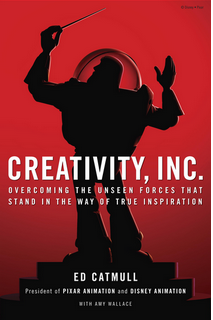
Screen Shot 2014-05-02 at 7.55.16 AMI am reading Creativity, Inc. right now by Ed Catmull, the president of Pixar Animation and Disney Animation.

One particular quote by Catmull that has stuck with me personally over the last few days is this:

“At some point, every Pixar movie sucks.”

Which got me thinking – are we in the “suck” part of transforming healthcare right now?

In my opinion, all roads lead to yes.  Still, I don’t want to dwell on the suck part, I want to focus on how one of the world’s most innovative companies, Pixar, transforms their “ugly babies” (mediocre ideas) into something magical (a la Toy Story 2 or my personal favorite, Up) – and how the healthcare industry can learn fromPixar’s “Braintrust” model.

Forget that it’s cliché – celebrate failure

One of the key things that make the Braintrust at Pixar unique is the fact that candor and honesty are truly placed on a pedestal.  More so, failure is celebrated to a certain degree in the culture Catmull outlines.

He writes, “If you aren’t experiencing failure, then you’re making a far worse mistake: You are being driven by the desire to avoid it.”

Which leads me to something failure related that many in the healthcare industry have debated – whether the government did the right thing by incentiving providers to adopt electronic health records (EHRs).  I think many would agree that the answer to that is no.

Instead of touting the percentage of organizations reaching certain stages of meaningful use attestation, would the government’s honest admittance of a certain degree of failure provide a chance to successfully redirect efforts?

I think yes.

Yet, due to the risk adverse nature of the healthcare industry and the engrained fear of failure in all of us, we (not just government) are all too often guilty of pushing forward with similar mediocre ideas merely to see them through when they may have been better served by being put to rest.

Continue reading…