THCBist
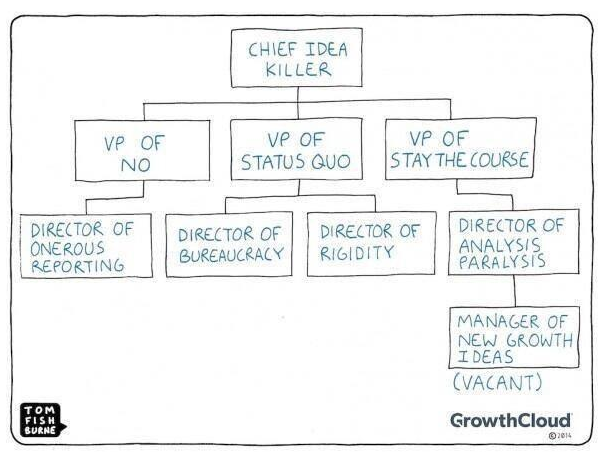
HAT TIP: Mr. Nosta

THCBist
HAT TIP: Mr. Nosta
By ROBERT ARKIN
ROBERT ARKIN and JITEN CHHABRA, MD
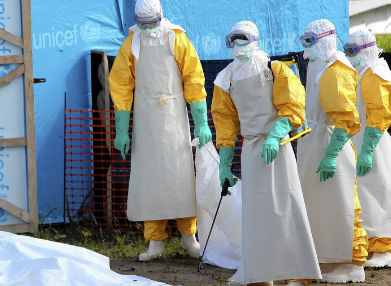
Living in Atlanta and working within the healthcare delivery innovation community, the mounting Ebola outbreak taught us all how quickly the “global” can become local.
For a healthcare system threatened by infectious disease, complex chronic illness, environmental and population management issues, the outbreak also reinforces how new technologies are advancing patient and caregiver safety, prevention, patient monitoring, diagnosis and even treatment.
The answer, through non-contact medicine, is literally in the airwaves.
Researchers at Stanford are pursuing the combined use of laser and carbon nanotubes to provide a more detailed view of blood flow in the brain – down to single capillaries – to increase the understanding of cerebral-vascular disease beyond the imaging provided by CT scan or MRI.
MOTION PICTURES
Required viewing.
Hat Tip: Lucien.
ART CAPLAN, PhD
 Why are they so afraid of public health types who want to do something about the carnage caused by guns in America?
Vik Khanna is the latest man with a gun to write squealing in terror before the kale crunching, fitbit wearing hordes of public health types who he is somehow sure are out to disarm him and, even more hilariously, have any chance of doing so.
Vik, buddy, no one and especially the roughly 28 folks in public health not completely distracted by their lack of funding and inability to secure tenure is capable of doing anything that will pry your gun from your warm-blooded grip. There is no political movement to take away anyone’s guns. The NRA is the mightiest lobbying outfit in these United States and the best Mike Bloomberg or Bill Gates are going to be able to do is to get the anti-gun lobby a few more op-eds and soundbites.
Vik stop being afraid of your critics. You hold all the bullets er … cards. Time to think harder. Do public health folks have anything to offer that might reduce the mayhem while letting you hunt deer or shoot partridge or blast targets or whatever it is you and your son like to do with your guns?
Well yes in fact there are some things from the minds of the unarmed weenies of public health worth your consideration and that of your open-carry pals.
VIK KHANNA

I am a public health professional, educated at the vaunted Johns Hopkins University Bloomberg School of Hygiene and Public Health. I like guns, and I believe the Second Amendment clearly secures the rights of individuals to own firearms.
You read that correctly. I am a public health professional.
And I like guns.
This make me a heretic in American public health, where embracing firearms and the rights of gun owners is a gross violation of orthodoxy.
As a society, our focus on guns and not gun users derives from the shock of mass killings, such as those in Newtown, CT, Aurora, CO, Virginia Tech, and Norway, which has some of the strictest gun control laws on the planet. Mass killings, however tragic, get distorted by saturation media hysterics and 24-hour political grandstanding. What gun opponents refuse to discuss is the precipitous fall in violent crime and deaths by firearms over the past 20 years, and how it coincides with an equally dramatic increase of guns in circulation in the US.
While that isn’t cause and effect, the association is certainly curious.
In 2013, the Institute of Medicine, at the behest of the Centers for Disease Control, produced a report on firearms violence that has been ignored by the mainstream media. The upshot: defensive use of firearms occurs much more frequently than is recognized, “can be an important crime deterrent,” and unauthorized possession (read: by someone other than the lawful owner) of a firearm is a crucial driver of firearms violence.
That report went away for political reasons. Translation. Nobody wanted to talk about it because it raised more questions than it answered.
 By KAREN DESALVO
The question isn’t whether or not we will have another disaster – it is just a matter of when, where and how severe it will be. The recent earthquake in Northern California, centered near Napa, serves as a reminder that we must be prepared for the unexpected no matter where we live.
Northern California’s largest quake since 1989 happened in a large state where ONC has been working for the past year to ensure health data access every day and especially during disasters. In fact, in April of this year, we issued an assessment on available opportunities to address potential disasters in California and along the Gulf Coast.
Based on those assessments and our expectations of a catastrophic event in California, ONC started working with state emergency medical services officials last year to begin connecting the state’s 35 health information exchange organizations (HIEs) and EMS organizations. This effort was launched to help ensure health data access during emergencies.
The program is working on a pilot project involving several counties in California. However, the Northern California earthquake reminds us that there is much work to do, and it must happen faster statewide and nationwide. We simply cannot make assumptions about how best to prepare for emergencies. In recognition of the importance of this initiative, the HHS Idea Lab awarded a joint ONC/ASPR proposal for the inaugural HHS Ventures Program. The team has been actively engaged in this project as well as other ways technology can improve the routine delivery of care and disaster response – all in an effort to create more resilient communities.
By CECI CONNOLLY
 While fierce debate continues to envelop much of the Affordable Care Act, financial data for many of the nation’s health systems reveal one clear fact: the optional Medicaid expansion has resulted in hospital haves and have nots.
An analysis by PwC’s Health Research Institute (HRI) of newly released earnings and patient volume data shows a clear financial split between healthcare providers operating in states that expanded Medicaid and those that have not. The law as written would have provided Medicaid coverage to every American earning less than 138% of the federal poverty level ($16,105 for an individual). But a June 2012 Supreme Court ruling made the expansion optional for states, creating a patchwork of coverage.
Health systems and physician groups delivering care in the 26 states and the District of Columbia that have embraced the federally-funded expansion have reported a significant rise in patient volumes and paying consumers and a measureable reduction in uncompensated care levels.
This year alone LifePoint Hospitals has seen a 30.3% reduction in its uninsured and charity care patients, according to filings with the Securities and Exchange Commission. Tenet Healthcare, which operates in five Medicaid expansion states, saw uninsured and charity care admissions decline by 46% in the expansion states, coupled with a 20.5% increase in Medicaid inpatient admissions in those same states, according to an HRI analysis which will be released next week.
In all, HRI analyzed financial data from the nation’s five largest for-profit health systems—HCA Holdings, LifePoint, Tenet, Community Health Systems and Universal Health Services, representing 538 hospitals in 35 states. Our team also reviewed data from several mid-sized hospitals, government reportsand industry surveys.
By TIM MALIYIL
 In the past few years, we’ve seen headline after headline marveling at the advancements of medical technology. From wearable tech and micro sensors to 3D printing and health-oriented apps, it’s evident that technology and medicine have merged into an industry that’s pushing healthcare to a new level.
Yet many in the health tech industry are also voicing concerns about government regulators and their standards for healthcare technology. Some have even gone as far as accusing the FDA of “stifling” the creativity of healthcare tech and hindering the value these devices and apps could bring to the public.
In early 2014, legislation was introduced in an attempt to redesign the regulatory framework for certain types of technologies and lessen the FDA’s control over this growing industry. But are the FDA’s standards and actions so bad?
I’m in the tech field myself, and while I’ve heard many arguments against the FDA’s regulations, I strongly feel that it’s completely within its rights as a regulatory agency to place limits on medical technology. The FDA’s standards are put in place to protect consumers and to correct disingenuous manufacturer claims — an alarmingly frequent trend in today’s digital world.
By RICHARD GUNDERMAN
 Celebrating its 40 anniversary this year, Robert M. Pirsig’s Zen and the Art of Motorcycle Maintenance bears several distinctions. It is listed in the Guinness Book of World Records as the eventual bestseller that was rejected by more publishers than any other, 121. It went on to sell more than 5 million copies, making it the most popular philosophy book of the past 50 years. And it focuses on a truly extraordinary topic, which its narrator refers to as a “metaphysics of quality.”
Quality is a hot topic in healthcare today. Hospitals and healthcare systems are abuzz with the rhetoric of QA and QI (quality assessment and quality improvement), and healthcare payers including the federal government are boldly touting new initiatives intended to replace quantity with quality as the basis for rewarding providers. Yet as Pirsig’s narrator, Phaedrus (see Plato’s dialogue of the same name), comes to realize, quality is very difficult to define.
In fact, giving an account of quality is so difficult that it drove Zen’s author mad. And this is a man whose IQ, 170, would make him one of the most intelligent people in any health system. The problem, of course, is that there is a big difference between intelligence and wisdom, and in the quest for wisdom, mere intelligence often leads us dangerously astray. Something similar is happening in healthcare today, where schemes to improve quality often precede sufficient efforts to understand it.
For example, we seek to gain greater control over healthcare outcomes through measurement, only to discover, to our chagrin, that people are massaging the data to meet their numbers. We create new programs intended to increase patient throughput, only to discover unintended perverse effects on the quality of relationships between patients and physicians. Initiatives intended to reduce error rates turn out again and again to stifle innovation.Continue reading…
By DOUGLAS NAEGELE, DAVID BLACKBURN & ERIC KLOS
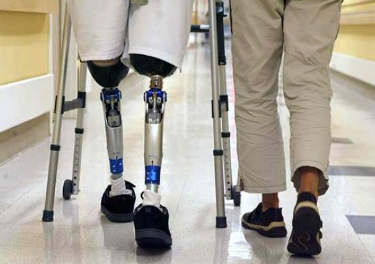
Earlier this month, the U.S. Senate passed a Department of Veterans Affairs health reform bill in response to scandals in patient care at VA centers. The $16.3-billion bill,signed by President Barack Obama, includes measures that will attempt to overhaul information technology and introduce telemedicine procedures at VA clinics and hospitals.
But who’s going to implement these reforms? Infield Health President Doug Naegele talked with G2Xchange Health Cofounders David Blackburn and Eric Klos to understand how the bill might create new opportunities for health entrepreneurs.
Can you talk for a minute about how some of the bill’s provisions make room for entrepreneurs?
This bill has a number of specific information technology mandates for the VA that are ripe for innovation. Many of the mandates are a direct response to excessive wait times, the need for information sharing when our veterans access care outside the VA, and the gaming that was done by VA staff to hide wait time issues at VA facilities. Three examples of opportunity areas for entrepreneurs include:
1) Digital Waiting List – You may have seen billboards on the highway that show the Emergency Room wait time at a local hospital. This is an example of the type of transparency that would permit veterans to monitor the average wait times by facility and type of care.
2) The VA has 90 days to establish a system to monitor and issue Veterans a “Veterans Choice Card,” which will facilitate the receipt of care from non-VA health providers.
3) Data for patient safety, quality of care and outcomes must be extrapolated from the existing VA electronic health records (VistA) and published as a comprehensive database within 180 days. This data must be “fed”’ into the HHS Hospital Compare website. Again, transparency is a key driver for the VA.


THCB's Podcasts
Listen to them on Itunes or Spotify



