Categories

Category: Medical Practice

The Data Response Curve (In Honor of the Dose Response Curve)

By JORDAN SHLAIN


Data Response Curve

All medical students learn about the dose response curve in pharmacology lectures. The dose-response curve informs us of how we should dose a medication in the context of its efficacy and its toxicity. Too little medicine won’t have the desired effect, and too much medicine can be toxic.

In the era of digital health, data have become the new “big pharma,” and we are facing the emergence of a data-response curve in which access to too little data is inactionable, and access to too much data can be overwhelming. Digital health devices abound today, and has enabled quantification of nearly every health and wellness metric imaginable. Sadly, in our exuberance about these new sources of data, we often conflate “more data” with “better data.”

In the era in which data have become the booming commodity of exchange in healthcare, we describe an emerging data-response curve. Large data sets can be at best clarifying or at worst self-contradictory. Too little data on the data-response curve, as with medication dosing, can be insufficient for effective action or decision-making. Too much data can be toxic to the user such as the physician, leading to poor decisions or worse, to analysis paralysis.

We live in a world of exploding data, and we need to be thoughtful. Medicine is a people business in need of data, not a data business on need of people. In reductive form, all humans make decisions based on inputs (data) from their environment and on individual analysis of the data in the form of non-linear, non-quantifiable perception. When we as doctors, policy-makers, or simply as human beings receive these inputs, one of three things happens: 1. We make a decision to do something (for example a treatment decision based on abnormal data), 2. We make a decision to do nothing (for example, normal data which we believe requires no action), or 3. We need more data in order to make an informed decision to do item #1 or item #2. More does not necessarily equal better data. More data is simply more.

Better data are actionable data wrapped in the context of the patient and the patient’s condition. Imagine each piece of objective data connected to concurrent subjective data, and surfaced in the context of a specific condition relevant to the patient. HealthLoop enables patients to generate contextual objective data married to their subjective symptoms and served to a clinician in an actionable context. High signal and low noise are the digital health equivalents of on the dose-response curve of a favorable therapeutic window.

See where some folks live on the Chart. Where do you live?

What PHR Should I Use? It’s Complicated.

By LESLIE KERNISAN

Leslie Kernisan new headshotA friend called me the other day: he is moving his 93 year old father from New England to the Bay Area.

This is, of course, a relatively common scenario: aging adult moves — or is moved by family — to a new place to live.

Seamless transition to new medical providers ensues. As does optimal management of chronic health issues. Not.

Naturally, my friend is anxious to ensure that his father gets properly set up with medical care here. His dad doesn’t have dementia, but does have significant heart problems.

My friend also knows that the older a person gets, the more likely that he or she will benefit from the geriatrics approach and knowledge base. So he’s asked me to do a consultation on his father. For instance, he wants to make sure the medications are all ok for a man of his father’s age and condition.

Last but not least, my friend knows that healthcare is often flawed and imperfect. So he sees this transition as an opportunity to have his father’s health — and medical management plan — reviewed and refreshed.

This last request is not strictly speaking a geriatrics issue. This is just a smart proactive patient technique: to periodically reassess an overall medical care plan, and consider getting the input of new doctors while you do this. (Your usual doctors may or may not be able to rethink what they’ve been doing.) But of course, if you are a 93 year old patient — or the proxy for an older adult — it’s sensible to see if a geriatrician can offer you this review.

Continue reading…

Is the Patient the One With the Disease?

By RICHARD GUNDERMAN

Screen Shot 2014-08-21 at 11.45.17 AM“The patient is the one with the disease.”  This medical aphorism, often quoted as rule number four from Samuel Shem’s 1978 novel, The House of God, has probably been around as long as medicine itself.  Its point is that doctors need to learn to accept their own vulnerability and fallibility before they can devote themselves fully to the care of their patients.  And so long as medicine was built on the relationship between two parties, patients and doctors, the rule worked reasonably well.

More recently, however, the party is being transformed into a crowd.  A third player is increasingly encroaching on the doctor-patient relationship, and more and more doctors are beginning to suspect that it may be the vector of much of contemporary healthcare’s pathology.  Who is the third party?  Its precise identity is often difficult to pin down, but its seat in the doctor’s office and at the patient’s bedside is often occupied by a hospital, a health insurer, or a government agency.

This third party usually does not see individual patients.  Instead it sees aggregates, such as rates of mortality, disease incidence, and the utilization rates of particular tests, procedures, and pharmaceuticals.  It tends to be particularly interested in parameters such as efficiency, safety, cost, and revenue.  Because it is largely blind to individuals, however, its risk of developing certain disorders is dramatically increased.  And when it falls ill, both patients and doctors suffer.

Before patients and doctors can respond effectively to such pathologies, they must first recognize that they exist.  One of the first steps in recognizing a disorder is applying a name to it, and one physician who has taken up this challenge is Adam Ratner, MD, one of the founders of the San Antonio-based non-profit, The Patient Institute.  Ratner, who has been struggling to clarify the nature of these pathologies for many years, believes that healthcare is in the midst of an unrecognized epidemic.

Continue reading…

CDC Laboratory Guidance on Ebola

By TOM FRIEDEN

Tom Frieden optimizedFor more than four decades, Ebola virus had only been diagnosed in central or eastern Africa.

Then late this past March, the first cases of Ebola began appearing in a surprising part of the continent. The Ministry of Health in Guinea notified WHO of a rapidly evolving outbreak of Ebola virus disease. The outbreak in Guinea was the first sign the virus had made the jump across the continent.

Ebola then spread quickly to Sierra Leone and Liberia, and then to Nigeria.

As the world learned of the cases, CDC began receiving questions from American hospital labs. They were looking for guidance on how to handle testing for patients who had recently returned to the U.S. from West Africa with potential Ebola symptoms.

If U.S. hospitals were to run laboratory tests on these patients, how could they be sure their staff could safely handle materials that might contain this dangerous virus? Did they need the kind of personal protective equipment they saw CDC scientists using when they were testing for Ebola?

Continue reading…

Should We Send Docs to Tech School?

By BILL CROUNSE

Tech Skool

An article in Information Week caught my eye recently . It reviews a new program offered by Texas A&M with support from Dell to help medical students and other healthcare professionals “come to terms with  the ways technology is changing their jobs”. The article, Doctors Can Go Back to Tech School, says Texas A&M will launch its new health technology academy later this year as part of its continuing medical education program.

Now, don’t get me wrong. I’m all for education and career improvement. I’m just not sure that the best way to improve Health IT is to get more physicians trained in IT so they can, as the article suggests, move into IT roles. How about giving full time clinicians who have an interest in improving Health IT some extra support and time so they can help those who work in IT better understand what clinicians need to do their jobs efficiently and safely? How about just a little paid time away from the daily treadmill of patient care to educate IT about the nuances of medicine and clinical workflow? I believe understanding that would do more to help IT deliver better solutions.

Over the course of my career, I’ve been many things. First and foremost, I am a physician. Only a true clinician understands how clinicians think and work. For many years, I continued to practice even when it no longer made a whole lot of sense with regards to my income or available time. I was a biology major in college. I went to medical school and did a residency in family medicine. I never had any formal training in either business or technology. I learned the ropes by doing. It was often trial by fire. I’ve had my share of success as well as a few failures along the way. When I advanced into the role of a hospital CIO and CMIO, it wasn’t because I knew tech. When my then CEO asked me to step into the CIO role, I’ll never forget what he said to me. He said, “I want to put a civilian in charge of the military”, meaning a doctor in charge of a department that existed to serve clinicians and their patients but had become a renegade army running out of control and way over budget.

Continue reading…

An Open Letter to Primary Care Physicians

By JACK COCHRAN & CHARLES KENNEY

Screen Shot 2014-08-19 at 9.52.07 AM
Dear Doctor,

The future is in your hands.

You have the opportunity to make primary care better.

More efficient.
More accessible.
And more affordable.

We know you and other primary care doctors have more responsibilities than ever. But you also have great influence, along with the ability and opportunity to change this country’s health care system for the better.

Primary care is essential to the quality of health care, and we need you now more than ever.

Maneuvering the Minefield

According to research firm Harris Interactive, “the practice of medicine is … a minefield. … Physicians today are very defensive – they feel under assault on all fronts.’’* Harris questions, “how much fight the docs have left in them. Some are still fired up … while others have already been beaten down.’’

Those who feel frustration, anger and burnout say they are squeezed by administrators, regulators, insurance companies and more. They worry about the possibility of a lawsuit that could destroy your career.

The question is: What can be done about it? Some of you may choose to remain in the status quo. Some of you have chosen to retire early or otherwise leave the field of medicine entirely. Yet some of you have said enough is enough and found specific solutions that mark a pathway forward. You sought – and found – specific solutions that mark a pathway forward.

If you’ve rejected the status quo and joined your fellows in search of innovations from other practices that you have applied at home, congratulations. You’re a physician leader who’s doing great things for your patients, your colleagues and yourself. You are undoubtedly more satisfied in your work than before, and you are quite likely providing better care.

Continue reading…

Why Doctors Shouldn’t Be Healers

By ROB LAMBERTS

Screen Shot 2014-08-16 at 10.04.17 AMIt’s a seductive idea. We doctors possess knowledge and experience which can not only help people, but can save their lives. We get opportunities to be the right person at the right time to offer the right help that makes all of the difference. It’s one of the greatest things about our profession. It’s also one of its greatest traps.

I’ve heard many doctors refer to themselves as “healers,” as if we have some special power to bring about healing in our patients. This idea confers some sort of a higher status and originates, to some, from a “higher calling” to a more noble life. Again, this is a logical step, in that we have opportunities on a regular basis to help and even save the lives of people. It’s natural to believe that somehow the healing power comes from our touch, or even from our knowledge.

It doesn’t. I am not a healer.

Healing is what the patient does, not the doctor. As a physician, I am certainly one who can help the patient find a faster road to healing, but I don’t heal. I help.

Why am I taking the time to talk about this? Why get stressed out over whether I am a helper or a healer? I think that the belief in doctors as healers causes significant harm to both doctors and patients, and that getting a better perspective about the roles of each will greatly improve the care given. Here’s why I believe this is a topic that needs addressing:

1. Doctors Often Fail at Healing (And Will Always Ultimately Fail)

There are many patient problems that do not get better, despite my best efforts. There are countless pains I can’t remove, and many problems I do not solve. Even when I succeed, the success is always temporary, as a new problem will eventually come back. And if healing is our ultimate goal as physicians, we all are total failures, as all of our patients eventually die. If healing is held as our goal, we fight a losing battle. We are the soldiers in the Alamo, offering impotent resistance to an overwhelming force.

Continue reading…

How Effective is CER?

By ROBERT DUBOIS

flying cadeuciiHaving the best evidence at hand is vitally important for making health care treatment decisions. But even when the right—or best—information is available, it isn’t always put to use in clinical practice.

Why? Although we are getting better at generating evidence, we’re still not doing a great job of using it.

Our progress in creating a robust pipeline of comparative effectiveness research (CER) is clear. By 2019, the Patient Centered Outcomes Research Institute (PCORI) is expected to receive an estimated $3.5 billion from the PCOR Trust Fund to fund CER. CER is not new, but the investment in PCORI represents a national appetite for a robust and reliable queue of research to overcome one of the greatest perennial challenges in health care delivery—knowing what works, for whom it will work and under what conditions.

CER offers every provider, patient and payer the promise of better care, yet its impact on patient outcomes remains on the horizon, rather than a reality in health care settings today. Why? Research published recently in the American Journal of Managed Care suggests that changes are needed in order to see more consistent translation of research findings into clinical practice. In short, at the moment, we have a hard time using what we learn from CER.

This research examined how major CER studies have impacted care. We evaluated real-world utilization trends before and after a) publication of CER findings and b) the release of relevant clinical practice guidelines (CPGs) from four high-profile CER studies published within the last decade.

The research we examined tells the story. Under the microscope were four major studies, including: PROVE-IT, an examination of cholesterol-lowering treatment strategies from 2004; MAMMOGRAPHY WITH MAGNETIC RESONANCE IMAGING (MRI), a comparison of diagnostics to detect breast cancer from 2004; SPORT a comparison of surgical and non-operative treatments for herniated disks from 2006; and COURAGE, a comparison of percutaneous coronary intervention (PCI) to optimal medical therapy (OMT) for people with coronary artery disease, from 2007.

These studies delved into pressing therapeutic questions, and the findings of each study revealed new thinking in optimizing care for patients. But, despite the shifts in care that could have—or should have—occurred, our analysis revealed no clear pattern of utilization in the first four quarters after publication. Even after the studies were incorporated into CPG, we were not able to consistently find changes in utilization or clinical practice.

Continue reading…

Informed Consent 2.0

By JOSEPH SMITH

Screen Shot 2014-08-14 at 2.06.08 PM

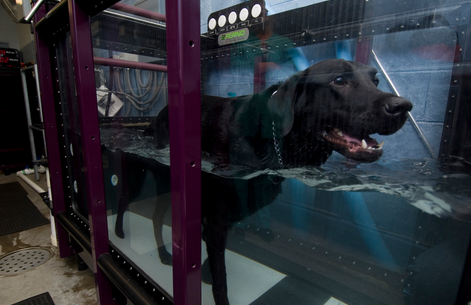
Is healthcare going to the dogs?  In at least one way, it probably should.

While not often spoken of together, physicians and veterinarians share an otherwise unique position of helping people make healthcare decisions in the awkward and charged space between risk, benefit and cost.  Both share an ethical requirement to provide the information necessary for informed decision making. Before starting a treatment or procedure, patients (and pet owners) need to understand the potential risks and benefits of their care, as well as the reasonable alternatives.

But veterinarians often share some other important information, information that physicians seldom share, or even know – that being: exactly what will it cost.

When our family dog recently became very sick, my veterinarian shared not only about the diagnosis, her recommended treatment, its risks, benefits and the plausible alternatives, but she also provided a detailed estimate of what Cosmo’s care was going to cost me.

Isn’t it crazy that when it comes to our own healthcare, we don’t get the same information?

Continue reading…

A Time For Revolutionary Thinking

By JOHN HAUGHOM

John Haughom MD whiteWe need to design a system of health care that optimally meets the country’s needs while also being affordable and socially acceptable. Clinicians should be at the center of this debate if care delivery is to be designed in a way that puts quality of care before financial gain.

This challenge is too important to be left to politicians and policymakers. There is an urgent need for clinicians to step up, lead the debate and design a new future for health care. Placing professional responsibility for health outcomes in the hands of clinicians, rather than bureaucrats or insurance companies with vested interests, must be an ambition for all of us. We need to find the formula that meets the needs of the patients and communities we serve. A sincere collective effort by committed clinicians to design an effective system will lead to a health care system that has a democratic mandate and the appropriate focus on optimizing the outcomes patients and society need.

As clinicians enter the debate, they should keep three things in mind.

Promote the leadership role of clinicians

We need to help politicians and policymakers recognize the role of clinical leaders in shaping a transformed but effective health care system. Clinicians must redefine the debate so that it focuses first and foremost on patients and health outcomes. Cost effective care can and should be a byproduct of optimal care. Accomplishing this will provide a strong common purpose for efforts to address the challenges of designing outcome-based funding structures and improving access to care.

Continue reading…