Categories

Category: Medical Practice

What Happened at Yorkville Endoscopy?

By KAREN SIBERT

KAREN SIBERT, MD

Screen Shot 2014-09-23 at 8.19.25 AM

The ear, nose and throat specialist who treated comedian Joan Rivers on August 28 has been identified as Dr. Gwen Korovin, a prominent New York physician who is known as a voice doctor to many entertainers and Broadway stars including Hugh Jackman and Julie Andrews.

With a physician who is an expert in airway anatomy at her side, and all the technologic advantages of a modern clinic in Manhattan’s upper east side, the 81-year-old Ms. Rivers must have anticipated an uneventful procedure. Instead, she stopped breathing and suffered cardiac arrest. The question remains:  What went wrong?

Credentials questioned

Several sources have reported that Dr. Korovin had not completed usual credentialing procedures at Yorkville Endoscopy, and did not have privileges to do anything but observe on the day Ms. Rivers was treated.

In fairness, the credentialing process at a hospital or ambulatory surgery center (ASC) simply reviews documentation that the physician is qualified to perform procedures, and grants the physician privileges to practice there. Physicians choose where they want to work, and don’t necessarily maintain privileges at more than one hospital or ASC.  A lack of privileges doesn’t imply a lack of experience or training; it simply means that the physician hasn’t gone through credentialing steps at that facility.

Continue reading…

Help the Doctor

CHARLES KENNEY and JACK COCHRAN, MD

Jack CochranIn recent weeks and months a number of articles have delved into the issue with a sense of seriousness and purpose that the doctor crisis deserves. Progress on reducing unnecessary pressures on physicians is painfully slow, but the broadest possible recognition of the problem is an important step toward dealing with it effectively.

We hold a basic belief about the future of health care: Solving the doctor crisis is a prerequisite to transforming our delivery system to improve access, equity, quality, and affordability. How can we possibly achieve the overall excellence and affordability in health care if large numbers of doctors are alienated and burned out?

Let’s be very clear: This is not about coddling doctors.

It is about preserving the ideals of the physician as healer and enhancing the professional experience – essential elements to optimizing care for patients and families. It is about acknowledging an honorable profession whose members deserve an environment in which they can serve patients to the best of their ability; an environment in which physicians can aspire to continuous improvement as engaged learners who embrace their role as active members of the Learning Coalition.

Traced Back to Medical School

The problem begins as early as medical school. Richard Gunderman, MD, recently authored an article in the Atlantic arguing that medical students:

are suffering from high rates of emotional exhaustion, depersonalization, and a diminished sense of personal accomplishment. College students choose careers in medicine because they care, because people matter to them, and because they want to make a difference. What is happening to the nearly 80,000 U.S. medical students to produce such high rates of burnout?

Dr. Gunderman argues that we “need to understand not only the changes taking place in medicine’s external landscape but the internal transformations taking place in minds and hearts. … In what ways are we bringing out the best elements in their character — courage, compassion, and wisdom — as opposed to merely exacerbating their worst impulses — envy, fear, and destructive competitiveness?”

Continue reading…

How To Discourage a Doctor

By RICHARD GUNDERMAN

Not accustomed to visiting hospital executive suites, I took my seat in the waiting room somewhat warily.

Seated across from me was a handsome man in a well-tailored three-piece suit, whose thoroughly professional appearance made me – in my rumpled white coat, sheaves of dog-eared paper bulging from both pockets – feel out of place.

Within a minute, an administrative secretary came out and escorted him into one of the offices. Exhausted from a long call shift and lulled by the quiet, I started to doze off. Soon roused by the sound of my own snoring, I stared and looked about.

That was when I spotted the document on an adjacent chair. Its title immediately caught my eye: “How to Discourage a Doctor.”

Continue reading…

Would You Take a Bullet For Your Clinical Data?

BONNIE CASSIDY

flying cadeuciiMillions of important pieces of health information are entered into systems of record daily. Without an information governance play book, we are asking our patients to take a trust fall with their health. How confident are you that this is the single source of truth and care is being accurately reflected?

Data has become the vital component against which all things are measured— from determining short-term efficacy to developing long-range strategies. As a result, a new role is emerging in many industries, the Data Quality Officer (DQO), who is entrusted with ensuring data health, analyzing trends, and deriving actionable insights from the information. While this role may be new to Fortune 500 companies, its core competencies have existed in healthcare for years, championed by health information management (HIM) professionals.

In healthcare, data has always been the lifeblood of better patient care — and accurate documentation is an essential first step to ensuring integrity. Data integrity not only helps improve patient care, it has downstream effects on regulatory compliance, case mix index (CMI), quality reports and your organization’s bottom line, as well.  But it won’t stand up today’s pressures and levels of scrutiny unless it all starts with an information governance strategy.

Create a playbook

A lot has been written about health IT and the vast amounts of patient data that is being entered into systems every day. How do we organize it, track it, analyze it, and leverage it to improve patient outcomes? Before we can execute against any of these initiatives, we first have to know that the information is accurate and uniform. Creating a playbook that includes protocols and processes, such as, who is allowed to enter clinical information into a record, what information is included and how it is presented, and a process for amending possible discrepancies is vital. Outlining these procedures and policies will help maintain dataintegrity.

Continue reading…

Unnecessary “Preventive” Mastectomies are Surging in Young, White Women With Insurance

By LAURA NEWMAN 

Screen Shot 2014-09-17 at 12.44.25 PM

I remember the first time that I heard about an unexpected rise in unnecessary mastectomies in young white women, who were privately insured. About five years ago, I was at the largest cancer meeting of the year, the annual meeting of the American Society of Clinical Oncology. Speakers raised the issue; they’d speculate why; and within minutes, the speaker and the entire audience looked crestfallen and helpless.

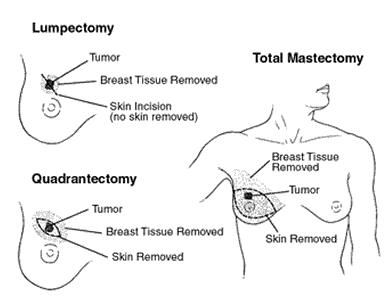
For many, it was a devastating turnaround. The women’s health movement and progressive forces in medicine had vigorously fought for breast-conserving surgery because the best science long ago proved that total mastectomies were overkill. Not only has breast-conserving surgery been tested rigorously against total mastectomies, but the results have consistently shown, that for women with early breast cancer, there is no survival advantage to having more aggressive surgery. Compelling proof that breast-conserving surgery AKA lumpectomy and radiation should be the standard of care for early breast cancers goes back until about 1990. Simply put, for women with early breast cancers, if both breasts are removed, they will not reduce their chance of getting cancer again, nor will they improve their survival any more than if they had had a minimally invasive lumpectomy followed by radiation. Additionally, unnecessary hysterectomies were also questioned and they are far less common today.

Continue reading…

Anesthesiologist’s Review of the Facts in the Joan Rivers Case

By KAREN SIBERT

Screen Shot 2014-09-15 at 8.37.02 AM

Since the death of comedian and talk-show host Joan Rivers, more information has surfaced about the events on the morning of August 28 at Yorkville Endoscopy. But key questions remain unanswered.

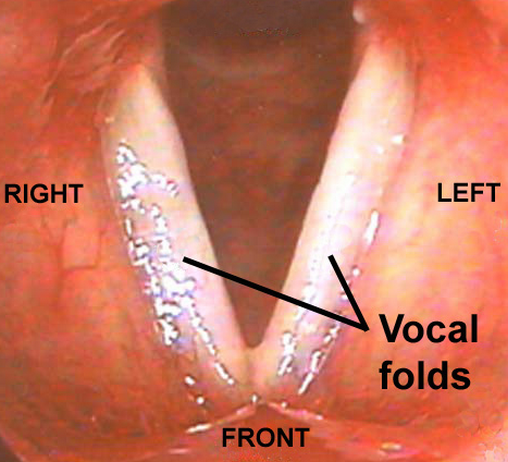
News accounts agree that Ms. Rivers sought medical advice because her famous voice was becoming increasingly raspy. This could be caused by a polyp or tumor on the vocal cords, or by acid reflux irritating the throat, among other possible causes.

So Ms. Rivers underwent an endoscopy by Dr. Lawrence B. Cohen, a prominent gastroenterologist, to evaluate her esophagus and stomach for signs of acid reflux. At the same time, a specialist in diseases of the ear, nose, and throat (ENT) reportedly examined her vocal cords (also known as vocal folds).

We don’t know exactly how much or what type of sedation Ms. Rivers’ may have received, though several news sources have reported that she was given propofol, the sedative associated with the death of Michael Jackson. No physician who specializes in anesthesiology has been identified on the team taking care of Ms. Rivers, and we don’t know who was in charge of giving her propofol.

It seems clear that at some point during Ms. Rivers’ endoscopy and vocal cord examination, there was a critical lack of oxygen in her bloodstream.

Was laryngospasm the cause?

Giving sedation for upper endoscopy is tricky, as any anesthesia practitioner will tell you. A large black endoscope takes up space in the mouth and may obstruct breathing. Any sedative will tend to blunt the patient’s normal drive to breathe. But most patients breathe well enough during the procedure, and go home with no complaints other than a mild sore throat.

News reports have speculated that the root cause of Ms. Rivers’ rapid deterioration during the procedure could have been laryngospasm. This term means literally that the larynx, or voice box, goes into spasm, and the vocal cords snap completely shut. No air can enter, and of course the oxygen in the bloodstream is rapidly used up.

The most common situation that leads to laryngospasm is irritation of the vocal cords. Everyone knows that when a drop of liquid or a crumb of food goes down the wrong way, it’s highly irritating and provokes a fit of coughing. When the vocal cords are stimulated or even lightly touched, their natural protective response is to close up.

Every anesthesiologist is taught how to manage laryngospasm, because it can be a life-threatening emergency leading to brain damage or death if the patient is deprived of oxygen for too long. Sometimes the vocal cords relax and open up on their own, but often they don’t.

Continue reading…

What Would You Give Up For a Virtual Doctor Visit?

By GIRISH NAVANI

Screen Shot 2014-09-14 at 1.49.42 PMWith the fast adoption of smart phones, tablets and wearable devices, the way people communicate, travel, eat and entertain have all been simplified. Why not streamline the way we experience healthcare as well? A study released in May 2014 from MDLive discovered that 82% of young adults 18-34 would prefer consulting with their doctor via a mobile device than show up for an appointment. Twenty seven percent of patients confirmed they’d be willing to give up shopping for a month, skip their next vacation, even refrain from showers for a week—if it meant they would be able to access their doctor via a smart phone! These results, along with the multiple surveys and studies conducted in the past year, confirm that a new way to conduct healthcare services is in high demand.

The solution to changing up the healthcare system sits at the center of three key advancements: patient engagement, population health and electronic health records (EHRs). At eClinicalWorks, we consider these components of healthcare to be like a three-legged stool where two cannot stand without the other. We recognized this need as an opportunity within the healthcare IT space and created healow in order to provide our customers and their patients with a platform to schedule doctors’ appointments and get immediate access to medical records via an online interface or mobile app. healow empowers doctors and patients by packaging personal health records (PHRs), healthcare tools and appointment scheduling together, making the data readily accessible to patients and their doctors from the palm of their hand.

Continue reading…

Waiting For Payment Reform?

By CHARLES KENNEY & JACK COCHRAN

Jack CochranThe Health Care Blog recently featured our Open Letter to Primary Care Physicians,generating quite a bit of reaction. A commenter made the point that “we cannot expect” primary care physicians “to act differently until and unless they get paid differently.” [Emphasis added]

The comment refers to a doctor in solo practice and notes that “the first step is changing how you are paid, in one way or another. And there are many ways that work better than the current code-driven fee-for-service model.”

Does waiting for payment reform make sense? Or should primary care practices act now to change the way they practice in anticipation of payment shifts?

Moving Toward Value-based Care

Some physicians groups seem somewhat frozen – unsure exactly where health care payment is headed and thus waiting until there is a clearer signal.

But it seems to us that the payment reform signal grows louder and clearer and support for that contention comes in a recent research report* from McKesson, the international consultancy:

We can now say with certainty that healthcare delivery is moving in one direction: towards value-based care.

This is care that is paid for based on results – on measurable quality – as opposed to the traditional fee-for-service approach that pays for volume. McKesson notes that

The affordability crisis is causing unprecedented changes in the healthcare landscape, the most significant of which is the transition from the current volume-based model [fee-for-service] to myriad models based on measures of value.

To remain relevant and competitive, payers, hospitals, health systems, and clinicians must respond now to integrate value-based models into their existing systems.

Continue reading…

On the origins of Maintenance of Certification in the National Health Service: A Serial Killer

By SAURABH JHA

Screen Shot 2014-09-10 at 6.22.08 AMBritain’s most prolific serial killer was a General Practitioner (GP), Dr. Harold Shipman. He wasn’t England’s most famous murderer. That accolade goes to Jack the Ripper. The Ripper killed five women in the streets of Whitechapel. Shipman might have been responsible for over 200 deaths.

Shipman’s legacy to the medical profession was not just a permanent simmering of mistrust. He triggered the introduction of revalidation, Britain’s version of maintenance of certification (MOC).

During Shipman’s prosecution the media scrutiny on physicians was intense. It’s both a beauty of and curse on our profession that we’re assumed to have such high code of ethics yet not spared the foibles of human nature.

“Homo homini lupus” doesn’t spare physicians. Bashar al-Assad was an ophthalmologist. Ayman al-Zawahiri once had taken the Hippocratic Oath.

This means that outliers, inevitable products of a Gaussian distribution, also get past the gates of medical school.

The government set up an inquiry headed by Dame Janet Smith. How could Shipman have gotten away with murder for so long? What were the systemic failures?

The Shipman Inquiry is 5000 pages long, compiled after interviewing 2500 witnesses. It cost the tax payer nearly 21 million pounds. Its conclusion was stunningly bland even if of military precision: doctors need more policing. This is like concluding that the First World War happened because people aren’t always nice to one another; a truism so uniformly true that it ceases to inform policy.

The report called for the General Medical Council (GMC), the prime regulatory agency for physicians, to work for patients, not physicians.

The solution: Revalidation.

Continue reading…

What Killed Joan Rivers? Piecing Together a Medical Mystery

KAREN SIBERT, MD

Screen Shot 2014-09-08 at 10.27.18 AM

There are minor operations and procedures, but there are no minor anesthetics.  This could turn out to be the one lesson learned from the ongoing investigation into the death of comedian Joan Rivers.

Ms. Rivers’ funeral was held yesterday, September 7.  Like so many of her fans, I appreciated her quick wit as she entertained us for decades, poking fun at herself and skewering the fashion choices of the rich and famous.  She earned her success with hard work and keen intelligence–she was, after all, a Phi Beta Kappa graduate of Barnard College.  Ms. Rivers was still going strong at 81 when she walked into an outpatient center for what should have been a quick procedure.

So when she suffered cardiac arrest on August 28, and died a week later, we all wondered what happened.  I have no access to any inside information, and the only people who know are those who were present at the time.

But the facts as they’ve been reported in the press don’t fully make sense, and they raise a number of questions.

What procedure was done?

Early reports stated that Ms. Rivers underwent a procedure involving her vocal cords.  A close friend, Jay Redack, told reporters at the NY Post, “Her throat was bothering her for a long time. Her voice was getting more raspy, if that was possible.”  In a televised interview, Redack told CNN that Ms. Rivers was scheduled to undergo a procedure “on either her vocal cords or her throat.”

However, the Manhattan clinic where Ms. Rivers was treated, Yorkville Endoscopy, offers only procedures to diagnose problems of the digestive tract.  All the physicians listed on the staff are specialists in gastroenterology.  Any procedure on the vocal cords typically would be done by an otolaryngologist, who specializes in disorders of the ear, nose, and throat.

So it may be that acid reflux was considered as a possible cause of Ms. Rivers’ increasingly raspy voice, and she may have been scheduled for endoscopy at the Yorkville clinic to examine the lining of her esophagus and stomach.  Endoscopy could reveal signs of inflammation and support a diagnosis of acid reflux.

Upper gastrointestinal (GI) endoscopy involves insertion of a large scope through the patient’s mouth into the esophagus, and passage of the scope into the stomach and the beginning of the small intestine.  It’s a simple procedure, but uncomfortable enough that most patients are given sedation or, less commonly, general anesthesia.

Was sedation given?

Three types of medication are commonly used for sedation during endoscopy:

1.  Midazolam, diazepam (Valium), or other medications in the benzodiazepine family are often used to help patients relax before the start of the procedure and to produce amnesia.

2.  Narcotics such as Demerol and morphine are often used to provide pain relief and make the procedure less uncomfortable.

3.  Propofol, a potent sedative and hypnotic medication, may be used to induce sleep and prevent awareness.  Many people first heard of propofol as the medication associated with the death of singer Michael Jackson in 2009.

Continue reading…