Categories

Category: Medical Practice

Is It Possible to Catch Ebola From the Media?

By JOHN IRVINE

flying cadeuciiThat pesky Ebola bug is not done with us yet.

Apparently not satisfied with inflicting havoc in Texas for two weeks and causing a major panic, the publicity-hungry Ebola virus set its sights on the media capital of the world on Thursday.

The latest Ebola case is a New York City Doctor. A specialist in international medicine at New York Presbyterian Hospital, Dr. Craig Spencer had been working with Ebola patients for the French relief agency Doctors Without Borders.

New York City health officials are conducting contact tracing to find people who may have had contact with Dr. Spencer.

The bad news?

New York City being New York City,  Spencer took the the subway from his apartment on West 143th street in Harlem to a Brooklyn bowling alley the night before his fever spiked.  That’s led to speculation that he may have inadvertently exposed a lot of people. Public health health officials are now tracing Spencer’s contacts to find potential “high risk” cases.

Our talking points:

Is It Possible to Catch Ebola on the Subway? 

No. Yes. Maybe.

Unfortunately,  in reality we don’t know, although we’re pretty sure we do.  Current CDC guidelines are based on the assumption that Ebola only becomes contagious when symptoms present and the patient enters the high fever stage.

Via Controversies at Hospital Infection Prevention:

Those at risk for Ebola are healthcare workers who have cared for Ebola patients (whether here or in West Africa). Not mall-goers, bowlers, subway riders, or those who might have been in an airport terminal on the same day as an asymptomatic Ebola patient. The greatest transmission risk is borne by those who provide direct care for Ebola patients during severe illness, when viral shedding is very high.

There’s a lot of evidence to support this argument. There have been cases of symptomatic Ebola patients traveling by airplane, bus and other modes of transportation without spreading the disease.  That’s somewhat reassuring.

On the other hand, it is not exactly compelling statistical evidence of anything other than that some people travelled with an Ebola patient and did not develop Ebola.

We need to work with  much larger numbers before we know for sure.  The good news?

Now that Ebola has arrived in a city of eight million people, we’re now going to have them.

Continue reading…

The Great Checklisting of American Medicine

By HANS DUVEFELT

Dr DuvefeltMedical errors happen every day. Few make the headlines, but when they do, almost everyone who chimes in to comment offers the same type of solution for avoiding them. Three of the most common are guidelines, decision support and checklists.

From my vantage point as a primary care physician I agree that checklists, in particular, can enhance clinical accuracy, but some of the lists I have to work with in today’s healthcare environment are more likely to bog me down and distract me than focus my attention on the essentials. I call them choke lists.

Re-reading “The Checklist Manifesto” by Atul Gawande, published in 2010, the year before my clinic implemented their first EMR, I am reminded of how much has changed since then.

How I work and where my attention is drawn has changed because of the minutia of Meaningful Use, Patient Centered Medical Home, Accountable Care and all the other new philosophies and forces that define primary health care.

Continue reading…

Health Value: IT and the Rise of Consumer Centricity

By CYNDY NAYER

CYNDY NAYER

Screen Shot 2014-10-21 at 6.02.19 PM

Accountable care demands that the system sync with the preferences and choices of the consumer purchasing the services.  In order to get to real health value, consumer-patients must make the health care decisions that improve personal health and do not derail personal bank accounts.  It was hard to piece these together for the last 15 years.  Now, with high deductible plans, more transparency for costs, and on-time digital connectivity, there is less difficulty.

Information technology can deliver the needed information to the patient and the physician to improve not only the likelihood of improved care but also the time-to-achieve the outcomes.  Most patients want and need to be involved in their care.  There is evidence that giving patients access to their information results in higher levels of engagement and adherence to recommendations.  In fact, the latest evidence shows that patients have been signing up for access to their health system portals at a rate of 1% per month for over 30 months.

Continue reading…

Throwing the EHR Under the Bus …

By JOHN IRVINE

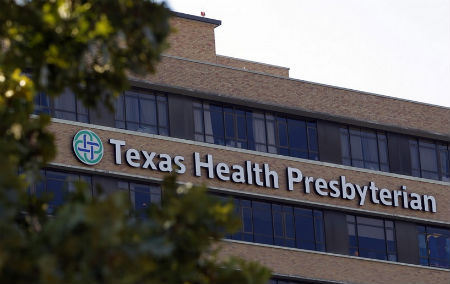
Given what is now known about how the case of Thomas Eric Duncan at Texas Health Presbyterian was handled, the attempt to blame the hospital’s electronic health record for the missed diagnosis sounds pretty lame.

But people are still doing it:

Screen Shot 2014-10-18 at 10.28.09 AM

Screen Shot 2014-10-18 at 10.50.02 AM
Screen Shot 2014-10-18 at 10.43.43 AM

Critics of electronic medical records have found a case they will be talking about for years.

Consider this argument from Ross Koppel and Suzanne Gordon:

While it is too early to determine what precisely happened in this case, it is not too early to consider the critical issues it highlights. One is our health care system’s reliance on computerized technology that is too often unfriendly to clinicians, especially those who work in stressful situations like a crowded emergency room. Then there are physicians’ long-standing failure to pay attention to nurses’ notes. Finally, there is the fact that hospitals often discourage nurses from assertively challenging physicians.

Long promised as the panacea for patient safety errors, electronic health records, in fact, have fragmented information, too often making critical data difficult to find. Often, doctors or nurses must log out of the system they are on and log into another system just to access data needed to treat their patients (with, of course, additional passwords required). Worse, data is frequently labeled in odd ways. For example, the results of a potassium test might be found under “potassium,” “serum potassium level,” “blood tests” or “lab reports.” Frequently, nurses and doctors will see different screen presentations of similar data, making it difficult to collaborate.

Continue reading…

Statement from the Dallas Nurses

By NATIONAL NURSES UNITED

When Thomas Eric Duncan first came into the hospital, he arrived with an elevated temperature, but was sent home.

On his return visit to the hospital, he was brought in by ambulance under the suspicion from him and family members that he may have Ebola.

Mr. Duncan was left for several hours, not in isolation, in an area where other patients were present.

No one knew what the protocols were or were able to verify what kind of personal protective equipment should be worn and there was no training.

Subsequently a nurse supervisor arrived and demanded that he be moved to an isolation unit– yet faced resistance from other hospital authorities.

Lab specimens from Mr. Duncan were sent through the hospital tube system without being specially sealed and hand delivered. The result is that the entire tube system by which all lab specimens are sent was potentially contaminated.Continue reading…

Angry Nurses Tell of Ebola Patient’s arrival at Texas Hospital

By THCBist

Texas Health Presbyterian

A group of nurses at Texas Health Presbyterian has come forward with a very different picture of what happened when Liberian Ebola patient Thomas Duncan arrived at the hospital with Ebola-like symptoms on September 28th.  If true, the allegations are certainly unsettling.

In an unusual move, the nurses spoke anonymously to the media, conducting a blind conference call in which none of the participants were identified.

After arriving at the emergency room with a high fever and other symptoms of the disease , the nurses said the patient was kept in a public area, despite the fact that he and a relative informed staff that he had been instructed to go to the hospital after contacting the Centers for Disease Control in Atlanta to report a possible case of Ebola.

Continue reading…

Big Data gets a Big Spotlight at AHA Scientific Sessions

By AHA SCIENTIFIC SESSIONS IN MARKETPLACE

ucm_439944

Big data is a big deal for healthcare providers and research scientists in 2014. At this  year’s Scientific Sessions, our Global Congress is focused on how Big Data is changing  the cardiology landscape.

From understanding the importance of data collection and analysis to discussing the  challenges cardiology professionals face when it comes to big data science, we’ll  explore the impact of big data on disease mechanisms and prevention.

The American Heart Association’s Scientific Sessions is the leading cardiovascular conference for basic, translational, clinical and population science in the United States, attracting more than 17,000 attendees from more than 100 countries. It’s five days of unmatched education designed to improve patient care by communicating the most timely and significant advances in basic, clinical, translational and population health

Learn more and register at scientificsessions.org.

Six Sigma vs Ebola

By SAURABH JHA

flying cadeuciiIf another case of Ebola emanates from the unfortunate Texas Health Presbyterian Hospital, the Root Cause Analysts might mount their horses, the Six Sigma Black Belts will sky dive and the Safety Champions will tunnel their way clandestinely to rendezvous at the sentinel place.

What might be their unique insights? What will be their prescriptions?

One never knows what pearls one will encounter from ‘after-the-fact’ risk managers. I can imagine Caesar consulting a Sybil as he was being stabbed by Brutus. “Obviously Jules you should have shared Cleo with Brutus.” Thanks Sybil. Perhaps you should have told him that last night.

Nevertheless, permit me to conjecture.

First, they might say that the hospital ‘lacks a culture of safety which resonates with the values and aspirations of the American people.’

That’s always a safe analysis when the Ebola virus has just been mistaken for a coronavirus. It’s sufficiently nebulous to never be wrong. The premise supports the conclusion. How do we know the hospital lacks culture of safety? ‘Cos, they is missing Ebola, innit,’ as Ali G might not have said.

They would be careful in blaming the electronic health record (EHR), because it represents one of the citadels of Toyotafication of Healthcare. But they would remind us of the obvious ‘EHRs don’t go to medical school, doctors do.’ A truism which shares the phenotype with the favorite of the pro-gun lobby ‘guns don’t kill, people kill.’

Continue reading…

How Not to Talk to Someone Dying of Cancer

By ALLEN FRANCES

Screen Shot 2014-10-12 at 6.49.00 PMA friend of mine has been living well with lung cancer for five years — working, running several miles a day, traveling, doing good stuff with his family, and generally enjoying the pleasures of everyday life. He knows the cancer will eventually kill him, but has been making the most of every remaining minute.

Then, a month ago, things suddenly turned dramatically south. Severe shortness of breath, constant coughing, sleeplessness, fatigue, loss of interest, anxiety. My friend figured the jig was finally up — that he was going terminal. We all felt sad in the face of this inevitability. In our different ways, we began the painful process of saying goodbye.

Then things seemed to get even worse. I accompanied my friend to visit his lung doctor — an amiable and thorough man who spent lots of time with us, took a good history, and did many tests.

Continue reading…

Let’s Make Sure “Health” Encompasses “Care”

By RISA LAVIZZO-MOUREY

Risa preferred headshotFor the past several months the Robert Wood Johnson Foundation has been promoting a particular vision– of a Culture of Health in America, where everyone  has the opportunity to live the healthiest life possible, no matter their income, or where they live, or work, or play.

With  that vision in mind, geriatrician Dr. Leslie Kernisan asks an important question in her Oct 7 Health Care Blog post, “Why #CultureofHealth Doesn’t Work For Me.”  She writes: “Is promoting a Culture of Health the same as promoting a Culture of Care? As a front-line clinician, they feel very different to me.”

For physicians treating the chronically ill and patients facing the end of life, good health might seem like a pipe dream. Kernisan and some of her commenters even wonder if the phrase “Culture of Health” could be misconstrued as “blaming the victim.”

Continue reading…