Categories

Category: Medical Practice

The Right to Die: The Suicide Checklist

By JAMES SALWITZ

flying cadeuciiPhysician–Assisted–Suicide; the collaboration of two through a professional relationship, to cause the death of one.

Ever since Socrates took hemlock, suicide has been part of society, sometimes supported, often condemned.  Today, many argue that we have a right-to-die, sort of an infinite extension of free speech or thought.   Regardless, to actively involve doctors is a unique distortion of the medical arts, as if stopping a beating heart can somehow mend disease.  For a healer to take life is bizarre and threatens the physician-patient relationship.  If individuals really want and require assistance to die perhaps there is another solution.

A long trail of vital documents marks our lives. These include birth certificate, diplomas, driver’s and marriage license, advanced directives, wills and most recently the POLST. Perhaps we should create a new personal document.  Its purpose would be to give each person not only permission to kill themselves, but access to the means.  A permit controlled by the patient and only their responsibility.  A passport for dying.  A Suicide Certificate.

The Suicide Certificate would be a kind of application.  A legal checklist, which once complete would allow the individual to die by their own hand, but in a controlled and definite manner.

What would go on this form?  First, basic demographics; name, birth-date, address, social security number, etc.  It is important to confirm that the right person is filling out the form.  A photograph might be a good idea.

Next, statements regarding right-to-die laws.  This could include a review of the sanctioned methods available, as well as the legal indications and limits for committing suicide.  It might remind the applicant that a terminal disease is required, what is and is not a qualifying medical condition, and that suicide pacts are discouraged and therefore forbids sharing the lethal prescription. The whole form might start on-line and as part of the process an instructional video must be viewed and review answers given correctly, before it can be printed.  Alternatively, an app could be developed.

Continue reading…

The Future Is Calling Us

By JOHN HAUGHOM

flying cadeuciiThe recent debate surrounding the American Board of Medical Specialties (ABMS) Maintenance of Certification (MOC) program is a microcosm for a transformation in medical practice that is long overdue. The profession of medicine is going through a fundamental shift from a traditional craft-based practice to a more sophisticated, data-driven profession-based practice.  The solo-based practice is dying. As the ABMS program suggests, the awareness and acceptance of this shift is already occurring at the national medical board level, but it is not happening as quickly at the individual physician level. It is time for all clinicians to consider a new, more effective and more empowering approach to clinical care.

Let’s take a look at the details. As you may know, the MOC program consists of six Core Competencies for Quality Patient Care that physicians must demonstrate to maintain certification.  These competencies are over and above the traditional board certification requirements. The core competencies are professionalism, patient care, medical knowledge, practiced-based learning and improvement, interpersonal and communication skills and systems-based practice. Descriptions of each competency can be found here. In addition to being a new requirement, the program encourages a new style of practice for physicians.

The MOC program has generated considerable friction, especially among physicians, some of whom argue that the requirements place an additional burden on their increasingly burdensome work experience. Others have joined the program and are fulfilling its requirements. As of May 2014, 150,000 physicians were enrolled in the program, but tens of thousands have also signed protest petitions.

Continue reading…

Writing the Value-Based Contract

By CYNDY NAYER & LEONARD KISH

sovaldi sovaldi

The kiss in the song from classic movie Casablanca is, at its essence, the seal of approval on a relationship.  The kiss is meant to symbolize shared reward (love, potentially) and risk (two souls who share a common set of values but now have new lives) built with other people. The recognizable phrase provides a frame for distilling the rewards (opportunities) and risks in true health care innovation.

Innovative health care solutions, such as new value-based benefit designs or emerging treatment for complex chronic diseases, often deliver tremendous value, but they take time (usually 2-3 years), do not deliver consistent benefits across populations (based upon severity of disease) or reduce total costs consistently (based on geographic influences, for example). Generics are often described as an equal substitute for branded drugs, but this is not always the case. Commercials advertise drugs that purport to make quality of life better (the contract for care), but then the rapid-fire “potential adverse effects” statement overtakes the “superiority message,” in effect reducing the value of the contract.

So when Gilead launched a new drug, Sovaldi, that promised a cure for Hepatitis C (cure = contractual promise, or “kiss”), the market place was excited. Then the spell was broken as obvious risk, the US$84,000 price tag, was revealed.

Gilead has a huge opportunity here.  It can become the true innovator that it claims to be.  It can be the value-driven company that calls for aligning the risks and rewards so that all the parties involved achieve reasonable outcomes.

Curing the highly infectious HepC is a lofty goal for care innovation.  Gilead’s new drug purports to cure HepC within 12 weeks (for certain patients) at the cost of $1000/per day in the US.  The FDA approved the drug and it launched in January 2014. CMS agreed to fund it for Medicare patients with the right profile, which tends to open the door for legitimacy to coverage in the commercial marketplace.

Continue reading…

International Classification of Diseases Hampers the Use of Analytics to Improve Health Care

By ANDY ORAM

andy oramThe health care field is in the grip of a standard that drains resources while infusing little back in return. Stuck in a paradigm that was defined in 1893 and never revised with regard for the promise offered by modern information processing, ICD symbolizes many of the fetters that keep the health industries from acting more intelligently and efficiently.

We are not going to escape the morass of ICD any time soon. As the “I” indicates in the title, the standard is an international one and the pace of change moves too slowly to be clocked.

In a period when hospitals are gasping to keep their heads above the surface of the water and need to invest in such improvements as analytics and standardized data exchange, the government has weighed them down with costs reaching hundreds of thousands of dollars, even millions just to upgrade from version 9 to 10 of ICD. An absurd appeal to Congress pushed the deadline back another year, penalizing the many institutions that had faithfully made the investment. But the problems of ICD will not be fixed by version 10, nor by version 11–they are fundamental to the committee’s disregard for the information needs of health institutions.

Disease is a multi-faceted and somewhat subjective topic. Among the aspects the health care providers must consider are these:

  • Disease may take years to pin down. At each visit, a person may be entering the doctor’s office with multiple competing diagnoses. Furthermore, each encounter may shift the balance of probability toward some diagnoses and away from others.
  • Disease evolves, sometimes in predictable ways. For instance, Parkinson’s and multiple sclerosis lead to various motor and speech problems that change over the decades.
  • Diseases are interrelated. For instance, obesity may be a factor in such different complaints as Type 2 diabetes and knee pain.

All these things have subtle impacts on treatment and–in the pay-for-value systems we are trying to institute in health care–should affect reimbursements. For instance, if we could run a program that tracked the shifting and coalescing interpretations that eventually lead to a patient’s definitive diagnosis, we might make the process take place much faster for future patients. But all a doctor can do currently is list conditions in a form such as:

E66.0 – Obesity due to excess calories

E11 – Type 2 diabetes mellitus

M25.562 – Pain in left knee

The tragedy is that today’s data analytics allow so much more sophistication in representing the ins and outs of disease.Take the issues of interrelations, for instance.

These are easy to visualize as graphs, a subject I covered recently.

Continue reading…

Doctors Who Take Medicine Into Their Own Hands

By RICHARD GUNDERMAN

Screen Shot 2014-08-01 at 9.42.53 PMMany doctors are frustrated by pressures to practice a faster and more impersonal brand of medicine, but some are actually doing something about it.  I recently spoke with one such doctor, Tom O’Connor, MD, who practices general internal medicine in central Connecticut.  He and his partner, Paul Guardino, MD, believe they were the first US physicians to begin building a fully concierge medical practice the day they completed training.  In the concierge model, their practice collects an annual fee of several thousand dollars from each patient, enabling better access, more personalized care, and even house calls.

But the real story about physicians such as O’Connor is not that they are opting for a different model of financing their practices.  Instead it is the unmistakable sense of excitement with which they talk about the way they care for patients – an attitude that has become noticeably rarer in recent years.  Says O’Connor, “I have been practicing medicine for nearly ten years this way, and I am happier than ever.”  His enthusiasm stems largely from the fact that, unlike most physicians, he is not employed by a hospital or a large practice group.  Instead, he works for himself.  He is his own boss.

Of course, the idea of doctors running their own practice is not a new one.  For much of the 20th century, most physicians were self-employed, and many operated in solo practice.  Today’s trend away from physician self-employment is driven by a number of factors, including increasingly complex and costly regulation of medical practice by government and insurance companies, the failure of medical schools and residencies to prepare physicians to manage their practices, and big financial incentives for hospitals and health systems to buy medical practices in order to capture patient referrals.

Enter a new breed of physician that includes O’Connor.  He did not want someone else telling him who he could care for, what tests and medications he could order, or how long he could spend with each patient.  In his practice, he and his partner – the doctors who actually see the patients every day – make such decisions themselves.  He sees all his own patients, whether in the office, the nursing home, the hospital, or at home – wherever care needs to be provided.  They do not go to walk-in clinics and they are not cared for by teams of hospitalists.  O’Connor is their doctor in every context.

Continue reading…

Pseudo Innovation

By DONALD LIGHT

Screen Shot 2014-08-01 at 2.06.25 PMFew people know that new prescription drugs have a 1 in 5 chance of causing serious reactions after they have been approved. That is why expert physicians recommend not taking new drugs for at least five years unless patients have first tried better-established options and need to. Faster reviews advocated by the industry-funded public regulators increase the risk of serious harm to 1 in 3. Yet most drugs they approve are found to have few offsetting clinical advantages over existing ones.

Systematic reviews of hospital charts by expert teams have found that even properly prescribed drugs (aside from misprescribing, overdosing, or self-prescribing) cause about 1.9 million hospitalizations a year. Another 840,000 hospitalized patients given drugs have serious adverse reactions for a total of 2.74 million. Further, the expert teams attributed as many deaths to the drugs as people who die from stroke. A policy review done at the Edmond J. Safra Center for Ethics at Harvard University concluded that prescription drugs are tied with stroke as the 4th leading cause of death in the United States. The European Commission estimates that adverse reactions from prescription drugs cause 200,000 deaths; so together, about 328,000 patients in the US and Europe die from prescription drugs each year. The FDA does not acknowledge these facts and instead gathers a small fraction of the cases.

Perhaps this is “the price of progress”? For example, about 170 million Americans take prescription drugs, and many benefit from them. For some, drugs keep them alive. If we suppose they all benefit, then 2.7 million people have a severe reactions, it’s only about 1.5 percent – the price of progress?

However, independent reviews over the past 35 years have found that only 11-15 percent of newly approved drugs have significant clinical advantages over existing, better-known drugs. While these contribute to the large medicine chest of effective drugs developed over the decades, the 85-89 percent with little or no clinical advantage flood the market. Of the additional $70 billion spent on drugs since 2000 in the U.S. (and another $70 billion abroad), about four-fifths has been spent on purchasing these minor new variations rather than on the really innovative drugs.

In a recent decade, independent reviewers concluded that only 8 percent of 946 new products were clinically superior, down from 11-15 percent in previous decades. (See Figure) Only 2 were breakthroughs and another 13 represented a real therapeutic advance.

Spokesmen for the pharmaceutical industry point out that therapeutically similar drugs have advantages. First, physicians need some choice within a therapeutic class because some patients do not respond well to a given drug. This is true, but after about three choices, there is little evidence to justify a 4th , 5th, or 6th in a class.

Continue reading…

Meet the First Aledade ACOs

By FARZAD MOSTASHARI

Screen Shot 2014-07-31 at 2.20.35 PM

On June 18, we launched Aledade – a company built on our belief that independent primary care physicians are best positioned to lead the next revolution in health care delivery – boosting quality of care and bringing down costs.  Over the past six weeks, we traveled across the country meeting doctors, discussing the future of independent primary care practice, and recruiting physician partners for our first wave of Accountable Care Organizations.

Meeting these doctors, from areas and backgrounds as diverse as the populations they serve has been a constant reminder of the reasons we founded this company.  One physician, having spent decades serving the same community from the same office, lamented that in the past, he felt more involved – and more informed – about all aspects of his patients’ care.  Today, he told us, fragmentation in care delivery had given him less insight into his patients’ health, and less influence in coordinating their treatment.

When we started Aledade, these were the type of doctors we wanted to empower.

Today, I am elated to announce that we have formally submitted applications to the Center for Medicare & Medicaid Services to form ACOs serving physicians in Delaware, Maryland, New York, and Arkansas for 2015.  We expect this first wave of Aledade ACOs to serve tens of thousands of Medicare patients beginning January 2015.

The choice of four dissimilar states was intentional. We intend to establish a model that can be replicated across the country, and the diversity in our practices matches the diversity of our country. Each state has strengths to build on. Delaware- ‘the First State’ has been a leader in electronic health record implementation. Maryland and New York’s health reforms set the stage for alignment and collaboration with acute-care facilities. Arkansas’ tradition of independent primary care practice is strong. We’ll also be serving very different patient populations in each state – from practices that serve urban neighborhoods to those that treat folks in small towns and rural communities.

Continue reading…

A Challenge to Control Blood Pressure Using HIT

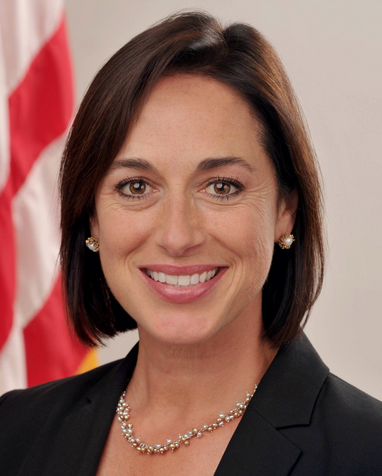
By KAREN DESALVO & JANET WRIGHT

Screen Shot 2014-07-30 at 2.13.16 PMHeart disease and stroke are two of the leading causes of death in the United States. To combat these threats, the Department of Health and Human Services (co-led by Centers for Disease Control and Prevention [CDC] and the Centers for Medicare & Medicaid Services [CMS]) has joined with private and non-profit organizations such as the American Heart Association, American Pharmacists Association and the YMCA, to launch Million Hearts®, a national initiative to prevent one million heart attacks and strokes by 2017. The initiative is working to encourage clinicians nationwide to improve the quality of care through use of the ABCS strategies – Aspirin when appropriate,Blood pressure control, Cholesterol management and Smoking cessation.

On July 7th, as we marked the halfway point in this ambitious drive to improve America’s health, the Office of the National Coordinator for Health Information Technology (ONC), in collaboration with the CDC, launched the EHR Innovations for Improving Hypertension Challenge to accelerate improvement on the Million Hearts® “B” strategy – Blood Pressure Control. The goal is to show how professionals are using health IT to improve patients’ cardiovascular health. Evidence-based treatment protocols are an essential tool for providers to use in improving blood pressure control.

What makes this ONC challenge unique?  First, it taps the expertise of clinicians who care for patients with hypertension and are using health IT to improve their control. Second, the challenge is designed to promote the scalability of critical tools for maximum impact and reach.Continue reading…

Hyping Cancer Genotyping

By NORTIN HADLER

Screen Shot 2014-07-28 at 7.53.06 PM

It was 1970. I was in my laboratory at the NIH sequencing a murine myeloma protein in order to define the structure of its antibody combining region. Studies of protein conformation were at the cutting edge of science then; enthusiasm abounded. But it was clear to me that this work, in all its scientific elegance, had little to do with treating myeloma or anything else in mice or man. The reason for all the painstaking effort was the joy of pushing back the frontier of ignorance, even if only a bit. No one could foresee clinical utility then, nor would any become apparent for decades. Today such monoclonal antibodies are widely used to treat many diseases, sometimes with efficacy that justifies the costliness.

Genomics is in a bigger hurry.

Thanks to 40 years of breakthroughs, many earning Nobel Prizes, the chromosome carrying the defective gene underlying a genetic disease, Huntington’s disease, was identified in 1983 and the gene sequenced a decade later. In short order, defective genes underlying a number of single-gene diseases were defined: cystic fibrosis, hemophilia, and others. We all wait with baited breath for these elegant insights to transform into primary treatments for single allele genetic diseases. Attempts to transfect patients with normal genes are encouraging but barely so; it has proved difficult to get the right gene to stay in the right cells. Likewise, directly modifying the abnormal genetic apparatus is still largely just promising. The fallback remains working downstream from the genetic apparatus, replacing or modifying the defective products of many of these pathogenetic genes.  Nonetheless, optimism regarding modifying the genetic apparatus itself is rational as is ever more boldness on the part of molecular biologists.

Continue reading…

Using Big Data to Manage Medical Expectations

By CYNTHIA RUDIN

Screen Shot 2014-07-28 at 1.53.01 PM

x axis = time since prostatectomy, the y axis = predicted sexual function level,
scaled by the sexual function level.  Young patients (below 55 years) reporting
poor sexual function prior to treatment 

For all the advances in both medicine and technology, patients still face a bewildering array of advice and information when trying to weigh the possible consequences of certain medical treatments. But a hands-on, data-driven tool I have developed with some colleagues can now help patients obtain personalized predictions for their recovery from surgery. This tool can help patients better manage their expectations about their speed of recovery and long-term effects of the procedure.

People need to be able to fully understand the possible effects of a medical procedure in a realistic and clear way. Seeking to develop a model for recovery curves, we developed a Bayesian modeling approach to recovery curve prediction in order to forecast sexual function levels after prostatectomy, based on the experiences of 300 UCLA clinic patients both before radical prostatectomy surgery and during the four years immediately following surgery. The resulting interactive tool is designed to be used before the patient has a prostatectomy in order to help the patient manage expectations. A central predicted recovery curve shows the patient’s average sexual function over time after the surgery. The tool also displays a range of lighter-colored curves illustrating the broader range of possible outcomes.

This model not only shows people what they can expect about their recovery on average, based on their own specific characteristics, but it also clarifies the uncertainty in the shape of the recovery curve. It shows a range of possible realistic outcomes. We want to help patients who are considering this particular surgery to understand what they could expect. We can’t tell them exactly what their recovery will look like, but at least we can now forecast a personalized recovery curve and show them an informed prediction of their possible outcomes. The model can be used in an interactive way. For example, patients could adjust their reported age or reported sexual function levels to see how their predicted recovery curves change.

Continue reading…