Categories

Category: Medical Practice

Will Independent Physicians Go Extinct?

By RICHARD GUNDERMAN & MATT ALBIN

Richard Gunderman goodLife is tough for physicians in solo and small group practice.  The federally mandated introduction this fall of ICD-10 requires physicians and their staffs to learn a new system of coding diseases.  “Meaningful Use,” another federal program, requires physicians to install and use electronic health records systems, which are complex and expensive.  And PQRS, the Physician Quality Reporting System, is beginning to penalize physicians for failing to report individual data for up to 110 quality measures, such as patient immunizations, each of which takes time to collect and record.

Of course, such requirements are not being imposed solely on solo and small-group physicians.  In many ways, they affect all physicians alike.  Yet the burdens of complying are disproportionately high for small groups, which cannot spread out the costs of purchasing equipment, hiring employees and consultants, and training personnel over so large a number of colleagues.  Hospitals and large medical groups can afford to hire full-time specialists to meet these challenges, but such approaches are not economically feasible for a group that consists of only a few physicians.

Such challenges are not just raining down –  they are pouring down on the heads of physicians.  Some physicians fear they smell a conspiracy to drive solo and small-group practitioners out of business.  And the problem is not just the money.  It’s also the time.  Many physicians already work long hours and simply cannot afford to shop for such systems, negotiate contracts, and enter data.  We personally know physicians who report spending two hours each evening completing records that they did not have time to attend to while they were seeing patients.

Continue reading…

On Mandatory Screens and the People Doing the Screening

By ART CAPLAN

Art Caplan 2The entirely predictable media obsession with the tragedy of the Germanwings jetliner that crashed into the French Alps on March 25 is moving forward full force. The media, especially cable television, love airline disasters. Once German prosecutors revealed that Andreas Lubitz, the pilot at the controls of the Germanwings jetliner when it crashed, had a mental illness but had kept the diagnosis hidden from his employer, all media hell broke loose.

One of the key questions raised by the spectre of mental illness was whether the pilot’s doctors tried to establish Lubitz’s mental fitness to fly and if they were concerned should they have revealed their worries to his employer. Despite a whole lot of talking heads jawing on these points few had anything useful to say since almost none of the experts consulted seemed familiar with the accuracy of mental health screening, or with the nature of German requirements for health screenings for crews or mechanics, or with German privacy law. When the discussion shifted to what about America, things still stayed fuzzy.

Pilots being interviewed noted that the Federal Aviation Administration requires they receive a physical exam from a flight surgeon annually or every six months as they get older. What mechanics or flight attendants undergo was never mentioned. Mental health is supposed to be a part of the exam for pilots but it almost never is. Pilots and the doctors examining them know that any indication of mental illness including addiction or suicidal thinking would get reported right to the FAA and that would be the end of that pilot’s job so little probing gets done. Plus those doing the screening rarely have any training in mental health.Continue reading…

The High Cost of Reducing Waste in US Healthcare

By SAURABH JHA

thcbRecently, a jury awarded a young California resident $28.2 million for a delayed diagnosis of a pelvic tumor. The jury found Kaiser Permanente (KP) negligent. Doctors in the system, touted to be one of the finest systems by the President, allegedly refused an immediate MRI for back pain in a 17 year old. The patient eventually received an MRI three months after presentation, which found a tumor so extensive that the patient needed an amputation.

The case is instructive at multiple levels. It shows a tense dialectic between the individual and society. It also highlights a truism that many don’t understand or don’t acknowledge – missed/ delayed diagnosis and waste are reciprocal. They’re birds of a feather. You can’t have less of one without more of the other.

The patient presented with back pain. MRI for back pain is the poster child of waste. Why so? Because so many are negative. Even more are meaninglessly positive –disc bulges which simply mean “I’m Homo sapiens and I wasn’t intelligently designed to be sitting at the desk.”

High quality doctors don’t order MRI for back pain immediately, reflexively and incontinently. Think about this. A high quality doctor should say “I don’t think you need an MRI because it won’t change the management and doesn’t improve outcomes.” That’s the resounding message from the top. If it doesn’t improve outcomes it’s not a worthy test. High quality doctors will, once in a while, cost their organization a lot of money.

But quality is still not settled. Quality doctors must satisfy patients. If a patient asks for an MRI for back pain the quality doctor must acquiesce, if that refusal dissatisfies. I’m confused. Ordering an MRI for back pain is poor care. But not ordering an MRI for back pain is poor care. Which is it?

We don’t know the facts of the case. It’s possible that the patient had a neurological deficit that should have raised the urgency. It’s possible that the physician didn’t examine the patient and had he/ she examined, the tumor might have been detected. We don’t know. We shouldn’t judge (1).Continue reading…

No More Numbers

By SHIRIE LENG

sherie

Medicine is obsessed with numbers. Or rather, journalists and medical administrators are. Here are two related examples of how large a grain of salt one must put on numbers.

Cardiac surgical procedures, like everything else in medicine, have quality indicators. One of these is what we doctors call “30-day mortality”. What this term means is that surgeons are evaluated in part on how many of the patients they operated on died within a month of having surgery. Presumably a surgeon whose patients rarely die within 30 days is a better surgeon than one whose patients die all the time. The American Academy of Hospice and Palliative Medicine, whose members deal frequently with the elderly, thinks this number, 30, harms old people. http://nyti.ms/1AR3OqB. The problem, according to Paula Span of the New York Times, is that surgeons refuse to operate on people who are more likely to die within 30 days, and that they keep patients alive in ICUs until day 31 to keep their numbers up. Bad doctors! Continue reading…

Patient Self-Scheduling 2.0

By JOSEFINA JERVIS & MICHAEL TURPIN

thcbAs the digital economy transforms health the most transformative ideas and consumer engagement solutions can sometimes challenge the industry’s ability to adopt and implement them. Reimbursement reforms, risk sharing, migration towards high deductible plans and the expansion of public and private coverage are converging to unleash an increasingly sophisticated consumer into the marketplace. Health systems and physician practices are consolidating and marketing their services direct to consumers in an attempt to underscore the critical differentiators valued by consumers – access, quality and affordability.  In today’s consumer economy, access remains a critical criterion for choosing and patronizing a provider or a practice. To assist the move toward consumerism, employers are introducing tools to facilitate comparison-shopping for services seen as “consumer-driven.”  The cost of elective and non-emergency services are highly variable and employers want employees to become consumers making decisions based not only on access but also cost.Continue reading…

Patients are NOT Customers

By SHIRIE LENG

Screen Shot 2015-03-21 at 4.26.26 PMRecently I wrote about the problems with Maintenance of Certification requirements.  One of the phrases I read repeatedly when I was researching the piece was “the patient as customer.”  Here’s a quote from the online journal produced by Accenture, the management consulting company:

Patients are less forgiving of poor service than they once were, and the bar keeps being raised higher because of the continually improving service quality offered by other kinds of companies with whom patients interact—overnight delivery services, online retailers, luxury auto dealerships and more. With these kinds of cross-sector comparisons now the norm, hospitals will have to venture beyond the traditional realm of merely providing world-class medical care. They must put in place the operations and processes to satisfy patients through differentiated experiences that engender greater loyalty. The key is to approach patients as customers, and to design the end-to-end patient experience accordingly.

Except for one thing.  Patients are NOT customers.

The definition of a “customer” is a person or entity that obtains a service or product from another person or entity in exchange for money.  Customers can buy either goods or services.  Health care is classified by the government as a service industry because it provides an intangible thing rather than an actual thing.  If you buy a good, like a car, you voluntarily decide to shop around and get the best car you can for the price.  Even a vacation, especially a vacation package or a cruise, is a good.  A nice dinner, while a good in the sense of the food, is also a service.  You buy the services of the cook and servers.

Here is why the patient shouldn’t be considered a customer, at least not in the business sense.

1. Patients are not on vacation.  They are not in the mindset that they are sitting in the doctors office or the hospital to have a good time.  They are not relaxed, they have not left their troubles temporarily behind them.  They have not bought room service and a massage. They are not in the mood to be happy.  They would rather not be requiring the service they are requesting.  Which leads to number 2:

2. Patients have not chosen to buy the service.  Patients have been forced to seek the service, in most cases.

3. Patients are not paying for the service.  At least not directly.  And they have no idea what the price is anyway.

4. Patients are not buying a product from which they can demand a positive outcome.  Sometimes the result of the service is still illness and/or death.  This does not mean the service provided was not a good one.

5. The patient is not always right.  A patient cannot, or should not, go to a doctor demanding certain things.  They should demand good care, but that care might mean denying the patient what the patient thinks he or she needs.  The doctor is not a servant; she does not have to do everything the patient wants.  She is obligated to do everything the patient needs.

6. Patient satisfaction does not always correlate with the quality of the product.A patient who is given antibiotics for a cold is very satisfied but has gotten poor quality care.  A patient who gets a knee scope for knee pain might also be very satisfied, despite the fact that such surgery has been shown to have little actual benefit in many types of knee pain.

Continue reading…

Back In the Day *

By MARTIN SAMUELS

flying cadeuciiMany people believe that neurologists are particularly attracted to detail.  I prefer to think of the issue as one of precision rather than pointless obsessiveness.  Some years ago, I was asked to discuss a case for the New England Journal of Medicine’s series of CPCs called the Cabot Cases.

In preparing the case for publication, I found myself in an argument with the editor about the placement of an apostrophe. There were two diagnoses in this case: aphasia from a cardiac source embolism to the left cerebral hemisphere and hypercoagulability as a paraneoplastic syndrome. In my view, aphasia is a Trousseau syndrome (i.e., the word “aphasia” was suggested by Trousseau), whereas hypercoagulability as a paraneoplastic syndrome was Trousseau’s syndrome, because Trousseau both described and suffered from the disease. I am very much opposed to the trend to remove eponyms from the names of diseases and syndromes as to do so strips medicine of some of its most illustrious history.  But, only a handful of eponymic disorders deserve the apostrophe. Antonie van Leeuwenhoek’s disease (diaphragmatic myoclonus) is another example.

History in medicine is not a mere avocation. In addition to the old saw of helping to prevent the same errors from being repeatedly made, it provides us with the perspective needed to approach diagnostic and scientific challenges in our own era. It also combats hubris. In carefully researching my eleven New England Journal CPCs I have never encountered an idea that had not evolved from those before it.

In grand rounds, in medical journals, and particularly in the lay press, we are regaled with “revolutionary” ideas, but that they are completely new is an illusion. Throughout history, people have always been on the “cutting edge” and have repeatedly believed that they had some sort of huge advantage over prior generations.

Continue reading…

The “Business Case” For Patient Safety

Michael Millenson

By MICHAEL MILLENSON

Betsy Lehman

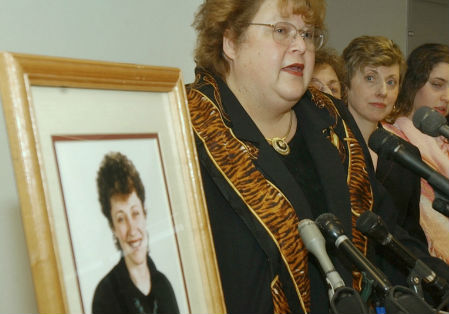
Twenty years ago this month, the Boston Globe disclosed that health columnist Betsy Lehman, a 39-year-old mother of two, had been killed by a drug overdose during treatment for breast cancer at Dana-Farber Cancer Center. In laying out a grim trail of preventable mistakes at a renowned institution, the Globe prompted local soul searching and a new focus on patient safety nationally.

Although I didn’t know Betsy personally, we were about the same age, had two kids about the same ages and were in the same profession. (I, too, was a health care journalist.) That’s why I was particularly disappointed by a recent conference celebrating the reopening of the Betsy Lehman Center for Patient Safety and Medical Error Reduction. It was heavy on statistics and poll results; e.g., one in four Massachusetts adults say they’ve seen an error in their own care or the care of someone close to them.

While it’s true that Boston is the epicenter of thinking, writing and speaking about patient safety, words do not always translate into deeds.

Continue reading…

What Zeke Missed on an Annual Physical

By ALI KHAN & LEAH MARCOTTE

flying cadeuciiIn January, Ezekiel Emanuel – one of the country’s foremost health experts – threw a presumptive grenade into the national discourse: the annual physical is worthless. As we watched the initial burst of reactionary fervor following hisNew York Times opinion piece, we weren’t quite sure what to think.

Then we realized why: in our training and burgeoning careers in primary care, neither of us has ever scheduled an “annual physical” for a patient. To us, the notion of such a visit – for scheduled, non-urgent care, and one not specifically for chronic disease management – is already dated. Given current trends in American health care delivery and professional training, we argue it is one that may well soon be obsolete.

But does that obsolescence change the value of that time – whether 15 minutes or 60 – with a patient, on a regular interval? Our perspective from medicine’s emerging front line offers a resounding no.

The most obvious argument for regular primary care visits is preventive care. Dr. Emanuel bases much of his argument on the validity (or lack thereof) of annual physicals. Drawing off that same evidence base, the U.S. Preventive Services Task Force sets recommendations for evidence-based screening in various populations. Even the young and healthy benefit from cervical cancer screening, initiated at 21 years of age and continued every three years provided negative results until the age of 30 (when the recommendations change slightly). Patients with higher risk earn further screenings, based on whether they smoke, their weight, their age and their family history.

Continue reading…