Categories

Category: Medical Practice

The Psephology of Early Diagnosis in Britain’s NHS

By SAURABH JHA

flying cadeuciiConsider this equation.

Early Diagnosis = Early Diagnosis + Overdiagnosis (1.1)

This sort of unequal algebra will fail high school mathematics. A new NHS initiative is arithmetic defying as well. Patients who think they have symptoms of cancer will be allowed to book medical imaging directly, without seeing their GP. This is to catch cancer early. The logic is impenetrable: early diagnosis of cancer saves lives.

Here is the problem. Cancer does not unequivocally announce its arrival. Early cancer presents with non-specific symptoms, such as an uncomfortable niggle in the back.

Tom

Let’s take Tom, who has advanced pancreatic cancer. He recalls that three years earlier he noticed a dull pain in his back during a misguided drinking binge. He would be correct in thinking that had he attended the emergency department and had a CAT scan of his abdomen, the cancer would have been smaller and would not have spread to other organs. He is right in contending that had the cancer been removed then, he would have a longer survival than presently.

The rationale has implications if extrapolated to everyone. To understand the consequences of extrapolation let’s visit a logical fallacy.

1) All Mr Smiths are over six feet tall.

2) He is above six feet tall so he must be Mr Smith.

This is affirming the consequent. Not all men above six feet in height are Mr Smiths. In fact, most are not.

3) Early pancreatic cancer presents with back pain.

4) All patients with back pain have early pancreatic cancer.

Similarly, (3) doesn’t imply (4).

Cancer often presents with non-specific symptoms, such as a vague discomfort, early on. But the majority of people with a vague discomfort do not have cancer. That is, the chance that someone with pancreatic cancer has dull back pain should not be confused with the chances that someone with dull back pain has pancreatic cancer. The chances of the latter are much lower than the former.
Continue reading…

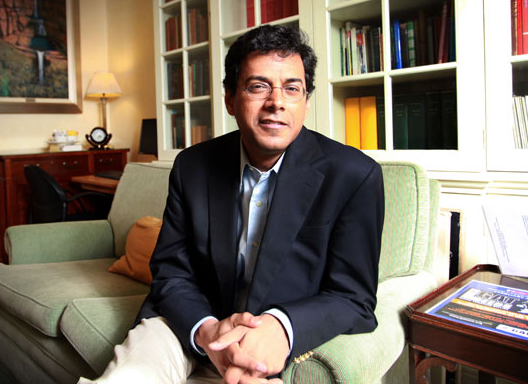
Computers Replacing Doctors, Innovation and the Quantified Self: An Interview with Atul Gawande

By ROBERT WACHTER

Screen Shot 2015-01-07 at 6.59.26 AM

Atul Gawande is the preeminent physician-writer of this generation. His new book, Being Mortal, is a runaway bestseller, as have been his three prior books, Complications, Better, and The Checklist Manifesto.

One of the joys of my recent sabbatical in Boston was the opportunity to spend some time with Atul, getting to see what an inspirational leader and superb mentor he is, along with being a warm and menschy human being. In my continued series of interviews I conducted for The Digital Doctor, my forthcoming book on health IT, here are excerpts from my conversation with Atul Gawande on July 28, 2014 in Boston.

I began by asking him about his innovation incubator, Ariadne Labs, and how he decides which issues to focus on.

Gawande: Yeah, I’m in the innovation space, but in a funny way. Our goal is to create the most basic systems required for people to get marked improvements in the results of care. We’re working in surgery, childbirth, and end-of-life care.

The very first place we’ve gone is to non-technology innovations. Such as, what are the 19 critical things that have to happen when the patient comes in an operating room and goes under anesthesia? When the incision is made? Before the incision is made? Before the patient leaves the room? It’s like that early phase of the aviation world, when it was just a basic set of checklists.

In all of the cases, the most fundamental, most valuable, most critical innovations have nothing to do with technology. They have to do with asking some very simple, very basic questions that we never ask. Asking people who are near the end of life what their goals are. Or making sure that clinicians wash their hands.Continue reading…

How the Advent of Propofol Changed the Meaning of the term “Sedation”

By KAREN SIBERT

“flying cadeuciiTwilight! She has to have twilight,” insisted the adult daughter of my frail, 85-year-old patient. “She can’t have general anesthesia. She hasn’t been cleared for general anesthesia!”

We were in the preoperative area of my hospital, where my patient – brightly alert, with a colorful headband and bright red lipstick – was about to undergo surgery. Her skin had broken down on both legs due to poor circulation in her veins, and she needed skin grafts to cover the open wounds. She had a long list of cardiac and other health problems.

This would be a painful procedure, and there would be no way to numb the areas well enough to do the surgery under local anesthesia alone. My job was to figure out the best combination of anesthesia medications to get her safely through her surgery. Her daughter was convinced that a little sedation would be enough. I wasn’t so sure.

“Were you asleep the last time your doctor worked on your legs?” I asked the patient. “Oh, yes,” she said. “Completely asleep.”

“But she didn’t have general,” the daughter interrupted. “She just had twilight.”

Continue reading…

CPOE For Management

By PETER ELIAS

flying cadeuciiAt a recent clinical staff meeting, a physician complained that the new requirement that clinicians enter all orders manually into the electronic record (CPOE) is slowing us down and causing errors. The IT and administrative staff were not the least sympathetic. Their message: it’s really not a big deal, it only takes an extra minute or two, and smart people like you should be able to master a simple skill like this. On the way home, I came up with a way to help them better understand: CPOE for management.

I would like to see them forced to use their own version of CPOE: Computer Process for Organizing Errands. Here’s how it would work.Every errand they do requires a computerized planning and documentation process. Whether they were going grocery shopping, out to fill up the tank on their car, buying shoes for their child, or a present for their spouse, here is what they would have to do:

  • Go to their computer and start the Errand Management Resource (EMR).
  • Go to the Schedule Errands tab and open it.
  • Enter each errand (picked from a list of 20,000 possible errands) and link it to a household or family category. Examples might include:
    Continue reading…

The Therapeutic Paradox: What’s Right for the Population May Not Be Right for the Patient

By SCOTT ABEREGG

An article in this week’s New York Times called Will This Treatment Help Me?  There’s a Statistic for that highlights the disconnect between the risks (and risk reductions) that epidemiologists, researchers, guideline writers, the pharmaceutical industry, and policy wonks think are significant and the risks (and risk reductions) patients intuitively think are significant enough to warrant treatment.

The authors, bloggers at The Incidental Economist, begin the article with a sobering look at the number needed to treat (NNT).  For the primary prevention of myocardial infarction (MI), if 2000 people with a 10% or higher risk of MI in the next 10 years take aspirin for 2 years, one MI will be prevented.  1999 people will have gotten no benefit from aspirin, and four will have an MI in spite of taking aspirin.  Aspirin, a very good drug on all accounts, is far from a panacea, and this from a man (me) who takes it in spite of falling far below the risk threshold at which it is recommended.

One problem with NNT is that for patients it is a gratuitous numerical transformation of a simple number that anybody could understand (the absolute risk reduction  – “your risk of stroke is reduced 3% by taking coumadin“), into a more abstract one (the NNT – “if we treat 33 people with coumadin, we prevent one stroke among them”) that requires retransformation into examples that people can understand, as shown in pictograms in the NYT article.  A person trying to understand stroke prevention with coumadin could care less about the other 32 people his doctor is treating with coumadin, he is interested in himself.  And his risk is reduced 3%.  So why do we even use the NNT, why not just use ARR?

Continue reading…

Medical Necessity and Unnecessary Care

By PAUL KECKLEY

Paul KeckleyUnnecessary care that’s not evidence-based—usually associated with excess testing, surgical procedures or over-prescribing—accounts for up to 30% of what is spent in healthcare. In recent months, enforcement actions against physicians and hospitals have gained increased attention. But unnecessary care and over-utilization is not a new story or one that’s easy to understand.

Background

Medical necessity means something slightly different in every part of the healthcare industry. Varied definitions and interpretations are used by providers, physicians, courts, pharmacy benefits managers, government insurers, private insurers, and consumers. Perhaps the two most important are from the largest and most influential payer, Medicare, and the industry’s most important clinical authority, the American Medical Association (AMA).

Continue reading…

A Tale of Two Sore Throats: On Retail Clinics and Urgent Care

By LESLIE KERNISAN

Leslie Kernisan new headshotSix years ago, just after arriving in Baltimore for a winter conference, I fell sick with fever and a bad sore throat.

After a night of feeling awful, I went looking for help. I found it at a Minute Clinic in a CVS near the hotel. I was seen right away by a friendly NP who did a rapid strep test, and prescribed me medication. I picked up my medication at the pharmacy there. The visit cost something like $85, and took maybe 30 minutes. They gave me forms to submit to my California insurance. And I was well enough to present my research as planned by day 3 of the conference.

Fast forward to this year. After feeling a bit blah on a Monday evening, I developed a sore throat, headache, and fever overnight.

I figured it was a winter viral pharyngitis, rearranged my schedule, and planned to make it an “easy day.” Usually a low-key day plus a good night’s sleep does the trick for me.

But not with this bug.

Continue reading…

Three Recommendations for President Obama’s Precision Medicine Initiative

By SPENCER NAM

One of the pleasantly surprising announcements President Obama made during his 2015 State of the Union address was “a new Precision Medicine Initiative to bring us closer to curing diseases like cancer and diabetes.”

Given precision medicine’s potential to solve many outstanding health care issues and lower costs without compromising clinical quality and performance, the President’s proposal is a welcome initiative. Many of the challenges we face practicing symptom-focused intuitive medicine could be overcome by turning toward precision medicine, a process of precisely diagnosing and targeting disease.

However, announcing the initiative is one thing. As with all policy discussions, the devil is in the details – and there are three details specifically that could make the difference between political rhetoric and a policy that truly improves the health of American citizens.Continue reading…

Safe Doctors, Unsafe Patients: A Tale of Two Infections

Michael Millenson

By MICHAEL MILLENSON

Call it a tale of two infections. It’s the story of how hospitals have blocked transmission of a dangerous infection that patients can give doctors, while a hospital-caused infection that can kill patients continues to be widely tolerated. It involves saved lives and endangered ones ­– and also of billions of dollars spent needlessly due to unsafe care.

The infection that’s been conquered is occupational transmission to doctors and other health care workers of HIV, the virus that causes AIDS. When AIDS first burst on the scene in the early 1980s, it was “disfiguring, debilitating, stigmatizing and inevitably fatal,” in the words of Dr. Paul Volberding, a treatment pioneer. With the disease’s spread poorly understood, “the fear of contagion [was] hanging over our heads,” Volberding recalled.

However, once the mode of transmission was identified– exposure to HIV-infected blood or other bodily fluids – precautions were rapidly put into place. From 1985 through 2013, there were just 58 confirmed cases of occupationally acquired HIV infection reported to the Centers for Disease Control and Prevention (CDC), according to a Jan. 9 CDC report. Since 1999, there’s been only one confirmed case of occupational transmission, involving a lab tech infected via a needle puncture in 2008.

Reported occupational infection “has become rare,” the CDC concluded, likely due to prevention strategies and “improved technologies and training.”Continue reading…

What’s Next For Physician Compare?

By STEVE FINDLAY

Screen Shot 2015-01-23 at 9.33.17 PMOf the many hidden gems in the Affordable Care Act, one of my favorites is Physician Compare.  This website could end up being a game changer—holding doctors accountable for their care and giving consumers a new way to compare and choose doctors.  Or it could end up a dud.

The outcome depends on how brave and resolute the Centers for Medicare and Medicaid Services (CMS) is over the next few years.  That’s because the physician lobby has been less than thrilled with Physician Compare, and, for that matter, with every other effort to publically report measures of physician performance and quality.

I’d give CMS a C+ to date.   Not bad considering it’s the tough task.  The agency has been cautious and deliberate.  But after the many problems with Hospital Compare, Nursing Home Compare, Home Health Compare, and Dialysis Facility Compare—not to mention the shadow of healthcare.gov’s initial rollout—that’s understandable.  They want, I hope, to get this one right from the get-go.  And competition from the private sector looms.

Continue reading…