Categories

Category: Medical Practice

Forks In the Road

By NORTIN HADLER

On Saturday, Dr. Hadler delivered the commencement address at the University of Michigan Medical School.  THCB is pleased to feature his remarks. 

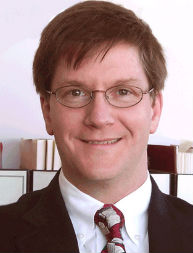
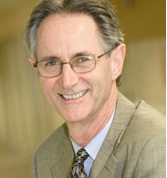
Nortin HadlerThank you, Class of 2015, for the privilege of sharing this special occasion with you, your families and the community that has come together to celebrate with you. This is a rare day of pure self-indulgence. Our professional life allows little room for self-indulgence and seldom applauds when one of us makes the room. For those of you who are drawn to a career anchored at the bedside, the trade-off is the quiet, internalized quest to become the best physician you can be. I have pursued this goal nearly all my life – literally, I have been working in hospitals since I was 12. If I had it to do over, I would pursue the same goal.

This goal demands expertise. Expertise requires intellect and discipline. I have a superabundance of both and so do you. Expertise is necessary but not sufficient.  More than expertise, one must understand myriad contexts in which illness plays out.

Medicine is not a science. Medicine is a philosophy informed by science.

I was a medical student when this dawned on me. Like you, I entered clinical rotations brimming with the pathophysiology of all those diseases that are poised to smite a mighty blow. Was I missing the forest for the biochemistry? Many of our patients are elderly patient and plagued by more than one serious disease. As we set to the task of confronting each in turn, it occurred to me that I might not care as much about what kills me as I care about when, and what the journey was like? Today, we have a good handle on that “when”. I can make a strong argument that if you manage to stay well to 85, you’re off warranty.

Notions of “fatal diseases” and of “saving a life” demand a temporal component.  Realize that in America, you can’t die without a diagnosis. In the mid-1980s, I started to sign the death certificates of frail elderly patients with “It was her time.” I would get a call from Raleigh; Doctor Hadler you can’t do that. I’d respond, “Which of the several diseases vying for the honor do you want me to list?” Whenever you hear of the epidemic of cancer or heart disease or stroke, ask the “When” question.

Continue reading…

The “21st Century Cures” Draft Bill: A Step Away From Transparency

By NIAM YARAGHI

Screen Shot 2015-05-18 at 10.25.01 AM

There is optimism that Congress will soon pass the 21st Century Cures bill. The draft bill proposed by the House Energy and Commerce Committee aims to foster medical innovation by streamlining the FDA regulatory process and increasing NIH research funding by $10 billion. The draft bill has overwhelming bipartisan support and will benefit patients, medical researchers and pharmaceutical companies. However, it also includes a passage, which aims to amend the Sunshine Act and exempt pharmaceutical companies from reporting the payments they make to physicians for continued medical education (CME) programs. The supporters of this change argue that physicians learn about the latest developments in medical science through CME programs and that requiring the disclosure of these payments would discourage pharmaceutical companies from financially supporting educational programs. Ultimately they believe it could inhibit the diffusion of medical innovation among doctors.

I took a look at the data released by CMS on the financial transactions between the pharmaceutical companies and individual physicians. In the last five months of 2013, more than $120 million were paid to physicians who participated (as faculty or speakers) in CME programs. The payments constitute 26 percent of the total financial transactions between pharma and individual physicians. The proposed change essentially allows pharmaceutical companies to hide more than a quarter of their payments to physicians. Exempting the pharmaceutical companies from reporting the largest part of their financial relationship with doctors will not help to foster medical education, rather it will add to current suspicions about the unjustified impact of such payments on the drugs that physicians prescribe to their patients.

If CME programs legitimately increase the awareness of physicians about the latest medical innovations and provide them with unbiased information about new drugs, then both pharmaceutical companies and those physicians who serve as speakers and faculties of such programs should be extremely proud of their role as champions of innovation and envoys of the latest knowledge in the medical community. If that is the case, one would wonder why they wouldn’t embrace and support the efforts that shed light on their noble role.

Patients heavily rely on the recommendations of their doctors to make any kind of decision regarding their health and thus have the right to be informed about the possibility that their doctors have a conflict of interest. Congress should refrain from amending the Sunshine Act and avoid jeopardizing the patients’ right to have access to information.

Niam Yaraghi is a fellow at the Brookings Institute Center For Technology Innovation. His posts appear regularly on THCB and on the Brookings Institute Tech Talk blog, where this post first appeared. This post also appeared as an opinion column on the US News and World Report site.

Patient-Centered Research Can Improve Chronic Pain Care and Address Opioid Abuse

By JOE SELBY

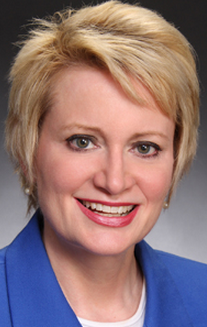
Joe SelbyFor more than a decade, the United States has faced an escalating opioid abuse crisis. The number of deaths associated with abuse of these prescription painkillers more than tripled between 1999 and 2012 and now outstrips the number associated with any other drug, according to the US Centers for Disease Control and Prevention. The problem is estimated to approach $56 billion in costs to society.

Often, opioid abuse or overuse is associated with patients seeking effective relief from the common and often devastating problem of chronic pain, which has been reported as affecting up to one in three US adults. People in pain often request opioid medications, not understanding that these drugs don’t effectively treat certain types of pain, don’t work well for many people, and can lead to a range of additional health problems.

Researchers, policy makers, clinicians, and their professional organizations are working hard to stem the opioid abuse epidemic, seeking ways to reduce overprescribing of these drugs by expanding the use of alternative and supporting therapies, as well as identifying more effective treatments for addiction.Continue reading…

Physician Data on Impact of Health Reform In 2014

By JOSHUA GRAY

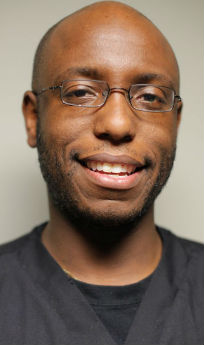
Screen Shot 2015-05-13 at 3.05.39 PMOver the past year, our athenaResearch team has been working with the Robert Wood Johnson Foundation (RWJF) on ACAView, an initiative that provides researchers, policymakers and the public with regular updates on how the Affordable Care Act (ACA) is affecting physician provider practices. To accomplish this, we curate and analyze data from a nationally distributed sample of 16,000 providers on the athenahealth cloud-based network. This gives us a timely view into national physician practice patterns and an ideal platform for measuring the impact of health care reform on the day-to-day practice of medicine.
After reporting some initial findings a handful of times, we’ve recently published our comprehensive report from the first year of the ACA rollout: “ACAView: Observations on the Affordable Care Act: 2014” (PDF). Here are some of the more interesting findings from the data:

Many feared a surge of new patient volume. That hasn’t occurred.

In 2014, the coverage provisions of the ACA went into effect, with the intention of bringing millions of patients into stable physician relationships that would improve their health status. Just before the coverage expansion, some commentators expressed concern that physicians might lack the practice capacity to treat these new patients, many of them with unmet medical needs. That has not happened.Continue reading…

The 5 Percent Conundrum

By MARGALIT GUR-ARIE

There is something deeply disturbing about the existence of big fat dossiers of personal information, meticulously collected over a lifetime, and stored under lock and key in dark places you are not allowed to enter. There is something degrading and dehumanizing when those secret files, which contain the most intimate details about you, your children and your loved ones, are only accessible to entities empowered to make life and death decisions for you and for those you care about most. A free society cannot allow this to happen and remain free, but this is a lesson we are destined to painfully learn in the future.

The good news is that when those dossiers are your medical records, our government acted decisively to ensure that every American has a right to not just view the collected information, but also to demand and obtain a copy of the records. Every medical facility, from the largest and most powerful conglomerate, to the humblest rural doctor, is required by law to fork over copies of your medical records whenever you ask for them. Few people ever asked for their medical records, and of those who did ask, many experienced difficulties and delays. If you ever visited the medical records floor in a hospital, you should be able to figure out why.

Continue reading…

A Second Look at the Two Midnight Rule

By ANWAR OSBORNE

Anwar“You gotta change us to inpatient!”

Mrs. Mack’s daughter was referring to me changing her mother’s status from “inpatient” to “outpatient.” If Mrs. Mack was discharged as an outpatient, she wouldn’t be able to afford to go to the nursing home she needed to make a full recovery, and her daughter couldn’t care for her at home.

Physicians and hospital are all too familiar with this scenario.  When a patient stays inside a hospital building, they can be either an inpatient or an outpatient.  A patient can be either in an inpatient status or an outpatient status, yet stay in a hospital bed overnight and receive identical care.  The ‘2 Midnight Rule’ serves to put this determination of status in the hands of doctors, but somehow, physicians like those in the Society of Hospital Medicine and the American Hospital Association dislike this new responsibility.

When I work as an emergency physician or an internist, I used to have to explain to patient families that this status designation is not in my hands.

Mrs. Mack’s daughter was in a precarious situation, but not an uncommon one; I’ve heard similar requests from patients and their families, and with good reason.

Continue reading…

Why Cancer Patients and Clinicians Need a Decision Aid Upgrade

THOMAS SMITH, MD

flying cadeucii

We have learned a lot about how to treat cancer in the past 30 years, yet patients still experience significant symptoms, pain, and stress from cancer and its treatments. And we are nowhere near curing patients of some of the most debilitating forms of this disease.

The outlook for lung cancer can be particularly poor because it is often diagnosed at a late stage, tends to occur in older people who often have other medical conditions, and remains one of the most difficult cancers to treat. The average survival has increased a few months with new treatment, but is still only to about a year – way too short.

However research has shown that palliative care – which addresses the emotional, physical, practical, and spiritual issues of serious illness – can help lung cancer patients live better, longer lives.

So, how do we incorporate palliative care into our conversations with patients and families who expect us to tell them about the latest treatment, downplay its side-effects and demonstrate the tenacity with which we will fight for them and with them against this scourge? It is especially tough when 70% of people (and some of their doctors) don’t know what palliative care is, or think of it just as “end of life care” or hospice.Continue reading…

Doctors Should Own Up to Creating the Mark Cuban Problem

By ADAMS DUDLEY

Adams Dudley UCSF

Much has been made of Mark Cuban’s medical knowledge since he tweeted, “If you can afford to have your blood tested for everything available, do it quarterly so you have a baseline of your own personal health”.  Charles Ornstein shared the tweet and many physicians and others, myself included, weighed in on the costs and potential for harm from unnecessary testing.

I’ll admit that, when I tweeted to him, I expected Cuban to agree. But he didn’t. In fact, he grew increasingly resistant. I stopped responding when he announced that the opposition to his idea his had convinced him he needed to take his proselytizing to his TV show.

Instead of poking the sore, I began to wonder about the origins of Cuban’s conviction. I remembered that he is not alone in wanting tests that clinicians who worry about value, cost, and harm think he shouldn’t have.

But where do these attitudes come from? Is it possible that clinicians are contributing in any way to this situation? Quite the contrary: most Americans want tests, even when you tell them that nothing can be done with the information. Furthermore, Americans are more convinced of the benefits of tests like mammograms than people in other countries, and then go out and get more of them.

I think that we are. My team has studied why patients get so many electively placed coronary stents, when cardiologists readily admit that randomized trials have demonstrated that there are few situations in which such stents improve survival or reduce the risk of heart attacks.

Studies of the beliefs of patients who have just received an electively placed stent give a big clue: 80% thought stenting would reduce their risk of death, even though their cardiologists knew that this was not the case.

Continue reading…

Wikipedia: Homeopathy and Evidence for Unpatentable Medications

By FRED TROTTER

flying cadeuciiRecently, I have had some interesting conversations with doctors and medical students of Naturopathic Medicine. I am slowly getting involved in editing Wikipedia medicine articles, and I was approached by several proponents of Naturopathic Medicine, who were upset about the following phrases from the Wikipedia article on Naturopathy:

Naturopathic philosophy is based on a belief in vitalism and self-healing, and practitioners often prefer methods of treatment that are not compatible with evidence-based medicine. Naturopathic medicine is replete with pseudoscientific, ineffective, unethical, and possibly dangerous practices.

Of course, they felt this was unfair. In their mind, the Wikipedia article was “wrong” and needed to be fixed and they were frustrated by the tendency for Wikipedia editors to thwart their efforts to “fix” the article.

This put me in an uncomfortable position. I had the option of remaining entirely silent, or informing these followers of Naturopathy of several issues:

  1. Wikipedia has become a “court for facts”. The Wikipedian community focuses on what has become verifiable scientific consensus.

  2. There is very little scientific consensus supporting Naturopathic methods while there is is a substantial amount of scientific consensus opposing some Naturopathic methods.

  3. Naturopathic methods tend to layer “placebo effects” (Ben Goldacre is the inevitable reference for how that works).

  4. These layered placebo effects tend to make the patients of naturopaths and the naturopaths themselves, believe that their methods are way more effective than they actually are.

  5. I have to admit that I fully expected to have a serving of Tim Minchin’s Storm. But what the hell. Why not?? So I jumped and put the basic issues forward.

Continue reading…

Opening the Care Conversation Through Open Notes

By SUSAN DENTZER

Susan DentzerIt’s a memory aid.

It’s truth serum.

Using it can transform relationships forever.

These may sound like come-ons for the type of product typically hawked on late-night television.  But in fact, they’re some of the things people are saying about OpenNotes.

OpenNotes isn’t a product, but an idea: That the notes doctors and other clinicians write about visits with patients should be available to the patients themselves. Although federal law  gives patients that right, longstanding medical practice has been to reserve those visit notes for clinicians’ eyes only.

But Tom Delbanco and Jan Walker, a physician and nurse at Beth Israel Deaconess Medical Center in Boston, have long seen things differently.

Their personal experiences with patients, and inability to access care records for their own family members, persuaded them that the traditional practice of “closed” visit notes had to change.  So, with primary support from the Robert Wood Johnson Foundation, they launched what has now become a movement.

In 2010, Delbanco, Walker and colleagues led a study in which more than 100 primary care doctors from three health systems began sharing notes online with patients. Patients got secure messages prompting them that the notes were available, and reminders to read notes before their next appointments.

Continue reading…