Categories

Category: Medical Practice

Real Mentoring Lessons From the Liver Queen

By MARTIN SAMUELS

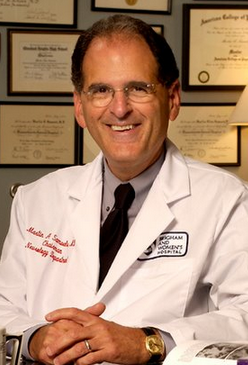
Martin SamuelsIn 1970 I had the opportunity to spend time at the Royal Free Hospital in London.  One of my professors at The University of Cincinnati College of Medicine, the late Leon Schiff, a renowned liver expert, arranged for me to work under Professor Sheila Sherlock.  I was placed in a laboratory that was investigating the presumed immune basis of primary biliary cirrhosis.  Roy Fox and Frank Dudley, the faculty in the lab, warmly welcomed me and taught me the basics of immunology research.  My first scientific paper in Gut, was based on this work.  But, I was a budding clinician and I was drawn to the charismatic Professor Sherlock, so I took every opportunity to attend her rounds and teaching conferences.  In many ways a fearsome figure, The Prof dazzled me with her clinical acumen, rhetorical skills, sense of humor and drive.  Though only a lowly visiting medical student, she including me in the exercises and even turned to me as a local “expert” on American culture.  The entire experience is remarkably memorable.  The Prof was filled with pearls, anecdotes, stories and caveats.  Here are a few.

The “outpatient” consisted of the Prof seeing patients while the students watched.  The room was arranged with six cubicles, three on each side of her desk, each guarded by a watchful nurse (sister) with a neat uniform and starched hat.  In front of The Prof’s desk were several rows of chairs; perhaps a total of 16, for students who were to sit quietly unless specifically ask to speak or to feel the liver of one of the patients.


Continue reading…

Moneyball For Doctors and Nurses (and the People Who Run Hospitals)

By PAUL KECKLEY

Screen Shot 2015-06-24 at 9.23.14 AM

Michael Lewis’ 2003 best seller Moneyball recounts how Oakland Athletics’ manager Billy Beane beat the big-payroll odds in major league baseball by using analytics to field a competitive team. The dynamic between Beane and his Yale-trained geek, Peter Brand is the central theme: together they fought off naysayers using Brand’s sabermetrics model later credited with the Red Sox World Series win the next season.

This week, thousands of financial officers from across multiple sectors in healthcare will descend on Orlando for the Healthcare Financial Management Association Annual Institute (ANI), a four day potpourri of knowledge-sharing sessions punctuated by keynotes from industry luminaries and an active exhibit floor.

The growing complexity of healthcare financial administrative issues is daunting. Case in Point: ANI organizes its 80 sessions in 8 tracks titled Business Intelligence and Analytics, Clinical Integration, Collaboration for Decision-Making, Cost Management-Margin Transformation, Finance-Capital Markets, Payment Trends and Delivery Models, Regulatory and Compliance Updates, and Revenue Cycle and the Patient Experience. There’s something there for everyone—from the rookie in internal audit to the CFO in the C-Suite.

Continue reading…

The Digital Doctor: Is Natural Language Processing the Breakthrough We’ve Been Waiting For?

By BOB WACHTER

Bob WachterNatural language processing might seem a bit arcane andtechnical – the type of thing that software engineers talk about deep into the night, but of limited usefulness for practicing docs and their patients.

Yet software that can “read” physicians’ and nurses’ notes may prove to be one of the seminal breakthroughs in digital medicine. Exhibit A, from the world of medical research: a recent studylinked the use of proton pump inhibitors to subsequent heart attacks. It did this by plowing through 16 million notes in electronic health records. While legitimate epidemiologic questions can be raised about the association (more on this later), the technique may well be a game-changer.

Let’s start with a little background.

One of the great tensions in health information technology centers on how to record data about patients. This used to be simple. At the time of Hippocrates, the doctor chronicled the
patient’s symptoms in prose. The chart was, in essence, the physician’s journal. Medical historian Stanley Reiser describes the case of a gentleman named Apollonius of Abdera, who lived in the 5th century BCE. The physician’s note read:

There were exacerbations of the fever; the bowels passed practically nothing of the food taken; the urine was thin and scanty. No sleep. . . . About the fourteenth day from his taking to bed, after a rigor, he grew hot; wildly delirious, shouting, distress, much rambling, followed by calm; the coma came on at this time.

The cases often ended with a grim coda. In the case of Apollonius, it read: “Thirty-fourth day. Death.”

Continue reading…

Data Druggies

By PHILIP ALLEN GREEN

We are data druggies.

We spend our days like desperate junkies crawling the carpet, sifting through the shaggy strands of patient histories with shaky fingers in search of facts. Every word our patients utter we feed to the never-ending demands of the electronic chart.

We find a fact and we enter it. The database grows. Someone somewhere adds another question we are supposed to ask our patients. We get back on our hands and knees. We start sifting once again.

Have you been to the continent of Africa in the last twenty-one days? Click. Do you or a loved one feel threatened at home? Click. How was your experience today? Click.

In the background the blood pressure cuff inflates, the quiet hiss filling the room. The monitor beeps along with the patient’s pulse, each ding another penny tossed into the ever-growing bank of patient data.Continue reading…

Brookings vs Yelp and E-Patients: They’re All Wrong, but Mostly Brookings

By ADAMS DUDLEY

Screen Shot 2015-06-20 at 10.14.04 AM

Can I fool you with the picture above? Apparently, some people think so.

I’m a Twitter newbie, but I’ve already discovered that sometimes you can tweet what you think is a helpful piece of data, then find yourself suddenly caught up in an explosive controversy.  When it’s the Brookings Institute and US News and World Report on one side and passionate e-patients on the other, a research tweep is liable to feel like a nerdy accountant who wandered into the OK Corral at high noon with neither Kevlar nor a gun.

This happened to me when Niam Yaraghi of Brookings posted on the US News blog and the Brookings blog that people shouldn’t trust Yelp reviews in health care—the URL for the post actually ends “online-doctor-ratings-are-garbage”—because patients hadn’t been to medical school.

Continue reading…

Sorry, Patients ARE Qualified to Yelp Doctors!

By CANCER GEEK

Last night my friend and mentor Marie Ennis-O’Connor (@JBBC) highlighted her recent post on Medium entitled: “Patients As A Prop.”

Marie’s post pointed me to an opinion piece written by Niam Yaraghi  (@niamyaraghi) for US News and World Report. (Niam is a fellow at Brookings Institute’s Center for Technology Innovation with a special focus on healthcare economics and health information) Niam’s post titled, “Don’t Yelp Your Doctor” discusses whether or not patients are capable or qualified to evaluate their physicians.

Niam writes:

“Patients are neither qualified nor capable of evaluating the quality of the medical services that they receive.”

Continue reading…

Anatomy of a Healthcare Quality Metric

By RACHEL KATZ

Screen Shot 2015-06-19 at 8.24.15 AM

In the future, doctors who provide better healthcare will be paid more. When a doctor gives good care, she will get credit. For factors out of that doctor’s control, she won’t be penalized. The patient, too, will be rewarded for taking care of his own health. In short, payments will align with good care, and good care will become more common.

This is the promise of value-based care, which is coming, according to almost everyone. Medicare is pushing it. Private payers are preparing for it.Top providers are tooling up.

And yet, the question lingers — how exactly do we measure quality? Today quality measurement is rigid, periodic, and manual. Here’s a peek behind the curtain of what we measure today — and what’s possible tomorrow.

Continue reading…

Do You Need a Medical Degree to Crowdsource Medicine?

By PATTI ZETTLER

There’s been a lot of talk about crowdsourcing lately. Everything from criminal investigations, to the tax code, to ski resorts have been crowdsourced or considered for crowdsourcing. And now medicine has thrown its hat in this trendy ring. KQED’s “Future of You” recently reported on a company called CrowdMed that wants to be the “Wikipedia of medicine.” (Due to space constraints, this blog post will not engage the important question of whether Wikipedia itself, is, in fact, the Wikipedia of medicine.)

CrowdMed touts itself as harnessing the wisdom of the crowd to improve and expedite diagnosis and treatment for patients whose doctors don’t have the answer. (The company was inspired by the difficulty its founder’s sister had in getting a rare condition diagnosed.) “Patients” pay CrowdMed a subscription fee ranging from $99-$249 per month in order to submit an account of their symptoms and medical history to CrowdMed’s “Medical Detectives.”

The Medical Detectives – who might be physicians or other healthcare professionals, but also might be any average Joe – read patients’ cases, and interact directly with patients to ask questions about their cases.
Continue reading…

A Powerful Tool For ICD9-ICD10 Conversion

By PATRICIA SALBER, MD                     SPONSORED CONTENT

Screen Shot 2015-06-19 at 6.19.20 PM

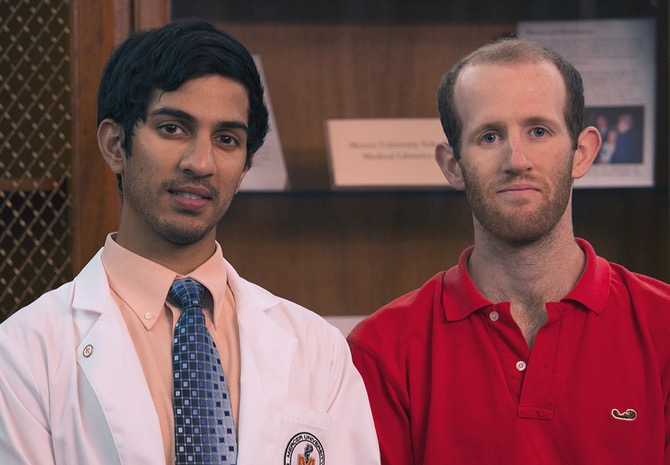
Prior to attending medical school, Parth Desai took a gap year to help his mom manage his dad’s small internal medicine practice.  She was worried about how she was going to handle the looming transition from ICD-9 to ICD-10.  Parth said he would help her out.

He looked at different consultants and programs, but they were all too complicated, too expensive, or both.  He also looked at a number of different ICD-10 training programs, but didn’t really find anything that he thought was that good.  He wanted help with code conversions, but everything he saw was slow, or required additional personnel, or was too costly.

So, he did what lots of entrepreneurs do, he decided to build what he needed himself.  He enlisted his former college roommate, Will Pattiz, a “tech whiz, outdoor enthusiast, and filmmaker” to help him and together they developed software that automates the conversion of ICD-9 to ICD-10 codes. 

Continue reading…

Health System Conflict 101

MATTHEW HOLT

By MATTHEW HOLT

Ok. You know the story. The work we do here at THCB would not be possible without the generous support of our corporate underwriters.  Like Castlight Health and Evolent, Health Catalyst are widely rumored to be bound for an IPO in the near future. They’re a really interesting company, with roots that go back to the fabled IT department at InterMountain Healthcare.  They’ve also been wonderful enough to sign on to support the community here at THCB as Flagship level sponsors. If you love what we do at THCB,  take a few minutes to show you support by taking a look at what they’re up to. Today’s free online session on adaptive leadership in a change of healthcare system conflict is a great introduction.

As you possibly may have noticed, there is a lot of conflict in healthcare. Doctors vs. Nurses. Patients vs. Doctors. Doctors vs. Computers. This online bootcamp will help you deal with it – or at least understand it – and should be required viewing for healthcare leaders, doctors, nurses and other healthcare providers. You will learn effective strategies for leading healthcare system change that will help address resistance to quality improvement, the drivers of negative attitudes, and the way to manage our own personal barriers to change. Well worth your time IMHO. Bring a friend. ; )