Categories

Category: Health Policy

Inconvenient Facts (For Both Republicans and Democrats)

By ROBERT LASZEWSKI

I call your attention to Ezra Klein’s column in the Washington Post this morning.

In it he cites data that has been out there for a long time but Ezra puts some perspective on it that never occurred to me before.

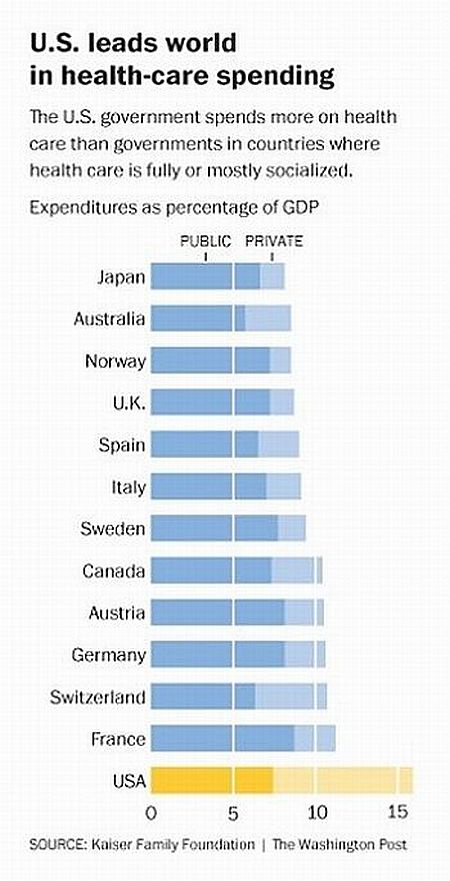
Examining the Kaiser Family Foundation brief, “Health Care Spending in the United States and Selected OECD Countries” he points out, “Our government spends more [as a percentage of GDP] on health care than the governments of Japan, Australia, Norway, the United Kingdom, Spain, Italy, Canada, or Switzerland.”

The data would seem to indicate that even our single payer government-run American health care programs, Medicare and Medicaid, cost way more than similar health plans in these nations.

The argument is often made that we should adopt a single payer—or perhaps a “public option”—health plan in the United States in order to control costs and cover everyone. But it would appear that even those programs in America are way too expensive when compared to similar programs in other industrialized nations.

As for the Republican market-based approach, Klein also points out that those programs have been ineffective at cost control. House Republican Paul Ryan often cites the Medicare Part D drug benefit as proof his proposals to privatize Medicare would work better than what we have. But as Klein points out, Part D premiums have risen 57% since 2006 and the program is on track to see nearly 10% growth in annual costs over the next decade.Continue reading…

Calling All Health Innovators: Health Data Palooza

By TODD PARK

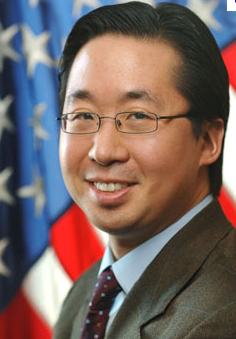
This week the Health 2.0 team will be at Health Innovation Week DC, and the biggest event there will be the Health Data Initiative Forum. One day, 50 demos, mixing more government and private data than you can imagine. We’ve been helping at the periphery of the Health data Initiative and we’ll be be having a special session talking more about the Health 2.0 Challenge, including our upcoming work running Challenges for ONC. We’re incredibly excited and enthusiastic, but no one is as enthusiastic as Todd Park! Here’s the CTO of HHS telling you about his brainchild, Health Data Palooza–Matthew Holt

Almost exactly one year ago, we launched a vital new HHS Open Government effort: The Health Data Initiative (HDI). The Initiative was publicly launched by HHS Secretary Kathleen Sebelius, Deputy Secretary Bill Corr, Institute of Medicine (IoM) President Harvey Fineberg, and White House CTO Aneesh Chopra at a forum held at the National Academy of Sciences.

The Health Data Initiative is an incredibly exciting public-private collaboration that is encouraging innovators to utilize data made publicly available by HHS and others to help fuel applications and services that can help improve health and health care. Over the past year HHS has been working very hard to make our data ever more accessible to the public – both publishing brand new data and making more of our existing data machine-readable, downloadable, accessible via application programming interfaces (APIs), free, and vastly easier to find. We’ve launched major new data and information websites (the HealthData.gov community, the Health Indicators Warehouse; and HealthCare.gov).

Equally importantly, we’ve been energetically publicizing our data, through challenges, code-a-thons, and many sessions with innovators of all kinds – educating folks around the country about what data we’ve made available and its potential to help power health  improvement. Innovators from across America are taking our data and are using it to build and power an amazing and rapidly growing array of applications in creative and powerful ways to help advance health. This movement has included entrepreneurs and change makers from all sectors: startups, major businesses, nonprofits, public health, health care delivery system, federal and local government, and academia.

On June 9th, 2011 at the National Institutes of Health, in partnership with the IoM, we will be holding our 2nd Annual Health Data Initiative Forum (or, as I like to call it, our second annual Health Data Palooza!). Continue reading…

An Obama-Gingrich-Ryan Ticket on Health Policy Reform

By SENATOR DAVID DURENBERGER

Newt Gingrich has to be one of the most interesting figures in recent political history.  His soul lives at the intersection of public policy, politics and history.  Because he has been on so many sides of history and policy, political insiders greet his entry into the presidential primary campaign as “Harold Stassen-ish.” I am among them, having entered the Senate the same time Newt entered the House 30-plus years ago.  I don’t know Republican House Budget Committee chair Paul Ryan, but I admire his leadership talent and regret his decision not to run for the Senate from Wisconsin.  It would raise the level of health policy discourse substantially in that “august body.”

Barack Obama is undoubtedly making presidential history.  Given the many policy challenges he has had to take on since January 20, 2009, plus the one he chose to take on – health policy reform, aka PPACA, there’s no question he is in a unique place in history today.  But, it is the Republicans – the “Party of No” on Obamacare – that are carrying the day on bringing health policy in line with health reform on the ground in the U.S. today. Obama’s PPACA sets historic national policy goals.  Ryan and Gingrich articulate the policy means to the ends of the new law.

Public health insurance programs like Medicare and Medicaid should begin now to reward success in meeting access, quality, and value goals where they exist in communities and systems across the country.  On their way to converting to private insurance and “premium support” subsidies when, and only if, genuine competition comes to the insurance marketplace. Along with the information consumers of insurance and healthcare need to make value judgments to purchase.

Obama could encourage this now because he has the new law on his side.  He has a budget/debt ceiling impasse which could make it possible. Unfortunately, he doesn’t know it; and it appears those in his administration charged with implementing PPACA, haven’t figured out how to do it. Bogging down in waivers and new rules and regulations which set the new law up for “socialistic” ridicule, and the president for a messy political campaign which will not, as Gingrich suggests, “lead to a national discourse” on the future of health care policy and politics.Continue reading…

The Summer of Sequels

By DAVID DRANOVE

I have seen this film before. Folks get all excited about the potential for vertical integration to save our healthcare system, and then the facts emerge.

The results of the first major ACO demonstration project are in and unless there is some hidden meaning behind all the data, it looks like ACOs may not be the magic bullet that the Obama administration had hoped. The demonstration began under President Bush and the specific payment structure and quality incentive differ somewhat from the ACO rules under the Affordable Care Act, but the main features are the same – give an integrated provider organization a share of the savings if it can hold down Medicare spending while also offering some quality bonuses.

Despite the fact that the participants included ten of the nation’s best known physician-led integrated organizations, less than half were able to lower Medicare costs by the final year of the project and only two demonstrated consistent cost savings. And the methods used to achieve savings – nurse call centers and telephone health checkups – are the sorts of thing that don’t exactly require vertical integration.

There are going to be excuses – the ACOs need to be run by hospitals, they need more time to develop their information technologies, the performance incentives need to be strengthened. But that is the kind of ex post rationalizing one hears any time an experiment fails to support a theory. Maybe the theory (that vertical integration is the panacea for our ailing system) is wrong.Continue reading…

Coordinating Care: It’s A Moral Question, But Not A Hard One

By JOE FLOWER

Under the headline, “Medicare Plan for Payments Irks Hospitals,” today’s New York Times details the opposition stirred up by the government’s “value-based purchasing” initiative. If you’re buying anything (and the US federal government is the largest purchaser of healthcare in the world), on what basis other than value would you want to buy?

The measure at issue is “Medicare spending per beneficiary” during hospitalization, and in the 3 days before and 90 days after. The hospitals and hospital associations that are complaining have, mostly, two beefs: “Our patients are sicker,” and “We can’t be responsible for what happens, and what tests and procedures doctors order, outside our walls.”

The government’s response to the first is that the system will be adjusted for older populations, more acuity, and other variables. The response to the second is more complex, but it amounts to: “Work it out.”

And there is good reason for this. In studies going back two decades, the Dartmouth Group has shown wide disparities in Medicare payments per beneficiary between regions and between hospitals. A recent Institute of Medicine study took the Dartmouth stats and, in response to all the talk from hospitals that “our patients are sicker,” or “but we have to pay for teaching and research,” re-worked them to back out all those confounding factors. The Dartmouth Group’s study showed that the most expensive areas spent three times as much as the least expensive. After the IOM backed out the confounding factors, the data still showed that the more expensive areas spent twice as much.  And the expense does not vary so much with inner-city status or number of illegal aliens as it does with whether health care in a given area is well-organized and coordinated or unorganized and fractured. It’s a really easy pattern to see if you stare at the maps of expense long enough, and know a lot about different healthcare markets.Continue reading…

Paul Ryan Still Doesn’t Get It

By ROBERT REICH

Republican House Budget chief Paul Ryan still doesn’t get it. He blames Tuesday’s upset victory of Democrat Kathy Hochul over Republican Jane Corwin to represent New York’s 26th congressional district on Democratic scare tactics.

Hochul had focused like a laser on the Republican plan to turn Medicare into vouchers that would funnel the money to private health insurers. Republicans didn’t exactly take it lying down. The National Republican Congressional Committee poured over $400,000 into the race, and Karl Rove’s American Crossroads provided Corwin an additional $700,000 of support. But the money didn’t work. Even in this traditionally Republican district – represented in the past by such GOP notables as Jack Kemp and William Miller, both of whom would become vice presidential candidates – Hochul’s message hit home.

Ryan calls it “demagoguery,” accusing Hochul and her fellow Democrats of trying to “scare seniors into thinking that their current benefits are being affected.”

Scare tactics? Seniors have every right to be scared. His plan would eviscerate Medicare by privatizing it with vouchers that would fall further and further behind the rising cost of health insurance. And Ryan and the Republicans offer no means of slowing rising health-care costs. To the contrary, they want to repeal every cost-containment measure enacted in last year’s health-reform legislation. The inevitable result: More and more seniors would be priced out of the market for health care.Continue reading…

Earth to Republicans: You Are In Big Political Trouble Over the Ryan Medicare Plan

By ROBERT LASZEWSKI

It should now be clear to Republicans they are in trouble over the Ryan Medicare plan.

Yesterday, they lost a seat in a solid Republican New York House district. Their candidate had benefited from lots of money and House leadership attention. The big issue was the Ryan Medicare plan.

All month, Republican Presidential candidates have been walking a tightrope over the Ryan plan–don’t embrace it but don’t criticize it either for fear of offending the base who will drive the primary outcomes next year. You only had to watch the Gingrich implosion to see what happens if you fall off that tightrope.

Next the Senate will take up the Ryan budget. Senate Democrats can’t wait for a vote on it and are making the Ryan Medicare plan the central issue. Already, at least three Senate Republicans have said they will not vote for the House budget over the Medicare issue. Leader McConnell, sensitive to its political vulnerability, has told Senators they are free to vote their conscience on this one.Continue reading…

Stifling Primary Care: Why Does CMS Continue To Support The RUC?

By BRIAN KLEPPER, PAUL FISCHER, MD, & KATHLEEN ANNE BEHAN

Last October, the Wall Street Journal ran a damning expose about the Relative Value Scale Update Committee (RUC), a secretive, specialist-dominated panel within the American Medical Association (AMA) that, for the past two decades, has been the Centers for Medicare and Medicaid Services’ (CMS’) primary advisor on valuation of medical services. Then, in December, Princeton economist Uwe Reinhardt followed up with a description of the RUC’s mechanics on the New York Times’ Economix blog. We saw this re-raising of the issue as an opportunity to undertake an action-oriented campaign against the RUC that builds on many professionals’ work – see here and here – over many years.

We have focused on rallying the primary care and business communities to pressure CMS for change, and are contemplating a legal challenge. But the obvious question is why these steps are necessary. Why doesn’t CMS address the problem directly? Why does it continue to nurture the relationship?

The Negative Consequences Of The RUC

There is overwhelming evidence that the RUC has used flawed and capricious methodologies. It has systematically under-valued primary care and operated without regard for financial conflicts of interest. Its influence has compromised care quality and facilitated the primary care labor shortage. The Chair of the Medicare Payment Advisory Commission (MedPAC) is on record before a Congressional Committee describing its harmful characteristics. We know that the valuations it recommends – and CMS accepts – are major contributors to unnecessary utilization and cost. Former CMS Secretary Tom Scully has publicly condemned it as “indefensible.”

In studying the RUC closely, we have come to believe that the structure of CMS’ relationship with the RUC has violated the management and reporting requirements of a “de facto” Federal Advisory Committee. Meanwhile, the nation generally and publicly funded health care programs specifically are under intense fiscal pressures that have resulted, at least in part, from the runaway health care costs associated with the RUC’s influence.Continue reading…

We Need a Liberal Immigration Policy to Support Health Care Reform

By DAVID E. WILLIAMS

Over the last decade, the United States has intentionally made itself less attractive to immigrants, forgetting that immigration has been a huge driver of the country’s economic success. In a recent article (America needs a 21st century immigration policy), leading entrepreneurs, executives and investors including Steve Case and Sheryl Sandberg said:

To some, the link between immigration reform and economic growth may be surprising.  To America’s most innovative industries, it is a link we know is fundamental.

The global economy means companies that drive U.S. job creation and economic growth are in a worldwide competition for talent.  While other countries are aggressively creating policies and incentives to attract a highly educated workforce, America has stagnated.  Once a magnet for the world’s top minds, America now faces a “reverse brain drain” and is no longer the first choice for many entrepreneurs creating new companies and jobs.

America needs a pro-growth immigration system that works for U.S. workers and employers in today’s global economy.  And we need it now.Continue reading…

Do We Have Any Clue How to Cut the Cost of Healthcare?

By ROBERT WACHTER

At the Society of Hospital Medicine’s annual meeting last week in Dallas, Lenny Feldman of Johns Hopkins presented the results of a neat little study. His hypothesis: physicians given information about the costs of their laboratory tests would order fewer of them.

Feldman randomized 62 tests either to be displayed per usual on the computerized order entry screen or to have the cost of the test appear next to the test’s name. Some of these were relatively inexpensive and frequently performed tests. After randomization, for example, the costs of hemoglobins ($3.46) and comprehensive metabolic panels ($15.44) were displayed, while TSHs ($24.53) and blood gases ($28.25) were not. He also randomized more expensive tests: the costs of BNPs ($49.56) were displayed, while hepatitis C genotypes ($238.62) were not.

The educational intervention was surprisingly powerful. Over the six-month study, the aggregate expenditures for each test whose costs were displayed went down by $15,692, while non-displayed tests had a mean increase of $1,718. Over the entire group of 31 tests whose costs were shown to physicians, costs fell by nearly $500,000.

Coincidentally, last week’s Archives of Surgery reported the results of an intervention aimed at decreasing lab ordering on the surgical services of Rhode Island Hospital. There, simply announcing the service’s overall expenditures on non-ICU laboratory tests for the prior week at a house staff conference led to significant savings: $55,000 over an 11-week study period.

Have we found the Holy Grail, the key to flattening the cost curve? A little physician education leads to increased awareness of the cost consequences of their choices and, voila, our economy is rescued from the brink of disaster. How nice.Continue reading…