Categories

Category: Health Policy

Death by Regulation

By JOHN GOODMAN

“How many of you have not been able to get a drug you needed to properly deliver anesthesia to a patient?” I asked.

Every hand in the room went up.

“How did that affect your patients?” I asked. “Two of our patients died,” one woman answered.

I was speaking to a group of nurse anesthetists, enrolled in a business management program at Marshall University in West Virginia. I wish I could say their experience is unusual. It isn’t.

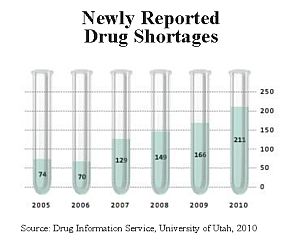
About 90 percent of all the anesthesiologists in the country report they are experiencing a shortage of at least one anesthetic. Drug shortages are also endangering cancer patients, heart attack victims, accident survivors and a host of other ill people.  The vast majority involve injectable medications used mostly by medical centers, in emergency rooms, ICUs and cancer wards. Currently, there are about 246 drugs that are in short supply and, as the chart shows, the number has been growing for some time.

So what’s going on?


Continue reading…

Rads are Good For You. Take Twice as Many.

By PAUL LEVY

Dear Mrs. Smith, I am writing to inform you that we exposed your body to an unnecessary level of radiation during your visit to our hospital. Oh, by the way, that was two years ago. We don’t intend to do anything about this for you. Also, we have known about this problem for a long time, and we don’t expect to change our procedures for future patients. Just wanted you to know. Yours in delivering the best health care in the world, Chief of Radiology and CEO. (Jointly signed.)

That’s the essence of this article by Walt Bogdanich and Jo Craven McGinty in the New York Times. Here are excerpts:

Long after questions were first raised about the overuse of powerful CT scans, hundreds of hospitals across the country needlessly exposed patients to radiation by scanning their chests twice on the same day, according to federal records and interviews with researchers.

Double scans expose patients to extra radiation while heaping millions of dollars in extra costs on an already overburdened Medicare program. A single CT scan of the chest is equal to about 350 standard chest X-rays, so two scans are twice that amount.


Continue reading…

Health Data Discovery Contest at CureTogether

By ALEXANDRA CARMICHAEL


If the fine folks at Health 2.0 are any indication, contests seem to be the best way to spark innovation these days. CureTogether is throwing another contest into the mix this summer:

The Health Data Discovery Contest

Over the past 3 years, CureTogether has gathered millions of patient-reported data points on symptoms and treatments for over 500 conditions. Now it’s time to test on a larger scale how well CureTogether data represents the general population. Do they match up or not?

So we’re running a contest to tap the most brilliant stats minds out there. Challenge our dataset! See whether or not it holds up to existing research studies. Why? You’ll be helping to demonstrate the effectiveness of online platforms for medical discovery, and ultimately helping to reduce global suffering.

There are cash prizes, and the deadline to join the contest is June 29, 2011.Continue reading…

FDA Should Add a Comparative Effectiveness Arm to Final Trials

By MERRILL GOOZNER

The Food and Drug Administration’s Prescription Drug User Fee Act is up for reauthorization next year, and so is the consumer and drug industry face-off over the contentious issue of comparative effectiveness research (CER). Consumers, patients and some physicians are demanding that CER be required of all new drugs coming to market when there are already FDA-approved therapies for the same condition. They say it will give payers and patients immediate feedback on the relative worth of the latest drugs, which are always more pricey than what preceded them, especially if the older drugs are coming off patent.

Industry opposes including CER arms in final efficacy trials. The companies claim it will place additional costs on the already expensive new drug development process; provide inadequate information for actually divining the relative worth of two competing therapies; and dissuade companies from investing in follow-on drug research, which can turn up drugs that are significantly better than older drugs.

The American Enterprise Institute’s Scott Gottlieb, who served in the FDA during the Bush administration, this week offered a lengthy brief in support of the industry position. Unfortunately, he sets up a straw man in order to knock down what could be a very effective tool for lowering the cost of medicine. It behooves industry leaders to ignore his advice, and to ignore the bleating of their marketing departments’ incessant demand for follow-on drugs.


Continue reading…

Is TV Killing Us?

By MERRILL GOOZNER

The latest Journal of the American Medical Association has a meta-analysis of the limited number (8) of studies that looked at peoples’ television habits and their relationship to incidence of diabetes, heart disease and early death. According to Anders Grøntved of the University of Southern Denmark and Frank B. Hu of Harvard Medical School, two hours of television viewing per day resulted in a 20 percent increase in type 2 diabetes, a 15 percent increase in heart disease, and a 13 percent increase in all-cause mortality. All the findings were statistically significant. In absolute terms, for every 100,000 people who viewed TV for at least two hours a day, there were an additional 176 cases of type 2 diabetes, 38 cases of fatal cardiovascular disease, and 104 deaths of any type.

Is this really a smoking gun? Correlation is not causation. What else do we know about people who watch at least two hours of TV a day? Are they depressed? Are they bored? Is their sedentary lifestyle a product of some underlying condition, which may actually be the proximate cause of the diseased state?

As the authors note in their discussion:

Although the included studies attempted to control for various known risk factors, the possibility of residual or unmeasured confounding cannot be ruled out. . . Although all of the included studies excluded participants with chronic disease at baseline, it is still possible that reverse causality may contribute to some of the associations reported herein if participants with subclinical stages of disease become more sedentary.

Karen Goozner, a certified school counselor, recently surveyed the literature that associated violent childhood behavior with watching violence on TV. The literature suggested it was a co-factor, not a causative factor. she said. In other words, families with a history of violence – who believed physicial violence was an appropriate response to social or child-rearing problems and role-modeled that behavior for their children — tended to also watch violent television for entertainment. Did the TV do it? Or was it mom or dad?

Television can be blamed for many things. Bad writing. Bad acting. But let’s not blame the escape valve for the pressures of modern life and worklife that has driven western Europeans (3.5 hours a day average); Australians (4 hours a day average) and Americans (5 hours a day average) to seek refuge in the depressing, all-night escape of drinking in front of the tube.

Another Legal Round – With a Major Misstep?

By ROGER COLLIER

The appellate court hearing in Atlanta a week ago on the Affordable Care Act’s constitutionality, one of a series along the inevitable road to the Supreme Court, showed that the opposing legal arguments are beginning to be firmly established—with each seeming to confuse the purchase of health insurance with the purchase of health care.

The Atlanta panel of three judges, with both Republican and Democratic appointees, heard arguments for and against the earlier ruling by Judge Roger Vinson in Pensacola that the individual mandate was unconstitutional and so central to the ACA that the entire act should be invalidated, and specifically that while the Commerce Clause of the Constitution gave the government authority to regulate interstate commerce, it did not allow Congress to penalize people for the “inactivity” of declining to buy a commercial product.

Former Bush administration Solicitor General Paul Clement, arguing in support of the Vinson decision, agreed that while it could be permissible for Congress to require insurance or other payment by those being treated in an emergency room, because they would already be in the “stream of commerce,” it was a very different matter to require them to pay prospectively for future care.


Continue reading…

Obama-ney Care

By SENATOR DAVID DURENBERGER

Tim Pawlenty used a recent appearance on Fox News Sunday to show a tougher demeanor and to prove he will not make health care cost containment and access a priority.   As Governor of Massachusetts Mitt Romney worked with the Democratic legislature and the health care industry to expand access to all residents of the state and to commit to cost containing behavior change. The coverage reforms came right out of conservative health policy playbooks at Wharton (in the 1980s) and the Heritage Foundation (in the 1990s) and the cost containment was to be accomplished by voluntary action of Massachusetts health systems and health plans. On which they have since foundered, leaving Romney to take the heat.

When President Obama made his commitment to reform of national coverage, access, insurance, payment, and delivery system policy, national Republicans refused to cooperate. The legislative policy approach he advocated came mostly from a bipartisan Senate Finance Committee report from 2008. Elements of it came from the bipartisan approach Romney took in Massachusetts. Congressional Republicans unanimously refused to participate in the process. Today every elected Republican has committed to repealing Obamacare (and now Obama-ney care).

What changed? The definition of Republican.  The election power of Sarah Palin, Michele Bachmann, Jim DeMint and the Rupert Murdoch/WSJ/Fox version of facts to bring out the “just vote No on government and on Obama” in a substantial enough minority of Americans turned the trick. While Pawlenty and Bachmann represent a state which has been committed to universal coverage and healthcare cost containment for decades, neither has done much to make it a reality in our state. Assuming “repeal and replace” implies state action is preferable to national, they’ve nothing to show for their efforts so far.

Senator David Durenberger, Minnesota, served in the US Senate from 1978 – 1995.

There’s No Choice but Change

By GRACE-MARIE TURNER

The outrageous distortions about the Ryan Medicare reform plan are coming from people who are accelerating the program’s path to insolvency.

Medicare is being used as a piggy bank by Democrats, with $575 billion in payment cuts used to finance two massive new entitlement programs in Obamacare. And this April, the president proposed taking another $480 billion out of the program to lower the deficit.

Payments to providers will be cut so deeply that seniors will find it harder and harder to get care. Doctors will stop taking Medicare or go bankrupt. A whopping 87 percent of doctors say they will stop seeing or will restrict the number of Medicare patients they see, further shrinking the pool of providers and further restricting access to care.

The powerful, 15-member Independent Payment Advisory Board will use price controls to meet ever-elusive spending targets. Rationing is inevitable, especially of newer medicines and technologies.

House Energy and Commerce chairman Fred Upton explained, “Last year, Medicare expenditures reached $523 billion, but the income was only $486 billion — leaving a $37 billion deficit in just one year. And with 10,000 new individuals becoming eligible each day, it’s only going to get worse.”

Medicare is $38 trillion in the red, and it accelerated five years toward insolvency in just the last year, according to the Medicare Trustees’ latest report.

Continue reading…

Analyzing A Crucial Battle In The Legal War Over Health Reform

By TIMOTHY JOST

For a lawyer, the argument of Florida v. the Department of Health and Human Services before a three judge panel of the Eleventh Circuit Federal Court of Appeals on Wednesday, June 8, was a beauty to behold.  (For a non-lawyer it was probably tedious, repetitive, and much too long).  Three active and very well-prepared judges spent two and a half hours grilling three very talented lawyers about intricacies of health policy and constitutional law, rarely allowing the lawyers time to finish a thought before interrupting with yet another question.

This is arguably the most important of the many Affordable Care Act (ACA) challenges currently pending in the courts.  The plaintiffs include over half of the states, as well as the National Federation of Independent Businesses (NFIB) and two individual plaintiffs.  It is one of only two cases in which a part of the ACA has been held unconstitutional (out of over thirty cases that have been filed), and it is the only case in which the lower court struck down the entire statute as unconstitutional. Thirty-six amicus briefs were submitted to the appellate court, including briefs filed by professional and provider organizations, members of Congress, states and state legislators (on both sides), Nobel Prize winning economists, law professors, disease and consumer organizations, and just about every conservative advocacy group in the country.

The attorneys. The importance of the case is underlined by the fact that the federal government was represented by Acting Solicitor General Neal Katyal, while the states were represented by Paul Clement, Solicitor General under the Bush administration, perhaps the first time two solicitor generals have squared off against each other in a court of appeals argument.  (The NFIB was represented by a third well-known lawyer, Michael Carvin).

Continue reading…

The Unbridgeable Gap between Left and Right on Health Reform

By JEFF GOLDSMITH

Though thoroughly smothered under 2900 pages of well meaning but poorly focused, expert-driven “good works”, the core of the Affordable Care Act was providing 30 million people subsidized health insurance coverage. As the country continues to decide how it feels about this monumental legislation, a major ideological divide persists over whether the aggressive coverage expansion in health reform was really needed or not.

Far from “selling itself,” as a overconfident White House aide suggested it would back on March 23, 2010,  health reform remains strikingly unpopular. Only 37% of the public thinks the country will be better off as a result of health reform, and only 28% think their families will be better off, according to the May Kaiser Family Foundation tracking poll.  There is a stark partisan divide over health reform.  While 72% of Democrats have a favorable opinion of health reform, a substantial minority believes the bill could have done more (covered more people, provided a public option or path to single payer).  Alternatively, 74% of Republicans have an unfavorable opinion of health reform; the same percentage favors repeal.  Independents tend to break toward the Republican view of the bill (49% unfavorable vs. 35% favorable).  Those opposed feel more intensely about health reform than those in favor.

The Ryan House Budget for 2012 zeroes out all new spending for health reform (while keeping ACA’s Medicare cuts, devoting them to deficit reduction!).  The conservative narrative is that the problem of the uninsured was liberal mythology, not meriting major new spending.  In the blogosphere, an analysis surfaced suggesting that the real uninsured problem is only about 4 million people. This apparently originated in a Heritage Foundation blog posting from late August, 2009.  Other conservative analysts charitably suggest there may be as many as ten to twelve million uninsured worthy of federal help.   To take care of this smaller number, you do not need a major coverage expansion, but merely to apply the familiar market oriented remedies: selling insurance across state lines, high deductible health plans, malpractice reform, high risk pools, etc.

Continue reading…