Categories

Category: Health Policy

Why Medicare Is the Solution — Not the Problem

By ROBERT REICH

Not only is Social Security on the chopping block in order to respond to Republican extortion. So is Medicare.

But Medicare isn’t the nation’s budgetary problems. It’s the solution. The real problem is the soaring costs of health care that lie beneath Medicare. They’re costs all of us are bearing in the form of soaring premiums, co-payments, and deductibles.

Medicare offers a means of reducing these costs — if Washington would let it.

Let me explain.

Americans spend more on health care per person than any other advanced nation and get less for our money. Yearly public and private healthcare spending is $7,538 per person. That’s almost two and a half times the average of other advanced nations.

Continue reading…

Why Let IPAB Control Health Care?

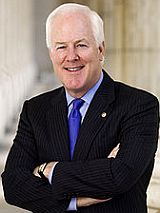
By SENATOR JOHN CORNYN

Former House Speaker Nancy Pelosi once said that Congress needed to pass the new health care law so the American people can find out what’s in it. Many have since taken her up on that — and they do not like what they see in Obamacare. Seniors on Medicare are particularly alarmed by the new Independent Payment Advisory Board, which could severely restrict their access to treatments and medications.

The advisory board would change Medicare forever. This group of unelected, unaccountable bureaucrats has now been given the power to restrict access to health care for our seniors. They can do so through price controls on medical services that would become law without a vote in Congress.

This board, included in Obamacare, was bad enough to begin with, but now President Barack Obama wants to strengthen it further. After two years of wasteful spending, he sees the new board as the key to reducing Washington’s budget deficit. Instead of reforming our entitlement programs responsibly, he wants to appoint 15 “experts” to balance the budget on the backs of our seniors.

Continue reading…

Health Care Reform in 2 Short Sentences

By DAVID E. WILLIAMS

Foes of the Patient Protection and Affordable Care Act (PPACA) made a big point of complaining about the length of the bill. Personally, I think that criticism is unfair, because the law deals with a complex industry that’s almost one-fifth of the economy.

But today I read a brilliant two-sentence proposal in the letters section of the Wall Street Journal from David J. Gross, a Florida dermatologist. He was reacting to an article about the extensive cardiac care received by former vice president Dick Cheney.

Before any of Dick Cheney’s heirs get a nickel from his estate, Medicare should be reimbursed for the difference between what it paid out versus what he paid in all these years. This same paradigm should apply to all of us.

(Actually the essence is expressed in just one sentence.)

If we actually implemented that solution it would have significant salutary effects:

* Make Medicare financially viable for the long run
* Improve inter-generational equity
* Instill cost consciousness in Medicare beneficiaries, thus keeping a lid on expenses
* Reduce the need for an estate tax

Continue reading…

Am I A Socialist?

By BOB WACHTER

Am I a socialist? I don’t think so, but I did inch in that direction during the four days I spent in northern Norway last week, visiting the local hospital in Bodø and speaking to about 20 of the nation’s hospital CEOs. Here’s what I learned.

First, a word on visiting northern Norway – above the Arctic Circle – in summertime.

I’d rank experiencing the midnight sun (your wristwatch says midnight, but the sky looks more like late afternoon) as among the most awe-inspiring things I’ve seen in my travels, up there with Xian’s terra cotta warriors, Scotland’s Isle of Skye, Masada at sunrise, and the 8th hole at Pebble Beach. And the people are a delight – unpretentious, outdoorsy types who were far less reserved than I’d been led to expect. It is well worth a visit.

But the medical piece was what fascinated me – particularly as it reflected the country’s broader societal values. Norway is a wealthy country, owing both to the miracle of oil reserves and to an industrious and well-educated population. Belying the notion that capitalism is the only way to achieve prosperity, the country is unabashedly socialist. Although the tax rate is high (about 50 percent for top earners), this level of taxation is an accepted part of life, the subject of absolutely no political debate. When the economy dipped a couple of years ago – a mere blip by world standards – it was a given that the government would pump in money to rebuild roads and improve the infrastructure.

Continue reading…

Interpreting the Draft Insurance Exchange Regs

By ROGER COLLIER

The Obama administration’s progress—with just a few stumbles—towards health care reform implementation took another major step this past week. In a carefully chosen small business setting—a Washington DC hardware store—HHS Secretary Kathleen Sibelius released draft regulations for the health benefit exchanges called for by the Affordable Care Act.

The exchanges, required to be established for every state, are predicted to serve some 24 million consumers by 2019 (provided that the ACA is neither significantly changed nor found unconstitutional), with the majority receiving federal subsidies to help pay for coverage.  So far, a dozen states have enacted bills to create exchanges, while in nine states such legislation has failed.

Responding to strident opposition to the ACA requirements from conservatives and from many business owners, Secretary Sibelius emphasized the flexibility of the draft regulations, which would allow considerable variation among states, give participating businesses considerable latitude in coverage selection, and interpret states’ readiness for exchange operation more loosely than implied by the ACA itself.  In describing the intent of the exchanges, she stated that they will “offer Americans competition, choice, and clout.”

Well, maybe, depending on one’s interpretation of the draft regs.

Continue reading…

Personal Liberties Versus Public Harm

By PAUL LEVY

David Ropeik, about whose excellent work on risk perception I have written before, recently offered some additional perspectives on the issue of vaccinations — making us think about the cost of personal liberties to public harm. He wrote this Op-Ed, entitled, “Public health: Not vaccinated? Not acceptable,” in theLos Angeles Times. The subheading is: “What should we do about people who decline vaccination for themselves or their children and put the public at risk by fueling the resurgence of nearly eradicated diseases?”

Here are some excerpts:

What does society do when one person’s behavior puts the greater community at risk? We make them stop. We pass laws, or impose economic rules or find some other way to discourage individual behaviors that threaten the greater common good. You don’t get to drive drunk. You don’t get to smoke in public places. You don’t even get to leave your house if you catch some particularly infectious disease.

Continue reading…

The Quantified Self: Making the Personal Public

By SCOTT PEPPET

“Only the shallow know themselves.” — Oscar Wilde

Human instrumentation is booming. FitBit can track the number of steps you take a day, how many miles you’ve walked, calories burned, your minutes asleep, and the number of times you woke up during the night. BodyMedia’s armbands are similar, as is the Philips DirectLife device. You can track your running habits with RunKeeper, your weight with a WiFi Withings scale that will Tweet to your friends, your moods on MoodJam or what makes you happy on TrackYourHappiness. Get even more obsessive about your sleep with Zeo, or about your baby’s sleep (or other biological) habits with TrixieTracker. Track your web browsing, your electric use (or here), your spending, your driving, how much you discard or recycle, your movements and location, your pulse, your illness symptoms, what music you listen to, your meditations, your Tweeting patterns. And, of course, publish it all — plus anything else you care to track manually (or on your smartphone) — on Daytum or mycrocosm or me-trics or elsewhere.

There are names for this craze or movement. Gary Wolf & Kevin Kelly call this the “quantified self” (see Wolf’s must-watch recent Ted talk and Wired articles on the subject) and have begun an international organization to connect self-quantifiers. The trend is related to physiological computing, personal informatics, and life logging.

There are all sorts of legal implications to these developments. We have already incorporated sensors into the penal system (e.g., ankle bracelets & alcohol monitors in cars). How will sensors and self-tracking integrate into other legal domains and doctrines? Proving an alibi becomes easier if you’re real-time streaming your GPS-tracked location to your friends. Will we someday subpoena emotion or mood data, pulse, or other sensor-provided information to challenge claims and defenses about emotional state, intentions, mens rea? Will we evolve contexts in which there is an obligation to track personal information — to prove one’s parenting abilities, for example?

Continue reading…

Trying Too Hard to Save Medicare

By DAVID DRANOVE

In the latest edition of Health Affairs, Dr. Francis Crosson, chair of the Council of Accountable Physician Practices and senior fellow at Kaiser Institute of Health Policy, offers an impassioned defense of Accountable Care Organizations. Crosson’s main point is in his title: “The Concept is Too Vitally Important to Fail.” He adds:

“The accountable care organization model is intended as an option both for Medicare and for non-Medicare, commercial health care services. However, the general model and the specific shared savings model proposed for Medicare have come under criticism. Much of the criticism is valid and should be addressed. However, none should serve to prevent the evolution of this model.”

If the concept is “It sure would be nice to hold down costs and improve quality” then how can I argue? Who wants to argue against God, Mother or Country? But if the concept is “The only way to save the healthcare system is to organize everyone into ACOs,” well forgive me for disagreeing.

Continue reading…

Frances Dare, Cisco: Global Health Leaders’ Survey

MATTHEW HOLT

By MATTHEW HOLT

Cisco’s Frances Dare is an occasional but regular and welcome guest on THCB. Frances spends a lot of time looking at the environment for Cisco’s products and services in health care both in the US and internationally–think demand and readiness bandwidth and live video! Earlier this year Cisco released the results of a survey done with numerous international leaders in health care about their problems in general and their readiness for telehealth solutions in particular. The overall verdict? It’s getting pretty close, especially outside of the US. For the longer story, grab a cup of coffee and watch this interview in which I bring chat and Frances brings data!

The Awful Dichotomy Between Health Care Politics and Policy

By ROBERT LASZEWSKI

Amy Goldstein has an important article in today’s Washington Post detailing the place Don Berwick, the Medicare and Medicaid administrator finds himself in.

It is all but certain he will have to leave his post at year’s end, when his recess appointment expires, because the Senate will not confirm him for a lack of Republican support.

Berwick is one of the most respected health care experts in the country—his career has been dedicated to improving quality first and with that the cost of care. With the new law giving his agency more opportunities to experiment with new approaches and the ability to more quickly implement the things that work, he was the ideal choice.

But with the Democrats ramming the law through without a political consensus to support it, Berwick also became the political whipping boy for opponents to pile on. That he has been willing to point to the things that work in places like Britain only gave the political opportunists plenty of red meat to throw into an already red hot ideological debate.

Continue reading…