Categories

Category: Health Policy

Does Mitt Romney Deserve the Abuse He’s Getting on Health Care? Yes, He Does.

By DAVID E. WILLIAMS

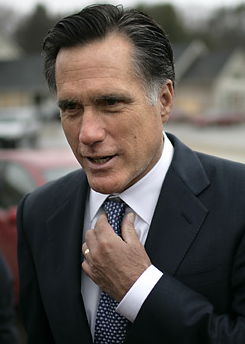
Mitt Romney took a big beating on the Wall Street Journal‘s editorial page last week, the same day he laid out his health care plan in the USA Today and defended his position on the topic in a speech in Michigan. I’m not a big Romney fan but had been feeling sympathetic enough toward him on this issue to defend him. After reading what he has to say, though, I’m not prepared to offer a defense. On the other hand, Massachusetts health reform remains defensible, if incomplete.

Here’s what Mitt Romney should have said:

  • Health reform in Massachusetts has achieved its main goal: more than 98% of residents now have health insurance including 99.8% of children
  • The Massachusetts reform was achieved by bringing together all major stakeholders in the state from both parties, and focusing on addressing a serious problem rather than scoring political points against one another at the expense of the public good
  • Gaining consensus enabled health reform not just to get passed, but actually implemented more or less as envisioned, in contrast to earlier failed attempts at universal coverage
  • Massachusetts’ long history of substantial public sector investments made this kind of reform feasible. Good schools translate into an educated workforce that attracts high-wage employers who can afford to offer health insurance. That made it possible for the state to offer a safety net that was more generous than other states’ (e.g., in its eligibility criteria for Medicaid) even before the enactment of so-called Romney Care
  • Massachusetts, like other states, still has a cost problem. It’s no surprise that Massachusetts health reform didn’t bring costs down. First, that wasn’t its goal. Second, cost problems can’t be addressed in a serious manner without changes in the health care delivery system and reform of Medicare. Tackling the delivery system is very difficult, and states have no power to reform Medicare. That’s why health reform can’t be left purely to the states; it has to be tackled at the national level
  • Even a cold-blooded capitalist like me realizes that pure free-market approaches aren’t effective or fair in health careContinue reading…

How Should Medicare Pay for Medical Care?

By JOHN GOODMAN

There are basically five possibilities. To compare them, let:

S = each unit of service, or a package of services

P = the price of each unit of service, or the price of a package of services

Then the government can:

1.     Dictate every service it will pay for and the price it will pay for each of them (fix S and P), leaving providers to compete only on amenities, including waiting times.

2.     Dictate S, but leave providers free to compete on P, say, through a system of competitive bidding.

3.     Dictate P, but leave providers free to compete on what S they will provide for that price.

4.     Initially fix S and P, but leave providers free to opt out, substituting different bundles of S & P as long as government’s cost goes down and quality of care goes up.

5.     Initially fix S and P, but allow patients to opt out, managing a portion of the funds directly and making their own purchasing decisions.

Alert readers will recognize (4) and (5) as NCPA solutions, (3) as the Rivlin-Ryan plan, and (1) as the status quo. But I’m getting ahead of the story.

Under the current system (Method 1), Medicare establishes a list of about 7,500 physician tasks it will pay, and sets the price for each of them. These prices differ, however, for every city, town, and hamlet in the land. So that in fact there are millions of prices that Medicare is administering every day.

One important drawback of this system is that it’s in no one’s interest to curtail spending. Every provider maximizes profit and every patient maximizes utility by exploiting the reimbursement formulas.

Continue reading…

The Quantified Self and the Future of Health Care

By GARY WOLF

The  Quantified Self is a global collaboration of users and tool-makers interested in the personal meaning of personal data. There are now Quantified Self groups in more than twenty cities around the world. Our inspiration is the Homebrew Computer Club. Once upon a time, computers were thought to be useful only for scientists, managers, and planners. But a few people saw things differently: they argued that computers were for  all of us. That notion seemed very strange. What would an ordinary person do with a computer? But it turned out that the personal uses of computers were not just an important use, but the most important use.

We at the Quantified Self think of data the same way. Nearly every day, we hear about a new system to track human behavior. There is sensor-based tracking of sleep,  activity,  location,  heart rate,  blood glucose,  metabolism, even facial expression. There are web services to track mood,  diet,  menstrual cycle,  productivity, and  cognition. (This is just a sample, to give a sense of range, and not an endorsement of any particular approach.) Often, when I talk to my friends in the health care field, they are eager to know how exploring these tools might be justified in conventional health care terms: return on investment, treatment outcomes, patient compliance, etc. This managerial view of data is part of the important conversation that happens every day on the The Health Care Blog. But for the remainder of this post, I’d like to ask you put these questions aside. Seeing something of the big culture change happening outside health care might prove useful for solving some of the seemingly intractable problems inside it.

There are three reasons people track themselves:

They have a specific goal, such as losing weight, keeping fit, sleeping better, ameliorating a chronic condition, or training for an athletic competition.
They are generally curious. Surprisingly often, people find their tracking data valuable even in the absence of narrowly-defined utility. These self-trackers see their data as a kind of mirror on the self, helpful in maintaining overall self-awareness. (Like keeping a diary.)

They want to establish a baseline with which to measure future changes. This often goes along with a belief that the data will become more powerful over time. Personal data, in this sense, is an investment that will pay off in the future, and is part of an exploratory, pioneering worldview.Continue reading…

The Lightweight Romney Health Plan

By ROBERT LASZEWSKI

Mitt Romney has outlined his new health plan. He outlined five key steps in an op-ed in USAToday. Here is a summary:

Step 1: Give states the responsibility, flexibility and resources to care for citizens who are poor, uninsured or chronically ill.

Step 2: Reform the tax code to promote the individual ownership of health insurance.

Step 3: Focus federal regulation of health care on making markets work…For example, individuals who are continuously covered for a specified period of time may not be denied access to insurance because of pre-existing conditions. And individuals should be allowed to purchase insurance across state lines, free from costly state benefit requirements. Finally, individuals and small businesses should be allowed to form purchasing pools to lower insurance costs and improve choice.

Step 4: Reform medical liability. We should cap non-economic damages in medical malpractice litigation.

Step 5: Make health care more like a consumer market and less like a government program. This can be done by strengthening health savings accounts that help consumers save for health expenses and choose cost-effective insurance.

It looks to me like his health care outline is more intended to make conservative Republicans happy then to really propose ways to reform America’s health care system.

There isn’t one new idea here and it all comes straight from the 2010 Republican campaign playbook.Continue reading…

The Unbearable Lightness of Being Mitt

By ROBERT REICH

One of my regrets in life is losing the chance to debate Mitt Romney and whip his ass.

It was the fall of 2002. Mitt had thundered into Massachusetts with enough money to grab the Republican nomination for governor. Meanwhile, I was doing my best to secure the Democratic nomination. One week before the Democratic primary I was tied in the polls with the state treasurer, according to the Boston Herald, well ahead of four other candidates. But my campaign ran out of cash. Despite pleas from my campaign manager, I didn’t want to put a second mortgage on the family home. The rest is history: The state treasurer got the nomination, I never got to debate Mitt, and Mitt won the election.

With Trump, Gingrich, Bachmann, and possibly Palin now in the race for the Republican presidential nomination, “GOP” is starting to mean Goofy, Outrageous, and Peculiar. Mitt would pose the most serious challenge to a second Obama term.

I say this not because Mitt’s mind is the sharpest of the likely contenders (Gingrich is far more nimble intellectually). Nor because his record of public service is particularly impressive (Tim Pawlenty took his governorship seriously while Mitt as governor seemed more intent on burnishing his Republican credentials outside Massachusetts). Nor because Mitt is the most experienced at running a business (Donald Trump has managed a giant company while Mitt made his money buying and selling companies.) Nor, finally, because he’s especially charismatic or entertaining (Sarah Palin can work up audiences and Mike Huckabee is genuinely funny and folksy, while Mitt delivers a speech so laboriously he seems to be driving a large truck).Continue reading…

Why We Should Think Twice About Getting A CT Scan

By SHANNON BROWNLEE & SAM WAINWRIGHT

There’s an eerie video up on YouTube, shot by a Japanese journalist who ventured into the evacuation zone surrounding the Fukushima nuclear power plant, armed with a camera and a radiation meter. The video looks like b-roll footage from a low-budget zombie movie, with roving bands of stray dogs and a soundtrack of the radiation meter’s increasingly frantic beeping.

Shortly after the earthquake that damaged the plant, the Japanese government evacuated residents from a more than 1,000 square mile zone. Last week, they raised the severity level of the crisis at Fukushima to a 7 out of 7, making it the worst nuclear disaster since the complete meltdown of the reactor at Chernobyl, in 1986. In its wake, worldwide fear of nuclear power spiked. The German government shut down seven of its 17 nuclear reactors, and plans to eliminate nuclear power by 2020. In the U.S., a Fox News Poll conducted in early April found that 83 percent of respondents thought a similar disaster could happen to an American nuclear plant.

People fear radiation for good reason. All ionizing radiation passes unimpeded through cells of the body, mutating or destroying DNA along the way. The danger level depends on the dose and the length of exposure. We’re exposed to small amounts of radiation all the time — from cosmic rays to the normal radioactive decay of soil, rocks and building materials. Even the granite in the U.S. Capitol Building emits low levels of radiation. These levels are harmless, but a high dose can kill, and prolonged or repeated moderate exposure can lead to cancer.Continue reading…

Neither the Republicans Nor the Democrats Want to Face the Provider Cost Problem

By ROBERT LASZEWSKI

A key piece of Paul Ryan’s deficit reduction plan is to change Medicare as we know it. It appears his bold Medicare premium support proposal is failing to gain traction–it is dead as part of any deficit reduction deal this year. Worse, his Medicare proposal looks to be giving Democrats lots of political ammunition for the 2012 elections.

What lies at the heart of Ryan’s Medicare difficulties is that he would all but abandon future seniors (those now under age-55) to a health care system whose age-adjusted premium support would increase each year only at a rate equal to the increase in the consumer price index while their health care costs would likely continue to increase far faster.

Simply, Ryan just shifts the future burden of uncontrolled Medicare health care costs from the federal government to the senior. That will solve a big part of our federal deficit problem but hardly help people.

Yes, he offers a defined contribution health care solution with the promise of invigorating the markets and making costs lower. But we have had a form of Medicare premium support and private competition for years (Medicare Advantage) and there isn’t a lot of evidence the market can get the cost control job done on its own. (See: Defined Contribution Health Care—The Conservatives’ Silver Bullet)Continue reading…

Translation Needed

By DEREK LOWE

The “Opinionator” blog at the New York Times is trying here, but there’s something not quite right. David Bornstein, in fact, gets off on the wrong foot entirely with this opening:

Consider two numbers: 800,000 and 21. The first is the number of medical research papers that were published in 2008. The second is the number of new drugs that were approved by the Food and Drug Administration last year.

That’s an ocean of research producing treatments by the drop. Indeed, in recent decades, one of the most sobering realities in the field of biomedical research has been the fact that, despite significant increases in funding — as well as extraordinary advances in things like genomics, computerized molecular modeling, and drug screening and synthesization — the number of new treatments for illnesses that make it to market each year has flatlined at historically low levels.

Now, “synthesization” appears to be a new word, and it’s not one that we’ve been waiting for, either. “Synthesis” is what we call it in the labs; I’ve never heard of synthesization in my life, and hope never to again. That’s a minor point, perhaps, but it’s an immediate giveaway that this piece is being written by someone who knows nothing about their chosen topic. How far would you keep reading an article that talked about mental health and psychosization? A sermon on the Book of Genesization? Right.Continue reading…

A Mother’s Day Manifesto: Blood, Toil, Tears, and Sweat

AMY ROMANO

By AMY ROMANO

I’ve been writing about safe and effective maternity care for years and direct a coordinated national effort to transform maternity care, but this is a post where the political gets personal.

Last weekend, I attended the birthday party for the sweetest one year old. There were all of the typical rituals – hands and face covered in cake frosting, a pile of toys and new clothes, and a tuckered out babe falling asleep as the party wound down. But this birthday was bittersweet, because it also marks the anniversary of a crisis that very nearly cost the life of this child’s mother, my friend.

Nine days after giving birth, rather than gazing with equal parts sheer love and sheer exhaustion at her baby, my friend – we’ll call her  Near Miss Mom – was unconscious in an ICU on a ventilator, recovering from the emergency hysterectomy and blood transfusion that had saved her life.

I’d say Near Miss Mom had become a “statistic” but we keep no statistics on near miss maternal events, even though multiple agencies and organizations have sounded alarm bells about the rising rate of maternal mortality and have cautioned that for every maternal death, there are many more near misses. Legislation just introduced in the House by Representative Conyers would, among other provisions, establish steps toward a standard definition and routine counting and reporting of maternal near misses.

Because if we’re not counting near misses, we’re not systematically learning what our health care system could be doing to avert them, and for that matter the deaths that do occur. A  just-released report from a state-wide, multi-year investigation of maternal deaths in California found that 38% were likely to be preventable. Let’s take Near Miss Mom’s case, which almost certainly could have been averted far before she was so close to death.Continue reading…

THCB Live: SAP

Matthew Holt interviewed the leaders of enterprise software giant SAP at HIMSS 2011 back in late February. On the left it’s Andrew Flanagan, National Vice President – Healthcare, and on the right John Papandrea, Senior Vice President – Global Healthcare Sector Head.