Categories

Category: Health Policy

In Obamacare Case, Constitution Is Victor

By ILYA SHAPIRO

Today is a great day for liberty.  By striking down the individual mandate, the Eleventh Circuit has reaffirmed that the Constitution places limits on the federal government’s power.  Congress can do a great many things under modern constitutional jurisprudence, but, as the court concludes, “what Congress cannot do under the Commerce Clause is mandate that individuals enter into contracts with private insurance companies for the purchase of an expensive product from the time they are born until the time they die.”  Indeed, just because Congress can regulate the health insurance industry does not mean it can also require people to buy that industry’s products.

One of the striking things about today’s ruling is that, for the first time in one of these cases, a Democrat-appointed judge, Frank Hull, has ruled against the government.  Just as the Sixth Circuit Judge Jeffrey Sutton made waves by being the first Republican appointee to rule in the government’s favor, today’s 300-page ruling shows that the constitutional issues raised by the healthcare reform—and especially the individual mandate—are complex, serious, and non-ideological.

Supporters of limited constitutional government need to temper their celebrations—just as they wisely tempered their sorrows after the last ruling—because we must all now realize that this will not end until the Supreme Court rules.  Nevertheless, today’s decision gives hope to those who believe that there are some things beyond the government’s reach and that the judiciary cannot abdicate its duty to hold Congress’s feet to the constitutional fire.

Ilya Shapiro is a senior fellow in constitutional studies at the Cato Institute and editor-in-chief of the Cato Supreme Court Review.

This post first appeared at Cato@Liberty – Cato Institute Blog.

Reduce Antibiotic Resistance: Get Your Flu Vaccine

By LAURI HICKS, DO, SEEMA JAIN, MD, & RAMANAN LAXMINARAYAN

A study published in the July issue of Infection Control and Hospital Epidemiology shows that antibiotic prescriptions tend to spike during flu season, even though influenza is caused by a virus and cannot be treated with antibiotics.

Some of these antibiotic prescriptions are justified – bacterial pneumonia, which must be treated with antibiotics, is also common during the winter months. And getting the flu puts you at higher risk for developing complications from secondary infections, including bacterial pneumonia.

Yet some people suffering from the flu virus alone may demand–and get–an antibiotic even though viral infections do not respond to antibiotic treatment.

According to Extending the Cure, a nonprofit project funded by the Robert Wood Johnson Foundation’s Pioneer Portfolio, between 500,000 to one million antibiotic prescriptions are filled each year during flu season for patients who have the flu and no bacterial illness.

Why should we care about how many antibiotics are prescribed?

When antibiotics are overused or inappropriately used, bacteria can develop antibiotic resistance, or the ability to withstand antibiotic treatment, making bacterial infections difficult to treat. Antibiotic resistance can develop quickly. Today’s antibiotics – the wonder drugs that transformed modern medicine – are used so commonly that we face the prospect of a future with a multitude of resistant bacteria and a shelf full of ineffective drugs.

Continue reading…

Healthcare Spend at Historic Low

By MERRILL GOOZNER

In a rare bit of good news for the Obama administration and budget policymakers,  health care costs increased last year at their slowest pace since the advent of Medicare and Medicaid in the mid 1960s.

The new analysis, released on July 25 by officials at the Centers for Medicare and Medicaid Services, the agency that administers the two programs, showed health care spending grew last year at a “historic” low  3.9 percent rate, which is slightly below 2009’s record-setting low of 4.0 percent. Health care spending as a share of the economy remained stuck at 17.6 percent, a welcome change from most years when it increases its share of total economic activity.

At a time when the White House and congressional leaders are worried about rampant long term growth of the government’s major health care  insurance programs for seniors and the poor, the new data will allow government actuaries to project growth in  Medicare and Medicaid over the next decade will be less than previously feared. This could potentially ease the task of the Obama administration and congressional leaders somewhat when they finally negotiate an agreement for slowing the growth of entitlement programs to help reduce the deficit.

Moreover, CMS actuaries are now saying the cost of insuring 30 million previously uninsured Americans under the president’s signature health care reform bill will add only a sliver to overall spending, and that increase is about half the projected growth rate of a year ago.Continue reading…

A Legal Challenge To CMS’ Reliance On The RUC

By BRIAN KLEPPER & DAVID KIBBE, MD

This week in a Maryland federal court, six physicians based at the Center for Primary Care in Augusta, GA filed suit against HHS Secretary Kathleen Sebelius and CMS Administrator Donald Berwick. The complaint, spearheaded by Paul Fischer MD with DC-based lead counsel Kathleen Behan, alleges that the doctors have been harmed by the Medicare payment structure developed through the agencies’ reliance on the American Medical Association’s Relative Value Scale Update Committee (RUC).

The suit also claims that the agencies have functionally treated the RUC as a federal advisory committee. But they have not required the RUC to adhere to the Federal Advisory Committee Act’s (FACA) stringent management and reporting rules – e.g., balanced representation, transparent proceedings, and scientifically valid analytical methodologies – that keep the proceedings in the public interest. The plaintiffs request injunctive relief, which would freeze the relationship between CMS and the RUC until the advisory group complies with FACA’s requirements. Of course, compliance would drastically change the way the RUC conducts its affairs, something it is almost certainly loathe to do.

Continue reading…

The Economic Urgency of Health Care Reform

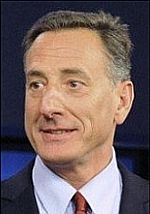
By GOV. PETER SHUMLIN

Watching the events of the past several weeks in Washington has been sobering. Decades of failed fiscal policy have finally come home to roost and Congress is tied in knots trying to find a compromise solution and avoid American default. Americans rightly are scared that our leaders can’t find a way out of this muddle. But the really sobering part is this: the solutions under consideration don’t fix the problem. Even if Congress enacts the most draconian spending cuts advanced by the Tea Partiers, and all of the tax increases advanced by the liberals, we will not be out of the mess. The crisis will still loom. Why? Because health care costs continue to increase at an unsustainable rate, and health care spending is the single largest category of federal spending. Without real, sustained health care cost control, we still face a crisis, no matter what package of cuts and revenues the new “gang of 12” develops.

As a Governor, I can’t ignore this problem. Health care spending more than tripled in Vermont between 1992 and 2009. Between 2000 and 2009, health care spending as a share of our gross state product rose from 12.9 percent to 18.5 percent.

We come face to face with the impact of growing health care costs every year in our state budget process. Health care squeezes out all sorts of other priorities, and we (state government) aren’t even paying our fair share of the increase. The state can’t afford to sustain a rate of growth that far exceeds growth in our economy and growth in our tax revenues. So we shift costs from state health care programs to the private sector. The private sector can’t sustain the growth, either, so they cut jobs and reduce insurance coverage for their employees. That’s why, despite aggressive efforts to expand government-sponsored insurance coverage in Vermont, nearly one in ten Vermonters is uninsured, and nearly a quarter of our population is underinsured — they have coverage, but could still go bankrupt if they had a major illness.

Continue reading…

The bleak state of the (health care) economy

By MATTHEW HOLT

Health care spending increased at 3.9%, its slowest rate for decades in 2010 following a slowdown in 2009. Merill Goozner has the play by play but it’s clear that the numbers are starting to reflect what Jeff Goldsmith said in his keynote at Health 2.0 last year.–even the health care industry can not grow geometrically forever.

But there’s something hiding in these data. Recently I gave an update for a talk that I’d given 15 years before at the Oregon Medical Association. I reviewed the 2010 year forecast I did for IFTF in 1997 and I was struck by how in our scenarios we had overestimated the per capita spend on health care, but underestimated its share of GDP. That meant while overall health spending didn’t grow as fast over the decade as we’d forecast, the economy grew much slower. And of course the big jumps in health care as share of GDP that we saw in 1991-4 and 2007-9 came when the economy tanked

As we enter the 7th year of our lost decade with the stock market starting to predict a double dip recession, and real unemployment in the high teens, we face the prospect of getting to 20% of the GDP going to health care via not a boom in spending brought on by the ACA or a rich economy making rational choices, but by default. Of course these days the loonies in the Tea Party are reminding us of  the other meaning of the word default!

Continue reading…

The Debt Ceiling and Health Care

By LINDA BERGTHOLD

Over the weekend, I watched Twitter as drops of information about the debt ceiling leaked out bit by bit. There was a deal. No deal. Well, maybe a deal.The deal would require Congress to wait until a Balanced Budget Amendment passed in the states before it acted. Well, no it actually didn’t include that. Medicare was on the chopping block. Well, not cuts to members, only cuts to physicians and other providers. What’s an ordinary person to think?

There was plenty of humiliation to go around. Speaker Boehner didn’t return the president’s phone calls. Speaker Boehner couldn’t rally his own party to support his deal. Majority Leader Reid couldn’t get Republicans to talk to him. Sen. McConnell would only talk to Biden not Reid, and his unfortunate facial expressions left us with the impression that he had a serious digestive problem. The classic picture was Boehner in the House elevator letting out a long groan as the doors closed. He was not the only one groaning.

Pundits made the worst cliché pronouncements. Everything was a “crisis”; there was lots of “kicking the can down the road.” TV time had to be filled and fill it they did. Those smart folks who spent the weekend outside, barbecuing or swimming, were the wise ones. We all knew it would come down to the last moment, but oh, was it painful to watch those last agonizing hours.

Continue reading…

There Will Be Blood

By ROBERT LASZEWSKI

The debt deal is finally done. But it really isn’t an agreement on what cuts will be made, just the process that will be used to make them.

The real work is left to the Congressional appropriators for the first $917 billion and for a super-committee of Congress for the second $1.2 trillion to $1.5 trillion in ten-year cuts.

That second tranche is where health care will make its contribution. The super-committee has to make its decisions by November 23rd and, as a practical matter, the Congress can only accept what the super-committee decides or face the consequences of the automatic $1.2 trillion fallback cuts.

When it comes to health care and the super-committee, all federal health care spending is on the table—–Medicare, Medicaid, the new law, benefits, and provider payments.

Since the budget window for the deal is ten years, it is not likely that any changes will be made to entitlement eligibility—such as delaying the Medicare eligibility age from 65 to 67. It just wouldn’t be fair to tell a 60-year-old their Medicare eligibility age is being raised. But we could see more means testing of Medicare premiums.

Continue reading…

Off-base Optimism

By PAUL LEVY

I like to view myself as an optimist, but two recent reports demonstrate the danger of misplaced or premature optimism.  I fear that they are influenced by what the authors hope will be the case rather than what has proven to be the case.  I find this generally to be the situation in the health care arena, where public policy is often based on shallow interpretations of data and on people’s political wishes rather than rigorous analysis.

The first comes from Karen Davis at the Commonwealth Fund, in a blog post entitled, “Health Spending Continues to Moderate, Cost of Reform Overestimated.”  We should know from the title alone that the conclusions cannot be accurate:  It is just too soon to reach them.  It would be like drawing a picture of climate change from one year of data about temperatures.

Here’s an excerpt:

A recent report from the Centers for Medicare and Medicaid Services (CMS) shows that national health spending grew at a historically low rate of 3.9 percent in 2010, almost paralleling the 3.8 percent increase in our gross domestic product (GDP) last year. This is . . . good news for the federal government as the slowdown indicates that the cost of health reform has been overestimated.

Now, let’s look at the possible reasons:

First . . . continuing declines in employment and private health insurance coverage have contributed to fewer people receiving both essential and nonessential treatment. [F]ewer people have received needed preventive and acute care. And people have increasingly gone without prescriptions, tests, and elective procedures.

Continue reading…

Chinese Research: Not Quite the Juggernaut?

By DEREK LOWE

A perennial topic around here has been the state of scientific research in China (and other up-and-coming nations). There’s no doubt that the number of scientific publications from China has been increasing (be sure to read the comments to that post; there’s more to it than I made of it). But many of these papers, on closer inspection, are junk, and are published in junk journals of no impact whatsoever. Mind you, that’s not an exclusively Chinese problem – Sturgeon’s Law is hard to get away from, and there’s a lot of mediocre (and worse than mediocre) stuff coming out of every country’s scientific enterprise.

But what about patents? The last couple of years have seen many people predicting that China would soon be leading the world in patent applications as well, which can be the occasion for pride or hand-wringing, depending on your own orientation. But there’s a third response: derision. And that’s what Anil Gupta and Haiyan Wang provide in the Wall Street Journal. They think that most of these filings are junk:

Continue reading…