Categories

Category: Medical Practice

Should a Doctor Prescribe Drugs that are Unapproved by the FDA?

By JULIET MAVROMATIS

Here’s an interesting clinical dilemma brought to my attention by another physician.

She was asked to refill a prescription for a drug called domperidone to help a patient with lactation. Domperidone is not FDA approved in the United States for any indication. However, in Europe and in Canada it is approved as a promotility agent for patients with a condition called gastroparesis, which causes the stomach to empty very slowly and results in chronic nausea and vomiting. As a side effect the drug is also known to increase the production of prolactin, a hormone that stimulates milk production. In the case of this physician’s patient, she had adopted a child and found that the medication had effectively enabled her to produce milk and nurse, with seemingly no untoward effects. It’s unclear who had initially prescribed the drug, but various online lactation support forums discuss it as an option  for women who have trouble with lactation.

The questions: Is it legal, ethical or good medical practice for a physician in the United States to write a prescription for domperidone for a patient who has been using it for lactation with good results? How about for gastroparesis? Where does one get the drug? Is it even legal to sell the drug in the United States?

I’ve cared for at least two patients who have used domperidone. In both instances it was ordered by prescription from an overseas source by a local gastroenterologist. In these two cases my patients had tried just about everything on the market in the United States for gastroparesis and were still struggling with debilitating symptoms. In one case, my patient had required hospitalizations and ultimately a feeding tube because of intractable vomiting. The drug was ineffective in both patients and it was eventually discontinued.


Continue reading…

Why Doctors Should Stay Out of the Business of Building EHRs

By FRED TROTTER

The original Hipoocratic Oath states:

I will not use the knife, not even on sufferers from stone, but will withdraw in favor of such men as are engaged in this work.

One modern version reads:

I will not be ashamed to say “I know not,” nor will I fail to call in my colleagues when the skills of another are needed for a patient’s recovery.

The idea here is that a doctor needs to recognize when another practitioner has a skill that they do not, and that they must refrain from “practice” when another person has demonstrable expertise in that area of practice.

It is now 2013. It is time for doctors to stop “writing their own EHR” from scratch. They need to bow out of this in favor of people who have developed expertise in the area.

I just found out about another doctor who has decided to write his own EHR, because he has not been able to find one that supports his new direct pay business model adequately. In the distant past I encountered a doctor who believed that his “Microsoft Word Templates” qualified as an EHR system. This is a letter to any doctor who feels like they are comfortable starting from-scratch software development for an EHR in 2013 or later.

You might believe yourself to be an EHR expert.

Are you sure about that? Are you sure that you are not just an EHR expert user?

This difference is not unlike your relationship with your favorite thoracic surgeon. Or for that matter, your relationship with the person who built your car. The fact that you are capable of expertly evaluating and using EHR products does not mean you are qualified to build one. Just like the fact that you are qualified to treat a patient who has recently had heart surgery or to discern when a patient might need heart surgery does not make you qualified to perform that heart surgery. Similarly, the fact that you can drive, or even repair your automobile, does not provide you with the expertise you need to build a car from scratch.

The ethical situation that you are putting yourself in by developing your own EHR is fairly tenuous. Performing heart surgery without being a heart surgeon, building and driving your own car without being an automotive engineer and a doctor coding their own EHR system from scratch all have the same fundamental problem: You might be smart enough to pull it off, but if you don’t you can really mess up another person’s life. Make no mistake, you can kill someone with a shoddy EHR just as easily as by performing medical procedures that you are not qualified for or by driving a car that is not road-safe.

Continue reading…

Creating Conditions for Humanity in Hospitals

By LESLIE KERNISAN

Why aren’t people in hospitals more attentive to the needs of patients?

In a recent post, Dr. Ashish Jha raises this issue as he relates his own story of coming to an ED with a very painful dislocated shoulder. Unsurprisingly, prompt treatment of his pain was deferred while staff diligently completed registration, sent him for an xray, and waited for a physician to see him.

On the bike path where Jha took his initial tumble, people went out of their way to respond to his injury with attention and concern. But as he lay moaning on a gurney in the hospital corridors, waiting for an xray and not yet treated for pain, people avoided his eyes and even walked by a little faster.

What gives? Why aren’t people in the hospital more empathetic and attentive? Is this a “wonderful people, bad system” issue?

In reflecting on his experience, Jha remarks that people seem to leave their humanity at the door when they arrive at the hospital for work, and posits that we get desensitized to suffering. He notes that some workers were able to “break out of that trap,” and responded to him more empathetically when he directly solicited their help and attention.

“It is the job of healthcare leaders to create a culture where we retain our humanity despite the constant exposure to patients who are suffering,” writes Jha.

Culture change is necessary but not sufficient

Culture is important. Yes I’ll admit that I’m usually a bit skeptical when I hear of a plan to tackle a problem through culture change. In my own experience, this has consisted of leaders trying to “create culture” by describing to front-line staff  what they should be doing, and repeatedly exhorting them to do it. (And maybe giving out gold stars to those who do it.)

This, of course, is never enough. Talking the talk does not mean people start to walk the walk, especially if the walk involves a slog uphill rather than an easier stroll down a path of lesser resistance.

If we – whether healthcare leaders or  just concerned citizens who want to see healthcare improve – really want healthcare workers to demonstrate more compassion and empathy while on the job, then here is what we need to do:

  1. We should take seriously the task of understanding what might be interfering with this compassion and engagement. This means not only studying workflow, but also the behavioral psychology of individuals as well as groups.
  2. We should then be serious about creating the conditions that would allow regular human beings to reliably produce the desired behaviors.

Why it can be hard to help people in the hospital

What interferes with showing compassion and engagement? In reading Jha’s piece, I reflected on my own hospital days. Here are the obstacles that I remember, and the impact on me.

Continue reading…

The Biggest Urban Legend in Health Economics–and How It Drives Up Our Spending

Vik KhannaAl Lewis

By AL LEWIS & VIK KHANNA

The wellness emphasis in the Affordable Care Act is built around the Centers for Disease Control and Prevention’s (CDC) 2009 call to action about chronic disease:  The Power to Prevent, the Call to Control.   On the summary page we learn some shocking statistics:

  • “Chronic diseases cause 7 in 10 deaths each year in the United States.”

  • “About 133 million Americans—nearly 1 in 2 adults—live with at least one chronic illness.”

  • “More than 75% of health care costs are due to chronic conditions.”

Shocking, that is, in how misleading or even false they are.  Take the statement that “chronic diseases cause 7 in 10 deaths,” for example.  We have to die of something.   Would it be better to die of accidents?  Suicides and homicides?  Mercury poisoning?   Infectious diseases?    As compared to the alternatives, it is much easier to make the argument that the first statistic is a good thing rather than a bad thing.

The second statistic is a head-scratcher.  Only 223 million Americans were old enough to drink in 2009, meaning that 60% of adults, not “nearly 1 in 2 adults,” live with at least one chronic illness — if their language is to be taken literally.   Our suspicion is that their “133-million Americans” figure includes children, and the CDC meant to say “133-millon Americans, including nearly 1 in 2 adults, live with at least one chronic illness.”   Sloppy wording is not uncommon at the CDC, as elsewhere they say almost 1 in 5 youth has a BMI  > the 95th percentile, which of course is mathematically impossible.

More importantly, the second statistic begs the question, how are they defining “chronic disease” so broadly that half of us have at least one?    Are they counting back pain?   Tooth decay?  Dandruff?   Ring around the collar?    “The facts,” as the CDC calls them, are only slightly less fatuous.   For instance, the CDC counts “stroke” as a chronic disease.   While likely preceded by chronic disease (such as hypertension or diabetes) and/or followed by a chronic ailment in its aftermath (such as hemiplegia or cardiac arrhythmias), a stroke itself is not a chronic disease no matter what the CDC says.  Indeed it is hard to imagine a more acute medical event.

They also count obesity, which was only designated as a chronic disease by the American Medical Association in June–and even then many people don’t accept that definition.   Cancer also receives this designation, even though most diagnosed cancers are anything but chronic – most diagnosed cancers either go into remission or cause death.    “Chronic disease” implies a need for and response to ongoing therapy and vigilance.  If cancer were a chronic disease, instead of sponsoring “races for the cure,” cancer advocacy groups would sponsor “races for the control and management.”  And you never hear anybody say, “I have lung cancer but my doctor says we’re staying on top of it.”

Continue reading…

What the Death of American Medical News Says About the Future of American Medicine

By MICHAEL L. MILLENSON

If you wanted to know what doctors thought about money and medical practice, including plumber envy, you’d read American Medical News(AMN). That’s the biweekly newspaper the American Medical Association just announced it’s shutting down.

Unlike JAMA, in which doctors appear as white-coated scientists, AMN focused on practical and political issues, not least of which was the bottom line. For outsiders, that’s provided a fascinating window into the House of Medicine.

Take, for instance, the sensitive topic of plumber envy. A 1955 AMA report I discovered during research on a book I wrote some years ago lamented physicians’ “consistent preoccupation with their economic insecurity,” including envious comparisons to “what plumbers make for house calls.”

Flash forward to 1967. Thanks to most patients now enjoying private or public health insurance, doctors’ incomes have improved substantially. The pages of AMN include advertisements for Cadillacs and convention hotels (Miami Beach is “Vacationland USA”). However, one man’s income is another man’s expenses, and complaints about rising medical costs have surged. When AFL-CIO president George Meany joins the chorus of carping, an AMN headline asks, “How about plumbing?”

If today’s doctors have finally piped down about plumbers ­– an electronic search of AMN archives back to 2004 produced no plumbing references – it may be because the average plumber earned about $51,830 in 2011, according to the Bureau of Labor Statistics, while the average general internist earned $183,170. Meanwhile, the AMN ads for cars ­were long ago replaced by ads for drugs, where influencing a doctor’s choice can drive millions or billions in revenue.

Unsurprisingly, the issue of rising medical costs and its causes has been a persistent theme in AMN since its launch in 1958. (For my book research, I pored through its indexes and old issues.) While AMN ran articles with titles like, “Medicine Called ‘Best Bargain Ever,’” the AMA leadership knew health cost unhappiness was not a psychosomatic disorder.

Continue reading…

Diagnosing Concussions and Assessing Balance- On Your iPhone

By MIKE MIESEN

The fall sports season is tantalizingly near; players and fans alike are gearing up for the Friday night lights and Sunday afternoon showdowns. But the season comes at a cost; every bone-jarring hit and wince-inducing header carries the risk of sustaining a concussion.

Most media coverage focuses on the National Football League’s professional players, but 65% of traumatic brain injuries are sustained by children. The majority are thought to be undiagnosed, but the Center for Disease Control estimates that 1.6 to 3.8 million sports-related concussions occur each year. This puts athletes at risk of sustaining a second concussion before their brains are fully healed, leading to longer recoveries, permanent neurological damage, and the potentially-fatal Second Impact Syndrome.

A just-released app hopes to change that. Sway Medical, founded by Chase Curtiss in 2011, aims to help health professionals objectively rate the risk of concussion at the source: on the football field or soccer pitch. On-the-spot concussion diagnosis is just the beginning, though; in the near future, the young company plans to enter the hospital space by the end of the year.

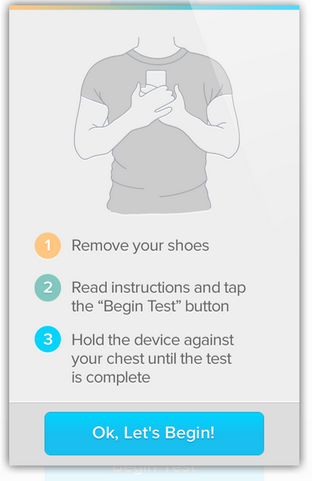
The FDA-approved app, called Sway Balance, uses proprietary software and the iPhone’s accelerometer to assess an athlete’s balance over time. In a phone interview, founder and CEO Chase Curtiss said that the app can be used by a health professional to “set up a baseline,” then “compare an athlete over the course of a season to that established norm.” Poor performance compared to baseline is indicative of a possible concussion.

Health care professionals can purchase a yearly subscription to the app for $199 – a fraction of the cost of a typical balance platform – and the patient-facing app is free to download.

Sway Medical has partnered with ImPACT Applications, an organization which Curtiss described as conducting the “gold standard of concussion testing on the market.” ImPACT uses baseline cognitive testing – verbal and visual memory, processing speed, and reaction time – and synchronous testing immediately after a hit to assess if a concussion has occurred.

“But you don’t have an element of physical control of the body,” Curtiss said – which is where Sway Balance comes in. “[ImPACT’s] interest in us is in pairing a balance test with cognitive testing.”

Continue reading…

Informed Refusal

By RICHARD GUNDERMAN

Before undergoing many health care interventions, patients are asked to give their informed consent.  In most cases, it represents a mere formality.  The patient has come to the healthcare facility for the express purpose of undergoing the test or treatment, and after a quick explanation, the patient signs the consent form.  But not always – sometimes patients elect not to go through with it.

I know a woman in her late 70s, a highly accomplished health professional with a long and remarkably distinguished record of career achievement, who was recently diagnosed with cancer.  Her physician advised a complete diagnostic workup to determine how far the disease has spread, to be followed by courses of radiation and chemotherapy.  A vast and sophisticated medical armamentarium, unprecedented in the history of medicine, stands at the ready to take the full measure of her disease and then beat it back.

Yet after her oncologist carefully explained the benefits, risks, and alternatives to the recommended course, she declined to proceed further.  Instead of launching into an arduous medical regimen, she has chosen to focus the remainder of her time and attention elsewhere, on matters outside of medicine.  Why?

On hearing such a story, some of my medical colleagues question the patient’s soundness of mind.  Could she be depressed?  Might she be in the early stages of dementia?  Could she have simply failed to grasp the full gravity of her situation?  To them, the failure to take advantage of the wonders of modern medicine smacks of irrationality.  The solution?  Her physicians need to sit her down again and explain the situation more clearly.  Should this fail to elicit her consent, perhaps a psychiatry consult would be in order.

Yet to those who know her, these explanations are unsatisfactory.  We cannot attribute her decision to a lack of intelligence or sophistication about healthcare.  She has spent her entire career in the field, and helped to care for countless patients with life-threatening conditions, many of whom eventually died.  She knows what the care of such patients looks and feels like from firsthand experience.  She understands the risks of declining further treatment at least as well as many of the health professionals caring for her.

Continue reading…

#MomInHospital

By BOB WACHTER

A few weeks ago, a middle-aged man decided to tweet about his mother’s illness from her bedside. The tweets went viral and became the subject of a national conversation. The man, of course, was NPR anchorman Scott Simon, and his reflections about his mother’s illness and ultimate death are poignant, insightful, and well worth your time.

Those same days, and unaware of Simon’s real-time reports, I also found myself caring for my hospitalized mother, and I made the same decision – to tweet from the bedside. (As with Simon’s mom, mine didn’t quite understand what Twitter is, but trusted her son that this was a good thing to do.) Being with my mother during a four-day inpatient stay offered a window into how things actually work at my own hospital, where I’ve practiced for three decades, and into the worlds of hospital care and patient safety, my professional passions. In this blog, I’ll take advantage of the absence of a 140-character limit to explore some of the lessons I learned.

First a little background. My mother is a delightful 77-year-old woman who lives with my 83-year-old father in Boca Raton, Florida. She has been generally healthy through her life. Two years ago, a lung nodule being followed on serial CT scans was diagnosed as cancer, and she underwent a right lower lobectomy, which left her mildly short of breath but with a reasonably good prognosis. In her left lower lung is another small nodule; it too is now is being followed with serial scans. While that remaining nodule may yet prove cancerous, it does not light up on PET scan nor has it grown in a year. So we’re continuing to track it, with crossed fingers.

Unfortunately, after a challenging recovery from her lung surgery, about a year ago Mom developed a small bowel obstruction (SBO). For those of you who aren’t clinical, this is one of life’s most painful events: the bowel, blocked, begins to swell as its contents back up, eventually leading to intractable nausea and vomiting, and excruciating pain. Bowel obstruction is rare in a “virgin” abdomen – the vast majority of cases result from scar tissue (“adhesions”) that formed after prior surgery. In my mother’s case, of course, we worried that the SBO was a result of metastatic lung cancer, but the investigation showed only scar tissue, probably from a hysterectomy done decades earlier.

Continue reading…

The Good Doctor Calls For Backup

By ROB LAMBERTS

My mom is great.

Unfortunately, like most mothers, she relishes telling funny (usually embarrassing) stories about us kids.  I, unfortunately, seem to be the subject of the vast majority of those stories.  But my big brother gets the leading role in one I will now tell.  I guess it’s a small way to get back at him for…well, for lots of stuff.  One day he came home from school all excited (unusual for my half-vulcan brother).  ”Mom!  Mom!  I learned how to swim today!” he said.  ”Oh?” my mother answered, not sure how and where he learned this new skill.  Bill got a very pleased expression as he explained, “Steven V. taught me on the bus!”  This is where my mother guffaws and my father chuckles and we kids look at each other with the well-worn “when will this story get old?” expression.  He’s probably making that expression at his computer right now.

Sorry, Bill.

But the naïveté expressed by my brother at the nature of learning how to swim is similar to my confidence going into this project.  Certainly it helps to know you can’t breathe underwater, and that swimming in a suit of armor is a bad idea, but this knowledge does not substitute for the first-hand experience of keeping afloat while the water seems to be trying to drown you.  Similarly, I could read books, make a business plan, and impress people with my thought and insights, but that does not substitute for the first-hand experience of building a new business from scratch.  It does nothing to keep me financially afloat while unseen forces try to pull me under.

Which brings me to my current situation.  Would I have taken the plunge had I known what it’s taken up until now?  It has been hard.

I hesitate to write about this, because:

  1. I hate to sound whiney.
  2. I don’t want people to worry that things are worse than they are.  Especially my patients.
  3. I don’t want to get a lot of advice from well-meaning people who don’t know the details of my situation.

But I want to give a realistic picture of what this journey is like, not just throw you the vaporware version.  Besides, my world right now has significant stress and pressures that I didn’t anticipate.

The first sign of trouble came very early, in the renovation of my office.  My goal was to start seeing patients in mid-December, and officially opening around the first of the year.  Unfortunately, the office wasn’t ready until February 6th, and the construction cost twice what I expected.  For those who can’t see the implication: I spent more money and lost a month of earning it.  More money out, less money in.  Maybe swimming’s a little harder than Steven said it was.

Then came the EMR debacle.

Of the areas I was most sure of, my ability to use computers to improve care was at the top.  After all, I had won national awards and much acclaim for my use of electronic records to improve care.  Two months and five EMR products later, I was beginning to see just how far the health IT industry had moved away from patient care.  I din’t know what to do; I was at an impasse.  Each system I tried either lacked some basic element of organization I required (such as management of outside documents) or was unable to generate anything but the voluminous documentation which succeeds only in two areas: getting physicians paid and hiding useful clinical information.

Continue reading…

Average Care at a Typical Hospital on an Ordinary Sunday in August

By ASHISH JHA

The Bike Path:

On a warm and sunny August Sunday, I was rollerblading with my kids on the Shining Sea Bikeway. On mile nine on the trip, I hit a tree root, went flying, and landed on my shoulder.  I could tell immediately that something was wrong — I couldn’t move my arm and was in the worst pain of my life. Feeling for my left shoulder, it was obvious that I had dislocated it. What happened next was that I received some of the best care of my life – unfortunately it was not from our healthcare system.

As I was lying on the bike path, nearly everyone stopped and asked how they could help. A pediatric nephrologist offered to pop my shoulder back into place. I declined. This wonderful couple on a two-person reclining bike stopped and insisted on pedaling me to the hospital. We were far from the road and knew that calling an ambulance was not straightforward. So I sat with my left arm dangling, in excruciating pain, while David rode the bike to Falmouth Hospital. It was a 20 minute ride finishing with a very steep hill. David apologized after each bump on the road as he heard me swear and wince.

The Emergency Room:

We finally made it to the ER, and, ironically, it was then that my care stopped being so wonderful.

It started off well enough – a triage nurse saw me walking in holding my arm, in distress.  She got me a wheelchair and brought me into triage. I explained what happened, gave my name, date of birth and described the pain as the worst of my life.  I was then shuttled to registration, where I was asked to repeat all the same information.  It felt surreal: I had moved all of 10 feet and yet somehow my information hadn’t followed me. The registration person asked me question after question.   Initially, the same ones: name, address, phone #, etc.  Then, my Social Security number (presumably so they could go after me if I didn’t pay my bill), my primary care physician’s name, his address, his phone #, my insurance status, my insurance #, my insurance card, my emergency contact, their address and phone #, etc. etc. etc.

I told her I was in excruciating pain and needed help.  A few more questions, she said.  She needed the complete registration.

I was wheeled to radiology and sat in a hallway for what felt like forever, groaning in pain. I couldn’t find a comfortable position. Six or seven people walked by – and as they heard me groan, they would look down and walk faster.  The x-ray technologist avoided eye contact.  It was hard — I was right outside her room.  Finally, I asked a passerby if she could help.  Caught by surprise (I must have sounded human), she stopped.  She looked at me.  She then went into the x-ray suite.  A few minutes later, a second technologist came out, saw my arm, and was the first to acknowledge that my arm looked painful.  He told me the ER was pretty quiet and he would get me in right away.

Continue reading…