Categories

Category: Medical Practice

The Not Normals Break Through — An Update From the Khan Academy

By MICHAEL PAINTER

If you’re going to get ambitious about your next task, don’t go and talk to normal people about it. You’ll only get normal answers. Get out of your comfortable little world and step into a completely alien one. As we say round here, when worlds collide, transformation happens.

Love that passage from Brian Millar’s 2012 Fast Company piece. (Plus, it gives me the awesome chance to nod to the eccentrics and outliers—like Millar’s dominatrix and tattooed hipster set—and their unlikely importance to pioneering, breakthrough ideas).

Recently RWJF extended another grant to the Khan Academy; this one for $1.25 million.  I say another as we started this health education journey with Sal, Rishi and the Khan team—right after Sal’s outstanding 2011 TED/Long Beach talk. That discussion resulted in a preliminary 2012 $350,000 bet on this great team. We were intrigued by their big idea—and we thought the world might be too.

What’s that big idea again? Just this: an entirely free, utterly fantastic health education for anyone in the world with a computer and an Internet connection.

Potentially crazy? Perhaps. Ambitious? No kidding. But for RWJF’s pioneering work, that’s right where we like to be. We thought there just might be something there. One year later, we are even more convinced. In that time, the Khan team has pushed intensely and hard—creating its new Healthcare and Medicine Initiative basically from scratch.

For instance, with our support, Khan staff have developed about 200 videos now posted on that Healthcare and Medicine Initiative site—as well as their YouTube medical channel. These videos have received about 800,000 views, and the site has over 10,000 new subscribers. Khan continues to work with Stanford Medical School. That collaboration includes developing and posting Stanford Medical School content on the Khan site as well as integrating the online format into traditional medical school courses.Continue reading…

The Shocking Truth About Medication Errors

By LEAH BINDER

Let’s say a physician writes a prescription for Colchicine and accidentally orders “10.0 mg,” when he should have ordered “1.0 mg.” That’s a tiny decimal error, a mistake even the best doctor could make. But it can be catastrophic for the patient. The higher dose could cause Colchicine poisoning, similar to arsenic poisoning: burning in the mouth and throat, excruciating abdominal pain. Internal organs would melt away and death would likely occur within 24 to 72 hours.

The ease with which even the best doctors can make gruesome errors is why hospitals set up elaborate systems to check and double check orders before drugs are given to patients. Some hospitals are better at this checking than others. Medication errors happen all the time, an estimated one million each year, contributing to 7,000 deaths. On average there is one medication error every day for every inpatient. Let’s take a closer look at what’s contributing to these preventable errors.

Hospitals Are In The Technological Dark Ages

According to recent research, the best known way for hospitals to protect patients from errors is by adopting technology called computerized physician order entry (CPOE). The physician (or other authorized prescriber) enters orders for a patient on a computer that contains patient information such as key lab values, clinical condition, allergies, etc. The computer checks the safety and appropriateness of the order and sends it electronically to the pharmacy. In the Colchicine example, a good CPOE system would alert the physician to the misplaced decimal in the order, and the best systems would prevent the order from being written in the first place. In my mind, one of the greatest advances of CPOE is that it eliminates the need for pharmacists to decipher physician handwriting. I’ve often wondered how they do that.

The research suggests errors decline by as much as 85 percent when hospitals implement CPOE, yet the pace of adoption in the hospital industry is agonizingly slow. To jump start progress, the federal government used economic stimulus funds starting back in 2009 to incentivize hospital investment in CPOE and electronic medical records (EMRs). That improved the pace of change, but still, most hospitals are in the Dark Ages when compared to other industries like airlines or retail.

My nonprofit, Leapfrog, finds that only about a third of the hospitals that voluntarily report to our survey meet our standard for full implementation of CPOE. Even for that minority of hospitals that adopt CPOE, the system doesn’t always work as advertised. Like all technology, CPOE must be continually tested and modified. That’s not always happening.

Continue reading…

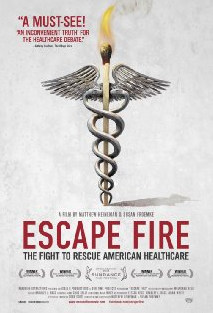
ESCAPE FIRE: Changing Medical Education

Since its Sundance premiere in 2012, ESCAPE FIRE has screened for national leaders, medical experts, thousands of students, and the general public. The film opened in theatres last October, and had its broadcast premiere on CNN March 10th. From the Pentagon to local communities, ESCAPE FIRE has reached an incredibly diverse audience.

Last year, ESCAPE FIRE: The Fight to Rescue American Healthcare screened on college campuses nation-wide two weeks before opening in theaters. Almost 6,000 students came together to watch the award-winning documentary, and to host discussions about the current state of the American healthcare system. The sentiments from these discussions became calls to action: service projects, course work, and blogs for undergraduates and medical students across the nation.

This year we’re doing it all again. On September 17th, ESCAPE FIRE will play at more than 60 college and university campuses across the country, followed by panel discussions and Q&As. We’ve partnered with the Institute for Healthcare Improvement (IHI), one of the widest-reaching non-profit health organizations in the US, to make sure as many students are aware of the opportunity as possible.

We’re taking the event a step further this year by donating an Educational copy of ESCAPE FIRE to each participating campus, allowing the event to incite change for years to come. Our hope is that students, after attending an entertaining event and participating in thoughtful conversations about their communities, will take on an active role in transforming healthcare.

In order to make sure this discussion doesn’t stop after school or with student groups, we have accredited ESCAPE FIRE for both Continuing Medical Education units and Continuing Nursing Education contact hours. Now, anyone who views the film, can get educational credit. And for the week of September 17th through 30th, the film will be available on iTunes for $0.99.

This is a unique and unprecedented chance for healthcare providers to utilise the film to elevate and deepen the national dialogue about our healthcare system and our role in leading it out of crisis.

Spread the word about this event on Facebook and Twitter. And find a screening near you.

Why Nurse Practitioners Will Not Solve the Primary Care Crisis

By NICOLE FISHER

In coming years the US could see growing shortages in the availability of primary care physicians (PCPs). With the number of individuals seeking care increasing and the current medical system continuing to incentivize physicians to specialize, the number of available PCPs will decline proportional to the population. To fill that gap, Ezra Klein and others have asserted that expanded scope of practice will allow nurse practitioners (NPs) to serve as viable substitutes for primary care shortages.

While NPs serve a vital role in the system and meet need, the argument that they are a 1:1 substitute for PCPs (but for the greedy doctors and pesky regulations holding them back) is singular and shortsighted. The argument also fails to address broader policies that influence both NP and PCP behaviors. Policies that unjustifiably lead to the unequal distribution of caregivers, location or expertise, inherently parlay into unequal care for patients. Sadly, a broader scope than “freeing nurse practitioners” is necessary to meet primary care needs, as NPs are complements, not substitutes. Policy must address the need for more primary care and assist to realign the system to meet our country’s basic care and equality through redistribution.

Primary care is the foundation of the evolving health care system, with equal access the intended goal of the ACA. Along the way to meeting future demand for primary care, NPs can be increasingly utilized to meet the needs of Americans and improve the health of the nation. And let it be known I am a strong proponent and supporter of nurse practitioners and all non-physician providers and coordinators. However, the argument that most NPs practice in primary care and will fill the primary care gap, estimated at about 66 million Americans, is inaccurate. It isn’t a 1:1 substitute, especially given that models of the solo practitioner are vanishing in lieu of complementary and team-based care.

The US, unlike many western countries, does not actively regulate the number, type, or geographic distribution of its health workforce, deferring to market forces instead. Those market forces, however, are paired with a payment system whose incentives favor high volume, high return services rather than health or outcomes. These incentives are reflected in where hospitals steer funding for training, and in the outputs of that training.

Throughout the US there are geographic pockets that fail to attract medical professionals of all kinds, creating true primary care deserts. These deserts occur in part due to the unequal distribution of practitioners in the health care system, with our medical schools and salary opportunities producing low numbers of generalists across the board. We have even continued to see shortages in nurses throughout the US.

Continue reading…

A Powerful Idea From the Nuclear Industry

By PETER PRONOVOST

Where health care has fallen short in significantly improving quality, our peers in other high-risk industries have thrived. Perhaps we can adapt and learn from their lessons.

For example, health care can learn much from the nuclear power industry, which has markedly improved its safety track record over the last two decades since peer-review programs were implemented. Created in the wake of two nuclear crises, these programs may provide a powerful model for health care organizations.

Following the famous Three Mile Island accident, a partial nuclear meltdown near Harrisburg, Pennsylvania in spring 1979, the Institute of Nuclear Power Operators (INPO) was formed by the CEOs of the nuclear companies. That organization established a peer-to-peer assessment program to share best practices, safety hazards, problems and actions that improved safety and operational performance. In the U.S., no nuclear accidents have occurred since then.

A more devastating nuclear incident in Chernobyl, Ukraine in 1986 spurred the creation of the World Association of Nuclear Operators (WANO), which serves a similar purpose but on an international scale. Since WANO’s inception, no severe nuclear accidents had occurred until the nuclear accident in Fukushima, Japan, caused by a devastating earthquake and tsunami in March 2011.

These programs have succeeded because their purpose and approach is very different from review processes by regulatory agencies. Instead of a punitive process that monitors compliance with minimum standards, peer-to-peer evaluations are thorough, confidential and—importantly—voluntary. They are viewed as mutually beneficial and help advance industry best practices, which are shared widely. The goal is to learn and improve rather than judge and shame. The reviews are done by experts, using validated tools and are ruthlessly transparent  yet confidential.

Peer-to-peer review has not been widely used in health care. A couple notable exceptions are the Northern New England Cardiovascular Study, which used organizational peer-to-peer review to improve the care of cardiac surgery patients, and the National Health Service in the UK, which used it to improve the care of patients with lung disease. While provider-level reviews are more common in health care organizations, they fail to capture the scale needed to achieve system-wide improvements.

At the Armstrong Institute, we have been pilot testing peer-to-peer review and early results are encouraging. We have evaluated specific outcomes, like blood stream infections; specific areas, like the operating room; and whole quality and safety programs.

Continue reading…

Morbus Propedeuticus

By COUNTRY DOCTOR

It was spring. My medical school class, two years along in our five-and-a-half year endeavor, had earned the “medicinae kandidat” degree. We were now worthy of leaving the basic sciences and research center on the outskirts of town and starting our preparatory clinical, “propedeutic” semester at the University Hospital. In Sweden, at that time, we used a lot of Latin words and phrases. Crohn’s disease was  Morbus Crohn, chart notes listed physical exam findings by Latin names for the bodily organs: Cor for the heart, Pulm(ones) for the lungs, Hepar for the liver, etc.

Uppsala Academic Hospital was an imposing campus, with several tall, white towers, housing the most modern wards, laboratories and operating theaters. We were relegated to a pink stucco building that housed the old tuberculosis clinic.

The physical exam course was taught by a couple of older pulmonologists. At first they struck many of us as relics from a bygone era, but as the course went on, our respect grew. These unassuming physicians could percuss a patient’s chest wall and describe in detail what the x-ray would look like, they made us feel the tip of the spleen by turning the patient on his right side, they measured jugular venous pulsations and pedal pulses.

Sometimes we had real patients with remarkably abnormal findings to examine, but we often were charged with examining each other for assessment of normal physical exam findings.

My partner for the Lymphatic System module was Sven Björk, a slow-talking kid from the very north of Sweden. He had jet black, completely straight hair and a broad face with eyes set wide apart. He was part Same, the native, reindeer-herding nomadic population from north of the Arctic Circle.

Continue reading…

Pathologizing the Human Condition

By DAN PETERS

The American Psychiatric Association recently published a new version of the Diagnostic and Statistical Manual (DSM). The DSM-5 is what medical, mental health, and chemical dependency professionals use to diagnose developmental, mental health, substance abuse and dependence, learning, and personality “disorders.” Now in its 5th edition, the DSM was first published in 1952. At that time, the DSM was 129 pages containing 106 diagnoses.

Now, 61 years later, the DSM-5 consists of approximately 950 pages and roughly 375 diagnoses. The DSM-5, while researched far more than previous editions, is based on the medical model or the model of disease. Simply put, the medical model finds the causes of disease and illness and then prescribes a treatment to cure the disease or illness. This means a person has a pathology or pathogen that needs to be treated and cured.

The questions that eat at me during my day as a psychologist and at night as a person searching for answers are:

  • Is it possible to accurately identify mental health “issues,” “illness,” or “disorders?” versus extreme ranges within the sphere of the human condition?
  • Even if it is possible to identify these conditions, does it determine the course of “treatment” or “intervention?”
  • If so, is there a “treatment” for every identified “condition?”
  • Does it mean there is a treatment that works?
  • Do you need a diagnosis to get help?

Over the years, many have been critical of this approach to mental “health” issues. Referring to mental “health” is actually a newer name as people have historically been thought to have mental “illness.” This makes more sense for people who are unfortunately compromised by severe conditions termed schizophrenia, bi-polar (manic-depressive), and severe depression and anxiety. But does this make sense for children, adolescents, and adults who are challenged with some other, and possibly less severe, aspect of their functioning and development? Do all human problems warrant a medical or mental health diagnosis? When did a weakness become a “disorder” that requires “intervention” and/or “treatment?”

To be fair, the DSM provided structure and guidelines for approaching the complicated business of determining who had a “problem” that required help. However, it seems things have gone too far. Critics of the DSM believe that this latest edition has taken the business of diagnosing to a new level, one where approximately 50% of the population can be diagnosed with something. Critics also believe that this pathology finding approach supports the continued trend of medication prescribing as the number one mode of treatment, and continued trend of increased health care costs and premiums with increased utilization of individuals who need a “diagnosis” to meet “medical necessity” to receive services. What does that mean? It means if you don’t have a diagnosis, you don’t get help. It means you have to have a problem (pathology) to get help (treatment and intervention).

Without going into detail about some of the changes in the newest edition of the DSM, some diagnostic categories have been added and some diagnosis “thresholds” have been lowered. This means that you need fewer symptoms to “meet diagnostic criteria.” Here are some examples of concerns with the new DSM-5:

  • Temper tantrums will now be diagnosed as Disruptive Mood Dysregulation Disorder
  • Normal forgetting will now be diagnosed as Minor Neurocognitive Disorder
  • Gluttony will be diagnosed as Binge Eating Disorder
  • Grief will be diagnosed as Major Depression
  • First time substance users and college partiers will get a diagnosis of Substance Use Disorder
  • Everyday Worry will be diagnosed as Generalized Anxiety DisorderContinue reading…

Prostate Cancer: Not a Good Week

By JAMES SALWITZ

The general practice of oncology seems to come in waves of disease.  One week every breast cancer patient is in trouble, another sees multiple new cases of lymphoma or leukemia, the next it as if someone is giving away lung cancer (or perhaps cigarettes) and then three patients with pancreatic cancer end up in the ICU.  This week a portion of the 240,000 yearly USA cases of prostate cancer walked in our door. The rush of cases served as a reminder that when it comes to this illness, we have a long way to go.

First, Allen. He is 73 years old and has prostate cancer in one out of twelve biopsies. The cancer has a Gleason’s Score of 6 (a measure of aggressiveness of the cancer tissue: more then 7 is particularly bad), which means it is not fast growing.  We recommended that given the small amount of slow growing cancer, Allen should be watched without treatment (“Active Surveillance”).  What Allen found so difficult about this recommendation is that his son was diagnosed with prostate cancer just one month ago and his son, who is 49, has a Gleason’s 8 Prostate Cancer on both sides of the prostate, and is scheduled for robotic surgery.  More than having cancer, Allen is hurt by the feeling it should have been him.

Then there was Robert and Mike. Robert was in the office at 10:00am for evaluation of his newly diagnosed prostate cancer, PSA blood test 32 (high), Gleason’s 7, with evidence of invasion through the capsule of the prostate gland.  Fortunately, because prostate cancer likes to spread to bone, his bone scan is normal.  Despite Robert’s relatively young age (66), the surgeon recommends external beam radiation therapy (RT) instead of operating.  What is bizarre and makes my head spin, was that at1:00pm, in the same exam room, in the same chair, I saw Mike.  He has recurrence of prostate cancer, previously treated with surgery.  Now Mike needs RT.  Although Robert and Mike do not know that the other has cancer, they have worked together in the same small company for 28 years, and consider each other friends.
Continue reading…

What I Need

By ROB LAMBERTS

So, the question has been raised: why am I doing this?  Why re-invent the EMR wheel?  What is so different about what I am doing that makes it necessary to go through such a painful venture?  I ask myself this same question, actually.

Here’s my answer to that question:

What medical records offer:
High focus on capturing billing codes so physicians can be paid maximum for the minimum amount of work.

What I need:
No focus on billing codes, instead a focus on work-flow.

What medical records offer:
Complex documentation to satisfy the E/M coding rules put forth by CMS.This assures physicians are not at risk of fraud allegation should there be an audit.  It results in massive over-documentation and obfuscation of pertinent information.

What I need:
Documentation should only be for the sake of patient care. I need to know what went on and what the patient’s story is at any given time.

What medical records offer:
Focus on acute care and reminders centered around the patient in the office (which is the place where the majority of the care happens, since that is the only place it is reimbursed)

What I need:
Focus on chronic care, communication tools, and patient reminders for all patients, regardless of whether they are in the office or not. My goal is to keep them out of the office because they are healthy.

What medical records offer:
Patient access to information is fully at the physician’s discretion through the use of a “portal,” where patients are given access to limited to what the doctor actively sends them.

Continue reading…

An “F” for Quality

By KEN COVINSKY

Huge numbers of older persons transition from hospitals to the nursing home.  Often, an older hospitalized patient needs skilled nursing care before they are ready to return home.  In other cases, a nursing home patient who needed hospitalization is returning to the nursing home.  Older patients and their families certainly hope that great communication between the hospital and nursing home would assure a seamless transition in care.

But a rather stunning study in the Journal of the American Geriatrics Society suggests the quality of communication between the hospital and the nursing home is horrendous.  The study was led by researchers from the University of Wisconsin, including nurse researcher, Dr. Barbara King and Geriatrician Dr. Amy Kind.

The authors conducted interviews and focus groups with 27 front line nurses in skilled nursing facilities.  These nurses noted that very difficult transitions were the norm.  Sadly, when asked to give the details of a good transition, none of the nurses were able to think of an example.

Most of the nurses felt that they were left clueless about what happened to the their patient in the hospital.  They lacked essential details about their patient’s clinical status.  The problem was not the lack of paper work that accompanied the patient.  In fact, nurses often received reams of paper work, often over 80 pages.  The problem is that the paper work was generally full of meaningless gibberish such as surgical flow sheets that told little about what was actually going on.

Often the transfer information had errors, conflicted with what the facility was told before the transfer, and lacked accurate information about medications.

Continue reading…