Categories

Category: Medical Practice

Three Ways Doctors Can Use Patient Data to Get Better Results

By JOHN HAUGHOM

John Haughom MD whitePhysicians have always been in the information business. We have kept records of patient data regarding the vital signs, allergies, illnesses, injuries, medications, and treatments for the patients we serve. We seek knowledge from other physicians, whether that knowledge comes from the conclusions of experts from research published in a medical journal or the specialist down the hall. However, a physician will always benefit from additional good information such as the analysis of pooled data from our peers treating similar patients or from the patients themselves.

Over the next few years, vast new pools of data regarding the physiologic status, behaviors, environment, and genomes of patients will create amazing new possibilities for both patients and care providers. Data will change our understanding of health and disease and provide a rich new resource to improve clinical care and maximize patient health and well-being.

Patient Data Used by the Patient

Instead of a periodic handful of test results and a smattering of annual measurements in a paper chart, healthdata will increasingly be something that is generated passively, day by day, as a byproduct of living our lives and providing care. Much of the data will be generated, shared, and used outside of the health system. It will belong to patients who will use it to manage their lives and help them select physicians and other healthcare professionals to guide them in their quest for a long and healthy life.

Based on a patient’s preferences and needs, the data will flow to those who can best assist them in maintaining their health. It will reveal important and illuminating patterns that were not previously apparent, and with the right system in place, it will trigger awareness and alerts for patients and other providers that will guide behaviors and decisions.


Continue reading…

Health Care Registries: Powerful Tool, Narcoleptic Name

By BEN WHEATLEY

flying cadeuciiDon’t let the name fool you—registries are important. Here are three powerful functions they can enable:

1). Collect data on real-world patient outcomes.
2). Create a feedback mechanism for health care providers—how well are patients faring under treatment?
3).Facilitate changes in care, and improvements in outcomes, based on that feedback.

Imagine this: You’re feeling sick and decide to go see the doctor. You receive a treatment, and in short order, you’re feeling much better. You’re a walking testimonial to the effectiveness of that treatment.

But where is this outcome recorded? Your doctor follows up and is aware that the treatment worked for you. But this is not a clinical trial, and these outcomes are not being systematically observed. So your experience becomes an anecdote—not a data point—which is to say, it doesn’t count. This is where registries come in.

Continue reading…

An Open Letter to Ezekiel Emanuel on Life and Death

By SUZANNE GORDON

Ezekiel Emanuel

In the October issue of The Atlantic, physician and medical ethicist Ezekiel (Zeke) Emanuel, brother of Rahm Emanuel (former official in the Clinton White House, then Congressman, then Chief of Staff for President Barack Obama, now Mayor of Chicago) published an article why he thinks we should all forgo advanced age and die at 75. As a 69-year-old moving toward 75, my response to that article is this blog post requesting a stay of execution from our newly appointed Czar of American longevity.

An Open Letter to Ezekiel Emmanuel.

Dear Ezekiel Emmanuel:

Please forgive me for taking so long to comment on your article in The Atlantic arguing that we should declare our lives to have reached their productive limit at age 75 and therefore gracefully exit this world before we move into an inexorable decline. Your article – “Why I Hope to Die at 75″ –– appeared in The Atlantic in October and here it is December and I have not joined the 3000 plus people who commented on it earlier. First, I confess, I did not read it until almost a month ago, and then, I had to stew in some juices before figuring out how to reply. You make many good points in your article. Americans do indeed consider themselves to be “immortals,” do prolong death rather than extend life when they push for futile treatments or agree when their physicians who too often recommend them (if they were not so enthusiastically recommended, would so many American patients so heartily sacrifice themselves on the altar of science?) But does the solution to the out of control medicine lie in declaring that 75 should be the age of exit?  See, for example, Shannon Brownlee’s Overtreated.

In your article, you carefully explain why you have picked 75 as the human sell by date.Continue reading…

The Anti-Hypocrisy Rule

By MARTIN SAMUELS

Martin SamuelsPundits abound when it comes to health care plans. They come from many different backgrounds: conservatives, liberals, academics, business people, doctors, politicians and more often all the time various combinations of these. But they all have one characteristic in common. They all want a different kind of health care for themselves and their families than they profess for everyone else.

I am acutely aware of this as I am in a position that demands that I find special appointments for them. A day virtually never passes when I don’t receive requests (often many in a single day) for me to either see these people myself or arrange for their special care elsewhere, including other parts of the county and the world. My own personal ethical code of conduct prevents me from mentioning their names or anything that could identify them. Suffice it to say that I have yet to see a single exception to this principle.

Continue reading…

The Great Patient Experience Survey Myth

By REBECCA ANHANG PRICE & MARC ELLIOTT

flying cadeuciiPatient experience measures are increasingly being publicly reported and included in pay-for-performance programs, but critics express concern about the relevance and fairness of using information from patient experience surveys as indicators of health care quality. In a recent article in the Journal of General Internal Medicine, we draw on our experience developing and implementing widely used Consumer Assessment of Healthcare Providers and Systems (CAHPS) surveys to debunk seven myths.

Myth #1: Patients don’t have the expertise to answer questions about the quality of their health care. Surveys, such as CAHPS, ask about patient experience, not technical quality of care. And patients are the best and only source of that information.

Myth #2: Patient experience is too subjective to be actionable. Good patient surveys measure specific care experiences, like whether the health care provider communicated in a way that you understood. Information from such surveys can help to identify aspects of care that could be changed to improve patient experience. Many health care providers choose to act on the results, but unfortunately, not all providers use the information generated by patient surveys to improve care.

Myth #3: Emphasizing patient survey results encourages providers to meet patient expectations for their care, rather than to provide appropriate care. Research suggests that patients value how well their health care providers communicate more than whether he or she offers a specific treatment. Making sure that patients are involved in treatment plans is another way to improve patients’ ratings of their care experiences.

Myth #4: There is a tradeoff between good patient experiences and high quality clinical care. It’s no surprise that some providers have higher scores for patient experience and lower clinical quality scores, and vice versa. But importantly, we know that it’s possible for health care providers to simultaneously offer better patient experiences and better clinical quality. Dozens of studies have found either positive or no association between ratings of patient experience and ratings of clinical quality, suggesting that there is no tradeoff between the two.Continue reading…

2015 Forecast: A True Healthcare Market Takes Shape

By KELLY BARNES

KELLY BARNES 

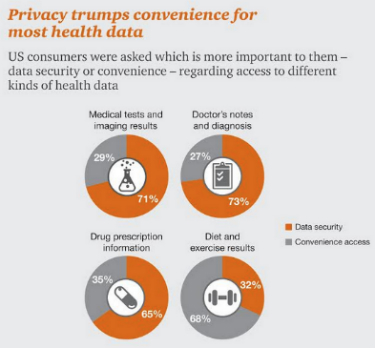
Privacy Trumps Convenience

2014 was the year of the Affordable Care Act.  There were other profound and important developments in health, but for consumer interest, media attention, and impact on the health business, the ACA dominated the picture.

2015 is expected to be different.  This increasingly wired, consumer-oriented, and innovative health industry is poised for profound transformation: 2015 will be the year that a true, industry-wide healthcare market begins to take shape.  To help navigate this emerging market, we’ve identified ten Top health industry issues of 2015 driving transformation.

Three issues coalesce around consumer–centric digital health technology:

Do-it-yourself healthcare        
U.S. physicians and consumers are ready to embrace a dramatic expansion of the high-tech, personal medical kit. Our Health Research Institute (HRI) surveys show that clinicians may be more open to using these tools than consumers. One-third of consumers said they would use a home urinalysis device. But more than half of physicians said they would use data from such a device to prescribe medication or decide whether a patient should be seen.

Making the leap from mobile app to medical device        

The proliferation of approved and portable medical devices in patients’ homes, and on their phones, will make diagnosis and treatment more convenient, redoubling the need for strong information security systems. Regulatory approval may provide a competitive edge — 20 percent of consumers and 26 percent of clinicians said FDA approval was important when deciding to use apps.

Continue reading…

Germs. The Pseudoscience of Quality Improvement

By KAREN SIBERT

C-Dif

No one wants a hospital-acquired infection—a wound infection, a central line infection, or any other kind.  But today, the level of concern in American hospitals about infection rates has reached a new peak—better termed paranoia than legitimate concern.

The fear of infection is leading to the arbitrary institution of brand new rules. These aren’t based on scientific research involving controlled studies.  As far as I can tell, these new rules are made up by people who are under pressure to create the appearance that action is being taken.

Here’s an example.  An edict just came down in one big-city hospital that all scrub tops must be tucked into scrub pants. The “Association of periOperative Registered Nurses” (AORN) apparently thinks that this is more hygienic because stray skin cells may be less likely to escape, though there is no data proving that surgical infection rates will decrease as a result.  Surgeons, anesthesiologists, and OR nurses are confused, amused, and annoyed in varying degrees.  Some are paying attention to the new rule, and many others are ignoring it.  One OR supervisor stopped an experienced nurse and told to tuck in her scrub top while she was running to get supplies for an emergency aortic repair, raising (in my mind at least) a question of misplaced priorities.

Continue reading…

Being Gawande

By ROBERT WACHTER

ROBERT WACHTER, MD

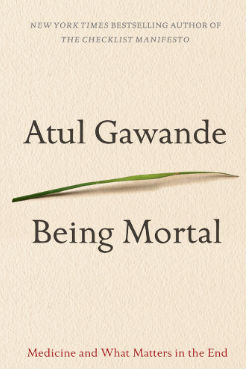
Atul Gawande“I learned about a lot of things in medical school, but mortality wasn’t one of them.” So begins Being Mortal, Atul Gawande’s fourth and most ambitious book.

All of Gawande’s prior books – Complications, Better, and The Checklist Manifesto – were beautifully crafted, lyrical, and fascinating, and all were bestsellers that helped cement his reputation as the preeminent physician-writer of our time. Each blended Gawande’s personal experience as a practicing surgeon with his prodigious skills as an author and journalist. They took readers behind the curtain of the hospital and the operating room, revealing much about some very important matters, like medical training, quality improvement, patient safety, and health policy.

But they were only partly revealing of Gawande himself. He told us what we needed to know about his thoughts and biases in order to make his points, but no more. Being Mortal is Gawande’s most personal book, and as such it reaches a level of poignancy that surpasses the others. Mind you, it’s not an easy read, it’s a bit dull in the early going before it hits its stride, and it has an attitude: Gawande’s indictment of modern medicine’s approach to aging and dying is pointed and withering. But, even more than his other books, this one matters deeply.

Continue reading…

A Doctor is a Doctor is a Doctor, Right?

HANS DUVEFELT, MD

flying cadeuciiI am a foreign born, foreign trained doctor, serving many patients from an ethnic minority, whose native language I never mastered.

So, perhaps I am in a position to reflect a little on the modern notion that healthcare is a standardized service, which can be equally well provided by anyone, from anywhere, with any kind of medical degree and postgraduate training.

1) Doctors are People

No matter what outsiders may want to think, medicine is a pretty personal business and the personalities of patients and doctors matter, possibly more in the long term relationships of Primary Care than in orthopedics or brain surgery. Before physicians came to be viewed as interchangeable provider-employees of large corporations, small groups of like-minded physicians used to form medical groups with shared values and treatment styles. The physicians personified the spirit of their voluntary associations. Some group practices I dealt with in those days were busy, informal and low-tech, while others exuded personal restraint, procedural precision and technical sophistication. Patients gravitated toward practices and doctors they resonated with.

Continue reading…

Why We’re Getting Patient Engagement Backwards

JOE SMITH, MD

Mean Joe SmithThere’s a mantra in healthcare right now to “drive patient engagement.” The idea is that informed and engaged patients play a crucial role in improving the quality of care our health system delivers. With the right information, these healthcare consumers will be more active participants in their care, select providers based on quality and value metrics, demand appropriate, high-quality, high-value services and choose treatment options wisely after a thorough process of shared decision-making.

This drive for patient engagement often fails to recognize one important truth: Our healthcare system inadvertently, yet potently, discourages engagement. It ignores the fact that the patient is already the most engaged person in healthcare. The patient bears the disease, the pain, the scar – and, ultimately, the bill. In our search for greater engagement, we must realize what the comic strip Pogo said years ago – “we have met the enemy, and he is us.”

Continue reading…