
Categories

Category: Health Policy

Does the GOP Have a Health Plan?

By JOHN GOODMAN

The Republicans have no plan to insure the uninsured.

How do I know that? A New York Times editorial told me. So did Ezra Klein, writing in The Washington Post. Matt Miller, also writing in the Post, went further. “I’m willing to repeal ObamaCare,” he wrote, provided the Republicans can “cover the same number of uninsured” and “do it at a lower cost.”

So why don’t the Republicans have a plan? That’s easy. “They’re against reform because it would cover the uninsured — and that’s something they just don’t want to do,” wrote Paul Krugman in The New York Times. The Times’ own editorial said the same thing.

All this has caused me to suffer a bout of severe depression. But, wait a minute. Wasn’t health care the biggest issue in the last presidential election? And…how memory fades…didn’t the Obama campaign spend millions of dollars…promoting his own plan?…no, that’s not right…

Ah, now I remember. The Obama campaign spent tens of millions of dollars on TV commercials attacking the John McCain health plan! It spent more money than has ever been spent for or against any policy proposal in the history of American politics.

The McCain plan, for all those suffering from collective amnesia, proposed to replace all existing health care tax and spending subsidies with a universal health grant, structured like a refundable tax credit. The Patients’ Choice Act version of the idea is sponsored by Tom Coburn (R-OK) and Paul Ryan (R-WI). It promises $2,300 (individual) or $5,700 (family) to everyone who isn’t enrolled in a government health plan.

So what was candidate Obama’s problem with that? Did he object that the plan wasn’t generous enough? Too few regulations? No, none of that. The Obama TV ads focused like a laser on raw self-interest. McCain’s health plan, the ads said, will cause your withholding taxes to go up (without mentioning the offsetting credit that would cause them to go down).Continue reading…
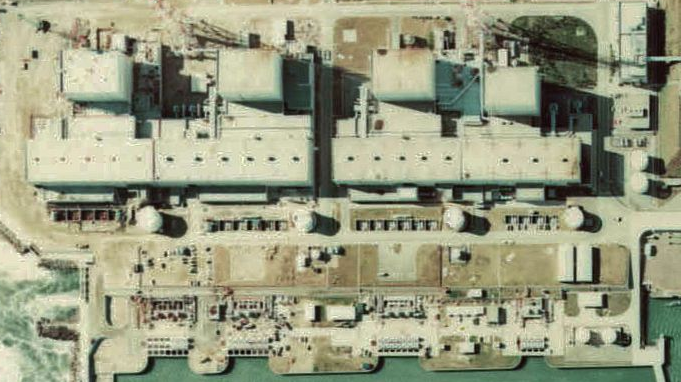

Shaken, Flooded, Stressed by Power Outages, Fukushima Daiichi Moves into Second Place

By ROD ADAMS

Fukushima Daiichi, ca 1975

Two weeks ago, I wrote an article titled Nuclear plant issues in Japan are the least of their worries that attempted to provide a realistic prediction of the worst case consequences of the one-two punch from a very large earthquake and tsunami on a large nuclear power station on the coast of Japan. It has become increasingly apparent during the past week that my view from afar was not as clear as I would have hoped. I was overly optimistic about the final consequences of the events at Fukushima Daiichi.

On the catastrophic scale of commercial nuclear energy accidents, where Three Mile Island was in second place and Chernobyl was the clear leader, Fukushima Daiichi has moved into second. It is likely that it will end up to be far closer to Chernobyl than to Three Mile Island in overall economic, public health and geographic consequences.

Update: (Posted on March 27, 2011 at 0234) The above paragraph has been changed to specify commercial nuclear energy accidents to avoid complications with discussions about accidents that have occurred in the other aspect of nuclear technology. The commercial and military sides of nuclear are complicated enough to merit two mostly separate conversations. End Update.

There has been enough damage to the plants and enough radioactive material released to pose a danger to public health for someone who does not take any precautions, though actions to evacuate, shelter and monitor contamination have minimized the actual effects – so far. There have also been a fair number of plant workers and other emergency responders who have received substantial radiation doses in the range of 100-200 mSv (10-20 Rem). Those doses are about 20% of the dose required for early signs of radiation sickness (1 Sv or 100 REM) and at the threshold where there is a statistically significant increase in long term cancer risk.Continue reading…

The Thing to Watch in the Medicare ACO Regulations

By VINCE KURAITIS

Health care lobbyists and advocates are bracing for six pages of the health care reform law to explode into more than 1,000 pages of federal regulations when the Department of Health and Human Services releases its long-delayed accountable care organization rules this week. Politico

What should you be looking for as you snuggle by the fireplace this weekend reading the draft ACO regs?

Rob Lazerow writes a helpful article listing 5 Things to Watch in the Medicare Shared Savings Program Proposed Rule. His list of five key design issues includes:

  1. How will patients be assigned to ACOs?
  2. To what cost benchmark will ACOs be compared?
  3. How will bonuses be calculated and paid?
  4. For which quality metrics will ACOs be responsible?
  5. What is the application process?

I’d like to add a sixth  item — which actually would be #1 on my list.

As I’ve previously written, IMHO the central issue around ACOs is:

Are (hospitals and doctors) viewing ACOs as a way to truly develop patient centric, collaborative care or as a means toward consolidating market power against payers? We really don’t know.Continue reading…

Potassium Iodide Pills

By DEREK LOWE

Well, the nuclear crisis in Japan seems to be causing a run on potassium iodide (KI), and not just in Japan. If news reports are to be believed, people in many other regions (such as the west coast of the US and Canada) are stocking up, and some of these people may have already started dosing themselves.

Don’t do that. Don’t do it, for several reasons. First, as the chemists and biologists in this site’s readership can tell you, it’s not like KI is some sort of broad-spectrum anti-radiation pill. It can protect people against the effects of radioactive iodine-131, which is a major fission product from uranium. It does that by basically swamping out the radioactive iodine a person might have been exposed to, keeping it from being taken up into the body. Iodine tends to localize in the thyroid gland, and that uptake and local concentration is the real problem. An unfolded newspaper will shield you just fine from the alpha particles that I-131 gives off, but not if it’s giving them off from inside your thyroid. Correction: I-131 is a beta/gamma emitter – my apologies! The point about not wanting it in your thyroid, of course, stands. . .

And this is why potassium iodide won’t do a thing to help with the other radioactive isotopes found in nuclear reactors. That includes both the uranium and/or plutonium fuel, as well as the fission products like strontium-90 and radioactive cesium. Strontium-90 is a real problem, since it tends to concentrate in the bones (and teeth), and it has a much longer half-life than I-131. Unfortunately, calcium is so ubiquitous in the body that it’s not feasible to do that uptake-blocking trick the way you can with iodide. The only effective way to deal with strontium-90 is to not get exposed to it.Continue reading…

You’re Sick. I’m Not. Too Bad.

By ELAINE SCHATTNER

There’s a popular, partly true, some­times useful and very dan­gerous notion that we can control our health. Maybe even fend off cancer.

I like the idea that we can make smart choices, eat sen­sible amounts of whole foods and not the wrong foods, exercise, not smoke, maintain balance (whatever that means in 2010) and in doing so, be respon­sible for our health. Check, plus.

It’s an attractive concept, really, that we can determine our medical cir­cum­stances by informed deci­sions and a vital lifestyle. It appeals to the well — that we’re OK, on the other side, doing some­thing right.

There is order in the world. God exists. etc.

Very appealing. There’s utility in this outlook, besides. To the extent that we can influence our well-being and lessen the like­lihood of some dis­eases, of course we can!  and should adjust our lack-of-dieting, drinking, smoking, arms firing, boxing and whatever else dam­aging it is that we do to ourselves.

I’m all for people adjusting their behavior and knowing they’re accountable for the con­se­quences. And I’m not keen on a victim’s men­tality for those who are ill.

So far so good –

Last summer former Whole Foods CEO John Mackey offered an unsym­pa­thetic op-ed in The Wall Street Journal on the subject of health care reform. He pro­vides the “correct” i.e. unedited version in the CEO’s blog:

Continue reading…

Deciding What Works

By STEVEN GOLDBERG

Steven Goldberg is probably best known for the controversial “Billions of Drops in Millions of Buckets: Why Philanthropy Doesn’t Advance Social Progress.” In this post he looks at the ways in which success and failure are measured in his field.  Healthcare audiences will note many familiar themes. What should we measure?  How should we measure it?  How much weight should we give the results?  And perhaps most importantly: what other questions should we be asking? — John Irvine

Conventional wisdom holds that randomized control trials (RCT) are the “gold standard” of evaluation. In fact, RCTs only make sense under very strict conditions that can rarely be met in the real world. Most of the time, RCTs produce inconclusive results and simply aren’t worth the time and money. As the social sector assumes greater responsibility for improving the lives of many more people, it should focus less on pseudo-scientific “proof” that programs work and focus more on making good programs better.

Now that the Social Innovation Fund (SIF) appears to have survived the “transparency” commotion, the eleven chosen intermediary grantmakers have less than six months to select their portfolios of nonprofit grantees.

As a commendable exercise in “evidence-based” grantmaking, SIF requires the intermediaries to incorporate evaluation into every step of their awards, from the initial competitive solicitations all the way through final payments and renewals. Applicants will be required to explain how their success should be measured and demonstrate their capacity to do so, and awards will be contingent upon the establishment of meaningful performance metrics, the timely collection and reporting of reliable data, and the faithful implementation of sound evaluation protocols.

Continue reading…

Life Saving Errors

By DENNIS GRACE

On March 28, 1979 the Three-Mile Island Unit-2 nuclear power plant experienced a feed system failure which prevented the steam generators from removing heat from the plant. The reactor automatically shutdown but, without the feed system to cool the primary, the pressure in the primary system (the nuclear portion of the plant) began to increase. In order to prevent that pressure from becoming excessive, a relief valve opened. The valve should have re-closed once the pressure dropped by a small amount, but it didn’t. The only indication available in the control room showed the valve in the closed position, but that indication was erroneous, representing only that the signal to close the valve (pressure below a set value) had been sent to the valve. Nothing in the system verified the actual valve position. This stuck-open valve caused the pressure to continue to decrease in the system (and ultimately provided a path for spewing thousands of curies of radioactive material into the atmosphere), but the false shut indication prevented the operators from taking actions to mitigate their severe loss of coolant accident.

The primary relief valve design had a history of sticking. That same valve had been involved in at least nine other minor incidents prior to the TMI incident. Most notably, eighteen months before TMI, a similar incident had occurred in another nuclear plant involving a loss of feed and rising temperatures shutting down the plant. In that incident, the plant was just starting up after a maintenance shutdown, so the power level and temperature of the system were not as dangerously high as at Three-Mile Island.

Continue reading…

The Incredible and Wasteful Complexity of the US Healthcare System

By HUMPHREY TAYLOR & IAN MORRISON

During the health care reform debate, we wrote that most people’s attitudes to it were “confused, conflicted, clueless and cranky.”  A major reason was that the American health care “system” is fiendishly complicated and few people really understand it.   As a result hardly anyone knows much about what is actually in the reform bill (but that does not prevent them from having strong opinions about it).    Sadly, the reforms, whatever their merits, will make the system even more complicated, the administration more Byzantine and the regulatory burden more onerous.

System complexity.

The American healthcare system is already by far the most complex and bureaucratic in the world.  We were once asked to spend ninety minutes explaining American health care to a group of foreign health care executives.  Ninety minutes?  We probably needed a few weeks.  Most other countries have relatively simple systems, whether insurance coverage is provided by a government plan or by private insurance or some combination of these.  But in the United States insurance coverage, for those who have it, may be provided by Medicare Parts A, B, C, and D, 50 different state Medicaid programs (or MediCal in California), Medicare Advantage, Medigap plans, the Children’s Health Insurance Plan, the Women, Infants and Children Program, the Veterans Administration, the Federal Employees Health Benefits Program, the military, the hundreds of thousands of employer-provided plans and their insurance companies, or by the individual insurance market.  This insurance may be paid for by the federal or state governments, by employers, labor unions or individuals.  Some employers’ plans cover retirees, others do not. The result is that the system is pluralistic, mysterious, capricious and impossible for most patients and providers to understand.

Administrative complexity

The administrative complexity is amplified by the multiplicity of insurance plans.  About half of all Americans with private health insurance are covered by self-insured plans, each with its own plan design.  Employers customize their plan documents, led by consultants who make a good living designing their plans and tailoring their contracts. As one prominent consultant told us recently, if all the self-insured plan documents were piled on a table they would not just exceed the 2,700 pages of Obamacare, they would probably reach the moon. For the rest of the commercially insured population, health plans may be traditional indemnity plans, Preferred Provider Organizations or Health Maintenance Organizations.

The coverage provided by different plans varies dramatically.  They may or may not include large or small deductibles, co-pays or co-insurance.  Beneficiaries may pay a large, small or no part of their health insurance premiums.  Some plans cover dependent family members and children, others do not.  The Medicare Part D pharmaceutical benefit plan involves a “doughnut hole,” which will disappear as health reforms are implemented.  Surveys have found that few people fully understand their own insurance plans let alone the bigger picture.  While health reform takes some steps toward standardization of insurance offerings and improving transparency, overall it is likely to increase complexity.Continue reading…

Who Owns Patient Data?

By DAVID HARLOW

Walgreens is being sued by customers who are not happy that their prescription information – even though it has been de-identified – is being sold by Walgreens to data-mining companies.

The data privacy and security concerns surrounding the transfer of de-identified data are significant.  To “de-identify” what is otherwise protected health information under HIPAA, some outfits will simply strip data of 18 types of identifiers listed in federal regulations.  However, the relevant regulation (45 CFR 164.514(b)(2)(ii)) also provides that this only works if “the covered entity does not have actual knowledge that the information could be used alone or in combination with other information to identify an individual who is a subject of the information.” Thus, the problem with this approach is that, these days, nobody can disclaim knowledge of the fact that information de-identified by removing this cookbook list of 18 identifiers may be re-identified by cross-matching data with other publicly-available data sources. There are a number of reported instances of this sort of thing happening. The bottom line is that our collective technical prowess has outstripped the regulatory safe harbor.

Is this the basis of the lawsuit brought against Walgreens?  An objection to trafficking in health information that should remain private?  No.  The plaintiff group of customers is suing to share in the profits realized by Walgreens from trading in the de-identified data.Continue reading…

What’s The Worst Case Scenario In Japan Nuke Crisis?

MERRILL GOOZNER

By MERRILL GOOZNER

This from John Beddington, the United Kingdom’s chief science advisor at its Tokyo embassy:

Let me now talk about what would be a reasonable worst case scenario.  If the Japanese fail to keep the reactors cool and fail to keep the pressure in the containment vessels at an appropriate level, you can get this, you know, the dramatic word “meltdown”.  But what does that actually mean?  What a meltdown involves is the basic reactor core melts, and as it melts, nuclear material will fall through to the floor of the container. There it will react with concrete and other materials … that is likely… remember this is the reasonable worst case, we don’t think anything worse is going to happen.  In this reasonable worst case you get an explosion.  You get some radioactive material going up to about 500 metres up into the air.  Now, that’s really serious, but it’s serious again for the local area.  It’s not serious for elsewhere even if you get a combination of that explosion it would only have nuclear material going in to the air up to about 500 metres.  If you then couple that with the worst possible weather situation i.e. prevailing weather taking radioactive material in the direction of  Greater Tokyo and you had maybe rainfall which would bring the radioactive material down do we have a problem?  The answer is unequivocally no.   Absolutely no issue.  The problems are within 30 km of the reactor.  And to give you a flavour for that, when Chernobyl had a massive fire at the graphite core, material was going up not just 500 metres but to 30,000 feet.  It was lasting not for the odd hour or so but lasted months, and that was putting nuclear radioactive material up into the upper atmosphere for a very long period of time.  But even in the case of Chernobyl, the exclusion zone that they had was about 30 kilometres.   And in that exclusion zone, outside that, there is no evidence whatsoever to indicate people had problems from the radiation.  The problems with Chernobyl were people were continuing to drink the water, continuing to eat vegetables and so on and that was where the problems came from.  That’s not going to be the case here.  So what I would really re-emphasise is that this is very problematic for the area and the immediate vicinity and one has to have concerns for the people working there. Beyond that 20 or 30 kilometres, it’s really not an issue for health.

Merrill Goozner has been writing about economics and health care for many years. The former chief economics correspondent for the Chicago Tribune, Merrill has written for a long list of publications including the New York Times, The American Prospect and The Washington Post. His most recent book, “The $800 Million Dollar Pill – The Truth Behind the Cost of New Drugs ” (University of California Press, 2004) has won acclaim from critics for its treatment of the issues facing the health care system and the pharmaceutical industry in particular. You can read more pieces by Merrill at GoozNews, where this post first appeared.