Categories

Category: Health Policy

De Tocqueville Rewrites the Affordable Care Act

By DAVE DRANOVE

Pending Supreme Court review, the provisions of Affordable Care Act (ACA) are gradually working their way through the system. But we are still three years away from the centerpiece of the ACA – the insurance exchanges. The combination of purchase mandates, taxes, subsidies, and underwriting restrictions that govern the exchanges has never been tried and no one knows if the exchanges will work. Even the academic theorists who assembled this patchwork quilt of rules and regulations have their fingers crossed.

Given the lengthy wait between passage and full implementation of the ACA, it was inevitable that the op-ed pages would be filled with alternatives to exchanges. Some critics would scrap them in favor of some bastardized version of the status quo, leaving tens of millions uninsured. But commentators on the right and left have offered bolder ideas for expanding coverage. Some conservatives promote voucher plans. These proposals feature open enrollment periods and a few other mechanisms that will promote broad risk pools without all the other regulatory bells and whistles. Some liberals renew the call for a single payer system. Frankly, I think both of these “ideologically pure” approaches will be more successful than the mongrelized ACA.

This is why I am intrigued by a bill that is flying under the radar screen in Congress. This bill, which has the support of President Obama, would allow states to implement their own rules for expanding health insurance coverage. If the bill provides enough carrots in the form of tax subsidies (that would have otherwise funded the ACA exchanges), then several states might just play along. If that happens, we would have a golden opportunity to discover the strengths and weaknesses of alternative approaches. Unfortunately, I suspect that this legislation will not give states enough time to act or enough money to make it worth their while, and the vast majority of states will leave the problem of financing and implementing health reform to the feds.Continue reading…

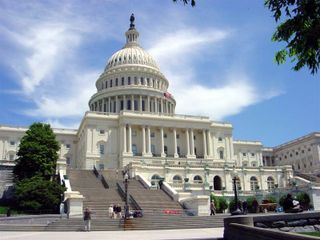
Laboratories of Democracy, Part 2

By MERRILL GOOZNER

Experimentation in how states would move toward universal health care coverage was written into the DNA of the Affordable Care Act. The law allowed any state to petition for a waiver that would enable it to enact its own brand of reform — including versions that did not include an individual mandate to purchase coverage or penalize employers who didn’t provide it – as long as their plans met the basic criteria of the law in terms of covering most people, providing comprehensive coverage, being affordable, and not increasing the federal deficit.

President Obama yesterday offered to move up the date for states that want to pursue their own visions of reform from 2017 to 2014. Stories in today’s press billed this as an effort by the administration to assuage conservative critics who’ve filed suit against the law and governors from both political parties who fear its economic impact. Medicaid expansion accounts for about half of the newly covered people under reform. Even with the feds picking up 90 percent of the tab, many states in today’s fiscal environment are wary of any new obligations — even one where they’re only on the hook for 10 percent.

As I wrote last month, leaving states to implement reform provides Americans with a classic example of federalism in action, one that may or may not lead to a common system across the U.S. In the early part of the 20th century, states began setting up unemployment and workers compensation insurance systems. The former became a shared federal-state responsibility with common features across the U.S. The latter remained unique to each state. Ohio, for instance, has a single-payer workers compensation system and insurance companies are prohibited from selling policies in the state.Continue reading…

Defined Contribution Health Care—The Conservatives’ Silver Bullet

By ROBERT LASZEWSKI

Conservatives are in a full court press these days telling us the answer to America’s out-of-control health care costs—and our fiscal crisis—is to move Medicare, Medicaid, and the tax code subsidy for private insurance to a defined contribution system.

Instead of the federal government defining a benefit and then shouldering the cost of whatever that promise leads to (today’s defined benefit plan), many conservatives are suggesting that we gradually move to a system where the government only promises an annual payment (or tax credit) for health care in the form of a voucher and then the consumer uses it (arguably more efficiently) to buy one of many health plans competing for their business.

First, let me tell you that I think defined contribution health care is generally a good idea. For too long the federal tax system and Medicare policy has subsidized careless health care spending.

Many worry that defined contribution health care would lead to poor people getting second-class health care because they would not be able to afford more than the voucher allows them. That is a legitimate concern and while that outcome can be tempered it cannot likely be eliminated. But that also occurs today, as many seniors have nothing more than a combination of Medicare and Medicaid while the wealthier can afford much better supplemental insurance. And, it will occur in the future under the Affordability Act because the new federal health care subsidies are based on the more limited plans available.

But I will also tell you that it is naïve to think the way to control health care costs is to simply move to a more market-oriented defined health care system.Continue reading…

The HMO in Your Future

By JOHN GOODMAN

I have not been able to determine how you pronounce the acronym for Accountable Care Organization (ACO). Is it ā´ ko? Or ā´ so? Or ăh so´, as in Charlie Chan movies? What about ĕ´ ko, as in a canyon? Or simply ick, with a silent o?

Anyway, this is not a trivial matter because you are likely to be in an ACO at some point in the future and it’s probably going to happen sooner than you think.

In Massachusetts, stakeholders are already meeting to develop a plan to push everyone with commercial insurance into an ACO. [Can you guess who doesn’t count as a “stakeholder?” If you live in Massachusetts and you weren’t invited to the meeting, that’s a clue.] Nationwide, Medicare will start paying fees to ACOs, beginning next year. Eventually, the Obama administration would like to see everyone in an ACO.

But if no one had any previous interest in forming ACOs, let alone joining them, what is going to cause us all to change our minds? Money. Insurers won’t be able to get premium increases unless they adopt ACO plans. Doctors and hospitals will be paid less if they don’t join. Eventually doctors will find they are ineligible to treat Medicare patients or patients insured in the newly-created health insurance exchanges if they are not practicing in ACOs. As for the patients, there won’t be any plans to join other than ACO plans.Continue reading…

Free Drug Samples and Hospital Hotels: Which is the Greater Evil?

By MICHAEL KIRSCH, MD

Many folks criticize pharmaceutical companies for providing physicians’ offices with free drug samples. They claim that this giveaway harms consumers because drug companies must raise their prices to cover the costs of these freebies. Of course, this is undeniable. Any business expense, such as payroll or advertising, has to be covered and is expectedly borne by the consumer. If a company chooses not to advertise, outsources manufacturing to a country with cheaper labor, offers limited benefits to its employees, then they can sell their product at a low price. In this hypothetical example, anemic sales may doom the company quickly.

Naturally, free samples are not really free. The rest of us pay for them. While this is true, I don’t think it is evil. Unlike the U.S. government, at least drug companies are covering their costs and not simply borrowing money every year to meet budget. Interesting concept.

Two of the community hospitals I work at have undergone transformations. One is owned by the dominant health care behemoth in Cleveland and has just completed a near $200 million renovation and expansion. The other smaller hospital is one of the few remaining Cleveland area hospitals that are still independent. I’d like to sneak there at night and hoist up a ‘Live Free or Die’ flag up the flagpole, to celebrate its independent streak, but I’m sure that there are video cameras everywhere and that I would be in violation of several bylaws. The apt punishment might be that I would have to spend a cold Cleveland night chained to the flagpole reading electronic medical record manuals out loud.Continue reading…

Are Academic Medical Centers Toast in a Post-Healthcare Reform World?

By BOB WACHTER, MD

My hospital, UCSF Medical Center, is thriving. Our profits this year will be nearly $200 million. We’re building a sparkling clinical complex – a combined women’s, children’s, and cancer hospital – adjacent to our new downtown biomedical research campus. We are installing a state-of-the-art computer system. US News & World Report calls us the 7th best hospital in the country. Our students, residents, and fellows have never been better.

Yet angst is in the air, borne of a sense that the future is coming at us fast, and we are not prepared.

We’re not alone, mind you. Every hospital enjoying a positive bottom line today is contemplating a bleaker future. Traditionally, hospitals planned to lose about 30% on every Medicaid patient and 5-10% on every Medicare patient, while banking enough profits from commercially insured patients to make the math work out. All of these payers – both governmental and private – are getting stingier, and this latticework of cross-subsidies will soon be a fading memory.

This threat to profitability is roiling hospital board rooms everywhere, but the threats to academic medical centers seem particularly daunting. After all, the community hospital simply (I guess that should be “simply”) needs to make enough of a profit to refurbish the physical plant, pay everybody’s salaries, keep the docs and nurses happy, and save for a rainy day. Academic medical centers, on the other hand, suffer from a different problem: Mission-O-Megaly.Continue reading…

The Other Scarlet Letter

By J.D. KLEINKE

Do you hate abortion? Me too. Every form of the procedure sickens me, and has since the first one I ever heard about, when I was 10 years old.

My mother had come home early, distraught and bathed in tears, from her job as a teacher in a special high school for pregnant teenagers. Her school had let out early, following the news that a 15-year-old student had just died in the hospital from sepsis, a few hours after delivering a second-trimester, stillborn fetus she had impaled the night before with a knitting needle. It was 1972, a year before Roe vs. Wade.

No, it was not appropriate to explain abortion to a 10-year-old. And perhaps it was my overexposure as a child to the nasty realities of the world that continues to inspire my utter impatience with the nonsense running out of some peoples’ mouths, in particular moralizing politicians who are probably cheating on their wives, but that’s another story. The starkness and radicalization of my upbringing gave me a hair-trigger for spotting and calling out hypocrisy and collective self-delusion – especially when both are so obvious, no one else in the room seems to see them.

To wit: those who claim to be “pro-life,” whatever the hell that means, should get real about how the real world works. The “pro-lifers” in Congress leading the charge to dismantle Planned Parenthood should try listening to their own rhetoric about the inexorable power of market forces. Demand will always seek and find supply; and as demand for abortions will never go away on its own, neither will those who “supply” them, be they overseas physicians for the wealthy, discreet, chart-buffing physicians for the middle class, back-alley butchers for the poor, or desperate, do-it-yourself teenagers. Anyone who thinks I am kidding – and who has not had the benefit of an OB/GYN rotation in a public hospital and/or a politically furious mother with poor boundaries – should read or watch the blistering Revolutionary Road through to its bloody end.Continue reading…

The Triumph of Fear, Uncertainty, and Doubt

By JOE FLOWER

According to a new poll, half of all Americans say they are “confused” about healthcare reform. And boy howdy, are they right!

Take a look at this new Kaiser Family Fund poll: http://www.kff.org/kaiserpolls/upload/8156-C.pdf

Scan down to Slide 9: Almost a quarter of all Americans think that ObamaCare has been already been repealed. More than a quarter aren’t sure. Barely half are paying attention enough to realize that it’s still law.

What about the idea that the reform law is wildly unpopular, and most people want it repealed? Slide 4 shows that 39% want it repealed, and 50% want it kept or expanded. But take a look at slides 7 and 8. The only major provision of the law that a majority of Americans want repealed is the individual mandate—the part that says you have to buy healthcare insurance or be fined. Even those who want the law repealed agree, except that a majority also think it’s unfair to make the wealthy pay a heftier Medicare tax.

Think about that: Even those who will tell pollsters that they want the law repealed say that, well, yes, they think it’s a good idea to give tax credits to small business to help them give health insurance to their employees. And to close the Medicare “doughnut hole.” And to subsidize low and moderate income Americans to buy health insurance. Or to provide voluntary long-term care insurance (the CLASS Act). And to tell insurance companies that they have to take all comers (“guaranteed issue”).

So 39% want health care reform repealed, but 30% want it expanded. And a majority across the spectrum want insurance companies to be forced to sign up all comers, but they don’t want to be forced to sign up if they don’t feel like it.

What are we to make of this?

1. What most Americans think about healthcare reform is somehow not exactly what you would hear on Fox News or on the red side of the House of Representatives.
2. Most Americans aren’t exactly paying attention anyway.
3. If Americans have a strong suit, it’s not arithmetic.

The Obamacare Shift

By PAUL LEVY

A colleague pointed this out to me recently, and I think he has it right: While more people will have health insurance as a result of the federal health care reform act, a side effect will be to reduce the number of people insured through the employer-based insurance plans that have characterized the US health care system. These people will either be insured as individuals through the state exchanges that are to be established or, if eligible, through Medicaid. There are three aspects of economic hydraulics that are likely to lead to this result.

First, the penalty to be assessed against employers for not offering coverage — $2000 per year — is dramatically below the cost of providing insurance. If you are an employers and can save, say, $5,000 by paying $2,000, why wouldn’t you do that? And the $2000 is not even indexed to inflation, while the annual charge for an employer-sponsored plan is likely to go up over time. Hence the differential will grow every year.

In the past, the provision of a health care benefit was viewed as competitive factor in hiring and retaining a firm’s work force. But for the vast majority of businesses, that may be a less important factor than saving a few thousand dollars per employee and being able to offer a portion of those savings in higher wages and/or improving the profitability of the firm. Sure, some businesses might still want to attract workers by having their own semi-customized insurance benefit, but the power of that is likely to diminish over time.

A second factor is that the so-called “Cadillac” tax will make employer-sponsored health care even more expensive if you have a plan with generous benefits. Health coverage in excess of $10,200 for individual plans and $27,500 for family plans will be hit with a 40 percent excise tax on the amount in excess of the floor. The tax is indexed for inflation plus 1 percent.

Finally, to help avoid the excise tax, employers are going to “dumb down” plan designs by raising deductibles and co-pays. As they do so, the substantive difference between their own plans and the ones that will be offered through state exchanges or Medicaid will diminish. Even if you have a residual concern that your workers may want an employer-based plan, their desire might be diminished as you make your plan less attractive, so you lose little in competitiveness by referring them to the non-employer based plans.

There are those who believe that there was an ideological basis for this construct, that the Administration and a majority of Congress wanted people to move away from employer-based health insurance as part of an eventual movement to a federally chartered single-payer regime. Others say that it is just an natural extension of a bill that created important protections — benefit mandates, a floor for medical loss ratios, guaranteed issue, restrictions on medical underwriting — all of which act to increase the cost of insurance products.Continue reading…

Regression to the Mean

By JOHN HALAMKA

You may have heard about the Sports Illustrated Effect, the notion that people who appear on the cover of the magazine are likely to experience bad luck, failure, or a career spiral.

Over the 30 years of my own professional life, I’ve watched many colleagues become famous, receive significant publicity, then fail to live up to the impossible expectations implied by their fame. They regress to the mean. Nature seems to favor symmetry. Things that rise slowly tend to decline slowly. Things that rise rapidly tend to drop rapidly.

Fame is usually a consequence (good or bad) of invention, innovation and accomplishment. Fame itself is generally not what motivates a person to accomplish their feats. An Olympic athlete is usually inspired because of a highly competitive spirit. An inventor is usually inspired because he/she believes there is a better way. Fame that is the consequence of a feat can affect future behavior. It can become an intoxicant and motivate someone to strive for accomplishments that keep the fame coming.

I’ve thought about my own brushes with fame.

When I was 18 and started at Stanford, I realized that my scholarships would only cover the first year of tuition. I visited the Stanford Law library, read the US tax code and wrote software for the Kaypro, Osborne 1, and CP/M computers that calculated taxes. The software shipping from my dorm room generated enough income to start a small company. When the PC was introduced, we were the first to provide such software to small businesses seeking to compute their tax obligations. By the time I was 19, I moved into the home of Frederick Terman, former Provost of Stanford, and the professor who first encouraged William Hewlett and David Packard to build audio oscillators and form a new company called HP. The story of a 19 year old running a software company and living in the basement of founder of HP was newsworthy at the time. I did interviews with Dan Rather, Larry King, and NHK TV Japan.Continue reading…