Categories

Category: Health Policy

The Super Committee—Will We Get a Deal?

By ROBERT LASZEWSKI


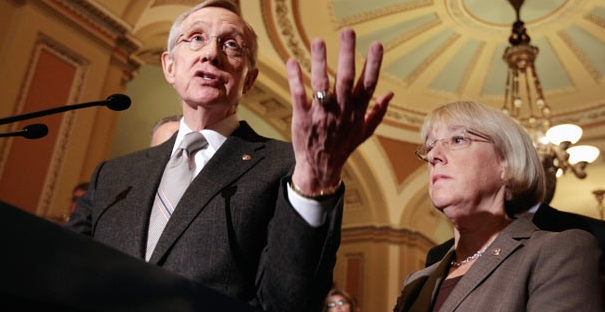
It’s back to work in Washington, DC and all the attention is now on the Super Committee and their goal of cutting spending by at least $1.2 trillion over ten years.

If the committee fails to come up with a plan that passes the Congress, there would be $1.2 trillion in automatic cuts. The health care special interests have reason to hope they will fail—the fallback cuts would only impact Medicare providers in a small way—2% in provider cuts—and not directly impact beneficiaries or Medicaid generally. Any Super Committee deal would likely be more far reaching if for no other reason than to protect the defense budget from the huge cuts the fallback would require. 

But the fallback would not solve any of the systemic problems the health care entitlements face and only prolong the inevitable day of fiscal reckoning.

Even a $1.2 trillion reduction—$2.1 trillion with the additional $915 billion reduction in discretionary spending that was part of the deal—is only a down payment on solving America’s fiscal woes—we face a $10 trillion budget shortfall over the next ten years.

Will the Super Committee succeed? That’s the big question in Washington.

Continue reading…

Preparing for the Exchanges

By JOHN R. GRAHAM

What is the biggest waste of effort in American health care today?

I’d suggest it is the hustle and bustle to establish PPACA’s Health Benefits Exchanges.  The health insurers’ trade association, AHIP, has an entire educational series on “preparing for exchanges.”  The likelihood of exchanges being up and running by January 2014 is vanishingly close to zero.  Indeed, they may not exist at all except in very few states – whether or not President Obama wins re-election.

Last January, I wrote in The Health Care Blog that states should not collaborate with the federal government in establishing exchanges.  Almost all states have taken this course.  Recent days have brought forward new evidence that exchanges are facing even bigger problems than previously understood.  The New York Times reports that Republican state senators are blocking a bill that would allow the state to establish an exchange and claim federal handouts to get it up and running. (A few weeks previously, Kansas governor Brownback actually sent a $31.5 million federal PPACA grant back to D.C.).

If they can’t get a PPACA exchange up and running in New York, of all places, where the heck will they? Only 13 states have passed pro-exchange legislation (and some of these bills don’t do much more than establish study groups).

Continue reading…

Some Myths About Social Security and Medicare

By LINDA BERGTHOLD

It’s the season of political misinterpretations and outright lies. Websites like Politifact try to sort things out. But people still seem willing to believe the most negative things about two of our most durable social programs – Social Security and Medicare. Are they really in terrible trouble and will disappear soon?

If you are over 65, have a parent or friend who is, please read and pass along. I have written some of this before, but when we hear political candidates saying inflammatory things about these programs, it seems like a little truth-telling is never redundant.

Myth #1: Social Security is in grave financial condition and must be reformed now!

Actually, Social Security is completely funded until 2036 (that’s 25 years from now!) and even if we did nothing to fix it, it would still cover 78% of the costs after 2036. So why are the Republicans trying to make it into an urgent issue and scare everyone in the meantime? In Gov. Perry’s case, he is stuck with charges he made in his book Fed Up! and may feel he has to stay with his argument to avoid a flip flop. It doesn’t seem to be working. Bachmann and Romney and Gingrich have all risen to the defense of Social Security, but we should all be wary about the conversation, because part of their solution may be to privatize the program. Given the behavior of the stock market in the past few years, that doesn’t sound very reassuring.

Myth #2 – Medicare is in grave financial condition and must be reformed now.

This is not completely a myth. Medicare does need reform. It does not need to be turned into a voucher program, but it needs better data systems so that it can pay providers more quickly and track fraud more effectively. It also needs to get tougher on reimbursements for new treatments which are much more expensive than existing treatments but provide no greater benefit. Lobbyists for the companies that make these new treatments and devices have pretty much had their way with Medicare for years. One of the solutions in the Affordable Care Act was the establishment of the Independent Payment Advisory Board (IPAB), which was supposed to provide solutions to Medicare’s problems without undue interference from lobbyists and Congress (who rely on lobby money for their campaigns). Unfortunately, the IPAB is under fire and may not ever be implemented.Continue reading…

HealthVault as a Platform for Research Development

By SEAN NOLAN

Greetings from Alaska flight 3, Reagan National to Seattle-Tacoma, seat 16C.

I’m on my way home after a great day at the Institute of Medicine’s Digital Learning Collaborative workshop. The overall goal behind the conversation was to identify core gaps and opportunities around creating feedback loops in the health system — how can we accelerate capturing learning about what works, and then integrate it back into general practice.

The room was full of smart folks and there were a ton of great observations, but the two themes that really stuck with me were:

  • It’s clear that to make real improvements we have to reach beyond the office visit and find ways to bridge between the “real lives” of citizens/consumers and the traditional healthcare world.
  • There is a ton of research and pilots running on either side of this bridge, but not a lot that reaches across it — and there is a perception that doing that work is really difficult.

Interestingly, not very long ago I was at the USENIX workshop on Health Security and Privacy*** — a very different conference (much longer hair than at IOM) — but exactly the same themes emerged from those sessions.

Continue reading…

Is the Foreclosure Crisis Making People Sick?

By SANJAY BASU

The housing crisis that precipitated our ongoing recession began with the foreclosure of 15% of US mortgages. There remains substantial disagreement, however, about whether and how public health departments should specifically address health problems experienced by the people who lost their homes in this crisis. While poor housing quality and homelessness have been statistically correlated to illness for many years, some argue that the correlation merely represents the influence of other factors that are common among people with housing insecurity: indebtedness and inability to pay for medical services, unemployment and associated insurance loss, food insecurity, mental illness, substance abuse, or family instability resulting in poor healthcare seeking or inadequate medical adherence.

As a result, it’s not obvious whether having health departments improve housing availability or quality will necessarily improve health conditions among the groups who face foreclosure. If better housing is really directly linked to better health outcomes, then health departments should expect a return on their investment in housing programs for this group. But if the statistical finding is merely secondary to other factors like indebtedness, then the money might be better spent elsewhere, for example in debt repayment programs, or in preventing the type of predatory banking practices that lead to the foreclosures. In this post, we try to answer the question: is the foreclosure crisis making people sick? And if so, what interventions have been shown to work, if any?

Continue reading…

The Safety Net Is Working

By HENRY AARON

Most of the newspaper coverage of the just-released Census Bureau data on health insurance coverage has focused changes in coverage between 2009 and 2010.  Since the advent of the Great Recession, the reduction in health insurance coverage has been dominated by the simple fact that as unemployment has risen, since most families with prime-age earners receive health insurance as a fringe benefit of employment, the number of uninsured has risen.  The increase was large from 2008 to 2009 when unemployment rose rapidly.  From 2009 to 2010, when unemployment stabilized at high levels, the increase was smaller, although still disturbingly large.

If one looks back a bit farther, however, some noteworthy differences by age group emerge, as shown in the table.  Health insurance coverage fell for all age groups but one from 2007 to 2010 and over the longer period starting with the boom year of 1999.  That coverage would have fallen in both periods is unsurprising because, as noted, health insurance for most people is linked to employment and unemployment rose over both of those periods.

Continue reading…

When Health Insurance is Free

By JOHN GOODMAN

Did you know that an estimated one of every three uninsured people in this country is eligible for a government program (mainly Medicaid or a state children’s health insurance plan), but has not signed up?

Either they haven’t bothered to sign up or they did bother and found the task too daunting. It’s probably some combination of the two, and if that doesn’t knock your socks off, you must not have been paying attention to the health policy debate over the past year or so.

Put aside everything you’ve heard about ObamaCare and focus on this bottom line point: going all the way back to the Democratic presidential primary, ObamaCare was always first and foremost about insuring the uninsured. Yet at the end of the day, the new health law is only going to insure about 32 million more people out of more than 50 million uninsured. Half that goal will be achieved by new enrollment in Medicaid. But if you believe the Census Bureau surveys, we could enroll just as many people in Medicaid by merely signing up those who are already eligible!

What brought this to mind was a series of editorials by Paul Krugman and Robert Reichand blog posts by their acolytes (at the Health Affairs blog and at my blog) asserting that government is so much more efficient than private insurers. Can you imagine Aetna or UnitedHealth Care leaving one-third of its customers without a sale, just because they couldn’t fill out the paperwork properly? Well that’s what Medicaid does, day in and day out.

Put differently, half of everything ObamaCare is trying to do is necessary only because the Medicaid bureaucracy does such a poor job — not of selling insurance, but of giving it away for free!

Continue reading…

CLASS-Gate

By AVIK ROY

I’ve written previously about the looming train wreck from Obamacare’s new long-term care entitlement for the elderly, called the CLASS (Community Living Assistance Services and Support) Act. Democratic Senator Kent Conrad (D., N.D.), you may recall, once described the CLASS Act as “a Ponzi scheme of the first order, the kind of thing that Bernie Madoff would have been proud of.” The Obama Administration strongly supported the CLASS Act’s inclusion in the Affordable Care Act, and Conrad ended up voting for it anyway.

However, the case for the CLASS Act has been rapidly unraveling. In February, HHS Secretary Kathleen Sebelius testified before the Senate Finance Committee, admitting for the first time that CLASS is “totally unsustainable.” Under questioning by Sen. John Thune (R., S.D.), she pointedly refused to rule out an individual mandate that would force everyone to join the program. Though Sebelius assured Thune that she had broad authority to fix CLASS’ structural problems, I obtained a Congressional Research Service report that stated the opposite. In the July/August issue ofForeign Affairs, former White House budget director Peter Orszag proposed an individual mandate as one of “the only solutions” to CLASS’ unsustainability.

So, we’re all in agreement that CLASS is a mess that could cost taxpayers hundreds of billions of dollars. So why was it included in our new health law in the first place?

The reason is simple: budget gimmickry. CLASS will rake in $86 billion in premiums from 2012-2021, but pay out substantially more than that over the long-term, rapidly generating deficits and bankruptcy. However, the Congressional Budget Office can only score the law’s impact over the next ten years, a period in which CLASS “reduces” the deficit. The claim that Obamacare was budget-neutral was critical to winning the approval of skittish moderate Democrats.

And now, today, a new Congressional investigation led by John Thune reveals that the Obama Administration knew all along that CLASS was unsustainable. “As a result of this investigation,” the authors write, “it is now clear that some officials inside HHS warned for months before passage that the CLASS program would be a fiscal disaster. Within HHS the program was repeatedly referred to as ‘a recipe for disaster’ with ‘terminal problems.’”

Continue reading…

Maryland Regulators Holding Hospital Costs in Check

By MERRILL GOOZNER

President Obama’s health care reform bill is filled with experiments on how to hold down health care costs.  There will be bundled payments for episodes of care and extra payments for raising quality standards. It calls for the reorganization of hospitals and physician practices into “accountable care organizations,”  which will share in savings if their costs fall below previous levels.

What’s not in the legislation is old-fashioned hospital rate regulation, which only one state in the nation uses. The latest results from Maryland suggest rate regulation works.

The state’s Health Services Cost Review Commission (HSCRC) announced earlier this week that average costs per stay at Maryland’s 51 hospitals rose just 2 percent in 2010, significantly less than the 3 percent national average. Since 1977, when rate regulation went into effect, hospitals costs in Maryland have experienced the lowest cumulative growth rate of any state in the nation, going from 26 percent above the national average to almost exactly average, according to data contained in HSCRC’s latest annual report .

Maryland, which had the sixth highest hospitalization costs among 50 states and the District of Columbia in the mid-1970s, today ranks squarely in the middle of the pack. Its $10,983 in average costs per equivalent admission in 2010 was slightly less than the $10,996 national average.

Continue reading…

Say It Loud, I’m a Gimp and I’m Proud!

By MARC STECKER

Apologies to James Brown for the title of this post, as his 1968 funk classic “Say It Loud, I’m Black and I’m Proud” (click here to listen) helped galvanize the civil rights movement in America, offering a joyous rallying cry to people who for far too long had suffered at the hands of racism and oppression. The song was not only a shout of protest, but an admonition to embrace the very thing that conferred minority status on an entire people and turn what for some had at one time been a mark of shame into a badge of honor. On top of all that, the song irresistibly generates the urge to get up and shake your groove thing. That is, of course, if you are able to get up at all.

Those of us whose disease has progressed to the point where shaking our groove things is a distant memory and has left us visibly disabled – reliant on canes, walkers, or wheelchairs – also find ourselves members of a minority group, the disabled, the inclusion in which leaves some feeling invisible, helpless, and diminished. Much of the world simply isn’t designed for people who don’t have full use of their limbs, and the fully functional folks who populate it can be insensitive, uncaring, ignorant, and sometimes even intolerant. Though much progress has been made in in the fight for the rights of the disabled, the struggle is closer its beginning than its end.

Throughout much of history, victims of chronic illness, particularly of the kind that deform or disable, have often been looked upon with scorn, as if getting sick was somehow a mark of shame, the afflicted somehow responsible for their own affliction.

Continue reading…