Categories

Category: Medical Practice

The Nine C’s of Successful Accountable Primary Care Delivery

By TOM DOERR

The Accountable Primary Care Model: New Hope for Medicare and Primary Care

Primary care has long been something of an outcast in the medical profession — and despite convincing outcomes and a validated assessment tool, checkered reimbursement has brought the Institute of Medicine’s Primary Care Model to the brink of demise.

But the accountable care movement, and some Medicare Advantage plans in particular, have breathed new life into primary care and offered new hope for the struggling Medicare system. At St. Louis-based Essence Healthcare, a 4.5-star Medicare Advantage plan, network primary care physicians’ deep experience in providing accountable care has spawned innovations that advance primary care and make progress toward the “Triple Aim Plus One” (outlined in C9 below). Their success is the result of five years of active practice transformation and continuous improvement in a risk-bearing environment.

The best practice experience from these front-line physicians can be summarized in the Accountable Delivery System Institute’s Accountable Primary Care Model. This model embraces the four pillars outlined in the Institute of Medicine/Starfield model and expands them for Nine C’s of Accountable Primary Care Delivery. They are:

C1: First contact means that care is initially sought from the Primary Care Physician/Clinician (PCP) when new health or medical needs arise. In a nationally representative sample of more than 20,000 episodes of care, when these events began with PCP visits, as distinguished from some other source of care in the system, costs were 53% lower. This cost differential persisted after controlling for ER visits, health status, socio-demographics, and other relevant variables.

Continue reading…

Building a Better Health Care System: Electronic Health Records Could Help Identify Which Patients Most Need ICU Resources

By BRIAN AHIER

It wasn’t until I had read this.

A national shortage of critical care physicians and beds means difficult decisions for healthcare professionals: how to determine which of the sickest patients are most in need of access to the intensive care unit. What if patients’ electronic health records could help a physician determine ICU admission by reliably calculating which patient had the highest risk of death?

Emerging health technologies – including reliable methods to rate the severity of a patient’s condition – may provide powerful tools to efficiently use scarce and costly health resources, says a team of University of Michigan Health System researchers in the New England Journal of Medicine.

“The lack of critical care beds can be frustrating and scary when you have a patient who you think would benefit from critical care, but who can’t be accommodated quickly. Electronic health records – which provide us with rich, reliable clinical data – are untapped tools that may help us efficiently use valuable critical care resources,” says hospitalist and lead author Lena M. Chen, M.D., M.S., assistant professor in internal medicine at the University of Michigan and an investigator at the Center for Clinical Management Research(CCMR), VA Ann Arbor Healthcare System.

The UMHS and VA study referenced in the article finds that patients’ severity of illness is not always strongly associated with their likelihood of being admitted to the ICU, challenging the notion that limited and expensive critical care is reserved for the sickest patients. ICU admissions for non-cardiac patients closely reflected severity of illness (i.e., sicker patients were more likely to go to the ICU), but ICU admissions for cardiac patients did not, the study found. While the reasons for this are unclear, authors note that the ICU’s explicit role is to provide care for the sickest patients, not to respond to temporary staffing issues or unavailable recovery rooms. Continue reading…

HealthEd Academy Report: Speaking Multiculturally in Health Care

By LAURA MONTINI

An often repeated saying in health care goes that patients lose about 80% of the information they heard during a doctor’s appointment by the time they reach the parking lot. It emphasizes that patients aren’t able to put followup care instructions into practice when they either forget or don’t comprehend what was said during a visit. Whatever the actual percentage might be, a guaranteed way to ensure that patients take home 0% of that information is to talk to them in a language they don’t understand.

Twenty percent of the United States population reported that they speak a language other than English at home, according to the U.S. Census Bureau. Many health care workers see limited English proficient patients every day, and within Accountable Care Organizations (ACOs) and Patient-Centered Medical Homes (PCMHs) it will be up to these workers to make sure that patients have the best health outcomes, no matter how high the language barriers are.

Today HealthEd Academy released the results of a survey that looked at the way non-MD health care professionals interact with their patients from multicultural backgrounds. The report examined responses from a survey of 192 health care extenders, which included nurses, social workers, pharmacists, patient educators, and more. One in five of those surveyed were part of an ACO or PCMH.

The respondents reported working with a huge array of languages. They were asked to name the most common languages spoken by their patient populations, and four out of 10 checked “other,” despite being able to choose from 10 languages identified by the Census Bureau as the most commonly spoken. Among the languages respondents wrote in were Arabic, Yiddish, several Indian/Pakistani languages, and sign language.

Continue reading…

Should Your Review of Your Doctor Be Taken Seriously?

By KENT BOTTLES

Recent articles highlight challenges with holding providers accountable for the care they deliver. One of the major thrusts of efforts to transform the American healthcare delivery system has been to become more patient-centered and to allow patients to provide feedback that matters.

Emblematic of this is the emphasis on patient involvement in the final rules for the Shared Savings Program accountable care organizations (ACO).

Echoing former Centers for Medicare & Medicaid Services Director Don Berwick’s plea on the behalf of patients (“Nothing about us without us”), the ACO final rules emphasize patient engagement in governance, quality improvement and the individual doctor/patient interaction.

Michael Millenson’s white paper provides a summary of the patient empowerment movement.

The development of the patient activation measure (PAM) and the Center for Advancing Health’s 43 engagement behaviors has allowed us to study patient-centeredness with more specificity. Studies have shown that activated patients are less likely to choose surgical interventions, have better functional status and satisfaction, are more likely to perform self-management behaviors, and report higher medication adherence rates.

Healthcare policy experts and payers have embraced the argument outlined above, and patients’ reports of their satisfaction with both physicians and hospitals have increasingly been used to calculate financial rewards.

Continue reading…

Building a Better Health Care System: Should We Be Tracking Misdiagnosis?

By EVAN FALCHUK

If you study misdiagnosis you realize how often patients get the wrong diagnosis.

But what do expert doctors think about how often it happens? And what do they think can be done to address it?

We wanted to find out so we partnered with the National Coalition on Healthcare to conduct a landmark, nationwide survey. We surveyed 400 cancer specialists from our Best Doctors database – and the findings were provocative.

The survey, “Exploring Diagnostic Accuracy in Cancer: A Nationwide Survey of 400 Leading Cancer Specialists,” focused on what doctors believe to be the most significant barriers in efforts to accurately diagnose cancers; the types of cancer they believe are most often misdiagnosed; and the tools and improvements they most need to combat misdiagnosis.

One of the most surprising findings was on how often doctors believe misdiagnosis happens. While published studies show that misdiagnosis occurs in about 15-28% of cases, the large majority of doctors we surveyed thought it happens in less than 10% of cases. At the same time, doctors recognized that the root causes of misdiagnosis were very prevalent – fragmented medical information, disparities in experience among pathologists and other factors.

So – how to explain the difference in doctors’ perceptions and the published research? I think it is because there is no systematic feedback loop for doctors letting them know of inaccuracies in their care. If you diagnose someone and they go on to get treatment someplace, and it’s later discovered that a diagnosis wasn’t exactly right, the original doctor may never find out about it. If you don’t hear about it, you can’t be blamed for thinking this problem is rare. It also means you miss out on the opportunity to improve the quality of care that these cases represent.

Another interesting point. Doctors reported that, regardless of how often they thought diagnostic inaccuracies happened, it is a problem that needed more attention from policy-makers. As NCHC President and CEO John Rother observed, “Not enough is being done on the state and federal policy end of things to acknowledge and firmly address this critical issue. Given our current health care climate and challenges, as decision-makers become more aware of the frequency of misdiagnosis and the enormous costs associated with it, they have a sizeable opportunity to make diagnostic accuracy much more of a ‘front and center’ issue in health care.”

Here’s to that promising thought.

Evan Falchuk is Vice Chairman of Best Doctors, Inc., where this post originally appeared. Prior to joining Best Doctors, Inc., in 1999, he was an attorney at the Washington, DC, office of Fried, Frank, Harris, Shriver and Jacobson, where he worked on SEC enforcement cases. This post originally appeared on Best Doctors, Inc.’s See First Blog.

How Doctors Think About New Technologies

By LESLIE KERNISAN

“Hey doctor, what do you think about this product/solution/service?”

These days, I look at a lot of websites describing some kind of product or solution related to the healthcare of older adults. Sometimes it’s because I have a clinical problem I’m trying to solve. (Can any of these sleep gadgets provide data — sleep latency, nighttime awakenings, total sleep time — on my elderly patient’s sleep complaints?)

In other cases, it’s because a family caregiver asks me if they should purchase some gizmo or sensor system they heard about. (“Do you think this will help keep my mom safe at home?”)

And increasingly, it’s because an entrepreneur asks me to check out his or her product.

So far, it’s been a bit of a bear to try to check out products. Part of it is that there are often too many choices, and there’s not yet a lot of help sifting through them. (And research has shown that choices create anxiety, decision-fatigue, and dissatisfaction with one’s ultimate pick.)

But even when I’m just considering a single product and trying to decide what to think of it, I find myself a bit stumped by most websites. And let’s face it, if I visit a website and it doesn’t speak to my needs and concerns fairly quickly, I’m going to bail. (Only in exceptional cases will I call or email for more information.)

So I thought it might be interesting to try to articulate what would help me more thoughtfully consider a product or service that is related to the healthcare of older adults.

Continue reading…

Quantified Death

By JOHN H. SCHUMANN

Cause of death on this 1937 death certificate? “Senile gangrene.”

I’ve always had nagging doubts about filling out death certificates.

An excellent article in the trade paper “American Medical News” by Carolyne Krupa explores the “inexactitude” of the custom.

As Krupa points out, doctors are never taught how to fill out the documents. She quotes Randy Hanzlick, MD, chief medical examiner for Fulton County, GA:

“Training is a big problem. There are very few medical schools that teach it,” he said. “For many physicians, the first time they see it is when they are doing their internship or residency and one of their patients dies. The nurse hands them a death certificate and says, ‘Fill this out.’ ”

That’s pretty much how it works. Though sometimes the person that comes calling with the death certificate is a hospital clerk. And she will make you fill out the form carefully, using only ‘allowable’ causes of death.

Of course, everyone dies from the same thing:lack of oxygen to the brain. But you can’t list that. Nor can you list common “jargon-y” favorites like “cardiopulmonary arrest,” “respiratory failure,” “sepsis,” or “multi-system organ failure.” All of which are true, but too inexact to be useful.

It’s intimidating to be the one to “pronounce” someone dead, and be the final arbiter of the cause. Isn’t that why we have medical examiners/pathologists?

We don’t autopsy patients much anymore, a trend that concerns many in the industry but doesn’t seem likely to change. That leaves interns and residents (at teaching hospitals) and community docs (in the real world) in charge of filling out these important statistical and historic documents.

Continue reading…

OpenNotes: Drilling Down to Assure a Healthy Evolution

By TOM DELBANCO & JAN WALKER

As the instigators of the OpenNotes initiative, we are thrilled that OpenNotes is being adopted by the VA. Prompted by Dr. Kernisan’s thoughtful post , the ensuing lively discussion, and our experiment with 100 primary care physicians and 20,000 of their patients ), we thought it useful to offer some observations drawing both on our experiences as clinicians and on ongoing conversations with clinicians and patients.

First and foremost, we don’t have “answers” for Dr. Kernisan. Our hope is to contribute to new approaches to these sticky questions over time. And, remember that patients’ right to review their records is by no means new. Since 1996, virtually all patients have had the right to access their full medical records. What’s new is that OpenNotes takes down barriers such as filling out forms and charging per page, while actively inviting far more patients to exercise this right in an easier and accessible way.

We think of open visit notes as a new medicine, designed like all therapies to help more than it hurts. But every medicine is inevitably accompanied by relative and absolute contraindications, and it’s useful to remember that it’s up to the medical and patient community to learn to take a medicine wisely as it becomes more widely available. A few specific thoughts:

Dementia and diminished physical capacity:

When a clinician notices symptoms or signs of dementia, chances are the patient and/or family has already been worrying about this for some time.  Is it safe for the patient to live alone?  What about driving? How and when could things get worse?  They may actually be relieved when the doctor brings up these topics and articulates the issues in a note. Moreover, their worst fears may prove unfounded, and reading that in a note can be reassuring. But we need to consider the words we write so we don’t rush to label a condition as “Alzheimer’s.”  Being descriptive is often better and more helpful than assigning one word definitions. In itself, OpenNotes reminds the health professional to choose words wisely.  That doesn’t have to mean more work, but we believe it can certainly mean better notes that can be more easily understood by the patient.  We urge colleagues to stay away from “The patient denies…,” or “refuses,” or “is SOB.”

Abuse or diversion of drugs, possible substance abuse, or unhealthy alcohol use:

These subjects are always tough, and what to write down has been an issue for clinicians long before they worried about open records. Over the course of our experiment in primary care, we have heard stories from patients about changing their attitudes and behavior after reading a note and “seeing in black and white” what their doctors were most worried about. Though substance abuse may seem like a particularly sensitive topic, at least one doctor in our study is convinced that some of his patients in trouble with drugs or medications did better as a result of reading his notes. And while some patients may reject our spoken (or unspoken) thoughts that we document in notes, experience to date makes us believe that more patients will be helped than hurt, and that it is worth the tradeoff.

Continue reading…

Replacing Lance

By JAMES SALWITZ

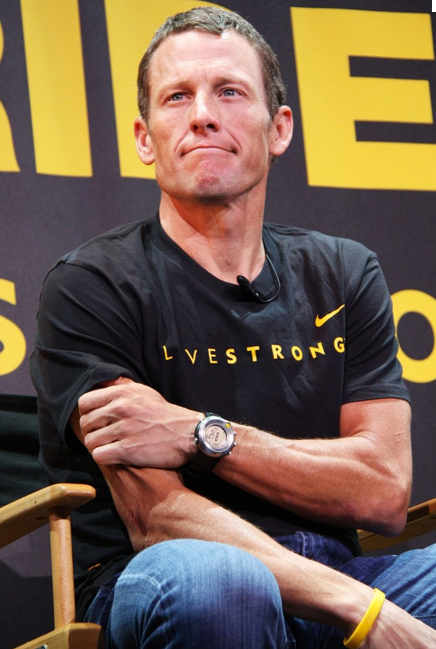
We need heroes.  Heroes show us light in the darkness, the way to the miraculous and ignite a fire in our soul to survive.  They prove what is truly possible, through the fog of the impossible.  We mourn the disgrace of Lance Armstrong because he seems to have achieved Pyrrhic victory.  Let us not doubt; whatever his frailty as a man, Armstrong vanquished a terrible foe; moreover the path blazed is not bare, for everywhere are cancer heroes.

– The 45 year old RN raising her children while she works full time in a pediatric intensive care unit, celebrates her eighth year in remission from pancreatic cancer, treated with surgery, chemotherapy and radiation.

– The grandmother who ignored a breast mass for two years so she could care for four disabled grandchildren, and when the tumor grew to be massive, continues to take care of the children while receiving chemotherapy.

– The hospital chaplain who has suffered from cancer, sits at the bedside holding a hand, sharing a smile, saying a prayer that is heard deep in the heart and to the heavens above.

– The 71 year old with four different cancers, treated with a bewildering mix of surgery, radiation and chemotherapy, whose primary worry is the cardiac care of her husband.

– The 64 year old rescue squad volunteer while receiving chemotherapy and radiation for extensive lung cancer, assists 150 people to flee from their homes and escape the wrath of Sandy.

– The national lymphoma expert, who could be wealthy in his own clinic, instead devotes his life to teaching and research, believing he can save more lives by consulting and advising oncologists in communities around the country.

Continue reading…

Lawyers, Guns and Doctors

By DAVID MOKOTOFF

Recently both President Obama and the AMA have called for physicians to talk with their patients about gun ownership, especially if they sense mental health issues. This request sounds innocuous enough, but let’s explore the implications and the reality here.

First I need to issue a disclaimer. I am neither a member of the NRA nor do I necessarily feel that more gun laws and bans will reduce the recent tragedies in Newtown, Ct. or Aurora, Co. Gun safety should be of paramount importance to all gun owners. However, if I am going to ask all my patients about gun safety and ownership, then there are a few other dangerous things I need to engage them with as well.

“Do you own a pool?” (Quite relevant since we live in Florida.) “If you do, do you have small children at home or as guests? Do the neighborhood children come by? Do you have a pool fence and is it locked at all times? Have you thought about how many accidental drowning of children there are in Florida every year? Have you taken a course in pool safety?”

Or how about this topic: “Do you own a dog? What kind of dog is it? Were there any pit bulls in its family lineage? Do you have small children at home or grandchildren? Has your dog ever bitten anyone? (Okay, the mailman doesn’t count.) Have you taken a course in dog safety ownership?”

You see where I am going with this of course. First of all, I, and most doctors, don’t have the time to engage in this dialogue with my patients, since I am too busy asking about percentage of seat belt use, quitting smoking, updating medicine lists and system reviews, and filling out ridiculous “meaningful use” of EHR forms, just to get paid from Medicare. And even if I did have time, it is really none of my business. And if even if it was my business, asking this would not prevent a mentally aberrant person from finding weapons and using them in a hideous fashion.

Continue reading…