
By RONI ZEIGER
 Here’s another technically easy and culturally hard product: Patient Friendly Orders.
My version of this idea was born when I was admitted to the hospital for pneumonia about 5 years ago. Even though I had previously worked in that hospital, the quality of communication about my care between the patient and the medical team was poor. This got me thinking…
There should be a touchscreen by my bed that lists all the current doctors’ orders.
They’re not hidden in the chart. They’re not explained only in ephemeral conversations that occurred without me present. And of course, if they’re in front of me, they’re going to have to get written in English.
Let’s organize the orders, too. Imagine a loved one is hospitalized for a severe skin infection which also caused his diabetes to get way out of control. He has difficulty sleeping in the hospital and also needs pain control. All the orders — whether for diabetes, infection, sleep, or pain — are organized according to the problem they address. (While doctors’notes are generally organized by problem, their orders are not. I bet if we implemented Patient Friendly Orders, they’d be useful for doctors if only just for this reason.)
When the doctor or nurse or physical therapist comes in, the patient and family can have a conversation about the current plan, with that plan laid out in front of them. They make a shared decision, and the doctor can update the plan on the same touchscreen. “Sounds like a plan,” the patient says while actually looking at it. When you visit your loved one, he can show you the plan, too. If a question comes up about a given order, or why something is missing from the plan, you can make a note on the touchscreen so the medical team knows to address it when they next come by.Continue reading…
 She was 94 years old with advanced Alzheimer’s. She thought it was 1954 and asked if I wanted tea. Not a bad memory for someone in a hospital bed with a broken left hip.
 The 30,000 member American Society of Clinical Oncology is the world’s leading group of cancer physicians. ASCO is dedicated to curing cancer, supporting research, quality care, reducing treatment disparities and a heightened national focus on value. This month they released their annual
 As we anticipate a new year characterized by unprecedented interest in healthcare innovation, pay particular attention to the following three emerging tensions in the space.
 A clever little study was published last month in the Archives of Internal Medicine, and it – plus the fact that I’ve just started a stint as ward attending – prompted me to think about the importance of managing a set of tasks in the hospital. In my quarter-century of mentoring residents and faculty, I can’t think of an area in which the gulf between what people should do and what they actually do is larger, nor one in which improving performance yields more tangible rewards.
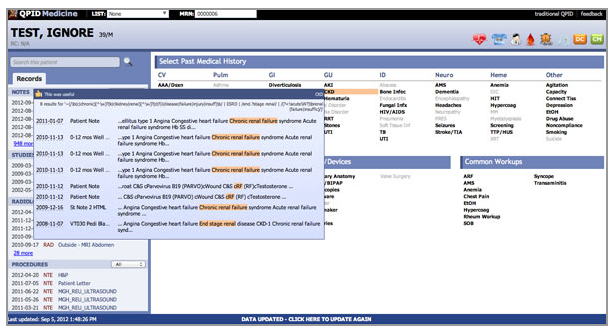 At 5am, Mr. A rolls onto the medicine floor: the fifth and final new patient to be admitted that night. The 70-year-old is well-known to our institution from his near-monthly hospitalizations and his primary care doctor, cardiologist, podiatrist, ophthalmologist, and both of his endocrinologists all work in-house. Unfortunately, for the intern admitting him (and for Mr. A), this translates into a few hours-worth of prior blood test results, MRI reports, visit notes, and discharge summaries to peruse. Where to begin? How to find the key details buried in this hoard of information?
 When you or a loved one enters a hospital, it is easy to feel powerless. The hospital has its own protocols and procedures. It is a “system” and now you find yourself part of that system.


 Things have been crazy. It’s much, much more difficult to build a new practice than I expected. I opened up sign-up for my patients, getting less of a response than expected. This, along with some questions from prospective patients has made it clear that there is still confusion on the part of potential patients. So here is a Q and A I sent as a newsletter (and will use when marketing the practice).



