Categories

Category: Health Policy

Why Only Business Can Save America From Health Care

By BRIAN KLEPPER

For a large and growing number of us with meager or no coverage, health care is the ultimate “gotcha.” Events conspire, we receive care and then are on the hook for a car- or house-sized bill. There are few alternatives except going without or going broke.

Steven Brill’s recent Time cover story clearly detailed the predatory health care pricing that has been ruinous for many rank-and-file Americans. In Brill’s report, a key mechanism, the hospital chargemaster, with pricing “devoid of any calculation related to cost,” facilitated US health care’s rise to become the nation’s largest and wealthiest industry. His recommendations, like Medicare for all with price controls, seem sensible and compelling.But efforts to implement Brill’s ideas, on their own, would likely fail, just as many others have, because he does not fully acknowledge the deeper roots of health care’s power.

Continue reading…

A $910 Million Price Tag For California Exchange: A Dark Omen of Things to Come

By ROBERT LASZEWSKI

So far California has received $910 million in federal grants to launch its new health insurance exchange under the Affordable Care Act (“Obamacare”).

The California exchange, “Covered California,” has so far awarded a $183 million contract to Accenture to build the website, enrollment, and eligibility system and another $174 million to operate the exchange for four years.

The state will also spend $250 million on a two-year marketing campaign. By comparison California Senator Barbara Boxer spent $28 million on her 2010 statewide reelection campaign while her challenger spent another $22 million.

The most recent installment of the $910 million in federal money was a $674 million grant. The exchange’s executive director noted that was less than the $706 million he had asked for. “The feds reduced the 2014 potential payment for outreach and enrollment by about $30 million,” he said. “But we think we have enough resources on hand to do the biggest outreach that I have ever seen.”

Continue reading…

Health Care Shibboleth

By FRANK DE LIBERO

“We spend far more on health care than other peer countries yet have worse outcomes. Why is U.S. health care so expensive?” I’m sure you’ve encountered similar statements, maybe even expressed it yourself. It occurs often, including by knowledgeable people and health-related institutions. However, it’s a fallacy because it confuses health care with population health.

Health care is a proper subset of population health. For example, longevity is determined by more than just health care. Using a specific recent estimate (Appendix Exhibit A6 – gated), an average 20-year old U.S. white male who did not graduate high school will live 10.5 fewer years than a similar man with a college degree. That’s over ten years of life related to educational attainment. Sure, there are many reasons for the difference, and health care or the lack of it is only one of them.

Continue reading…

Combat Medicine’s ‘Golden Hour’

By J.D. KLEINKE


WASHINGTON — While the news swells this week with sad and angry retrospectives on the war in Iraq, it is worth noting that the tremendous human costs of that war would have been much greater, were it not for breakthroughs in combat medicine deployed for the first time on a broad scale in Iraq.

4,486 American men and women were killed in the Iraq war. This represents approximately 14 percent of the 32,221 wounded in action — versus the 19 percent killed in Vietnam, or 27 percent killed in World War II. These statistics are cold comfort for those whose lives were derailed and families tormented in the process, and they are a clarion call to re-double all our efforts to help those who survived.

Continue reading…

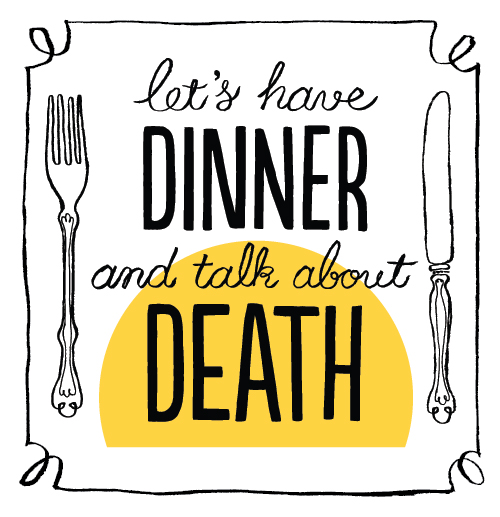
Let’s Have Dinner and Talk About Death

By ALEXANDRA DRANE

Our family debates a lot of things over our dinner table – the best Looney Toon character, politics, whether or not (and where or when) something is appropriate…  For many of these topics, there are no right answers and no wrong answers – just a whole lot of discussion and opinions.

A few months ago, on the heels of the Health 2.0 conference, a small group of us gathered in a San Francisco kitchen for one of the most powerful experiences most of us had ever had around a dinner table.

Continue reading…

Five Things Obamacare Got Right-and What Experts Would Fix

By DAN DIAMOND

It was one of the most notorious quotes that emerged from the battle over the Affordable Care Act.

We have to pass the bill so you can find out what is in it. – House Speaker Nancy Pelosi, March 9, 2010.

The line was taken out-of-context, as Pelosi’s office has continued to protest. But more than three years after her quote — and nearly three years after the ACA passed Congress — Pelosi’s accidental gaffe seems pretty apropos.

The law continues to delight supporters with what they see as positive surprises; for example, some backers say Obamacare deserves credit for the unexpected slowdown in national health spending. But critics warn that the law’s perverse effects on premiums are just beginning to be felt.

And there still are “vast parts of the bill you never hear about,” notes Timothy Jost, a law professor at Washington & Lee. “I wonder if they’re [even] being implemented.”

Jost and a half-dozen other health policy experts spoke with me, ahead of Obamacare’s third birthday on Saturday, to discuss how the law’s been implemented and what lawmakers could have done better.

Continue reading…

The Smarter Healthcare Consumer Myth

By JOHN S. WILSON

If consumers could review and shop for health care coverage as easily as they do television sets, costs would decline and we wouldn’t have as large a health care crisis. At least that’s what some folks would lead us to believe. But the picture isn’t that clear.

A recent article in The Wall Street Journal reports how companies are using private health insurance exchanges to lower costs and give employees more flexibility. The exchanges are similar in nature to those mandated by the Patient Protection and Affordable Care Act (a.k.a. Obamacare)—the difference being a private company is overseeing the exchange and not the federal government or states. Employees are able to log on to a site, review coverage plans with different benefits and a range of deductibles, and choose what works best for their budget.

A consultant running one such exchange was enthusiastic about its progress thus far. “When people are spending their own money, they tend to be more consumeristic,” Ken Sperling, national health exchange strategy leader for Aon Hewitt, a unit of AON Plc, told the Journal. (Aon itself, as well as Sears Holdings Inc. and Darden Restaurants are using a new Aon run exchange.) Benefits consultants Mercer (part of Marsh & McLennan Cos.) and Buck (part of Xerox) are rolling out similar private exchanges.

There’s no doubt that consumers are more astute, on average, regarding price for benefit when directly paying for goods and services.

Continue reading…

RWJF Call for Proposals: Pioneering Use of Behavioral Economics

By LORI MELICHAR

We have announced our second Call for Proposals in the field of behavioral economics. We’re actively seeking ideas that will help us to better understand how to discourage the consumption of low-value health services — those that provide more harm than benefit or which provide only marginal health benefits. In addition to improving health outcomes, this knowledge could contribute to lowering health care costs for us all.

Behavioral economics is an area of study by which I’ve personally grown increasingly intrigued and in which the Foundation has recently begun to invest. We all know, for example, that we need to exercise, eat right and be actively engaged in our own health care. But we don’t always do what we know we should do; knowing the “right” decision to make does not guarantee that we make that decision. The goal of behavioral economics is to uncover insights that could enable people to make better — more “rational” — choices for their health.

It’s not a given that the behavioral economic-driven solutions that have been shown to, for example, increase 401k savings will prove to be true when applied to the challenges of health and health care. But it’s a risk we want to take because we sincerely believe — if it does — that it could lead to the profound social impact that the Pioneer Portfolio, and the Robert Wood Johnson Foundation as a whole, is seeking.

Continue reading…

Gauging if Chronic Diseases can be Tamed By Enlisting Residents of an Entire County

By ALAN PLAYER

Increasingly, the health care community is experimenting to see if managing the health of a defined population – say diabetics – improves their health and also reduces the cost of health care or its rise over time. In other words, the healthcare profession seeks to determine if value can displace volume (our fee-for-service tradition) in delivering medical services. Humana’s first-of-its-kind, two-year pilot health-and-wellness program may provide some welcome answers.

A unique factor of the Team Up 4 Health program reflects its participants – hundreds of residents in Bell County, Kentucky (population: 28,750). Statistics show that its population bears a high incidence of preventable chronic illnesses. One-third of the county’s adults are obese and one-in-eight has Type 2 diabetes.

Continue reading…

Ready For O’Ryancare?

By J.D. KLEINKE

This is how sexy the chatter gets over cocktails at health policy wonk-ins in Washington. This is how sexy the chatter gets over cocktails at health policy wonk-ins in Washington.

“No pre-ex’s, community rating, guaranteed issue.”

“No, that’s Obamacare stuff,” I said to my colleague, as she read a summary of Congressman Paul Ryan’s House Republican budget plan released on Tuesday. “Everyone in Medicare already has those. You must have the wrong memo.”

She scrolled to the top of her iPhone and pointed at the screen. “Summary of the Ryan Budget Plan – Medicare.”

“Maybe just a gimme for popular support?” I speculated, knowing from headline coverage earlier in the day that the Ryan plan sought to repeal Obamacare, not strengthen its most popular consumer protections. “Guaranteed issue but no mandate — that would sure hang the insurers out to dry. But why would you put that in a budget?”

“Here’s why,” she read. “‘Seniors buy coverage through new Medicare Exchange.'”

“Oh.”

Consumers need protections only when they are turned into consumers. And that is what Congressman Paul Ryan’s budget seeks to do for — or do to, depending on your feelings about medical capitalism — future Medicare beneficiaries.

Continue reading…