Categories

Above the Fold

7 Ways We’re Screwing Up AI in Healthcare

The healthcare AI space is frothy.  Billions in venture capital are flowing, nearly every writer on the healthcare beat has at least an article or two on the topic, and there isn’t a medical conference that doesn’t at least have a panel if not a dedicated day to discuss. The promise and potential is very real.

And yet, we seem to be blowing it.

The latest example is an investigation in STAT News pointing out the stumbles of IBM Watson followed inevitably by the ‘is AI ready for prime time’ debate. If course, IBM isn’t the only one making things hard on itself. Their marketing budget and approach makes them a convenient target. Many of us – from vendors to journalists to consumers – are unintentionally adding degrees to an already uphill climb.

If our mistakes led to only to financial loss, no big deal. But the stakes are higher. Medical error is blamed for killing between 210,000 and 400,000 annually. These technologies are important because they help us learn from our data – something healthcare is notoriously bad at. Finally using our data to improve really is a matter of life and death.

Continue reading…

Which of These 10 New Companies Will Change the Face of Health care?

The Health 2.0 Fall Conference is the perfect place for new and young companies to get a foot in the door – to generate industry buzz, obtain critical funding and pitch new partners.

Our lineup includes:

Our exclusive Launch! event – 10 companies will debut their solutions and have them voted on by the audience.

Henk Jan Scholten, a co-founder of last year’s winner – Siren Care – said, “Launch! was the ideal platform for our product because it’s not only laser-focused on digital health but also has a stellar industry reputation and strong following of innovators and thought leaders. Showcasing our product with a live patient demo on stage gave us instant credibility that is hard to achieve.”

Be sure to also attend Traction, which puts Series A-ready companies center stage as they compete to be recognized as the most fundable start-up from venture capitalists and corporate investors.

Continue reading…

Why Doctors (And Everybody Else) Should Read Books by Nassim Taleb

“There are some enterprises in which a careful disorderliness is the true method” – Herman Melville, Moby Dick

Asymmetry of Error

During the Ebola epidemic calls to ban flights from Africa from some quarters were met by accusations of racism from other quarters. Experts claimed that Americans were at greater risk of dying from cancer than Ebola, and if they must fret they should fret more about cancer than Ebola. One expert, with a straight Gaussian face, went as far as saying that even hospitals were more dangerous than Ebola. Pop science reached an unprecedented fizz.

Trader and mathematician, Nassim Taleb scoffed at these claims. Comparing the risk of dying from cancer to Ebola was flawed, he said, because the numerator and denominator of cancer don’t change dramatically moment to moment. But if you make an error estimating the risk of Ebola, the error will be exponential, not arithmetic, because once Ebola gets going, the changing numerator and denominator of risk makes a mockery of the original calculations.

The fear of Ebola, claimed Taleb, far from being irrational, was reasonable and it was its comparison to death from cancer and vending machines which was irrational and simplistic. Skepticism of Ebola’s impact in the U.S. was grounded in naïve empiricism – one which pretends that the risk of tail events is computable.

Continue reading…

Dear Republicans, There Are Second Acts In Washington 

Nazis and white supremacists.  Charlottesville.  Immigration policy and DACA.  Climate change.   In the context of these issues, there’s been much discussion of late about moral and ethical principles and American values. 

There is, of course, no moral equivalency between white supremacists and those who oppose and protest them.   People who advocate white supremacy are just plain wrong, on moral grounds. 

And the Trump administration is clearly pursuing a path on immigration policy and climate change that is contrary to the ethical standards and values of the vast majority of Americans. I would add to this list the expansion of health insurance coverage.  If anything is clear after this summer’s failed attempt by Republicans to repeal the ACA it’s that almost all Americans now support universal coverage.  

And, more to the point, people see this increasingly in moral terms. They get it. It took many years—decades—to get to this point.   But this summer’s debate clarified what our values are as a nation on access to health care via the structure of insurance, private and public.     

Continue reading…

Is It time For Physicians to Unionize?

Since the birth of our nation, labor unions have existed in one form or another in the United States.  Unions are a force to protect the ‘working population’ from inequality, gaps in wages, and a political system failing to represent specific industry groups.  Historically, unions organize skilled workers in a specific corporation, such as a railroad or production plant, however unions can organize numerous workers within a particular industry.  Known as “industrial unionism”, the union gives a profession or trade a collective and representative voice.  The existence of unions has already been woven into the political, economic, and cultural fabric of America; recent events suggest that it may be time for physicians and surgeons to unionize.

A labor union, is a body of workers who come together to achieve common objectives, such as improved safety, higher pay and benefits, and better working conditions.  Union leadership bargains with employers on behalf of union members to negotiate labor contracts (collective bargaining.) This may include the negotiation of wages, work rules, complaint procedures, and regulations governing hiring, firing and promotion, or workplace policies.

Continue reading…

The Decline and Fall of the Doctor-Patient Relationship

The physician-patient relationship is a bedrock of the U.S. health system. Strong relationships are associated with higher ratings for physicians and better outcomes for patients but there’s a catch.
In Secretary of Health and Human Services’ Tom Price Senate confirmation and many times since, he has vowed his administration will seek to restore that relationship. But what patients associate with a strong relationship is increasingly at odds with how physicians think. And the gap between the two seems to be widening.

Background:

Per the American Medical Association, the physician-patient relationship is a formal or inferred relationship between a physician and a patient, which is established once the physician assumes or undertakes the medical care or treatment of a patient. It is a responsibility physicians don’t take lightly and most believe they do it well.

The physician-patient relationship has been widely studied. A framework developed by Ezekiel and Linda Manuel has been widely used to categorize the four roles physician play in these relationships: guardian, technical expert, counselor, and friend. In interacting with patients, physicians play all four. Researchers have linked a physician’s personality with their bedside manner. Surveys show most physicians lean toward a more paternalistic approach in dealing with patients and the majority think friendships with patients must be approached with caution. Academics have studied the dynamic between physicians and patients, observing that the physician is the ‘power’ figure in most. Studies have linked a physician known to have a prickly personality with more patient complaints and, in some specialties, a higher susceptibility to lawsuits. And physicians routinely compare notes among themselves about problem patients with whom interactions are routinely difficult.

Continue reading…

The Best Positioned Tech Giant in Healthcare Today? The Answer May Surprise You.

When you think about tech giants playing in healthcare, you think of Google and the work Verily is doing; you think of Apple and their HealthKit and ResearchKit applications, as well as their rumored plans to organize all your medical data on your iPhone; you may even think of Amazon and their potential entry into the pharmacy market.

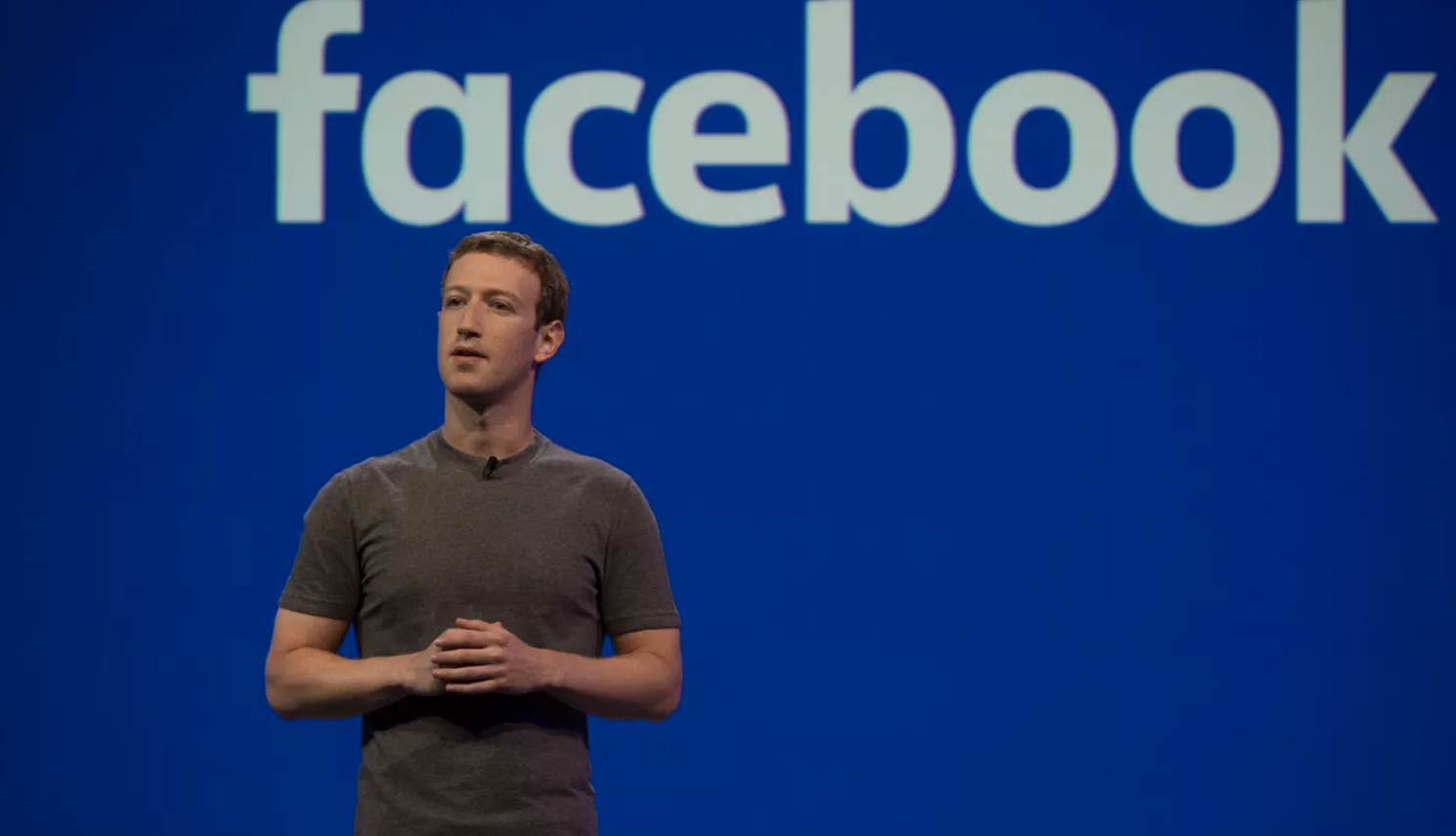
But the name you may hear about least–Facebook–may actually be the company influencing healthcare the most, and may also be the best positioned to support the patient-centered future that so many imagine and that Eric Topol described in The Patient Will See You Now (my Wall Street Journal review here).

At first blush, Facebook seems to be doing remarkably little in health; their most notable effort has arguably been providing the opportunity to list your organ donor status, an initiative which produced an immediate lift in organ donor registrations.

Continue reading…

BREAKING NEWS: CTO of HHS, Headspace, Google join Health 2.0 – rate goes up tomorrow!

What do most healthcare shows have in common? The same old, same old. You spend the equivalent of a mortgage payment for the same thought leaders who tell you about the problems in healthcare and the same vendors with products that don’t quite get at the core.

We do things differently at the 11th Annual Health 2.0 Fall Conference. We’ve deliberately curated a wide-ranging, hands-on, attendee-driven experience that focuses on achieving the possible. Check it out:

1. Test-Drive the Tech: Obviously! The agenda and exhibit hall is packed with 150+ tech demos in dozens of product categories. No power points and empty promises. These are products in action and entrepreneurs with real life tales from the trenches.

Check out the latest from such companies as Headspace, Google Play, Welltok, and Microsoft. Want to see what’s really brand new? Check out Launch!

2. Turn point solutions into system change: We go beyond one-off apps to show you how to integrate innovation sustainably. With presentations on FHIR and blockchain; Interoperability; and with live input from providers like Sutter Health, UCSF, Mount Sinai Health System, and more….you will see how to implement change in real life.
3. Get currency and customers. Discover “Series A” finalists at Traction, and meet investors from New Enterprise Associates, Merck Ventures, Humana Health Ventures, Nexus Venture Partners, Kaiser Permanente Ventures, Summation Health Ventures, and more at the Investor Breakfast. Get customers atMarketConnect Live with buyers from Cigna, Sutter Health, Kaiser Permanente, Dignity Health, Stanford Health Care, Providence, and more.
4. Get under the hood. Health 2.0’s Dev Day will be showcasing the latest developer platform updates, and chatting about exciting plans on the horizon for companies working on FHIR, blockchain, machine learning, and predictive analytics. Innovators on hand will include Aashima Gupta, Global Head of Healthcare Solutions at Google Cloud; Adam Culbertson, Innovator-In- Residence at HIMSS; Andrew Shults, Senior Director of Engineering at Oscar, and data guru Fred Trotter.
5. Understand policy to see the opportunity. Policy impacts innovation. Discover how legislation and regulation will impact solutions development and implementation from Bruce Greenstein, CTO of HHS; Don Rucker, National Coordinator at ONC; former ONC Director David Brailer, and former U.S. CTO Aneesh Chopra.

Register today before rates increase by $200 after tomorrow! 

Our Guide to Pre-Approval Access to Drugs For Both Doctors & Patients

By ALISON-BATEMAN HOUSE

In April 2016, I published guidance, in the form of a mock case study, on how to access a drug before it has been approved by the FDA—what’s known as pre-approval (or expanded or compassionate) access. This is an updated version of that guidance, reflecting multiple important changes in the pre-approval landscape over the past year. In particular, the FDA rolled out a new, streamlined form for single-patient requests, and Congress passed the 21st Century Cures Act, which, among many other things, mandated that certain pharmaceutical companies provide public information about their pre-approval access policies.

Patients (and physicians) trying to access an unapproved drug outside of a clinical trial can feel as though they’re navigating uncharted waters. Many physicians don’t know that the FDA permits the use of unapproved drugs outside of clinical trials; those who do know often have no idea how to access such drugs for their patients. Those physicians who know about pre-approval access are largely specialists in certain areas—often, oncology or rare diseases—and they are generally self-taught: they didn’t learn about pre-approval access in medical school or in their residencies. Thus, while some physicians have become very accustomed to requesting pre-approval access to drugs, the majority lacks this knowledge. In this essay, I use a fictional case to trace the process for requesting access to an unapproved drug. I hope to explode several myths about the process, especially the beliefs that the FDA is the primary decision-maker in granting access to unapproved drugs and that physicians must spend 100 hours or more completing pre-approval access paperwork.

Imagine you are a physician, and you have a pregnant patient who has tested positive for the Zika virus. She is only mildly ill, but she’s terrified that the virus, which has been linked with microcephaly and other abnormalities, will harm her unborn child. She’s so concerned that she is contemplating an abortion, even though she and her husband have been trying to have a child and were overjoyed to learn she was pregnant.

Continue reading…

assetto corsa mods