Categories

Category: Medical Practice

Interview with Aptus Health at HIMSS

By PRIYA KUMAR

One in a series of interviews that should have been posted months ago, but Matthew Holt is just getting to now.

Previously known as Physicians Interactive, Aptus Health rebranded itself after acquiring several companies including MedHelp, Quantia & Univadis, and now focuses on both physicians and consumers globally and domestically. At HIMSS back in February, Matthew met with Teri Condon, VP of Strategy and Development at Aptus Health, previously with IMS Health and PharMetrics, and Michael Bodenstab, Vice President of Healthcare Solutions at MedHelp, to talk about where the company stands today and what their platform offers.

Priya Kumar is an Intern at Health 2.0, and a student at George Washington University

Fighting Zika With Network Medicine

By BRIAN ANDERSON

Screen Shot 2016-08-05 at 11.47.44 AM

On Monday, the medical establishment and the general public were put on alert by an emergency notification from the Centers for Disease Control and Prevention: Florida’s Miami-Dade County had 14 confirmed cases of the Zika virus, the infectious disease which causes birth defects, and was at risk of continued active transmission.  In the following days, the CDC has advised pregnant women and their partners to avoid Wynwood, a small community north of downtown Miami–the first time it has ever issued a travel alert in the United States for an infectious disease. It has also issued specific Zika guidelines for the Wynwood region for patients who have traveled to the area on or after June 15th.

Moments like these test our healthcare system and reveal its weaknesses.  We’ve spoken often on this blog about healthcare’s connectivity problem: islands of information and data siloes that don’t talk to one another, sometimes to lethal effect. Public health crises demand that health information flow freely and that healthcare providers have the latest clinical guidelines at their fingertips.
Continue reading…

Podcast: Why Should Doctors Think Like Engineers?

By HOSPITAL TALK

Screen Shot 2016-08-02 at 7.03.56 AMIn this Carelogistics podcast, THCB editor Sanchayeeta Mitra talks about how thinking like an engineer can eliminate breakdowns in care delivery, the eternal quest to make a trip to the doctor’s office more like the experience of using Amazon.com and why doctors and engineers (and nurses and the IT department) should all love each other. Really.

If you have a story to tell about something innovative you’re doing or a hack you’re using to change medicine or improve care delivery at your hospital or practice – drop us an email to considered for an interview.

Absolution

By ANISH KOKA

Screen Shot 2016-08-01 at 6.35.24 PM

Like many cities, Philadelphia is a city defined by its neighborhoods.  I practice in two neighborhoods separated by a few miles but leagues apart in every other way.  One of the hospitals is a tertiary care facility in the heart of Center City – a well to do upcoming part of town – and the other is a small community hospital a few miles South.  The patients at the two locations are quite different, and the mechanism of health care delivery is also starkly different.  Medical care at the Center City campus is provided mostly by employed physicians, and care at the community hospital is provided mostly by private practice physicians.

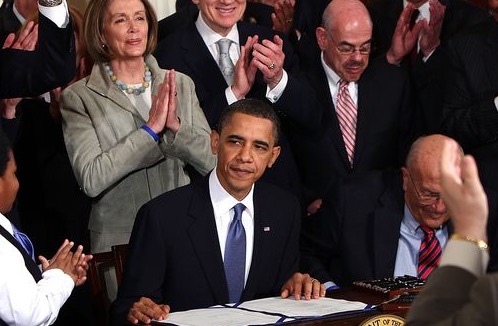
The debate about employed physicians vs. private physicians was one that until very recently was thought to have been settled.  To the nascent Obama administration in 2008 charged with ‘fixing’ health care, it was obvious that health care delivery in the United States was of low quality and needed change.  Enamored by models like the Mayo Clinic, the Cleveland Clinic, and Geisinger the answer clearly was large clinically integrated networks.  And just like that, with little discussion, and no evidence, the Obama administration set into motion legislation in the form of the Affordable Care Act that brought private practice to its knees. Declining reimbursement and increased overhead costs from regulations meant that percentage of private practice physicians went from 57% in 2000 to 37% in 2013.
Continue reading…

Rural America: A Primer for Washington Officials, Columnists and Dartmouth Economists

Niran S. Al-Agba

By NIRAN AL-AGBA

Earlier this week , physicians in small private practices and rural areas breathed a collective sigh of relief.  There is a possibility the implementation of changes to physician reimbursement (known as MACRA) could be delayed.  Thank you, Mr. Slavitt, for listening.  I am grateful to Orrin Hatch (R-UT) and Ron Wyden (D-OR) for keeping our rural needs in mind.  We have a window of opportunity for rural health care to survive but we must communicate our needs as physicians and patients’ loud and clear.

Continue reading…

Six Keys to Improving Progression of Quality Care in Hospitals

By KARL STRAUB

Screen Shot 2016-07-25 at 12.32.51 PM

The path to consistent, quality patient care progression sounds simple enough:

1. Set and meet accurate length of stay targets based on appropriate DRGs—begin with an end in mind and proactively manage toward that end.

2. Focus unit care teams on clear, appropriate care progression plans for all patients.

But admissions processes often do not capture and disseminate an appropriate target length of stay and DRG in a way that informs expectations for treatment and documentation. Thus caregivers face challenges choosing appropriate goals for managing patient progression so that everyone is working toward that goal. The resulting delays in care prolong length of stay, increase costs, frustrate patients and caregivers, and increase the possibility of preventable harm. Inconsistent care progression can also increase readmissions, as divergence from appropriate and timely care plans increases the risk that the need for treatment will reoccur.Continue reading…

A Novel Proposal: Let’s Trust Our Doctors

By PETER PRONOVOST

flying cadeuciiHow would you react if you sent your sputtering car to the auto mechanic, and they stopped trying to diagnose the problem after 15 minutes? You would probably revolt if they told you that your time was up and gave back the keys.

Yet in medicine, it’s common for practices to schedule patient visits in 15-minute increments — often for established patients with less complex needs. Physicians face pressure to mind the clock while they examine you.

That’s not to say that your physician “clocks out” as soon as your 1 p.m. appointment hits 1:15, or that all appointments last that long. What it does mean is that patients and doctors may be deprived of the opportunity for more meaningful discussions about the underlying causes of their problems and plans to improve them. A woman in her 50s who presents with high blood pressure and obesity might need medicine. But a longer conversation about the stresses of being the primary caregiver to her father, who has Alzheimer’s, could help provide strategies to help her look after herself.

When you see a new patient every quarter hour, there is often scant time to get to these root causes, to make accurate diagnoses, and develop the best treatment plans. And there is the danger that you miss a major diagnosis altogether.

The 15-minute appointment arose not out of evidence that it improves patient outcomes but out of production pressures — both the need to meet patient demand and to see enough patients to stay profitable.

Continue reading…

The Doctors Club

By ANISH KOKA

Vatsal Thakkar, a psychiatrist, recently wrote of the perks doctors are afforded in everyone’s favorite instrument of social justice – the New York Times. Dr. Thakkar speaks effectively and correctly about a broken health care system navigated best by pulling the ‘doctor’ card. Some on the progressive left have seized on this blatant disregard for egalitarianism as yet another example of a broken healthcare system, despite the fact that a two tiered system is exactly what they have been building over the last eight years.

flying cadeucii

To be clear, there has always been special treatment accorded fellow doctors and nurses – it has just become more obvious as the gulf between the haves and the have nots in health care has grown.  Make no mistake – this is absolutely a function of multiple strategies that have created winners and losers in the healthcare space.  The problem, of course, is that patients and physicians have ended up on the losing side of this equation.

Continue reading…

Hope, Statistics and the Overtreatment of Cancer

By SAURABH JHA

flying cadeuciiWhen diagnosed with abdominal mesothelioma, a rare cancer with a blighted future, evolutionary biologist and writer, Stephen Jay Gould, turned his attention to the statistics; specifically, the central tendency of survival with the tumor. The central tendency – mean (average), median and mode – project like skyscrapers in a populated city and are the summary statements of a statistical distribution.

The “average” is both meaningful and meaningless. The average utility of average is zero. Consider a gamble – fair coin toss where you get $50 if it lands heads and lose $50 if it lands tails. The average (net) gains of this coin toss, if the coin is thrown hundreds of time, is zero.  But no one gets nothing – you either get $50 or lose $50. The average is twice wrong – it over estimates for some and under estimates for others. But the average of this gamble has important information. It helps you decide if you could profit from making people play this gamble – you wouldn’t profit unless you charged a small fee to play the gamble.

Continue reading…

Oh, Those Evil Law Suits!

By JIM PURCELL

flying cadeuciiMy wife of 47 years likes to tell of her travails after having married me.  She claims she had no inkling that I would specialize in despised career choices.  Right after we were married, I served as an infantry airborne officer in Viet Nam, a then despised profession.  Then I became a trial lawyer.  A very despised profession.  And then in 2004, I became the CEO of a health insurer,  the pinnacle of my career in despised professions.  At one point she stopped reading the Providence Journal and listening to local talk radio.  When asked if she were my wife, she’d often reply, “Why do you want to know?”

So I have some perspective on emotional reactions of people in varied contexts.  Here we will discuss the hyper-emotionalism that lawsuits engender, because they indeed cause people to act in ways that are confounding.  Of course, an individual plaintiff in a medical malpractice lawsuit is hyper-emotionally involved.  But more to the point of this article, so is the defendant physician.

Why is that?  For the plaintiff, that’s easy to understand.  They believe (or were convinced) that the physician harmed them through negligent conduct, and that they should be compensated (and perhaps apologized to).  Their world often starts to revolve around the lawsuit as if nothing else mattered.  It consumes them, and the outcome is rarely satisfying.

The physician reacts almost equally emotionally when sued.  While that is counterproductive, they typically can’t help themselves because it is a direct and personal attack going to the heart of who and what they are professionally and as human beings.  Heavy stuff.

Continue reading…