Categories

Category: Medical Practice

Assessing the Validity of MACRA’s Risk Adjustment Methods

By KIP SULLIVAN

The feedback doctors will receive from CMS under CMS’s proposed MACRA rule will arrive in two forms: Money (more or less of it) and data. Neither form of feedback will be accurate. For that reason, the behavior desired by Congress and CMS – “smarter care” (as CMS puts it) producing lower costs and higher quality – will not materialize.

As I noted in the first installment of this three-part series, the two most important sources of noise in CMS’s feedback will be CMS’s inability to determine which patients “belong” to which doctor (the attribution problem) and its inability to adjust cost and quality scores for factors outside physician control (the risk-adjustment problem). [1] In my first installment I showed that the method of attribution CMS will use is unacceptably sloppy. In this installment I review the risk-adjustment problem and CMS’s irresponsible claim that it can measure physician “merit” even with sample sizes as small as 20 patients.

Continue reading…

The Cab Ride

By ROBERT MCNUTT

I usually walk from the University of Illinois, campus to Union Station at the end of my workday. But, that day it was raining. So, I hailed a cab. The cab driver was not in a mood to talk so I had time to relax and look around at the traffic. To my right was a recent model Mercedes sedan. I watched it for a moment and then pivoted to peer to the left. An old Toyota Corolla with the rear view mirror attached with duct tape was neck-in-neck slowed on the road with the cab and the Mercedes.

This image struck me; three impressively different cars depicting, perhaps, personal preferences and different opportunities of individuals, despite the differences, were driving on the same road.

So, this piece is about civil rights. Everyone who gets ill deserves the same road to drive on, but presently, some get better, or different roads than others. The “road” in the potentially obscure metaphor is the road that allows every individual the equal and omnipresent rights to information that will allow them to make an informed decision.

Continue reading…

Fame and Fentanyl

By KAREN SIBERT

flying cadeuciiA fentanyl overdose led to the recent death of musician and singer Prince, according to the medical examiner’s report released June 2. The drug seems likely to become as notorious as propofol did after the death of Michael Jackson in 2009.
For all of us in anesthesiology who’ve been using fentanyl as a perfectly respectable anesthetic medication and pain reliever for as long as we can remember, it’s startling to see it become the cause of rising numbers of deaths from overdose.  Fentanyl is a potent medication, useful in the operating room to cover the intense but short-lived stimulation of surgery. The onset of action is very fast, and the time that the drug effect lasts is relatively brief.

But fentanyl was never intended for casual use. Fentanyl is many times more potent than morphine; 100 micrograms, or 0.1 mg, of IV fentanyl is roughly equivalent to 10 mg of IV morphine. In March, the LA Times reported that 28 overdoses — six of them fatal — occurred in Sacramento over the course of just one week. The victims had taken pills that resembled Norco, a common pain reliever, but in fact the pills were laced with fentanyl. Even tiny amounts were enough to be lethal.

Like all opioids, fentanyl reduces the drive to breathe, and after a large enough dose a patient will stop breathing entirely. In addition to its effect on respiratory drive, fentanyl may also produce rigidity of the muscles in the chest and abdomen, severe enough to hamper attempts to ventilate or perform CPR.

Continue reading…

Sloppy Risk Adjustment and Attribution Guarantee MACRA Won’t Work

By KIP SULLIVAN

flying cadeuciiI just finished reading the 962-page MACRA rule CMS released late in April. I was prepared for the mind-numbing complexity of the document. What I was not prepared for was CMS’s glib treatment of two fundamental issues: The woeful inaccuracy of the scores CMS will use to punish and reward doctors, and the cost to doctors of participating in ACOs, “medical homes” and other “alternative payment models” (APMs)

These are not peripheral issues. If CMS dishes out financial rewards and punishments based on inaccurate data, MACRA will, at best, have no impact on cost and quality and may well have a negative effect. The second problem – the high cost of setting up and running APMs – may not be as lethal as the inaccurate-data problem, but at minimum it will reduce physician participation in APMs and, therefore, the already slim probability that APMs will reduce Medicare costs and improve quality.

In this comment and two more to come, I will review both of these problems and CMS’s what-me-worry attitude toward them. I begin with a jaw-dropping example of CMS’s reckless indifference to its inability to measure physician “merit” accurately.

Continue reading…

Tech VC Answers ‘Will Computers Replace Doctors’ – I Mean VCs

By DAVID SHAYWITZ

Screen Shot 2016-06-04 at 9.37.53 AM

A constant frustration for many in healthcare is the cognitive dissonance between the elegant, highly anticipated promise of technology solutions and the messy, lived complexity of clinical practice.

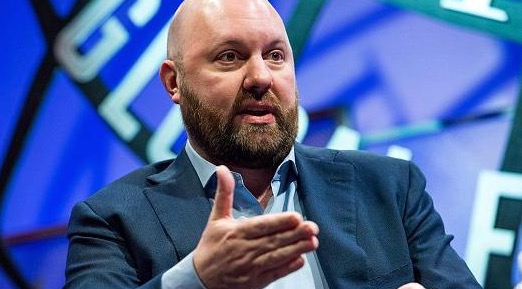
In this context, I was fascinated–and feel compelled to share–this unexpectedly revealing excerpt from a recent (and, as always, captivating) a16z podcast, featuring a conversation a16z founder Marc Andreessen and board partner Balaji Srinivasan recorded at Stanford.

Following an extensive conversation about the factors associated with startup success and VC success, as well as about emerging (or re-, re-emerging) trends such as artificial intelligence (AI), an audience member asked whether AI might not select investments better than actual VCs–a VC version of the “will computers replace doctors?” gauntlet that tech VCs have thrown down before the medical establishment.

Continue reading…

How Radiologists Think

By SAURABH JHA

flying cadeuciiDiagnostic tests such as CAT scans are not perfect. A test can make two errors. It can call a diseased person healthy – a false negative. This is like acquitting a person guilty of a crime. Or a test can falsely call a healthy person diseased – a false positive. This is like convicting an innocent person of a crime that she did not commit. There is a trade-off between false negatives and false positives. To achieve fewer false negatives we incur more false positives.

Physicians do not want to be wrong. Since error is possible we must choose which side to err towards. That is we must choose between two wrongness. We have chosen to reduce false negatives at the expense of false positives. Why this is so is illustrated by screening mammography for breast cancer.

A woman who has cancer which the mammogram picks up is thankful to her physician for picking up the cancer and, plausibly, saving her life.

A woman who does not have cancer and whose mammogram is normal is also thankful to her physician. The doctor does not deserve to be thanked as she played no hand in the absence of the patient’s cancer. But instead of thanking genes or the cosmic lottery, the patient thanks the doctor.

Continue reading…

Annals of Decision-Making

By MICHEL ACCAD

flying cadeuciiA Vox.com piece about decision-making caught my attention this morning.

The story was compelling.  A 12-year-old boy had intractable seizures from a leaking vascular malformation in the brain.  A first neurosurgeon would not operate and recommended radiation therapy instead.  The patient’s mother sought another opinion from a Mayo Clinic neurosurgeon who was adamant that an operation should be undertaken.  The second surgeon surgeon was undeniably right.  The patient is now a bright, fully-functional researcher at the University of California San Francisco.

So far, so good?  Not so, according to Vox.  That there should be a smart mom making a smart decision, and a smart doctor carrying out a successful surgery is apparently a problem.

Why?  Because the more cautious surgeon had a different opinion and, had the mom compliantly accepted his recommendation, the child could have been worse off.  Variability in judgment, as always, is the enemy.

Continue reading…

Beyond CQI: How Patient-Centered Care and Efficiency Go Hand-in-Hand

By KRISTIE HUFF

Screen Shot 2016-06-13 at 11.29.59 AMHospital administrators are finding that true continuous quality improvement (CQI) requires a radical change in thinking.

For decades, automakers, the packaging industry and the airline industry have created better products, improved processes and greatly increased user satisfaction by adopting the principles of CQI—which, simply put, means constantly looking at our processes and asking ourselves, “Can we do it better”?

CQI principles have been applied to the delivery of healthcare with great success. Hospitals have created and employed myriad mechanisms for all staff members/personnel to continually improve existing processes. But hospital leaders and administrators know that even after decades of dutifully applying the principles of CQI to improving delivery of care, the patient’s journey from admission to discharge is still all too often filled with missed opportunities for a speedier journey through the system and better care overall.

Administrators at leading hospitals are finding that, in some cases, CQI means adopting an entirely new model of delivery.  They are also finding that the most efficient way to deliver care is also the most patient-friendly. Let me explain.

Continue reading…

Why Medicine?

By SAURABH JHA

Cross posted with Quartz.

When I was applying to med school some 20 years ago in the UK, I was advised not to say at the interview: “I want to be a doctor because I want to help people.”

The answer was considered too dull back then. And in any case, I was asked “Why medicine?” only once.

“I’m not sure, but it’s not because my parents forced me.” I hesitatingly answered.

The interview panel giggled at my honesty, and for breaking a stereotype about Indians. I was accepted. But I doubt that this answer would cut it today.

Showing a sense of altruism is practically mandatory today for would-be doctors – one wonders if functional MRI will soon be used to prove empathy. But when I was 17 (the age when we typically applied to study medicine) that wasn’t the case. My curriculum vitae had little evidence that I wanted to help people.

Continue reading…

Slavitt’s “Data Paradox”

By KIP SULLIVAN

Andy Slavitt began his statement at the Datapalooza conference with encouraging words for those of us who believe that the measurement craze has been a disaster and that MACRA will make it worse.  

Slavitt claimed to be in favor of electronic medical record “reform” that “works with doctors, not against them.” He seemed to say he understood MACRA could aggravate the damage that “meaningful use” and the pay-for-performance fad have already inflicted on doctors.

He even accurately summarized the lousy results to date of the measurement craze. He said doctors feel all the data entry “took time away from patients and provided nothing or little back in return.” “[P]hysicians are baffled by what feels like the ‘physician data paradox,’” he said. “They are overloaded on data entry and yet rampantly under-informed.”

Continue reading…


