Categories

Category: Medical Practice

Independent Decision Support at the Point-of-Care for Both Patients and Physicians

By ADRIAN GROPPER

flying cadeucii“We did not spend $35 Billion to create 5 data silos.” This was said by Vice President Biden at the beginning of Datapalooza on Monday and repeated by CMS’s Andy Slavitt on Tuesday. On Wednesday, at the Privacy and Security Datapalooza at HHS, I proposed a very simple definition of electronic health record (EHR) interoperability as the ability for patients and physicians to access independent decision support at the point of care regardless of what EHR system was being used.

Over the three days of Datapalooza, I talked to both advocates and officials about data blocking. In my opinion, current work on FHIR and HEART is not going to make a big dent in data blocking and would not enable independent decision support at the point of care. The reasons are:

Continue reading…

A Free Market Repudiation of Evidence-Based Medicine

By MICHEL ACCAD

Michel AccadIn a recent article entitled “A Hayekian Defense of Evidence-Based Medicine” Andrew Foy makes a thoughtful attempt to rebut my article on “The Devolution of Evidence-Based Medicine.”  I am grateful for his interest in my work and for the the kind compliment that he extended in his article.  Having also become familiar with his fine writing, I return it with all sincerity.  I am also grateful to the THCB staff for allowing me to respond to Andrew’s article.

Andrew views EBM as a positive development away from the era of anecdotal, and often misleading medical practices:  “Arguing for a return to small data and physician judgment based on personal experience is, in my opinion, the worst thing we could be promoting.”  Andrew’s main concern is that my views may amount to “throwing the baby with the bath water.”

On those counts, I must plead guilty as charged.  I have been trying to sink that baby for a number of years now, attacking it from a variety of angles.  I have made a special plea in favor of small data and I have even questioned the intellectual sanity of EBM.  On the question of the coexistence between EBM and clinical judgment, I have been decidedly intolerant, relegating EBM to second class citizen status.  In other words, I’m an unapologetic EBM-denialist which, as I found out yesterday on Twitter, puts me in the same category as climate change skeptics.

Continue reading…

Datapalooza: MACRA, EHR Reform and Working with Doctors – Not Against Them

By ANDY SLAVITT

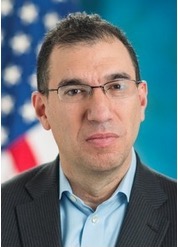
Screen Shot 2016-05-12 at 8.45.31 AMThere’s a bit of a checklist for speaking at Datapalooza. Thank Niall. Mention Todd Park. Remark at how big the event has gotten compared to last year. Recap how much progress has been made. Refer to yourself as a “data geek” . Also, have in my notes “Good not to follow Farzad or Aneesh” . Perhaps even make some news with an announcement or grant or contest. Several of my colleagues did this and I share their excitement.

But I’m not going to make news. Instead, I’m going to relay a bit of my personal experience with health care innovation and technology as my goal is to leave this job with nothing really left unsaid. Twitter, by the way, seems to be helping with that.

Lately, we’ve been contemplating a significant transformation of the Medicare program by implementing the bi-partisan MACRA legislation. Legislation to make a wholesale change in the Medicare payment system to pay for quality. This has caused me to begin an obsession with the plight of independent physicians, knowing as we all do that if we don’t invest in primary care, we’ll invest double or triple when people get unnecessarily sick. And as a steward of programs where people with the lowest incomes and in the most remote locations get care, I know that without access, it will be people that can afford it the least that suffer first and most.

Continue reading…

The Rise of the Chief Cognitive Officer

By DAN HOUSMAN

Cogito potestas est (Thinking & learning is power)

Screen Shot 2016-05-12 at 1.06.57 PM

In a recent blog post titled ‘A computer that allows the doctor to be more human’ Toby Cosgrove, the CEO of the Cleveland Clinic stated “It may sound odd, but technology like Watson will make healthcare less robotic and more human.” The reasoning behind putting an AI through a version of medical school is that human physicians can’t possibly read and process the exponentially growing volumes of clinical trials, medical journals, and individual cases available in the digital domain. A computer that digests them can transform them into useful support options for care of a patient. Furthermore humans can’t be a part of every case and learn from every physician. But by combining a human with the capacity of a computer as a physician’s assistant, physicians can focus on the many things that they are uniquely able to do in the complex domain of medicine. This includes the critical conversations with patients and their families.

Continue reading…

The Tangled Hospital-Physician Relationship

By GOLDSMITH, KAUFMAN and BURNS

flying cadeuciiTogether, hospital and physician services account for more than half of national health spending. In its 2014 National Health Expenditures estimates, the Centers for Medicare and Medicaid Services’ actuaries make the hospital (nearly $1 trillion) and physician practice (nearly $600 billion) sectors appear to be independent and non-overlapping. This is an optical illusion. Hospitals and physicians are, in day-to-day practice, hopelessly intertwined.

And while power appears to be shifting from physicians to hospitals with the increasing salaried employment of physicians, appearances can be deceiving. This post discusses the economic power balance between hospitals and physician communities, and the policy levers that influence this complex relationship — a relationship that is evolving in a way that could increase financial pressures on both hospitals and the American health system.

Physicians and hospitals must intimately collaborate or care does not get delivered. At the same time, hospitals and physicians directly compete in surgery, imaging, and other ambulatory services. In this relationship of simultaneous competition and interdependency, the borderline between hospitals and physicians is fraught both with economic conflict and moral/legal risk.

Continue reading…

A Hayekian Defense of Evidence-Based Medicine

By ANDREW FOY

It’s a lousy Saturday morning in Southeastern Pennsylvania. The 100-mile bike ride I had scheduled, the first century of the year, was cancelled at 5 AM due to inclement weather. I’ve been scanning my Twitter feed ever since.

I only joined Twitter yesterday, so I’m a bit obsessed at this point. The synapses in my prefrontal cortex are getting fresh hits of dopamine every time I land on another exciting science/political story, journal article, or blog that’s been tweeted about. Yes, I’m a nerd.

Through Twitter, I was introduced to Michel Accad less than 24 hours ago. He’s a cardiologist, philosopher, writer, and creator of the blog “Alert and Oriented”. Over last evening and this morning, I read most of his blog articles as well as a few research papers he has authored. In short, I think he’s a fantastic writer and very intelligent guy but I have to take issue with a recent piece titled “The devolution of evidence-based medicine”. In it, he praises Anish Koka’s recent article on this site titled, “In defense of small data”. I know Anish personally; he is brilliant and paradoxically, he positively covered my own research using big data in another recent article.

Continue reading…

Actually, Medical Errors are the Leading Cause of Death

By SAURABH JHA

Josef Stalin famously said: one death is a tragedy; one million is a statistic. Perhaps 250, 000 preventable deaths from medical errors, according to an analysis by Makary and Daniel in the BMJ, maketh a Stalin.

The problem with Makary’s analysis, which also concluded that medical errors are the third leading cause of death, isn’t the method. Yes, the method is shaky. It projects medical errors from a series of thirty five patients to a country of 320 million, which is like deciding national spice tolerance on what my family eats for dinner.

The problem with Makary’s analysis isn’t that it is full of assumptions. Assumptions are inevitable in biomedical research, and abundant in health services research. Researchers of medical errors must determine whether a bad patient outcome, such as death, was avoidable. Bad outcomes lie in a spectrum between inevitability and preventability. If every death is inevitable doctors are rendered impotent, and if every death is avoidable doctors are rendered omnipotent (FWIW, I prefer omnipotence).

Continue reading…

Who Owns What Happens Next?

By JEFF GOLDSMITH

flying cadeuciiAs Medicare and private insurers continue to struggle with implementing accountable care organization- and population-linked payments, an increasing amount of attention is being paid to a less expansive but almost as complex method of shifting risk to hospitals and physicians: paying a fixed price for an episode of care, or bundling. The key question about bundling is: Who owns the responsibility for assuring a successful recovery from clinical interventions?

Bundled payment is designed to focus attention on care coordination and delivering a complete clinical solution to a complex medical problem. Unless resource consumption and the patient’s progress through the episode are managed tightly, hospitals and others accepting bundled payments are at risk of significant operating losses as well as poor clinical results.

Acute care over quickly

As most of my friends and all of my family know, I spent a good portion of 2015 intensively using the health system I have worked in for 40 years. It was an eye-opening experience. Beginning in December 2014 with a scary cancer diagnosis, then nerve grafting in my right hand in October 2015 and a hip replacement in November, I experienced three surgical interventions in three different places (two academic health centers away from home and my local community hospital in Virginia). All of the interventions were successful, and after a period of recovery and rehabilitation, I returned, healthy and disease free, to my active life.

The biggest surprise in my patient experiences: how fast the acute phase of my care was over! In two of my three surgeries, I was out on the street with a sheaf of discharge papers in my hand, barely conscious of the magnitude of the intervention within 24 hours of waking up from surgery. In the third case, pain control issues prolonged my hospital stay for about a week.

Continue reading…

Misunderestimating the AMA

By BRADLEY FLANSBAUM

CMS just released their proposed MACRA regs (Cliff Notes version), and as you could expect, every specialty society and interested party dug in and critiqued.  The rule runs a thousand pages and will have a substantial effect on the future of provider payment.  In case, you have not heard.

Each organization will cut their sections of interest out, parse them, synthesize their analysis, and return a long letter to CMS. They will offer the correct paths on which the agency should proceed–lest they go forward uninformed taking down entire blocks of the healthcare system on account of willful neglect and ignorance.  The letters will start with a friendly salutation along the lines of, “We commend the Secretary on her wisdom and hard work….BUT, we have an eensy weensy problem on some issues,” and so the turn goes.

The inpatient docs will hit the rough patches as they relate to fitting hospital-based practitioners into an outpatient focused model; the nephrologists will sound off on integrating dialysis payments within a medical home; the surgeons will focus on attribution of adverse post-op events weeks after patients leave the hospital; and the pathologists will just throw their hands up and say, “huh, should we just skip this party.”

Continue reading…

Protecting the Health of Americans by Improving the Use of Antibiotics

By TOM FRIEDEN

Tom Frieden optimizedFew appreciate the threat of antibiotic resistance to human medicine more than readers of this blog. You know antibiotics as lifesaving “miracle” drugs that treat sepsis, save victims of burns and trauma, and are crucial to survival of patients receiving transplants and cancer treatment.  At the same time, you understand the devastating consequences when these drugs don’t work anymore—when infections become resistant.

The overuse of antibiotics breeds antibiotic-resistant infections that threaten patients, hospitals, and our entire health care system.  Resistant infections mean more and longer hospitalizations, increased hospital costs, and higher mortality.  As clinicians, it is our job to help our colleagues in the medical community and the American public better understand the risk posed by inappropriate use of antibiotics.  Patients and the community benefit from more appropriate antibiotic use, which reduces risks for the individual patient as well as the entire community.

A new, first-of-its-kind analysis of antibiotic use in US doctor’s offices and emergency departments, published in the Journal of the American Medical Association (JAMA), highlights how common inappropriate antibiotic prescribing is.  CDC, in collaboration with The PEW Charitable Trusts and other public health and medical experts, found at least a third of antibiotics are given when the patient does not need them. This overuse, largely due to overprescribing for relatively minor illnesses including common colds, sore throats, and ear infections – for which antibiotics are not effective – amounts to 47 million excess antibiotic prescriptions each year.

Continue reading…