Categories

Category: Medical Practice

Obamacare to the Rescue

By SPIKE DOLOMITE WARD
I want to apologize to President Obama. But first, some background.

I found out three weeks ago I have cancer. I’m 49 years old, have been married for almost 20 years and have two kids. My husband has his own small computer business, and I run a small nonprofit in the San Fernando Valley. I am also an artist. Money is tight, and we don’t spend it frivolously. We’re just ordinary, middle-class people, making an honest living, raising great kids and participating in our community, the kids’ schools and church.

We’re good people, and we work hard. But we haven’t been able to afford health insurance for more than two years. And now I have third-stage breast cancer and am facing months of expensive treatment.

To understand how such a thing could happen to a family like ours, I need to take you back nine years to when my husband got laid off from the entertainment company where he’d worked for 10 years. Until then, we had been insured through his work, with a first-rate plan. After he got laid off, we got to keep that health insurance for 18 months through COBRA, by paying $1,300 a month, which was a huge burden on an unemployed father and his family.

By the time the COBRA ran out, my husband had decided to go into business for himself, so we had to purchase our own insurance. That was fine for a while. Every year his business grew. But insurance premiums were steadily rising too. More than once, we switched carriers for a lower rate, only to have them raise rates significantly after a few months.
Continue reading…

Why Three Hospitals Didn’t Hurt My Wife

By MICHAEL L. MILLENSON

My wife was lying in the back of an ambulance, dazed and bloody, while I sat in the front, distraught and distracted. We had been bicycling in a quiet neighborhood in southern Maine when she hit the handbrakes too hard and catapulted over the handlebars, turning our first day of vacation into a race to the nearest hospital.

The anxiety when a loved one is injured is compounded when you know just how risky making things better can get. As a long-time advocate for patient safety, my interest in the topic has always been passionate, but never personal. Now, as Susan was being rushed into the emergency room, I wanted to keep it that way. “Wife of patient safety expert is victim” was a headline I deeply hoped to avoid.

In the weeks after the accident, we spent time at a 50-bed hospital in Maine; a Boston teaching hospital where Susan was transferred with a small vertebra fracture at the base of her neck and broken bones in her left elbow and hand; and a large community hospital near our suburban Chicago home. There were plenty of opportunities for bad things to happen – but nothing did. As far as I could tell, we didn’t even experience any near misses.

What went right? After all, though our health care system knows how to prevent errors that kill 44,000 to 98,000 people in hospitals each year, that death toll has remained stubbornly constant. Based on personal and professional observations, I’d simplify the formula that kept Susan safe into three variables: consciousness, culture and cash.

Continue reading…

Medical Injustice – Contracts That Suppress Patient Comments About Their Doctors or Dentists

By PAUL ALAN LEVY


Last week we filed a class action complaint on behalf of the patients of a New York dentist, Stacy Makhnevich, over a form agreement that she imposes on all new patients to try to suppress any online comments on her work that she finds disagreeable.  In the form, Makhnevich promises not to evade HIPAA’s patient privacy protection in return for patients’ commitment not to disparage her, not to post any comments about her publicly; if the patient writes anything about the dentist, the patient assigns the copyright in those comments to Makhnevich.   Relying on the form, Makhnevich sent one of her patients invoices purporting to bill him a daily hundred-dollar fine for having posted comments about her on Internet review web sites.

The copyright assignment aspect of the agreement is especially dastardly.  It is intended to enable the dentist to send a DMCA takedown notice to the host of any web site where the criticism is posted.  Because the DMCA protects site hosts from liability for copyright infringement, but only if they act expeditiously to remove infringing material once they receive notice of its presence on their servers, hosts generally respond like Pavlov’s dog to such notices.  In theory, copyright could be asserted regardless of whether a comment is true or false, and regardless of whether it is an opinion that is constitutionally protected from libel claims; copyright can also be used as a basis for seeking awards of statutory damages even if there are no real damages.

Continue reading…

Should Doctors Make House Calls?

By SANJAY BASU

In the olden days, doctors would travel from house to house when community members fell ill. Now, we usually expect patients to come to our office-based clinics. The modern model of care is certainly more efficient for us as physicians. But it’s also a barrier for patients to receive medicine; the highest-risk people usually make it to our clinics after being discharged from their first or second hospitalization, well after high blood pressure or diabetes has already taken its toll on their bodies. Our latest research suggests that we can statistically predict which people are most likely to end up having chronic diseases five or ten years from now. We can pinpoint these people right down to which house they live in. Such predictive models present a new opportunity to prevent disease before it becomes costly or deadly. In this week’s post, we look at a new idea for community-based disease prevention in medicine: the geographical mapping of chronic disease risks, and preemptive visits of healthcare workers to households where people are likely to become ill in the future.

The physician Jeffrey Brenner became famous for piloting a model of healthcare that would attempt to simultaneously improve services while reducing healthcare costs in his city of Camden, New Jersey. His model, recently profiled in Atul Gawande’s popular New Yorker article “The Hot Spotters”, was based on a simple observation: that sick people with poorly-treated diseases tend to be clustered in certain parts of the city.

Continue reading…

The British Primary Care System and Its Lessons for America

By BOB WACHTER

I’ve heard a lot of shocking things since arriving in England five months ago on my sabbatical. But nothing has had me more gobsmacked than when, earlier this month, I was chatting with James Morrow, a Cambridge-area general practitioner. We were talking about physicians’ salaries in the UK and he casually mentioned that he was the primary breadwinner in his family.

His wife, you see, is a surgeon.

This more than any other factoid captures the Alice in Wonderland world of GPs here in England. Yes—and it’s a good thing you’re sitting down—the average GP makes about 20% more than the average subspecialist (though the specialists sometimes earn more through private practice—more on this in a later blog). This is important in and of itself, but the pay is also a metaphor for a well-considered decision by the National Health Service (NHS) nearly a decade ago to nurture a contented, surprisingly independent primary care workforce with strong incentives to improve quality.

Appreciating the enormity of this decision and its relevance to the US healthcare system requires a little historical perspective.

As I mentioned in a previous blog, the British system cleaves the world of primary care and everything else much more starkly than we do in the States. All the specialists (the “ologists,” as they like to call them) are based in hospitals, where they have their outpatient practices, perform their procedures, and staff their specialty wards. Primary care in the community is delivered by GPs, who resemble our family practitioners in training and disposition, but also differ from them in many ways.

Continue reading…

Joint Commission Says Texting Orders Is a No-No, but Maybe Docs Are on to Something

By DAVID E. WILLIAMS

The Joint Commission has issued a statement indicating that health care professionals should not text patient orders. It reads:

“It is not acceptable for physicians or licensed independent practitioners to text orders for patients to the hospital or other healthcare setting. This method provides no ability to verify the identity of the person sending the text and there is no way to keep the original message as validation of what is entered into the medical record.”

I was alerted to this statement by an iHealthBeat article on the topic, which quotes a couple of experts who note that texting has security, privacy and reliability problems that make it unsuitable for critical issues.

I understand the downsides but I’d be interested to learn more about what’s driving the use of texting for orders — if there is in fact such a trend. My guess is that younger physicians in particular are used to texting in their personal lives, finding it convenient, immediate, reliable, concise and likely to be read, acknowledged and acted on quickly. Add to that the fact that texting can easily be done from personal mobile devices and the appeal becomes pretty clear.

Continue reading…

Drawing a Hard Line on Resident Work Hours

By SAMMY ALMASHAT & SIDNEY WOLFE

Last year, Public Citizen and other groups filed a petition – the second in 10 years – calling on the Occupational Safety and Health Administration (OSHA) to take over responsibility for enforcing medical resident work hours from the Accreditation Council for Graduate Medical Education (ACGME). This past September, the Obama administration denied our groups’ petition on the grounds that the ACGME is the appropriate entity to handle the issue, an identical argument to one put forward by the Bush administration nine years earlier to justify the denial of our first petition.

Both petitions were filed as a result of the long-standing failure of the ACGME to adequately protect residents from the proven deleterious effects of long work hours. Six years after the ACGME implemented the first limits on resident work hours in 2003, the Institute of Medicine (IOM) concluded an exhaustive 12-month review examining the existing system of medical training and the evidence regarding fatigue, resident physicians, and patient safety. The IOM concluded that the 2003 ACGME rules were not adequately protective and that major changes were needed, including a limit of 16 hours in a row for all resident work shifts.

In response, the ACGME updated its guidelines in 2010, but unfortunately, the new rules failed to incorporate the majority of the IOM’s recommendations. The rules limited medical interns ― first-year residents ― to 16-hour shifts but inexplicably allowed all other residents to continue to work up to 28 hours straight. There is no biological rationale to support the notion that residents suddenly become able to withstand the adverse effects of extended shifts upon completing their first year of residency. In addition, the new rules, in permitting averaging over several weeks to achieve the 80-hour weekly limit, continued the practice of allowing residents to work 100 or more hours in certain weeks.

Continue reading…

Are Doctors Becoming Obsolete?

By DAVID SHAYWITZ


The idea that physicians are going to be far less important in the medicine of the future seems to be a central assumption of many next-generation health companies, an assertion that, like undergraduate Shakespeare productions set in the present day, may once have felt daring and original, but now seems merely tedious.

The logic goes something like is: Patients are accustomed to seeking insight from their doctors but doctors are far less good at providing this advice than most patients realize. As more consumer-based tools for managing health become available, patients will recognize that they now have the means and the motivation to take care of their health better than their physicians, and medical care will move directly into their hands.

Arguably, a form of this already happens today, as patients make extensive use of non-prescription products (e.g. the Vitamin Shoppe reported net sales of $750 million in fiscal year 2010), non-traditional practitioners (e.g. total revenue received by chiropractors is estimated by Hoovers to be about $10 billion), and seek medical advice from friends on Facebook (which may have directly saved at least one life).

What these data don’t convey, however, is something I’ve had the privilege to experience first-hand: Doctors enjoy an exceptionally durable bond with patients — especially those patients with chronic illnesses. The level of trust reported by patients for their physicians is remarkable, and the role of physician as trusted adviser is difficult to overstate. It’s a huge burden to manage disease on one’s own, and it’s generally reassuring to know your physician is with you at every step — something I believe still happens, by the way, although obviously not in every case.

Continue reading…

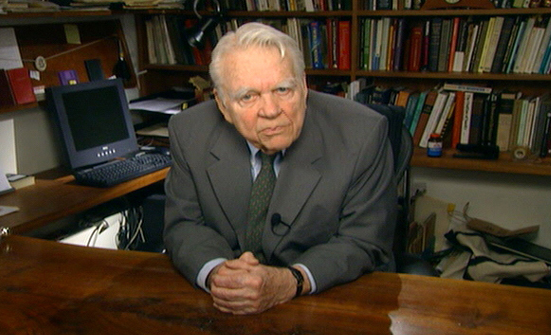
My Minute with Andy Rooney

By MICHAEL L. MILLENSON

Pat Mastors, a patient safety advocate, has written a clever blog post called, “A Few More Minutes with Andy Rooney.” Channeling the curmudgeonly tones of a 60 Minutes commentary, it begins:

I died last week, just a month after I said goodbye to you all from this very desk. I had a long and happy life – well, as happy as a cranky old guy could ever be. 92. Not bad. And gotta say, seeing my Margie, and Walter, and all my old friends again is great.

But then I read what killed me: “serious complications following minor surgery.”

Now what the heck is that?

The blog goes on to have Rooney ask for someone to find out what actually killed him. This has offended some respondents who, blinded by their own biases, think a writer using a celebrity’s death to push for information that could be used to improve care is the same thing as accusing his physicians of negligence or hauling Rooney’s family into court to publicly disclose private details.

Don’t you hate people like that?

OK, that was a cheap Andy Rooney imitation. But as it happens, I did have a phone conversation with Rooney about patient safety.  It came right after the Institute of Medicine released its landmark report, To Err is Human, in November, 1999. The appalling toll of medical errors wasn’t exactly a secret back then, but doctors and hospitals had gotten used to publicly tut-tutting about the “price we pay” for medical progress every time a new study came out and then going back to doing exactly what they’d been doing before.

Continue reading…

A Few More Minutes with Andy Rooney

By PAT MASTORS

“I died last week, just a month after I said goodbye to you all from this very desk. I had a long and happy life – well, as happy as a cranky old guy could ever be. 92. Not bad. And gotta say, seeing my Margie, and Walter, and all my old friends again is great.

But then I read what killed me: ‘serious complications following minor surgery.’

Now what the heck is that?

Nobody gets run over by a ‘serious complication.’ You don’t hear about a guy getting shot in the chest with a ‘serious complication.’ Sure, I didn’t expect to live forever (well, maybe only a little bit), but I was sorta going for passing out some Saturday night into my strip steak at that great restaurant on Broadway. Maybe nodding off in my favorite chair, dreaming of reeling in a 40-pound striper. You know, not waking up. This whole ‘death by complication’ thing is just so, I don’t know … vague and annoying.

Here’s something else that bothers me. This note I got a few days ago from a lady who says she’s a fan. She talked to a reporter at a national newspaper the other day. Asked the reporter, basically, what kind of complication ‘’did me in’? The reporter said ‘No idea what killed him. Unless someone dies unusually young, we don’t deal with the cause of death.’

Now I know reporters have lots to do. I was one myself before they started paying me to just say what I think. But I guess what this reporter means is, if I was 29 instead of 92, they mighta thought it was worth asking why I went in for minor surgery and died of ‘serious complications.’

Continue reading…