Categories

Category: Medical Practice

Will One Medical justify $40m in venture funding?

By MATTHEW HOLT

One Medical is a San Francisco-based “concierge lite” primary care service. I happen to know it pretty well because I’m a patient there and have known CEO Tom Lee and given free (probably unwanted) consulting to COO Sharon Knight since before the NY Times made them famous.  So yesterday’s news that they’ve raised another $20m (making their total $46m) gave me pause. Not because I don’t think my doctor (Andrew Diamond) isn’t fantastic. He is. Plus when you go to an appointment–which really can be booked same or next day online–you get a full half an hour, it really runs on time and the office environment is fabulous. Ian Morrison used to tell us that quality in health care was being in a waiting room with people richer than you. At One Medical everyone is better looking than you (well, than me anyway!).

The added cost for this? Only about $150 a year. Oh and that added cost is actually voluntary, as Tom Lee pointed out in an email last year after local IPA Brown & Toland complained. Yes that fee gets you rapidly answered emails, online prescriptions, same day appointments and way more. So what’s the catch? There doesn’t seem to be one. This concerns me for several reasons:Continue reading…

The Cleveland Experiment

By JOHN MOORE

There have been a number of research studies published that question the value of Electronic Health Records (EHRs), particularly as it pertains to improving quality of care and ultimately outcomes. Chilmark has always viewed these reports with a certain amount of skepticism. Simple logic leads us to conclude that a properly installed (including attention to workflow and thorough training) of an enterprise software system such as an EHR will lead to a certain level of standardization in overall process flow, contribute to efficiencies and quality in care delivery and ultimately lead to better outcomes. But to date, there has been a dearth of evidence to support this logic, that is until this week.

Last week the New England Journal of Medicine published the research paper: Electronic Health Records and Quality of Diabetes Care, which provides clear evidence, albeit a little fuzzy around the edges, that physician use of an EHR significantly improves quality metrics over physicians who rely on paper-based medical record keeping processes.

The research effort took place in Cleveland as part of Better Health Greater Cleveland from July 2009 till June 2010 and included 46 practices representing some 569 providers and over 27K adults with diabetes who visited their physician at least twice during the study period. Several common quality and outcome measures were used to assess and compare EHR-based care to paper-based. On composite standards of quality, EHR-based practices performed a whooping 35% better than their paper-based counterparts. On outcome measures, which are arguably more difficult for physicians as patients’ actions or lack thereof are more integral to final outcomes, EHR-based practices still outperformed their paper-based peers by some 15%. The Table below gives a more detailed breakout.

Continue reading…

Hearts on Fire: a Tale of Two Californias

By MATTHEW HOLT

The concept of practice variation raised its ugly head again this weekend in the northern California news media. And buried in the stories are several themes for our ages. But the conclusion is, the power of individual health systems and very small numbers of physicians to change patterns–and the cost–of care are enormous.

First the stories. Both about health care but also both revealing the future of investigative reporting. The BayCitizen is a non-profit blog about the San Francisco metro, created as response to the local papers cutting their reporting. It also provides stories to the NY Times–I’m unaware about how much of its revenue comes from the Times, but it’s part of  the Times’ entry into non-NY competition with retreating local papers.

For this story on heart program readmission picked up on an older UCSF press release and showed how UCSF used a $500K+ donation from the Gordon & Betty Moore Foundation (that’s the Moore of Intel & Moore’s law fame) to create a very sensible program that gave in-home support to newly discharged elderly cardiac patients. It cut readmission rates by 30%. The BayCitizen though will upset Gary Schwitzer as it did not include the actual numbers but the UCSF press release does, and yes this is a relative not an absolute cut. Here’s the key graf

Over the past 11 months, only 16 percent, on average, of the hospital’s heart failure patients were readmitted within a month of discharge, down from 23 percent in 2006. That’s well below the national 30-day readmission rate of 25 percent. The average readmission rate was 11.6 percent during the first four months of 2011.

So UCSF was about average and got much better and seems to be getting better still–but there’s quite a way to go. But it is an indication that at least one AMC is capable of moving the ball in the right direction. Of course UCSF is a leader in the pro-Dartmouth “use resources sensibly” camp, and we may or may not see the “keep em alive at all costs” folks at UCLA follow suit.

Meanwhile up in rural northern California it looks like the same Dartmouth data set is about to bring a series of visits from the FBI. Continue reading…

2011 Costs of Care Essay Contest

By NEEL SHAH

Do you have a story about a medical bill that was higher than you expected it to be? Or a time when you wanted to know how much a medical test or treatment might cost? How about a time you figured out a way to save money while still delivering high-value care?

As part of our second annual essay contest, Costs of Care, a nonprofit group based in Boston, is offering $4000 in prizes for anecdotes like these that illustrate the importance of cost-awareness in medicine. Judges will include former White House Budget Director Peter Orzsag, former United States Surgeon General C. Everett Koop, Governor Jennifer Granholm, women’s health and cancer research advocate Dr. Susan Love, and Harvard University Provost Dr. Alan Garber.

The mission of Costs of Care is to expand the national discourse on the role of care providers in controlling healthcare costs. The stories we receive as part of our second annual essay contest will provide everyday examples from across the nation that illustrate the power patients and healthcare workers have to curb costs at a grassroots level. Many of the submissions we receive will be published right here on The Health Care Blog.

Submissions should be no longer than 750 words and are due by November 15th. More details are available at www.CostsOfCare.org/essay. Email submissions to co*****@*********re.org.

You can also read about our winning essays from last year here.

The Need for a Level Playing Field for Physician Pay

By PAUL FISCHER


Everyone in medicine knows that some physicians are overpaid for the services they provide and some are underpaid. The list of specialties in each category is no secret, though we don’t talk about it much.  It’s part of the same ethic that teaches us not to criticize another doctor’s care.

But the sad fact is that in medicine, money is tied to prestige, power, public credibility, and medical student interest.  If we don’t deal with this problem, medicine will continue to fall hopelessly into the “haves” and the “have nots,” that is, those who “own” lucrativeCPTcodes and those who don’t. So the question is how did this inequity come to be and how can it be remedied?

History shows that physician pay rarely follows value, but rather aligns with power.  When I was a medical student, heart caths were new and were the domain of invasive radiologists. But it wasn’t long before the cardiology socialites took on the radiologists and successfully claimed heart imaging as their own.  Power and wealth followed.

About the same time, neurologists were trying to win control of brain imaging, but they lost the political battle to radiologists. Think how different neurology’s image and influence would be today if neurologists owned all those CT and MRI scans! Instead, they are stuck in work that is time-consuming, patient-centered, cognitively complex, and are forced to make a living on payments from EEGs and EMGs.

Continue reading…

The Wonks Are Wrong

By RICHARD REECE

I’ve heard critics express the idea a thousand times in a thousand ways.

The idea goes like this:

The system is terrible. It is fragmented. It is inefficient. It is too costly. It relies too much on specialists. Patients with chronic disease see too many over-paid specialists who don’t talk to each other. What we need is more well-paid primary care practitioners. They will provide accessible, continuous, comprehensive, coordinated, connected-electronically, and patient-centered rather than specialist-centered, care.

The Shadow

The problem is between the idea and reality falls a shadow. Patients aren’t listening.

They prefer the choice and freedom of picking their own doctor. In many cases, this doctor is a specialist who treats their specific problem. Patients feel they have enough information to make their own decisions as to what physician to choose. The American public is specialist-oriented. This is why the typical Medicare patient with chronic disease sees 5 or 6 specialists a year, rather than going through a personal primary care doctor who directs their over-all care

Continue reading…

The ‘CSI Effect’ Hits Medicine

By EVAN FALCHUK

I’m in Israel, home to some of the most innovative care in the world.  Doctors here wanted to know if the high-tech tests that are an increasing part of their work help.  A couple of weeks ago, they published their results.

It turns out that in about 90% of cases, it didn’t matter.

A physical exam, the patient’s history, and the basic set of tests that doctors have done for decades was almost always all that was needed to get a diagnosis.  As one of the doctors in the study put it, “basic clinical skills remain a powerful tool, sufficient for achieving an accurate diagnosis in most cases.”

The conventional wisdom is that doctors – at least in the U.S. – order extra tests to protect themselves from getting sued.  But this study was done in Israel, where the problem of medical malpractice is nothing like it is in the U.S.  American-style defensive medicine can’t be the reason doctors in Israel use so many diagnostic tests.

Instead, the answer is revealed in a comment from a Canadian doctor who wasn’t involved in the study.  According to him, the use of high-tech studies has become so “routine” that doctors need to be reminded that they aren’t a replacement for actually diagnosing the patient.

There is something more fundamental happening – and it’s happening around the world.

To understand it, look to something that is happening in courtrooms across the U.S.  Some call it the “CSI Effect,” after the TV show, CSI.  In that show, a police team uses sophisticated technology to identify criminals with almost complete certainty.  Researchers have found that shows like CSI have changed jurors’ expectations of what kind of evidence the prosecution should be able to present.

Something like this is happening in medicine.

Patients show up with the expectation that the doctor will use sophisticated technology to get a quick diagnosis.  They’re often surprised to see how it really works.  Their doctor is rushed, uses paper files, and it can often take a long time before you get a clear diagnosis.  Doctors often order high-tech tests because patients expect it.Continue reading…

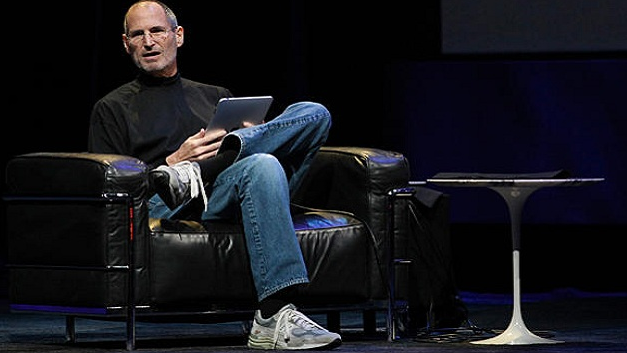
Steve Jobs: Healthcare Revolutionary?

By ALEX EPSTEIN

He killed the audio CD but resurrected the music industry.

Forever changed the way we look at pictures and videos of your summer vacation or watch summer blockbusters.

Turned your hand-held into a portal to the world wide web.

Historians will long debate the role Steve Jobs and his company played shifting paradigms in all sectors of our economy – from media to manufacturing to the practice of medicine.

Really? The practice of medicine?Continue reading…

Finding A Quality Doctor

By DAVIS LIU

The New York Times recently published an article titled, Finding a Quality Doctor, Dr. Danielle Ofri an internist at NYU, laments how she was unable to perform as well as expected in the areas of patient care as it related to diabetes. From the August 2010 New England Journal of Medicine article, Dr. Ofri notes that her report card showed the following – 33% of patients with diabetes have glycated hemoglobin levels at goal, 44% have cholesterol levels at goal, and a measly 26% have blood pressure at goal. She correctly notes that these measurements alone aren’t what makes a doctor a good quality one, but rather the areas of interpersonal skills, compassion, and empathy, which most of us would agree constitute a doctor’s bedside manner, should count as well.

Her article was simply to illustrate that “most doctors are genuinely doing their best to help their patients and that these report cards might not be accurate reflections of their care” yet when she offered this perspective, a contrary point of view, many viewed it as “evidence of arrogance.”

She comforted herself by noting that those who criticized her were “mostly [from] doctors who were not involved in direct patient care (medical administrators, pathologists, radiologists). None were in the trenches of primary care.”

From the original NEJM article, Dr. Ofri concluded when it related to the care of patients with diabetes and her report card –

I don’t even bother checking the results anymore. I just quietly push the reports under my pile of unread journals, phone messages, insurance forms, and prior authorizations. It’s too disheartening, and it chips away at whatever is left of my morale. Besides, there are already five charts in my box — real patients waiting to be seen — and I need my energy for them.

As a practicing primary care doctor, I’m afraid that Dr. Ofri and many other doctors are making a fundamental attribution error is assuming that somehow doctors can’t do both. She is also wrong in thinking that the real patients waiting to be seen are somehow more important that those whose blood pressure, cholesterol, and blood sugars are poorly controlled and the disease literally eats them up from the inside which could result in end organ damage to the eyes (blindness), kidneys (renal failure resulting in dialysis), extremities (amputation), and heart (coronary artery disease) and possibly premature death. They aren’t in the office and yet are suffering.Continue reading…

How to Avoid Death in the ICU

By ELAINE SCHATTNER

Some­thing I learned as a medical intern is that there are worse things than dying.

As I recall, it was sometime in April, 1988. I was putting a line in an old man with end-​​stage kidney disease, cancer (maybe), heart failure, bac­teria in his blood and no con­sciousness. Prince was on the radio, loud, by his bedside. If you could call it that – the uncom­fortable, cur­tained com­partment didn’t seem like a good place for resting.

An attending physician, a smart guy I respected, approached me as I com­pleted the procedure.

“It’s kind of like Dante’s seventh circle,” he noted.

Indeed. A clear, flexible tube drained greenish fluid from the man’s stomach through his nose. Gauze covered his eyes, just par­tially. His head, hands and feet swelled with fluid. A semi-​​opaque hard-​​plastic instrument linked the man’s trachea, through his paper-​​taped mouth, to a noisy breathing machine. His skin, barely covered by a stained hos­pital gown, was pale but blotchy from bleeding beneath. An arterial catheter inserted by his wrist, just where I might have taken his pulse had he been healthier. A fresh adhesive covered the cotton gauze and brownish anti-​​bacterial solution I’d placed over his lower right neck.

“Yeah,” I said as we walked out of the room to review another patient’s chart.

Continue reading…