Categories

Category: Medical Practice

What I Learned from Listening to a Patient

By PETER PRONOVOST

I was reminded again recently of how important it is to sometimes just sit back and listen to what our patients have to say. Every month, as part of our hospital-wide patient safety efforts, I meet with staff and interview patients, seeking to learn how we can improve the care we provide to them.

A young patient shared two stories with me, one telling me how we get it right and one reminding me how we sometimes get it wrong, even without realizing it. She was nervously awaiting a procedure in Interventional Radiology when a nurse sensed her anxiety and called in a child life specialist. The specialists came and significantly helped relieve the patient’s suffering. She listened to the patient, offered a comforting touch, and provided her age-appropriate reading material and Sudoku puzzles, a brilliant though infrequently used intervention. If anything could take your mind off of your illness, it is Sudoku.

What was amazing was that after all the patient had been through―weeks in the hospital, countless procedures, scores of clinicians―what she remembered was the nurse’s act of kindness by caring enough to call the specialist. The patient reminded me that though we can cure disease sometimes, we can relieve suffering always, often with nothing more than a kind word, a gentle touch or a warm smile.

As I listened, the patient, along with her mother, went on to tell me more. They told me how the patient has complex allergies and that her mom knew her disease better than any clinician. They had lived with the disease for a decade. Yet at times, neither the patient’s mother nor the patient felt they were being heard by the doctors. The mom expressed frustration that clinicians often dismissed her concerns and discredited her knowledge.

Continue reading…

How Doctors Are Trapped, Part II

By JOHN GOODMAN

Of all the people in the health care system, none is more central than the physician. Fundamental reform that lowers costs, raises quality and improves access to care is almost inconceivable without physicians leading and directing the changes. Yet of all the actors in modern health care, none are more trapped than our nation’s doctors. Let’s consider just a few of the ways your doctor is constrained, unlike any other professional you deal with.

No Telephone. Sometime in the early part of the last century, all the other professionals in our society — lawyers, accountants, architects, engineers, etc. — discovered the telephone. It’s a handy device. Ideal for communicating with clients. Yet even today I find that I can rarely talk to a doctor by phone. Why is that?

The short answer is: Medicare doesn’t pay for telephone consultations. Medicare has a list of about 7,500 tasks it pays physicians to perform. And talking by phone isn’t on the list — at least in a way that makes it practical. Private insurance tends to pay the way Medicare pays. So do most employers.

At a time when doctors feel like they are being squeezed on their fees from every direction by third-party payers, most become very focused on which activities are billable and which are not. And most are going to try to minimize their non-billable time.Continue reading…

Our Cancer Journey – Week 6

By JOHN HALAMKA

We’re halfway through the most challenging cycles of chemotherapy, Kathy has lost her hair,  and her fatigue is getting worse but her mood is still very positive.

On Friday January 20th, Kathy received Cyclophosphamide (Cytoxan) 1200 mg, Doxorubicin (Adriamycin)  120 mg and her pre-chemotherapy supportive medications Fosaprepitant 150 mg, Dexamethasone 12 mg and Ondansetron 8 mg.

She tolerated it well.

Her Complete Blood Count shows that her Granulocyte Count has dropped from 6690 to 3610 since the chemotherapy affects her fast multiplying white cells as a side effect of targeting the cancer.   Her hematocrit has fallen from 42 to 32.   She tires more easily but her appetite is good.   Small frequent meals enable her to overcome any GI symptoms.

We’ve been told that the Adriamycin/Cytoxan is the most difficult chemotherapy.  Only two more cycles to go.

The photograph above shows Kathy and me at age 21 in our Stanford graduation photo.  She’s always had long, luxuriant hair, even a waist length braid at one point.

On January 21st, her hair began falling out in clumps.   It was not exactly painful, but felt very odd, as if her hair had not been washed in months and just did not lie on her scalp properly.   In consultation with her cancer survivor friends, she decided to shave it off.    Her hairdresser gave her a “GI Jane” cut realizing that the small hairs left will fall out soon, but in a more manageable and comfortable way.    I seriously considered shaving my head in solidarity, but she asked me not to.

Continue reading…

DSM-5: You’re Still Autistic. You’re Just Weird. You We’re Not Sure About. Call Us Tomorrow.

By ANNE DACHEL


Reports of autism cases per 1,000 children grew dramatically in the US from 1996 to 2007. Source: Wikipedia.

It’s hard to imagine more chaos in the world of autism than what we see happening right now.  Autism is more and more in the public spotlight.  The numbers are huge and no one can explain them.  Since 2009 we’ve been told that one percent of children have autism.  Among boys alone, it’s almost two percent.  Mainstream medicine can’t explain the stunning increase in a once rare disorder.  For years health officials gave doctors credit for all the autism everywhere.  They said it was the result of “greater awareness” and “better diagnosing.”  Children who were mislabeled as something else were now correctly called autistic.  The criteria for diagnosing autism was laid out in the Diagnostic and Statistical Manual of Mental Disorders (DSM) and a child with symptoms would be placed somewhere on the autism spectrum, as it came to be known.  This included very high functioning autism and Asperger’s syndrome all the way over to the other end of the spectrum to those with severe intellectual impairment and all the signs of classic autism.Continue reading…

Care Innovations Summit Live Blog

By CONNIE CHEN & LAURA MONTINI

Wrapping up the CI Summit with a Health Affairs Chat

By Laura Montini

The Care Innovations Summit wrapped up with a fireside chat, and moderator Susan Dentzer observed that there hadn’t been much discussion about the Medicaid population throughout the day, even though the summit was co-hosted by the Centers for Medicare and Medicaid Services. Dentzer asked Deputy Administrator Director of CMS Cindy Mann how innovation could play into the care of the Medicaid population.

Mann mentioned three major ways: experimentation (with payment rules and service delivery), peer to peer learning and data. Though she mentioned data last, she emphasized it the most.

“We need to be much more intentional about getting the data that we need to see what’s working, what’s not working,” Mann said.

Continue reading…

Stopping an Epidemic By Redefining It

By GAYNELL PAYNE

American Autism Association LogoFinally a proposition to stop the epidemic of ASD (Autism Spectrum Disorder). But is it valid? An expert panel at the American Psychiatric Association is proposing to do just that. The D.S.M., Diagnostic and Statistical Manual of Mental Disorders is undergoing the most dramatic revision in 17 years. The D.S.M. is the standard used to diagnose mental disorders.

By new definitions, most of those now diagnosed with high functioning Aspergers will lose their diagnosis. Experts believe that this will stem the rising tide of numbers of those diagnosed with ASD, numbers which now are reaching “epidemic proportions.”

“We would nip [the rising Autism rate] in the bud,”  said Dr. Fred R. Volkmar, director of the Child Study Center at the Yale School of Medicine and an author of the new analysis of the proposal.

There has been an argument raging for years with one faction claiming that the numbers are merely the results of better diagnoses, while many experts still hold that that still doesn’t account for the fact that one child in a hundred is now diagnosed with ASD.

Continue reading…

The Entrepreneur’s Guide to Catching the Attention of Doctors

By REBECCA COELIUS

I’ve had the luck to attend medical school in the city of San Francisco during what will be looked back on as the start of transformational change in our health care system. My growing interest in technology and new business models as the disruptive forces behind this change, as well as marriage to a technology entrepreneur, has me frequently rubbing elbows with movers and shakers in the digital health space. One question I constantly receive (other than how I feel about being replaced by a computer) is how to get ideas and products in front of practicing physicians for product feedback or to test the market. Even more commonly, I’m asked why we are so resistant to technology and change in the way we practice. My reply usually takes some form of the following.

1. Show us the data.

The robust system medicine has developed for testing innovations in clinical care, disseminating these ideas, and transforming practice standards is being entirely overlooked (or alternatively scoffed at for being too cautious and slow) by most entrepreneurs. We insist on data to show that the newest pharmaceutical drug, procedure, or implantable device is safe and at least as efficacious as placebo, (and due to comparative effectiveness, this may soon become as compared to the standard of care). It should not be any different for an EKG iPhone app I use to rule out a myocardial infarction in your mother, or a motivational weight loss app the patient invests days of their time into with no results. These are not restaurant recommendations where a failure means bad sushi. These are people’s lives and well being, and we feel it’s unethical to start recommending unproven products.Continue reading…

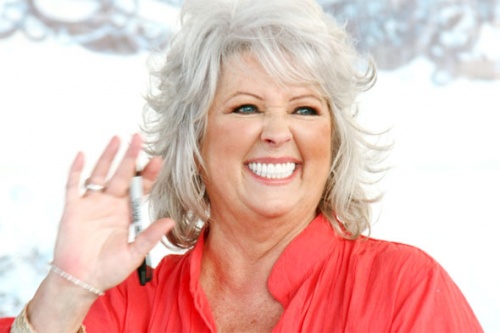
Weighing in on Paula Deen

By MARION NESTLE


The huge fuss over Paula Deen’s type 2 diabetes is understandable.   She is, after all, the queen of high-calorie Southern cooking.  And diabetes rates are especially high in the South.

Perhaps less understandable is the reaction of the American Diabetes Association.  As reported in the New York Times,

Heredity, according to the American Diabetes Association, always plays some part. “You can’t just eat your way to Type 2 diabetes,” said Geralyn Spollett, the group’s director of education.

Wrong.  You most definitely can eat your way to type 2 diabetes.

Type 2 diabetes is closely linked to overweight and obesity.  No, not everyone who is overweight develops type 2 diabetes.  But most people who have type 2 diabetes are overweight.

Continue reading…

Doctors Going Broke

By TOM EMERICK

According to an article in CNN, some doctors in the U.S. are going broke. Read it here . I feel sorry for anyone who goes broke, but this is not unexpected.

According to the author, some doctors have unsustainable debt and are facing reimbursement reductions by insurers. A good question is why the unsustainable debt?  After all, many of our institutions have become bloated and can’t adapt to the economic downturn.

The article mentions a cardiologist who is going broke. According to a StudentDoc survey, the average cardiologist makes $403,000 per year. The average cardiovascular surgeon makes $558,719 per year. That’s not bad in either case.

My point is a lot of very highly paid people in every walk of life end up in bankruptcy. No matter how much you make, you can always spend more.  I believe the health care industry has been as guilty of over-optimism as the real estate and finance sectors.

People have been saying for years that many clinics and hospitals will face a solvency crisis brought on by excessive borrowing to fund sleek new facilities and excessive purchases of uber-costly medical equipment. Some doctors became wealthy during the good years, and some of them made purchases not easily retracted now that the economy has turned down.

Continue reading…

Med School: It’s Not What You Think It Is

By DINOSAUR, MD


I am so tired of seeing statements like these:

– Nutrition is not taught in medical school.
– Pain management is not taught in medical school.
– Practice management is not taught in medical school.

All three of those statements, and the vast majority of others bemoaning the shortcomings of medical education just because “XYZ isn’t taught in medical school” are right, but oh so wrong.

“Nutrition” is not taught in medical school. What we learn is biochemistry, metabolism, gastrointestinal and endocrine anatomy and physiology. We may not learn “nutrition” per se, but we learn what we need to know to understand nutrition in a more fundamental and comprehensive way than can be gleaned from any course in “nutrition”. This also means we understand nutrition differently — and more completely — than anyone without that same level of medical education can, however much they’ve read about nutrition.

“Pain management” is not taught in medical school. What we learn is neuroanatomy, pharmacology, behavioral psychology, and neurophysiology, so that we have the basic knowledge to understand pain management. Narcotics dosing, epidural steroid injection techniques, rehab protocols and so on are learned in residency. I agree that pain is often not well managed, but not because “it’s not taught in medical school.”Continue reading…