Categories

Category: Medical Practice

The Crash of Air France 447: Lessons for Patient Safety

By BOB WACHTER

From the start of the patient safety movement, the field of commercial aviation has been our true north, and rightly so. God willing, 2011 will go down tomorrow as yet another year in which none of the 10 million trips flown by US commercial airlines ended in a fatal crash. In the galaxy of so-called “high reliability organizations,” none shines as brightly as aviation.

How do the airlines achieve this miraculous record? The answer: a mix of dazzling technology, highly trained personnel, widespread standardization, rigorous use of checklists, strict work-hours regulations, and well functioning systems designed to help the cockpit crew and the industry learn from errors and near misses.

In healthcare, we’ve made some progress in replicating these practices. Thousands of caregivers have been schooled in aviation-style crew resource management, learning to communicate more clearly in crises and tamp down overly steep hierarchies. Many have also gone through simulation training. The use of checklists is increasingly popular. Some hospitals have standardized their ORs and hospital rooms, and new technologies are beginning to catch some errors before they happen. While no one would claim that healthcare is even close to aviation in its approach to (or results in) safety, an optimist can envision a day when it might be.

The tragic story of Air France flight 447 teaches us that that even ultra-safe industries are still capable of breathtaking errors, and that the work of learning from mistakes and near misses is never done.

Continue reading…

How Did My 2011 Predictions Turn Out?

By EVAN FALCHUK

Pretty well, actually.

As predicted last December, there was no big change to health care reform, doctors still didn’t have enough time with their patients, Microsoft (disclosure: Microsoft is a Best Doctors client) made moves to create a “Windows” for electronic health records, and “ACO” became the hot buzzword in health care.  Some state governments started major redesigns of their benefits programs, saving money in the same ways private sector employers do.  Meanwhile, more than ever, private sector employers are penalizing employees who don’t take care of themselves.

Misdiagnosis finally started to be recognized as a public health problem.  At Best Doctors we got a great deal of press coverage in 2011 on this (for a few examples, go here, here, here, here and here).  I will sneak in a 2012 prediction and tell you that you will hear a lot more about this this year, and not just from us.

What did I get wrong?

Well, I said no major employer would drop their health benefits – and none did, so I didn’t really get this wrong.  But I was surprised to hear some very major employers quietly talking about their plans for dropping coverage in 2014.  It’s a bad idea – and I would have thought its badness would have been enough to keep it off the table.  For some employers, apparently not.

Continue reading…

Acne Cured by Self-Experimentation

By SETH ROBERTS

In November, at Quantified Self Europe, Martha Rotter, who lives in Ireland, gave a talk about how she cured her acne by self-experimentation. She summarizes her talk like this (slides here):

When I moved to Ire­land in 2007, I began to have skin prob­lems. It began gradu­ally and I attrib­uted it to the move, to stress, to late nights drink­ing with developers and cli­ents, to travel, to whatever excuses I could think of. The stress was mul­ti­plied by the anxi­ety of being embar­rassed about how my face looked, but also because my new job in Ire­land involved me being on stage in front of large audi­ences con­stantly, often sev­eral times a week. A year later my skin was per­petu­ally inflamed, red, full of sores and very pain­ful. When one spot would go away, two more would spring up in its place. It was a tough time. I cried a lot.

Frus­trated, I went to see my homet­own der­ma­to­lo­gist while I was home for hol­i­days. He told me that a) this was com­pletely nor­mal and b) there was noth­ing I could do but go on anti­bi­ot­ics for a year (in addi­tion to spend­ing a for­tune on creams and pills). I didn’t believe either of those things.

I was not inter­ested in being on an anti­bi­otic for a year, nor was I inter­ested in Accu­tane (my best friend has had it mul­tiple times and it hasn’t had long term res­ults, plus it can be risky). What I was inter­ested in was fig­ur­ing out why this was hap­pen­ing and chan­ging my life to make it stop. I refused to accept my dermatologist’s insist­ence that what you put in your body has no effect on how you look and feel.

Continue reading…

Mind the Gap

By STEPHEN J. DOWNS

It’s a simple idea – show patients the notes that doctors write about them– but it’s also a dangerous idea … in the best sense of the word. It’s dangerous because the very idea forces a conversation and in the course of that conversation, some uncomfortable tensions surface. Jan Walker and Tom Delbanco, co-directors of OpenNotes, a project supported by the Robert Wood Johnson Foundation’s Pioneer Portfolio that enables patients to see their doctors’ notes via secure e-mail after a visit, published a preliminary set of results from their first study. Actually, it’s just a pre-study: they surveyed doctors and patients about their expectations of how the OpenNotes idea would play out. And what they found is fascinating – and uncomfortable.

Doctors and patients are clearly divided about the expected benefits and consequences of the OpenNotes intervention. On a wide range of possible benefits, ranging from a greater sense of control to increased medication adherence, doctors are more skeptical than patients. But what really jumps out are the responses to questions of whether patients would find the notes more confusing than useful, and whether the notes would make them worry more. The gap is dramatic. In each case, most doctors said “yes” while less than one in six patients agreed. Ouch. That’s a big gap and my sense is that we should be talking about what it means. From my perspective, it appears that many doctors are underestimating their patients and that this underestimation could lead to less patient engagement and ultimately poorer care. Call it a hunch.

Continue reading…

We Have Cancer

By JOHN HALAMKA

Cancer.  It’s a word that creates fear and uncertainty.   Many of the doctors I know use the word “hate” whenever they discuss their feelings about cancer.

Last Thursday, my wife Kathy was diagnosed with poorly differentiated breast cancer.    She is not facing this alone. We’re approaching this as a team, as if together we have cancer.  She has been my best friend for 30 years.  I will do whatever it takes to ensure we have another 30 years together.

She’s has agreed that I can chronicle the process, the diagnostic tests, the therapeutic decisions, the life events, and the emotions we experience with the hope it will help other patients and families on their cancer treatment journey.

Here’s how it all started.

On Monday, December 5, she felt a small lump under her left breast.   She has no family history, no risk factors, and no warning.   We scheduled a mammogram for December 12 and she brought me a DVD with the DICOM images a few minutes after the study.   On comparison with her previous mammograms it was clear she had two lesions, one anterior and one posterior in a dumbbell shape.    I hand carried the DICOM images to the Breast Center team at BIDMC.

On December 13 she had an ultrasound guided biopsy which yielded the diagnosis – invasive ductal carcinoma, grade 3.

Continue reading…

Twenty-First Century Personalization of Health Care

By CHARIS ENG


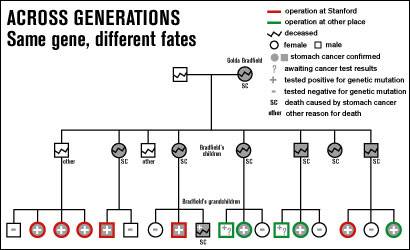
The public perception of “personalized medicine” is askew: the term is often viewed as a common treatment option for rare genetic disorders. The truth is that the power of genetic and genomic information allows physicians to offer personalized health care to their patients.

Yet personalized health care is not new: ABO blood typing is a superb example of widespread genetics-based personalized healthcare dating back to World War II, and continues to have universal applicability and will for centuries to come.

Consider a more recent example: common associations for breast cancer accounts for almost three percent of all breast cancers whereas a “rare mutation” (BRCA1-2) alone accounts for 10 percent of all breast cancers. There are currently at least nine other breast cancer predisposing genes which help knowledgeable healthcare providers make the correct diagnosis and inform patients of risks of other cancers.

Continue reading…

When the End of Life Is Not.

MARYA ZILBERBERG

By MARYA ZILBERBERG

So begins this New York Times essay by Peter Bach, MD, where he talks about the inadequacy of resource use at the end of life as a policy metric. Now, I am not very fond of policy metrics, as most of you know. So, imagine my surprise when I found myself disagreeing vehemently with Peter’s argument. Well, to be fair, I did not disagree with him completely. I only disagreed with the thesis that he constructed, skillfully yet transparently fallaciously (wow, a double adverb, I am going to literary hell!) Here is what got me.

He describes a case of a middle-aged man who was experiencing a disorganized heart rhythm, which ultimately resulted in dead bowel and sepsis. The man became critically ill, the story continues, but three weeks later he went home alive and well. This, Dr. Bach says, is why end of life resource utilization is a bad metric: if this guy, who had a high risk of dying, had in fact died in the hospital, the resources spent on his hospital care would have been considered wasted by the measurement. And I could not agree more that lumping all terminal resource use under one umbrella of wasteful spending is idiotic. Unfortunately, knowingly or not, Peter presented a faulty argument.

The case he used as an example is not the case. Indeed it is a straw man constructed for the cynical purpose of easy knock-down. When we talk about futile care, we are not referring to this middle-aged (presumably) relatively healthy guy, no. We are talking about that 95-year-old nursing home patient with advanced dementia being treated in an ICU for urosepsis, or coming into the hospital for a G-tube placement because of no longer being able to eat or drink. We are talking about patients with advanced heart failure and metastatic cancer, whose chances of surviving for the subsequent three months are less than 25%. And yes, we are also talking about some middle-aged guy with gut ischemia, sepsis and worsening multi-organ failure whose chances of surviving to hospital discharge are close to nil; but in his case, instead of being clear from the beginning, the situation evolves.

Continue reading…

Can Hospitals Exist Without Doctors?

By RICHARD REECE

“One cannot run a hospital without doctors, and one cannot run one with them.” – Peter F. Drucker

Yesterday Kaiser Health News ran a piece titled “Hospitals Clash with House Republicans on Medicare Cuts.”

The article revived these questions:

·Are hospitals friends or foes of independent physicians?

·Will the future of hospital-doctor relationships be one of cooperation, collaboration, or cooptation? (On the last bullet point, “cooptation” means hospitals take over the practice of medicine).

·What is the role of hospitals in health reform – hospitals after all have already agreed to $155 billion in Medicare cuts under Obamacare?

But I digress. What is the hospitals’ problem with the Republican legislation? What is the big deal? The Senate will probably not even take up the bill up anyway.

Continue reading…

What Really Needs to be Done About the Critical Shortage of Cancer Drugs

By STEPHEN SCHIMPFF & CURT CIVIN

Hospitals nationwide are experiencing shortages of critical generic intravenous drugs. We believe a fundamental reason for this national shortage is government price controls. With these limits there is little incentive to invest in new facilities and technologies, leading to equipment failures. Manufacturers have little economic incentive to prepare proactively for the quality assurance issues that routinely arise in the manufacturing of a sterile injectable compound. To reincentivize this process, the market needs to be free. spurring more manufacturers to produce these drugs, encourage reinvestment in facilities and the stockpiling of reserves.

The drugs in shortest supply include those used in critical care units such as norepinephrine for shock, antibiotics for infections, and cancer chemotherapy. Almost all are generics and manufactured by a just few companies. Among the oncology drugs in short supply are cytarabine and leukovorin. Cytarabine is the best single drug for acute myeloid leukemia. Leukovorin is used in childhood acute lymphoblastic leukemia.

These are older “off patent” drugs. As generics, they are far less expensive that newer drugs. They have stood the test of time, are still used extensively and are necessary for optimal patient care. Individual patients need exactly the right drugs on precisely the right schedule – no substitutes; now, not later. As pointed out in Congressional testimony and a Wall Street Journal editorial, these shortages are having a major negative impact for ongoing clinical trials designed to improve cancer treatment results. Another critically needed cancer drug is Doxil, a drug used for the treatment of many cancers. It is sold by Johnson and Johnson (J&J) and until recently it had been manufactured on contract for J&J by Ben Venue Laboratories. Unfortunately, Ben Venue is exiting the contract drug business. Thus, Doxil is not currently available. Prior to 2003, Medicare paid for cancer chemotherapy injectables based on the average wholesale price. But with no transparency, some distributors or physicians could reap huge profits. To combat this and with the best of intentions, a new system was developed as part of the Medicare Modernization Act of 2003, based instead on the average selling price updated quarterly.

Continue reading…

Can We Design a Heart Healthy Home?

By SANJAY BASU

There is increasing evidence that the quality of our homes and cities is a critical determinant of cardiovascular disease, diabetes and lung conditions. As urbanization and economic change occur globally, whether we live in a house free of dust in a city with open parks and traffic regulations, or in a dusty tenement building next to a major road, seems critically correlated with our likelihood for having shortened life expectancy, poor nutrition, heart disease and lung problems. In this week’s blog post, we look at some of the mechanisms relating the “built environment”—our human-made surroundings of daily living—to the risk of illness. We ask the question: can we do for our hearts and lungs what the Bauhaus movement did for functional design?

Indoor air quality

If Dwell Magazine had a feature edition on designing a healthy home, they’d have to tackle the major issue of indoor air quality. Much research on the built environment’s impact on health was revealed through a series of studies on asthma among children living in low-income public housing units in the United States. Poor indoor air quality resulting from dust and dirt in public housing units was a major cause of emergency room visits during the 1980’s and 90’s among these children, leading to new programs for housing quality checks and maintenance, which we featured in a previous post.Continue reading…