Categories

Category: Medical Practice

On Being Gay In Medicine

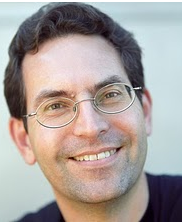
By MARK SCHUSTER

Dr. Mark Schuster is the William Berenberg Professor of Pediatrics at Harvard Medical School and Chief of General Pediatrics at Children’s Hospital Boston. This essay is based on a speech he gave the featured speaker at the Children’s Hospital Boston GLBT & Friends Celebration in June, 2010.

The first time I stood before a large audience to speak was when I was 13 years old. It was at my Bar Mitzvah. I walked up to the podium, looked out over the sea of faces, and thought to myself, I am a homosexual standing in front of all of these people. And I wondered what would happen if I told them.

That was in 1972, and even mentioning the word homosexual, unless paired with an expletive or derogatory adjective, would have been unacceptable at my synagogue. It would have been unacceptable in my home, my school, or any place I knew. I could not have conceived of telling my doctor. I assumed that I would never say out loud that I am a homosexual. The idea that I would someday be able to stand in an auditorium, stand anywhere, just a few miles from where I live with my husband, our two sons, and our dog, with everything but the white picket fence, was not something I could imagine.

Today I stand on a different stage. The Children’s Hospital Boston GLBT and Friends group asked me to share my story as part of its celebration day. How I got here, what I learned along the way, especially at Children’s, and how the world changed — these are what I will talk about.

A decade after I considered turning my Bar Mitzvah into a public confessional, I entered medical school at Harvard. Some students had started a gay group the year before. They had scoped out the territory, searched for role models, and come up nearly empty. In a creaky old closet, tucked way in the back, they found a world-renowned senior physician at Children’s. He advised against starting the group, offering that it was much better to be secretive about being gay so that no one would bother you. I’ve heard that same advice many times from men and women from earlier generations who had fewer options in their day.

Continue reading…

Commission Tackles Physician Payment Reform

By STEVEN SCHROEDER

How physicians are paid and what services they choose to recommend are key drivers of today’s escalating health care costs. The Society for General Internal Medicine (SGIM) has convened an independent commission to assess physician payment and physician-influenced expenses as well as issue recommendations on how to reform physician payment to restrain health care costs while at the same time optimizing patient outcomes. The 13-member National Commission on Physician Payment Reform will work together over the upcoming year, with a final report expected in early 2013.

Payment incentives and systems directly impact medical services that physicians provide as well as the overall approach to their patients. For example, the current fee-for-service system aligns payment with services provided rather than overall care outcomes. While the Commission will examine existing formulas that determine physician payment, such as the Resource-Based Relative Value Scale (RBRVS), we will also investigate promising payment methods that could lead to higher quality of care and better patient outcomes. More specifically, the Commission will evaluate optimal incentives and safeguards surrounding the three principal forms of physician payment: fee-for-service, capitation, and salary, as well as variations of these forms such as episode-based payments, global payments, pay-for-performance and partial capitation that attempt to incorporate quality into the equation.

The Commission appreciates that many have already put considerable effort into payment reform.  We would like to complement, not duplicate, these efforts.  We will review new approaches in the Affordable Care Act designed to constrain costs, including bundled payments and Accountable Care Organizations, as well as disincentive payment strategies that penalize providers for avoidable costs. We will also draw on the factual findings of The Medicare Payment Advisory Commission.  A key difference is that the National Commission on Physician Payment Reform will look at the entire physician payment system, including both public and private payers.

Continue reading…

The Letterman Approach to Cost Awareness

By CHRISTOPHER MORIATES

Who doesn’t love a Top 10 list? Creating them is an art form.  So when it was formally proposed by Dr. Brody in 2010 in the NEJM that each specialty create their own “Top 5 list” of unnecessary care, it seemed like a straightforward – if not downright provocative – suggestion.

“The Top Five list would consist of five diagnostic tests or treatments that are very commonly ordered by members of that specialty, that are among the most expensive services provided, and that have been shown by the currently available evidence not to provide any meaningful benefit to at least some major categories of patients for whom they are commonly ordered. In short, the Top Five list would be a prescription for how, within that specialty, the most money could be saved most quickly without depriving any patient of meaningful medical benefit,” he wrote.

And yet, thus far the only groups that have seemed to have taken him up on the suggestion have been the primary care specialties of Internal Medicine, Family Medicine and Pediatrics – notably amongst the least compensated fields in health care.

This is a great start, but c’mon guys, where are the rest of you? Dr. Brody wrote you a “prescription.” We have a term for your behavior: “noncompliance.”

Not to say that there hasn’t been some progress. The ABIM Foundation has indeed put together an impressive list of organizations participating in their “Choosing Wisely” campaign. They also have begun to be instrumental in funding projects towards this goal. Costs of Care has highlighted far-reaching areas of non-value-based care, including a recent thoughtful essay about robotic surgery. We must now consolidate on these small gains and move this forward across all specialties in medicine.

Continue reading…

Will Doctors or Patients Bend the Cost Curve?

By DAVIS LIU

The American Board of Internal Medicine (ABIM) and nine other professional medical societies announced that doctors should perform 45 tests and procedures less often than currently done because there is no good medical evidence that they add any value. Specifically, a xray or other imaging for low back pain in an otherwise healthy individual or an EKG as part of a routine physical, just add a lot of unnecessary cost to the health care system as a whole and don’t provide doctors or patients any meaningful information that would be helpful in improving health or arriving at the right diagnosis and treatment.

The ABIM partnered with Consumer Reports to create a new campaign called Choosing Wisely and are joined also by collaborators like employers (the National Business Group on Health, the Pacific Business Group on Health), hospital safety (the Leapfrog Group), and labor unions (SEIU).  The mission is simply to have doctors and patients deliver and receive care that is medically necessary, based on evidence, avoids harm, and minimizes duplication.

The real question is – will it work? Will doctors follow what their professional societies recommend?

Though Choosing Wisely is a laudable attempt to make medical care better quality, the truth is doctors won’t likely follow these guidelines from their medical societies. If it was that easy, we would not have this problem! Even today, it is still a challenge for the medical profession to have all doctors wash their hands correctly every patient every time, get immunized routinely against influenza, or even not to prescribe antibiotics for coughs, colds, and bronchitis due to viruses! What is more disturbing is that doing these basic interventions did not impact a doctor’s income. Some on the list of Choosing Wisely, however, will.

Continue reading…

Why the Fragility of Health Outcomes Research May Be a Good Outcome for Health

By DAVID SHAYWITZ

Durably improving health is really, really hard.

I’ve discussed this in the context of drug discovery, which must contend with the ever-more-apparent reality that biology is incredibly complex, and science remarkably fragile.  I’ve discussed this in the context of patient behavior, focusing on the need to address what Sarah Cairns-Smith and I have termed the “behavior gap.”

Here, I’d like to focus on a third challenge: measuring and improving the quality of patient care.

I’ve previously highlighted the challenges faced by Peter Pronovost of Johns Hopkins in getting physicians to adhere to basic checklists, or to regularly do something as simple and as useful as washing hands, topics that have been discussed extensively and in a compelling fashion by Atul Gawande and others.

Several recent reports further highlight just how difficult it can be not only to improve quality but also to measure it.

Consider the recent JAMA article (abstract only) by Lindenauer et al. analyzing why the mortality rate of pneumonia seems to have dropped so dramatically from 2003-2009.  Originally, this had been attributed to a combination of quality initiatives (including a focus on processes of care) and clinical advances.  The new research, however, suggests a much more prosaic explanation: a change in the way hospitals assign diagnostic codes to patients; thus, while rates for hospitalization due to a primary diagnosis of pneumonia decreased by 27%, the rates for hospitalization for sepsis with a secondary diagnosis of pneumonia increased by 178%, as Sarrazin and Rosenthal highlight in an accompanying editorial (public access not available).

Continue reading…

Jack Cochran, The Permanente Federation

[viddler id=e4a6efe5&w=560&h=275]


The Permanente Federation is the national organization for Kaiser Permanente’s doctors. In this interview taken at HIMSS12, Executive Director of the Federation Jack Cochran gives an overview of transitions physicians are undergoing in the workplace. He also debunks what he says is the biggest myth about patient to doctor emails.

The Magic of Doing One Thing at a Time 

By JOHN HALAMKA

I’ve previously written about multitasking and work induced attention deficit disorder.

I’ve also written about the burden of having two workdays every 24 hours – one for meetings and one for email

Yesterday, I was sent a post from the Harvard Business Review that summarizes these issues very well.

It highlights the problem and a series of solutions.

Nearly half of employees report the overwhelming stress and burden of their current jobs, not based on the hours they work, but the volume of multitasking – too many simultaneous inputs in too little time.  They’ve lost the sense of a beginning, middle, and an end to their day, their tasks and their projects.  There is no work/life boundary.

As a case in point, I’m writing now while doing email and listening to a Harvard School of Public Health eHealth symposium.   Am I being more productive or just doing a greater quantity of work with less quality?

The author of the post points to evidence that multi-tasking increases the time to finish a task by 25%.  He also notes that our energy reserves are depleted by a constant state of post traumatic stress induced by our continuous connectivity.

He suggests three strategies:

1.  Rather than multi-task, reduce meeting times to 45 minutes, leaving 15 minutes for email catchup and transition.

Continue reading…

Pay for the “A”

By DINOSAUR MD

Medicine is simple and straightforward; except when it’s complex and nuanced.

Medical diagnosis is a simple matter of taking a history, performing an examination, and reviewing the results of ancillary testing; except when it’s a complicated case of eliciting subtle nuances from the patient in both the interview and the exam, and interpreting multiple pieces of conflicting data.

Medical treatment is a straightforward affair of providing appropriate treatment; except when there are multiple treatment options with unclear risks and benefits, technically challenging surgical or other procedures to perform, not to mention fully informing the patient and family about all of those treatment options, risks, and benefits, plus eliciting and answering all their questions.

Nothing to it.

Notice, though, that the key ingredient here is DIAGNOSIS. Performing a flawless appendectomy won’t do a thing for an ovarian cyst, nor will a PPI prescription do much for an acute coronary syndrome. Performance measures that look at treatment without addressing diagnosis are somewhere between misguided and ludicrous.

Why does American medicine have this so bass-ackwards? Follow the money. Thanks to the specialty-heavy RUC, the commission that sets fees for various procedures, doing something — anything — is paid far more handsomely than thinking (even thinking about what to do).

Continue reading…

Curing cancer: Too Important — and too Difficult — for University Researchers to Do Alone

By DAVID SHAYWITZ

The central dogma of drug discovery is that academic basic research -> industry applied research -> new medical product.  The disappointing number of impactful new medical products have been a source of endless soul searching, and could in theory be attributable to any (and all) of the steps in this model – and might also, as some have suggested, reflect the need for an entirely new conceptual framework.

The latest issue of Nature features a spot-on commentary (subscription only) by Glenn Begley and Lee Ellis (nicely summarized in this terrific Reuters article) that focuses in on the first arrow, the translation of academic oncology basic research into application by industry, and highlights the uncomfortable and inconvenient truth that by now isn’t a very well-kept secret: basic science is unbelievably fragile, and a lot of it doesn’t stand up to serious scrutiny.

This observation is absolutely consistent with my own experience and observations (see here, here, here, and here), as well as with those of Bruce Booth (this is a terrific discussion), and of course the pioneering research of Stanford Professor John Ioannidis, whose work I discussed six years ago (here), and who has been profiled extensively since (e.g. this piece from The Atlantic).

We could spend a lot of time discussing why science is fragile; Begley and Ellis, for example, emphasize the need for a cultural change in the way preclinical research is conducted, particularly in the field of cancer.

At the end of the day, I suspect that the problem involves some combination of the law of small numbers, the appeal of narrative, the structural advantages of reinforcing dogma, and the difficulties of publishing negative results that might challenge it, especially if the dogma was advanced by senior leaders in the field who tend to play critical roles in reviewing papers for high-profile journals and in selecting which new research gets funded.  While the process may ultimately be self-correcting (and I certainly believe that science “works”), the cycle time for this can be a lifetime (literally – in some cases I’ve heard it said you need to wait for someone to pass away before contrary ideas can truly gain traction).

Continue reading…

Behind the New Autism Numbers

By ROB LAMBERTS

Yes, I am going to talk about…autism.  The last time I did so I was inundated with people trying to convince me of the dangers of immunizations and their causal link to autism.  I really, really, really don’t want to go anywhere near that one.

No, I am not going to talk about the cause of autism; I am going to talk about my observation of the rise of the diagnosis of autism, and a plausible explanation for part, if not most of this fact.  The thing that spurs me to write this post is a study by the CDC which was quoted in the NY Times:

The new report estimates that in 2008 one child in 88 received one of these diagnoses, known as autism spectrum disorders, by age 8, compared with about one in 110 two years earlier. The estimated rate in 2002 was about one in 155.

The rise in numbers is cited as one of the main evidences for some external source – a new thing in our environment – that is causing this rise.  The article, however, gives another clue:

The frequency of autism spectrum diagnoses has been increasing for decades, but researchers cannot agree on whether the trend is a result of heightened awareness, an expanding definition of the spectrum, an actual increase in incidence or some combination of those factors. Diagnosing the condition is not an exact science. Children “on the spectrum” vary widely in their abilities and symptoms, from mute and intellectually limited at one extreme to socially awkward at the other.

Children with such diagnoses often receive extensive state-financed support services — which some experts believe may have contributed to an increase in numbers.

That last sentence holds the golden ticket.  What would make me think this?  My experience.

Continue reading…