Categories

Category: Medical Practice

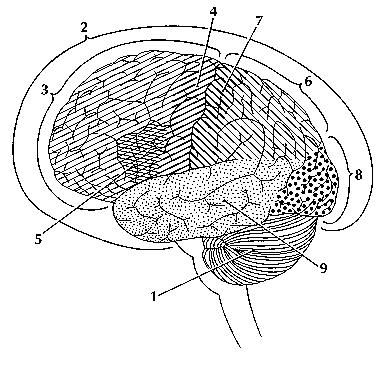
Your Doctor’s Brain

By ROB LAMBERTS

I have a split medical personality.  On one hand, I am a pediatrician;  I light up around babies and love to mess around with little kids.  On the other hand, I am an Internist; I love complex problems and love talking to the elderly.  But the one part of internal medicine which gives me perhaps the most joy is the opportunity to solve medical puzzles.  Yes, pediatrics has puzzles in it too, but they are far more common in adults.

The term used for a medical puzzle-solver is diagnostician.  It is always a great compliment to a physician to be called a great diagnostician.  It means you are a good thinker, have a good store of facts, know how to organize your thoughts properly, and can see patterns in things you otherwise would never have found.  It is the Sherlock Holmes, Lord Peter Whimsey, or Harry Dresden side of medicine.  The diagnostician searches for clues, but especially searches where they are most often missed: right out in the open.

I am not sure anyone has called me a good diagnostician, but there are few things that give as much satisfaction in my job.  It calls on my creativity, my memory, my mental organization, my ability to ask questions, my power of observation, and my ability to put all the disparate pieces together to form a cohesive whole.  It’s not just coming up with an answer; it’s coming up with a plan.Continue reading…

You Want to Sue Me?

By MANDY HUGGINS

“I’d be lookin’ to sue you.”

I’m sorry, what?? That is what I heard from the mother of one of my patients. I was evaluating a high school athlete who had recurrent stingers (nerve injury that affects an upper limb, usually resolves with time) and a possible episode of transient quadriparesis (affecting all limbs this time). I wasn’t on the sidelines for these injuries, so I had to go on the reports given to me by the athlete and the school’s athletic trainer. However, with that information, I did not want to clear this player to return to football until I could be certain he didn’t have any cervical stenosis or any other abnormality that might put him at risk for permanent damage if he suffered another neck injury.

I told the athlete and his mother that I needed to get an MRI of his cervical spine (neck) in order to determine this. The athlete was understandably upset with my decision, but his mother supported my decision to proceed with caution. She explained to me that if her son played again, sustained another injury, and something “bad” happened, she would be more than happy to take legal action against me. Fantastic.

First of all, I can’t say that I would blame her for being angry (at the very least) if I screwed up. But to tell me in my office, to my face, that she’s already thinking about suing me? I found that ridiculous. I must be in the minority, however. If you Google “how to sue a doctor,” an abundance of information follows. There’s an “ehow” on the subject, and even CNN offers an opinion.

Continue reading…

Would I Let My Son Play Football?

By ANDREW BLECHER

“Would I let my son play football?”

It’s a question that more and more parents are asking themselves these days. There are some people out there who say, “No way!”

Football is way too violent and should be abolished as a sport. Even some NFL players admit that they would not let their own sons play football. Then there are others, fierce advocates who think football is a wonderful game with tremendous benefits to its participants and think all of the media hype about injuries are just overrated scare tactics and headline grabbers.

But the majority of us are probably somewhere in the middle and aren’t quite sure what to think. So why don’t we spend a little time sifting through all the facts and emotions and see if we can make some logical decisions about the subject. I have an interesting perspective in that I am a sports medicine physician who is a true fan of the game, has played the game, has sustained injuries and has a son of my own.

Thus I can see the argument from all sides. Let’s start with the physician side. My job is taking care of injured athletes. I see patients with fractures, sprains, strains, overuse injuries, head injuries, concussions, trauma, you name it. During the months of August, September, October and November, I probably see more patients than I do for the entire remainder of the year. Why? Football season.

Continue reading…

What if Physicians Worked for Free?

By COUNTRY DOCTOR

Today I am going to write about how the US could save up to 10% on its healthcare bill.

The US spends more on health care than any other nation, $8,500 per person per year. Multiply that by 300 million people and try to grasp the vast sum of $2,5 trillion.

A lot of changes are taking place with the intent to save healthcare dollars. So far, many of those changes have involved creating new layers of middlemen, whose paychecks will come out of the same healthcare budget as MRI’s, prescription medicines and physician salaries.

Every so often physician salaries come into focus as a place where money might be saved. Some people even picture physician pay as a major driver of healthcare costs.

Now, I am just a country doctor, and I don’t have an MBA or any financial background. But I used to be pretty good at math, and I’d like to think I still am.

If the 2.5 trillion dollars this country spends on healthcare is paid to or prescribed by our 850,000 physicians, then each doctor controls 3 million dollars from our nation’s healthcare budget.

Of course, physicians aren’t the only providers or prescribers. I don’t have a figure for how much money is controlled by our 100,000 Nurse Practitioners and 70, 000 Physician Assistants. I also don’t know what portion of our 50,000 chiropractors’ work falls inside the traditional healthcare budget, but let me assume each physician on average controls only 2-2.5 million dollars worth of products or services…

Then, if every physician took a $200,000 pay cut, we could reduce our healthcare spending by up to 10%!

Continue reading…

Why You Are (Probably) Already Using The Most Powerful Digital Health App

By DAVID SHAYWITZ

Among the most frustrating dilemmas facing patients – and physicians – is when doctors are unable to assign a specific diagnosis.  Just having a name for a condition can be remarkably reassuring to patients (and families), providing at least a basic framework, a set of expectations, and perhaps most importantly, an explanation for what the patient is experiencing.

Sara Wheeler, writing in the New York Times in 1999, poignantly described the experience of traveling through “the land of no diagnosis.”  Ten years later, the NYT featured a story called “What’s Wrong with Summer Stiers,” about another patient without a diagnosis – and about a fascinating initiative at the NIH, the “Undiagnosed Disease Program” – specifically created to meet this need.

Continue reading…

Cost-consciousness and clinical decision-making

By IAN METZLER

With computerized health systems, physicians can place orders as easily as they can shop online at Amazon.com. Just a few clicks and your physician can purchase a panel of blood tests, futuristic imaging and diagnostic procedures that will hopefully guide their path to solving your ailments.

Search. Click. Submit. Repeat.

Except, unlike online shopping, physicians don’t see the price tags and they never get the bill. Doctors are the true consumers of health care dollars, but the rules of economics falter when the consumers aren’t the ones that pay up. This disconnect is a fundamental cause of the uncontrollable inflation of health care costs in the US. Ignorance about cost fuels spiraling inflation in healthcare because without cost-related restraint in utilization there is no incentive for suppliers of healthcare services to get any cheaper.

But the system’s stuck. While physicians ultimately control the tap of healthcare costs, exerting that control can contradict their primary objectives. Physicians feel a responsibility to do the most they can to make the patient in front of them better. If young doctors don’t order a test, a superior may berate them for not considering it in their differential. Malpractice always lingers as a consequence for a diagnosis missed. Some claim that it is irresponsible or unethical for physicians to consider cost in their clinical decision making. Perhaps good doctoring should be blind to finances. And after all, it’s no skin off the doc’s back to just click a little more, some of that money may even end up back in their own pockets.Continue reading…

How American Independence Created A New Kind Of Patient

Michael Millenson

By MICHAEL MILLENSON

The empowered patient, skeptical of professional authority, is not a new phenomenon: he was actually created by the American Revolution.

Reading through historian Gordon Wood’s Pulitzer Prize-winning book, The Radicalism of the American Revolution, I came across a passage describing how national independence from the British led to an independent turn of mind in other spheres. Wood writes that Charles Nisbet, president of Pennsylvania’s Dickinson College, complained as early as 1789 that Americans were carrying their reliance on individual judgment to ridiculous extremes. He fully expected, he said, to see soon such books as “Every Man his own Lawyer,” “Every Man his own Physician,” and “Every Man his own Clergyman and Confessor.”

In fact, New York’s Medical Repository wrote in 1817 of a shortage of “professional pharmacists” at a time when they did drug-mixing and diagnostic duties. But while the Repository acknowledged the lack of professionalism might lead to some mistakes, it continued that “these mistakes would be no more than occurred in Paris, London or Edinburgh, ‘where pharmacy, as a profession, is scientific, exclusive and privileged,’” writes Wood. (Emphasis in original) What a remarkable attitude!

Around this same time, the word “statisticks” appeared for the first time in American dictionaries. However, in America, there was a growing opinion that facts could speak for themselves without expert interpretation. As one popular journal put it in 1811, “The reflections arising out of [the facts] should be left to the reader.”

Continue reading…

A Call For a New Primary Care Society

By BRIAN KLEPPER

The dream of reason did not take power into account – modern medicine is one of those extraordinary works of reason – but medicine is also a world of power.

Paul Starr, The Social Transformation of American Medicine, 1984

How can primary care’s position be reasserted as a policy leader rather than follower? Even though it is a linchpin discipline within America’s health system and its larger economy – a mass of evidence compellingly demonstrates that empowered primary care is associated with better health outcomes and lower costs – primary care has been overwhelmed and outmaneuvered by a health care industry intent on freeing access to lucrative downstream services and revenues. That compromise has produced a cascade of undesirable impacts that reach far beyond health care. Bringing American health care back into homeostasis will require a approach that appreciates and leverages power in ways that are different than in the past.

But primary care also has complicity in its own decline. It has been largely ineffective in communicating and advocating for its value, and in recruiting allies who share its interests. Equally important, it has failed to appreciate and protect primary care’s foundational role in US health care and the larger economy, as well as the advocacy demands of competing in a power-based policy environment.

The consequences have been withering constraints that have diminished primary care’s value, and that have thwarted its roles as first line manager of most medical conditions, and as patient-advocate and guide for downstream services. Combined with fee-for-service reimbursement and a lack of cost/quality transparency, primary care’s waning influence has precipitated a cascade of impacts, allowing health industry revenues to grow at more than four times the general inflation rate for more than a decade, with unnecessary utilization and cost that credible estimates suggest is half or more of all health care spending.Continue reading…

Want to Revolutionize Healthcare? Enable Physicians, Don’t Replace Them

By DAVID SHAYWITZ

The reality of today’s funding environment for digital health entrepreneurs is that it’s traditional tech investors who have the lion’s share of the money, while most long-time healthcare investors are on the ropes, contending with fleeing LPs and at least the perception of disappointing returns.

While it’s great news that some tech funds seem interested in dipping their toes into the healthcare space, it’s concerning that the investors with the most resources are not necessarily the ones who understand healthcare the best.

Tech investors, in general, are not always comfortable with physicians, and seem much more at home with engineers and developers.  These investors also tend to gravitate to businesses selling directly to consumers rather than dealing with the sordid complexities of our current healthcare system.

Many tech investors are also — understandably — drawn to the power of data, and the possibility of analytics, a sensible affinity but one that at times can translate into an excessively reductive view of medicine that fails to capture the maddening but very real ambiguity of medical science, and especially of clinical practice.

Continue reading…

Zen and the Art of Not Thinking Magically

By ROB LAMBERTS

Don’t assume anything.

Assumptions can kill.  

Assuming something regarding your own health care can cost you money, cause you pain, and yes, even kill you.  Here’s my list of potentially harmful assumptions:

1.  No news is good news

If you have a test done and don’t hear anything about the result, do not assume it is fine.  This assumption kills people.  I have too many patients with too much information flying at me every day for me to catch every important detail.  Sometimes things are missed, but sometimes the results don’t come to our office.   We have trained our patients to expect an email or letter with their results within a certain amount of time, so they sometimes call when the test results don’t come in.  I tell them to do so in the clinical summary sheet I hand out at the end of each visit, but the assumption remains.

Continue reading…