Categories

Category: Health Policy

What the Rick Scott Decision Says About the Future of Health Care in the U.S.

By DAN DIAMOND

In 2009, Rick Scott founded Conservatives for Patients’ Rights, a health care pressure group opposed to President Obama’s health reforms.

In 2010, Scott ran for governor of Florida on a mission to repeal Obamacare.

In 2012, Scott … will work to implement Obamacare.

For some conservatives, it’s a shocking reversal. Leaders of Americans for Prosperity, the conservative organization backed by the influential Koch brothers, were publicly disappointed in the Florida governor — who not so long ago said the Affordable Care Act was “the biggest job killer in the history of the country.”

Now, it will be Scott’s job to help implement it.

Changing Tune

Given his prominence, Scott’s move from Obamacare opponent to grudging supporter may be the biggest symbolic shift on the law since its passage.

The Florida governor was reportedly pressured by state legislators to negotiate with federal officials over the ACA, once November’s election made clear that Obamacare was here to stay.

But Scott won’t be the last GOP official to change his tune. More health care groups in other Republican-led states are putting similar pressure on their leaders to opt into the ACA’s Medicaid expansion, in hopes of securing additional dollars for providers.

Continue reading…

Tobacco Companies Must Punch Selves in Face, Implement Court Orders

By CHRISTOPHER ROBERTSON

The Washington Post covers a new order by DC district court judge Gladys Kessler, arising out of an old RICO case brought by the federal government, requiring that the tobacco companies publish advertisements to confess publicly that they previously lied about the safety of smoking and manipulated cigarettes to make them more addictive.  I have pulled the district court order and posted it, along with this appendix.  The order provides the exact language of the mandated advertisements, but no analysis.  Below the fold, I trace the convoluted path this case and a related case have taken through the compelled speech doctrine around the First Amendment, all thanks to a single judge on the Court of Appeals.

A. Adverse Health Effects of Smoking

A Federal Court has ruled that the Defendant tobacco companies deliberately deceived the American public about the health effects of smoking, and has ordered those companies to make this statement. Here is the truth:

• Smoking kills, on average, 1200 Americans. Everyday.
• More people die every year from smoking than from murder, AIDS, suicide, drugs, car crashes, and alcohol, combined.
• Smoking causes heart disease, emphysema, acutemyeloid leukemia, and cancer of the mouth, esophagus, larynx, lung, stomach, kidney, bladder,and pancreas.
• Smoking also causes reduced fertility, low birthweight in newborns, and cancer of the cervix and uterus.

Continue reading…

Health Care Reform Gangnam Style

By LISA SUENNEN

So I read an article the other day about a new company called Rap Genius. The company consists primarily of a website that relies on crowdsourcing to explain rap lyrics to the masses who are not down with the urban vibe (aka, people over 30).  The company takes lyrics such as these from Kanye West’s Gold Digger….

“She was supposed to buy your shorty Tyco with your money
She went to the doctor got lipo with your money
She walking around looking like Michael with your money.”

…and explains that they mean, to wit:  The ex-wife was supposed to buy your baby some toys with the child support money but instead spent it all on so much plastic surgery that she looks like Michael Jackson (presumably before he died―my edit).

Here’s another example:  Nelly’s song Grillz gets explained thusly:  “Got 30 down at the bottom, 30 more at the top, all invisible set in little ice cube blocks” refers to the fact that Nelly is wearing “grillz” aka jewelry worn over the teeth, which are worth $30,000 on the top and another $30,000 on the bottom, with diamonds set right into the gold.  So now you know.

According to the article about the $15m investment that venture fund Andreesen Horowitz put into Rap Genius, the company’s goal is to “annotate the Internet” and, beyond rap music, “the company is slowly spreading to other categories such as literature, political speeches, and science papers.”  Let me just digress for a moment and say that the website I would love to see is the one that turns political speeches into rap lyrics―wouldn’t it be sublime to see Joe Biden and Paul Ryan speak jive?

Continue reading…

Pay for Performance in Healthcare: Do We Need Less, More, or Different?

By BOB WACHTER

The debate over pay for performance in healthcare gets progressively more interesting, and confusing. And, with Medicare’s recent launch of its value-based purchasing and readmission penalty programs, the debate is no longer theoretical.

Just in the past several months, we’ve seen studies showing that pay for performance works, and others showing that it doesn’t. We’ve heard from some theorists who describe P4P as sapping intrinsic motivation and doing violence to professionalism, and others who feel that its effects are as natural and predictable as water running downhill. Some commentators beg us to stop it, while others denounce P4P’s current incarnations as too wimpy to work and recommend they be turbo-charged.

If we weren’t talking about the central policy question of a field as important as healthcare, we could call this a draw and move on. But the stakes are too high, so it’s worth taking a moment to review what we know.

In the U.S., the main test of P4P has been Medicare’s Hospital Quality Incentive Demonstration (HQID) program. A recent analysis of this program, which offered relatively small performance-based bonuses to a sample of 252 hospitals in the large Premier network, found that, after 6 years, hospitals in the intervention group had no better outcomes than those (3363 hospitals) in the control arm. Prior papers from the HQID demonstrated mild improvements in adherence to some process measures, but – as in a disconcerting number of studies – this did not translate into meaningful improvements in hard outcomes such as mortality.

Continue reading…

Is It Time To Charge Medicaid Members for ER Usage?

By AL LEWIS

No one would deny that we’ve reached a point in public healthcare finance where tough choices have to be made about what gets covered and what doesn’t. There is, however, one fairly easy choice, and that is to reconfigure the $3 copay for Medicaid members using the emergency room.

I would propose a replacement benefit of $0 for the first visit and $20 for each subsequent one, in a given calendar year. Not every state, but any state that reaches certain thresholds for physician access or urgent care availability may switch to this policy.

Here are the arguments in favor. First, each $3 visit costs the state and federal government about $500.  There are few discretionary or semi-discretionary patient decisions that cost so little to trigger so much taxpayer spending.  (Hospitalizations have that kind of ratio, but a patient can’t check himself into a hospital the way he can visit an ER.)

Second, one must consider the historical context. The $3 copay (“$3” is a shorthand for $0 to $10 — I don’t think it is over $10 anywhere) is a vestige of the bad old days when it was very difficult to find physicians who accepted Medicaid patients. That is still the case in some locales; they would not be eligible for this waiver. The world has changed, but the copay hasn’t.

Third, ER utilization rates in the TANF population, which because of its average age is generally pretty healthy, far exceed that of the commercially insured population. This is despite the fact that TANF members in general cost much less than commercially insured people, a gap that widens still further once birth events are removed from the calculation. Clearly there is much excess utilization.

Continue reading…

Cigarettes Should Cost $25 a Pack

By VIJAY GOVINDARAJAN & SRIKANTH SRINIVAS

Henry David Thoreau said, “There are a thousand hacking at the branches of evil to one who is striking at the root.”

We have hacked at healthcare costs for what seems like thousands of times, with very limited success. It is time to strike at the root. Rather than focus on reducing costs after preventable diseases have taken hold, it is time to focus attention on eliminating the disease.

Let us look at two specific examples.

1. The CDC (Center for Disease Control and Prevention) has estimated that the cost of smoking(estimated cost of smoking-related medical expenses and loss of productivity) exceeds $167 billion annually. The CDC has also estimated that 326 billion cigarettes (combustible tobacco, to be more precise) went up in smoke in 2011. In other words, every cigarette consumed costs the nation about 50 cents; every pack, $10.

Put another way, while the smoker paid approximately $5 a pack up front, there was also an additional $10 secret surcharge — the cost of which is born by all of us (such as taxpayers, anyone who buys health insurance, even private companies who suffer from lower productivity as a result). It is as if we are telling the smoker, “I know you can’t afford to pay $15 for a pack. So we will give you $10 so you can afford to smoke.” We are not this generous even with people who don’t have one square meal a day. We spent $78 billion on food stamps, with constant pressure to bring that down further even if some people will be left without food as a result.

Continue reading…

Skilled Nursing Providers Playing an Increasing Role in Reducing Hospital Re-admissions

By JONATHAN HILL

The $200 billion skilled nursing and rehabilitation market is in the midst of a transformation and in a new world of ACOs and readmission penalties, we see these providers playing a significant role in helping hospitals reduce readmissions and providing patients with coordinated and professional care in a sub-acute environment.

In March 2012, the Medicare-Medicaid Coordination Office and the Center for Medicare and Medicaid Innovation announced the Initiative to Reduce Avoidable Hospitalization among Nursing Facility Residents. Through this initiative, CMS is partnering with seven organizations to implement strategies to reduce avoidable hospitalization for dual eligibles who are typically long-stay residents at nursing facilities. Each participant in the initiative is required to partner with a minimum of 15 dual eligible certified nursing facilities in the same state where the intervention will be implemented.

Continue reading…

Tough Hard Decision: What To Do About Medicare

By ROB LAMBERTS

It seems both ironic and inevitable: I won’t be getting any more “meaningful use” checks. It’s not that I didn’t qualify for the money; I saw plenty of patients on Medicare and met all of the requirements. I was paid for my first year money without much hassle. The problem I am facing is this: I am probably going to be “opting out” of Medicare, and once I do that I will cease to exist as far as HHS is concerned, and they are the ones who write the “meaningful use” checks. No existence equals no money.
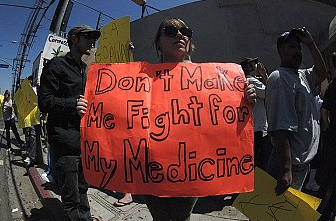
This is ironic because I have gotten famous for how well I’ve used electronic medical records, have written advice for physicians trying to qualify for “meaningful use,” and am esteemed enough to be often asked for my opinion on the subject (culminating in a presentation last year for CDC public health Grand Rounds).  I have spent much of the past 16 years disproving the myths that small practices couldn’t afford EMR, that EMR decreases profitability, or that they reduce quality of care.  We not only could afford EMR, we flourished, using it as a tool to increase both productivity and profitability.  Not to overstate the issue, but my practice (and others like it) paved the way for the existence of “meaningful use.”  I don’t know if that’s a good or a bad thing.

But, as fate would have it, I am leaving the practice in which I did all of this work and am starting a new practice with a different payment system.  Instead of charging for office visits or tests done in my office, I am charging a monthly “subscription” fee for access to my care and to the other resources I offer.  But there isn’t a Medicare code for a monthly subscription fee, and the rules of Medicare are such that, as far as I can tell, I cannot have the practice I intend to build and be listed as a Medicare provider.  This is the case even if I never charge Medicare for any of my services.

Regarding my status as a Medicare provider, there are three options:

  1. Accept Medicare as a “participating” provider – This means that I see Medicare patients and accept what they say I will be paid.  I bill CMS for my services, which are based on my “procedure codes.”  My main procedure is the office visit, but I can also bill for things like immunizations, lab tests, and office procedures.  The more procedures I bill for, the more I get paid, but I must justify this billing in my documentation or run the risk of being accused of fraud.
  2. Become a “non-Participating” Medicare provider – In this scenario, I am paid by the patient for the encounter and then they are reimbursed for what they paid me.  The choice of what I bill happens the same way, and I still must set fees based on what CMS tells me (although I can bill a little bit more than I would if I was a participating provider).  Billing is, once again, based on the documentation of the visit.
  3. “Opt out” of Medicare altogether – Opting out means that I am no longer in the Medicare database as a provider and won’t get paid by them at all.  Patients are free to come to me, but they must pay what I charge, and I set my fees based on what I think is best.Continue reading…

Roundup of State Ballot Initiatives on Health Issues

By KATIE BOOTH

This November, voters weighed in on an array of state ballot initiatives on health issues from medical marijuana to health care reform. Ballot outcomes by state are listed below (more after the jump).

Voters in Alabama, Montana, and Wyoming passed initiatives expressing disapproval of the Affordable Care Act, while a similar initiative in Florida garnered a majority of the vote but failed to pass under the state’s supermajority voting requirement. Missouri voters passed a ballot initiative prohibiting the state executive branch from establishing a health insurance exchange, leaving this task to the federal government or state legislature.

Florida voters defeated a measure that would have prohibited the use of state funds for abortions, while Montana voters passed a parental notification requirement for minors seeking abortions (with a judicial waiver provision).

Perhaps surprisingly, California voters failed to pass a law requiring mandatory labeling of genetically engineered food. Several states legalized medical marijuana, while Arkansas voters struck down a medical marijuana initiative and Montana voters made existing medical marijuana laws more restrictive.

Colorado and Washington legalized all marijuana use, while a similar measure failed in Oregon.

Physician-assisted suicide was barely defeated in Massachusetts (51% to 49%), while North Dakotans banned smoking in indoor workplaces. Michigan voters failed to pass an initiative increasing the regulation of home health workers, while Louisiana voters prohibited the appropriation of state Medicaid trust funds for other purposes.

Continue reading…

Does America Really Want Change?

By LAWRENCE ROSEN

Twenty years ago, in order to keep presidential candidate Bill Clinton’s campaign on message, James Carville hung a sign in their “war room” that read:

  1. Change vs. more of the same
  2. The economy, stupid
  3. Don’t forget health care

While point number two swiftly entered the national vernacular, the other two slogans have equally influenced the U.S. political landscape, especially since 2008. Four years ago, the country was on the precipice of transformation. Meaningful change was promised, and opportunities for significant, long-lasting reforms were abundant. Americans, particularly the millennial generation, turned out in record numbers to vote, and hope for the future was palpable. America, like a patient suffering from a debilitating chronic disease, seemed finally ready to put in the time and do the hard work to get healthy before that fatal heart attack occurred. After decades of procrastination, we heeded Carville and health care system overhaul became a top priority.

Pause: The State of America’s Health

Obesity prevalence increased 137 percent over 20 years, from 11.6 percent to 27.5 percent of the population. In 2008, more than one-third of children and adolescents were overweight or obese. The medical care costs of obesity in the U.S. totaled about $147 billion in 2008 dollars.

Diabetes has almost doubled in prevalence since 1996, rising from 4.4 percent to 8.7 percent of the adult population. For children, the prevalence of Type 2 diabetes increased 21 percent from 2001-2009, while Type 1 diabetes rose 23 percent. Estimated total diabetes costs in the U.S. were $174 billion in 2007.

Asthma diagnoses grew by 4.3 million from 2001 to 2009, and 9.4 percent of children currently have asthma. Asthma costs in the U.S. grew from about $53 billion in 2002 to about $56 billion in 2007.

Developmental Disabilities prevalence increased 17.1 percent over the last 12 years. The prevalence of autism increased 289.5 percent, and the prevalence of ADHD increased 33 percent. Autism alone is estimated to cost the U.S. $137 billion per year.

Continue reading…

