Categories

Category: Health Policy

The American Healthcare Consumer

By IAN MORRISON

Ian MorrisonWhen you hear the word “empowerment,” it’s code for “You’re on your own, pal.”

Health care leaders are starting to recognize that consumers are becoming a major decision-making force. Let’s be clear at the outset: The rise of the consumer is not the panacea that will solve all our problems. It is a reality that hospitals and health systems must respond to. For the foreseeable future, consumers will pay more for health care and be more involved in picking plans, providers and individual treatment options. This development means significant financial consequences for consumers (unlike almost any other developed country).

Providers need to understand the financial predicament of the typical American health consumer and the responses consumers are making in this changing environment. At the same time, with a new congress and a political season of primaries and posturing just around the corner, pundits, politicians and plutocrats need to recognize where consumers are as voters, plan members, employees, patients and family members.

Continue reading…

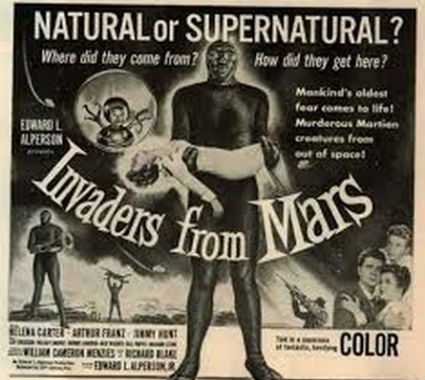
Invaders from Mars with Commentary from Robert Burns

By MARTY SAMUELS

Invaders From Mars

Just over a half-century ago, in the mid-50s, at the height of our paranoia about communists and the Soviet Union, a boy sees a flying saucer land in the distance.  No one else sees the event.  The occupants of the mysterious spacecraft prove to be invaders from Mars.  Their strategy is to capture people, one-by-one, and to perform brain surgery on them whereby  an electrode controlling device is placed in the victims’ brains rendering them  pawn
s of the invaders, though they retain the superficial appearance of human beings.  The only clue to recognizing one of these unfortunate robots is to look for the telltale antenna at the base of the hairline in the back of the neck.

In order to understand the profound meaning of the Invaders from Mars, you have to know a little neurology.

There are really two people within each of us, a fact that reflects the two almost mirror image cerebral hemispheres, each responsible for the opposite side of the body and extra-personal space.  Put simply, damage to the left hemisphere will cause paralysis and loss of sensation on the right side of the body, including loss of perception from the right side of the world.

This loss of perception is more profound than simple blindness.  If reflects the fact that anything that the brain does not record is actually not there.  We live, after all, in virtual reality. What our brains do not sense is, for us, not there.  Do the following experiment.  What is behind your head?  Not what you imagine might be there or what you think you remember is there.  What is actually there?  Is it black, white, striped?  Try to describe it.  You don’t have the words, because what is there is nothing, and nothing has no color, texture or shape.  Is there an antenna at the base of your hairline?  You couldn’t possible know, could you?

Continue reading…

An Open Letter to the People Who Brought Us HIPAA

By PAUL FLETCHER-HILL

flying cadeuciiOver the last five years, the United States has undergone more significant changes to its health care system perhaps since Medicare and Medicaid were introduced in the 1960s. The Health Information Technology for Economic and Clinical Health (HITECH) Act in 2009 and the Patient Protection and Affordable Care Act of 2010 have paved the way for tremendous changes to our system’s information backbone and aim to provide more Americans access to health care.

But one often-overlooked segment of our health care system has been letting us down. Patients’ access to their own medical information remains limited. The HIPAA Privacy Rule grants individuals the right to copies of their own medical records, but it comes at a noteworthy cost—health care providers are allowed to charge patients a fee for each record request. As explained on the Department of Health and Human Services’ website, “the Privacy Rule permits the covered entity to impose reasonable, cost-based fees.”

HIPAA is a federal regulation, so the states have each imposed guidelines outlining their own interpretations of “reasonable.” Ideally, the price of a record request would remain relatively constant—after all, the cost of producing these records does not differ significantly from state to state. But in reality, the cost of requesting one’s medical record is not only unreasonably expensive; it is also inconsistent, costing dramatically different amounts based on local regulation.Continue reading…

More Evidence Obamacare is Good For White People

Michael Millenson

By MICHAEL MILLENSON

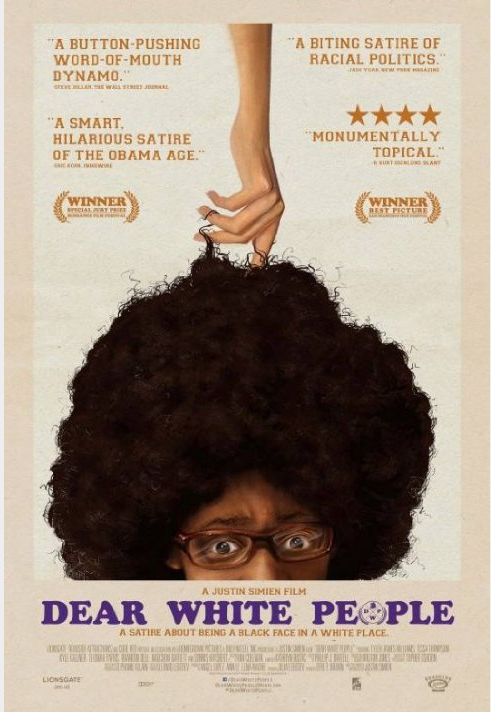
Dear White People Poster

The latest Gallup and Healthways poll doesn’t phrase it this way, but its findings that the Affordable Care Act “appears to be meeting its goal of reducing the percentage of Americans without health insurance” is more evidence Obamacare is good for white people.

In an interview with National Public Radio at the end of last year, President Obama was asked whether he and the Democrats had lost support among white voters. He denied it, comparing his share of the white vote favorably to that John Kerry in 2004 and pointing to the Affordable Care Act (ACA) as a program that benefited working-class white voters without many realizing it. I’d written much the same thing about Obamacare in a THCB blog post a couple of weeks before the 2012 presidential election. But as with other issues related to race, it’s a topic that the president has only reluctantly discussed, even when good policy is also good politics.

In response to NPR questions about race, Obama noted that some of the biggest beneficiaries of the ACA live in places like “Mitch McConnell’s state,” home to relatively few blacks or Hispanics. Coincidentally, a front page story in the print New York Times documented Kentucky’s experience with the law – which, the president wryly noted, Kentuckians do not call “Obamacare” – the same day the NPR interview aired.

Continue reading…

HIT Newser: A Setback for MyMedicalRecords

By MICHELLE RONAN NOTEBOOM

flying cadeuciiThere’s No Place Like Epic’s Home

Epic reveals plans for a fifth campus, which is slated to include half a million square feet of office space and pay homage to literary classics like “Charlie and the Chocolate Factory” and “The Wizard of Oz.”

A Setback for MyMedicalRecords

A US District Court rules against MyMedicalRecords in its patent case against Walgreens, Quest Diagnostics, and others. MyMedicalRecords, a company that many label a patent troll, contends its patents covered a method of providing online PHRs in a private, secure way. However, a judge ruled that “the concept of secure record access and management, in the context of personal health records or not, is an age-old idea,” and is therefore abstract.

Despite the setback, I doubt MyMedicalRecords will stop demanding organizations to pay up or risk facing a lawsuit. I predict they’ll make some tweaks to their business plan, such as focusing only on organizations with not-quite-so-deep pockets that are willing to settle without a fight.

What Has $564 million Bought Us?

Sens. Lamar Alexander (R-TN), Richard Burr (R-NC), and Mike Enzi (R-WY) ask the General Accounting Office to review the ONC-funded health information exchanges to determine what exactly the exchanges created with the government’s $564 million in grant money.

It’s a valid concern, given the significant number of providers and regions still lacking electronic exchange capabilities and the millions that have been spent.

Physicians Reject Stage 2 Attestation

Fifty-five percent of physicians say they won’t attest for Stage 2 MU in 2015, according to a SERMO survey of about 2,000 physicians. Respondents cite several reasons for not attesting including financial concerns, difficulty engaging older patients, and lack of software usability.

Given the lackluster Stage 2 attestation numbers so far, the findings are not particularly surprising. It will be interesting to see what CMS and ONC intend to do in the face of the overwhelming evidence that many providers simply don’t think it is worth the effort.

On To Stage 3

The Office of Management and Budget is currently reviewing the proposed Stage 3 MU rules and will likely publish them in February. CMS states that Stage 3 will include changes to the reporting period, timelines, and structure of the program, including a single definition of Meaningful Use. CMS also adds that “these changes will provide a flexible, yet clearer, framework to ensure future sustainability of the EHR program and reduce confusion from multiple stage requirements.”

Can’t wait to see what is included. And, I can’t help but be a little amused that it’s been six years since the passage of the HITECH legislation and we are just now getting a definition for “Meaningful Use.”

Show Me the Money

Allina Health and Health Catalyst sign a $100 million definitive agreement to combine technologies, clinical content, and front-line personnel.

Rush University Medical Center will implement Merge Healthcare’s cardiology PACS.

Healthcare operating system platform provider Par80 closes $10.5 million in Series A funding led by Atlas Ventures, Founder Collective, and CHV Capital.

Health analytics provider Apervita, formerly knowns as Pervasive Health, completes an $18 million Series A round of funding led by GE Ventures and Baird Capital.

Teledermatology provider PocketDerm raises $2.85 million from an undisclosed investor.

Caremerge, developers of a care coordination platform, raises $4 million in a second round of funding. Investors include Cambia Health Solutions, GE Ventures, Arsenal Health, and Ziegler-LinkAge Longevity Fund.

Continue reading…

Commentology: The Real Professor Baicker

By THCBist 

flying cadeuciiInfluential RAND researcher Soren Mattke had this to say in support of Al Lewis and Vik Khanna’s latest post on the Wellness story “Would the Real Professor Katherine Baicker Please Stand Up?”

“Gentlemen. Great post. Like you, I am disappointed that researchers of the caliber of Kate Baicker and David Cutler do not respond to the mounting debate about their paper. They should defend or disown their work rather than hope that the debate goes away.

In my mind, their paper is a product typical of high-end academic research. Two brilliant professors spot a gap in the evidence on a hot policy topic and decide to go after it. But the actual work gets done by a graduate student in his cubicle without windows or guidance, and then hastily published.

Then the problem arises that the paper becomes hugely influential and people start having a closer look. For our paper on the PepsiCo program, we reviewed in detail the seven publications that Baicker and colleagues called “high quality evidence”. We found that five of those analyzed programs that operated over 20 years ago and most of them had severe methodologic flaws. (John P. Caloyeras, Hangsheng Liu, Ellen Exum, Megan Broderick and Soeren Mattke. Managing Manifest Diseases, But Not Health Risks, Saved PepsiCo Money Over Seven Years. Health Affairs, 33, no.1 (2014):124-131)

Unfortunately, many defenders of the industry continue to take the Baicker paper at face value, while closely scrutinizing or ignoring more nuanced and scientifically sound findings.

So I herewith support your motion!

HIT Newser: Accenture Tapped to Continue Work on HealthCare.gov

flying cadeuciiBy MICHELLE RONAN NOTEBOOM

Accenture Tapped to Continue Work on HealthCare.gov

Accenture, the consulting firm that was hired a year ago to fix the troubled HealthCare.Gov insurance exchange, is awarded a five-year, $563 million to continue its work on the federal site. The government hired Accenture Federal Services to repair the online marketplace after dropping its original contractor, CGI Federal.

The long-term contract with Accenture also signals CMS’s acknowledgement that a task as large as HealthCare.Gov is best run with leadership from an experienced, private-sector vendor.

Connecticut HIE Dissolves After Wasting Millions

A former board member for The Health Information Technology Exchange of Connecticut blames management for the failure of the entity, which was tasked to create statewide HIE but dissolved by the legislature last summer. The HITE-CT “wasted” $4.3 million in federal grants over four years “without accomplishing anything,” according to Ellen Andrews, who served as the board’s consumer advocate.  State auditors also found deficiencies in state controls, legal problems, and a “need for improvement in management practices and procedures.” The state’s legislature is now developing a new exchange strategy.

Prediction: look for more HIEs to falter this year due to mismanagement and lack of sustainability.

Electronic Prescribing of Controlled Substances on the Rise

Electronic prescribing of controlled substances (EPCS) increased from 1,535 to 52,423 between July 2012 and December 2013, according to a study published in the American Journal of Managed Care. The percentage of pharmacies enabled for EPCS jumped from 13% to 30% during the same period.

The next task: figuring out how to get more than the current one percent of physicians to participate.

ONC Shares Lessons Learned from State HIEs

An ONC report on state HIEs finds that many exchanges lack a critical mass of data and are struggling with data sharing. The case study also found that the technical approaches, services enabled, and use of policy and legislation varied across states; collaboration among HIE participants is critical for success; and states are leveraging a variety of policy and regulatory levers to advance interoperability and data exchange.

CMS Seeks ICD-10 Testers

CMS is seeking approximately 850 volunteers for ICD-10 end-to-end testing in April, according to a CMS bulletin. Volunteers have until January 9to submit applications to participate in the April 26-May 1, 2015 testing week.

Pediatrics Report Increased EHR Use

Seventy-nine percent of pediatricians reported using an EHR in 2012, compared to 58% in 2009, according to a study published in the journal Pediatrics.  Only eight percent of physicians say their EHRs include pediatric-specific functionality.

Modernizing Medicine Buys RCM Vendor Aesyntix

EMR developer Modernizing Medicine acquires Aesyntix, a provider of RCM, inventory management, and group purchasing services.

Presumably Modernizing Medicine was most interested in Aesyntix’s RCM component, which may create some concern among Modernizing Medicine’s current RCM partners, which include ADP/AdvancedMD, CareCloud, and Kareo.

Will the Real Professor Katherine Baicker Please Stand Up?

Vik KhannaAl Lewis

By AL LEWIS and VIK KHANNA 

Harvard Professor Katherine Baicker is arguably most acclaimed health policy researcher at arguably the most acclaimed (and not even arguably, the best-endowed) school of public health in the country. Her seminal account of the effect of Medicaid coverage on utilization and health status is a classic. As luck would have it, in 2008 Oregon used a lottery to ration available Medicaid slots. A lottery controls for motivation and as such eliminates participant-non-participant bias, since everyone who enters the lottery wants to participate. That meant only one major variable was in play, which was enrollment in Medicaid or not.

Chance favors the well-prepared, and Professor Baicker jumped on this research windfall. She found that providing Medicaid–and thereby facilitating access to basic preventive medical care–for the previously uninsured did not improve physical health status, but did increase diagnoses and utilization. Because of the soundness of the methodology, the conclusion were unassailable – more access to medical care does not improve outcomes or optimize utilization, which is a proxy for spending. (We ourselves reached a similar conclusion based on a similar analysis on North Carolina Medicaid’s medical home model.)

Yet Professor Baicker herself used exactly the opposite methodology to reach the exact opposite conclusion for workplace wellness.  And that’s where the identity crisis begins.

She and two colleagues published a meta-analysis in 2010 of participant-vs-non-participant workplace wellness programs. Somehow—despite her affinity for Oregon’s lottery control—she found this opposite methodology to be acceptable.  She concluded that workplace wellness generated a very specific two significant-digit 3.27-to-1 ROI from health care claims reduction alone, with another 2.37-to-1 from absenteeism reduction. The title of the article–now celebrating its fifth anniversary as the only work by a well-credentialed author in a prestigious journal ever published in support of wellness ROI—was equally unambiguous:  Workplace Wellness Can Generate Savings.

Continue reading…

Rethinking The Gruber Controversy: Americans Aren’t Stupid, But They’re Often Ignorant — And Why

By UWE REINHARDT 

flying cadeuciiM.I.T. economist Jonathan Gruber, whom his colleagues in the profession hold in very high esteem for his prowess in economic analysis, recently appeared before the House Committee on Oversight and Government Reform. Gruber was called to explain several caustic remarks he had offered on tortured language and provisions in the Affordable Care Act (the ACA) that allegedly were designed to fool American voters into accepting the ACA.

Many of these linguistic contortions, however, were designed not so much to fool voters, but to force the Congressional Budget Office into scoring taxes as something else. But Gruber did call the American public “stupid” enough to be misled by such linguistic tricks and by other measures in the ACA — for example, taxing health insurers knowing full well that insurers would pass the tax on to the insured.

During the hearing, Gruber apologized profusely and on multiple occasions for his remarks. Although at least some economists apparently see no warrant for such an apology, I believe it was appropriate, as in hindsight Gruber does as well. “Stupid” is entirely the wrong word in this context; Gruber should have said “ignorant” instead.Continue reading…

2014 A Healthcare Odyssey

By SAURABH JHA, MD 

Screen Shot 2014-12-30 at 11.10.26 AM

It might have been the best of times. It could have been the worst of times. But 2014 turned out to be the most mediocre of times. Here’s a recap.

Why did Sebelius resign?

Never make a promise to your kids that you can’t keep. And never project the number of people who will sign up for the exchanges and change your mind, unless you are the CBO. If you have read about the problem of uninsured in the US you might have considered CBO’s original projection that seven million people will sign up on the exchanges within six months of open enrollment a tad conservative. Weren’t there millions and millions, forty million apparently, gagging for healthcare coverage?

The CBO revised the projection to six million in February with the projection date of March 31st coming tantalizingly close. Towards the end of March you could hear the cheers of “roll baby, enroll” getting louder.

On April Fools’ Day, the ACA remained intact, the country had not descended in to civil war and some eight million had signed up for Obamacare.

Continue reading…