Categories

Category: Health Policy

Rehabilitating Health Charities

By NORTIN HADLER

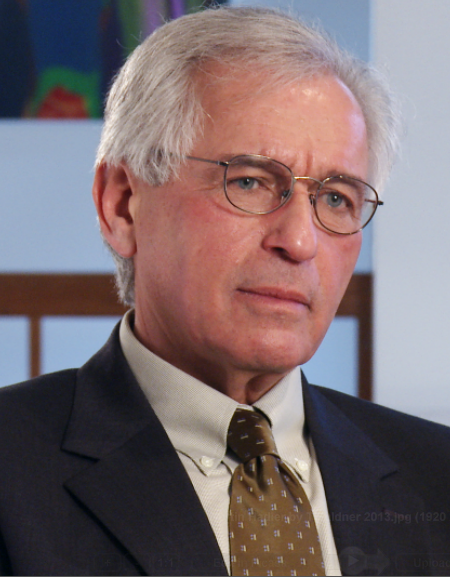
Nortin HadlerFall is when I attend to charitable contributions. It is the season for writing all those checks in a timely fashion so that I’ll receive the paperwork needed to garner tax credits. My wife and I want to do what we can to soften the hardships of those whose ability to do for themselves is compromised. It is a moral obligation, explicit in the Old Testament: The giving of charity is a duty for the advantaged and the receiving of charity a right, even an obligation according to Maimonides, of the needy. Alms-giving is one of the Five Pillars of Islam. Pope Francis embodies the Christian tradition.

Continue reading…

In Defense of Mistakes

By MARTIN SAMUELS

Martin Samuels“How much of the medicine that you now use, did you learn during medical school?”

My answer may be surprising. It is not the response given to me by my professors, when they were asked similar questions. I recall them telling me that virtually nothing that I was learning in medical school would be correct 20 years later.

I have thought about this since and will reveal my answer shortly, but before I do, we should pause for a moment to reflect on the process of medical education. I will refer here to natural selection as an analogue of this process, a concept that I have adapted from some ideas gleaned from David Dawkins and Susan Blackmore.

Darwinian natural selection is based on the concept that replicators (eg genes, viruses, prions) compete for their locus based on the phenotype produced. In the case of genes, these replications are done with high fidelity, but not perfectly, so that there are a few imperfect copies (mutations) produced, such that there are alternative genes meant for the same chromosomal locus (alleles). It is the competition among the alternative alleles, measured by their phenotypic expression that is the basis of natural selection.   This process accounts for all of the dramatic variation seen in nature, including the present state of the information processing hardware (the brain), but it does not account for more rapidly changing behaviors and beliefs (cultures).

Continue reading…

Small Groups Changing the World: ReThink Health’s Report On Multi-Sector Partnerships for Health

By SUSAN DENTZER

Susan-Dentzer-For-Post“Never doubt that a small group of thoughtful, committed citizens can change the world; indeed, it’s the only thing that ever has,” goes the quotation usually attributed to the late anthropologist Margaret Mead. Today, huddled around conference tablesand hatching ambitious plans, relatively small groups of committed leaders are trying to improve health and transform health care in their communities.

Consider these examples:

  • In California, Live Well San Diegois attacking a tidal wave of chronic diseases and rising costs, and is halfway through a 10-year plan to improve the health and well-being of county residents. More than 100 partnering organizations, including the county health department, are working to halt tobacco use, increase healthy eating, improve access to quality health care, and even make the area more resilient in the event of natural disasters or other emergencies.
  • In Georgia, the Atlanta Regional Collaborative for Health Improvementhas brought together local government officials, philanthropies, health care systems, public health authorities, and others to chart a strategy that could lead to lasting improvements in the community’s health. ARCHI aims to improve quality and save money in health care, and reinvest those savings to raise local citizens’ education and incomes, which are fundamental determinants of community health.
  • In Colorado, the Pueblo Triple Aim Corporation, a nonprofit organization, has worked for the past five years to make Pueblo County the state’s healthiest based on theircounty health ranking(Pueblo ranked among the bottom 5 of the state’s 64 counties when the effort began). The local health department, hospitals, federally qualified health centers, the Pueblo Latino Chamber of Commerce, and other organizations have banded together to fight obesity and unintended pregnancy, and deter unnecessary emergency department use and avoidable hospital readmissions.
  • In Minnesota, Hearts Beat Back: The Heart of New Ulm Project is working to create “a world without heart disease,” starting in the rural communities of New Ulm (population 13,500), Springfield (pop. 2,215) and Sleepy Eye (pop. 3,600). Beginning in 2009, this collaboration of The Minneapolis Heart Institute Foundation and two local health systems launched several initiatives to reduce heart attacks and heart disease. For example,with more than two-thirds of local adults overweight or obese, they launched a media campaign thataims to persuade people to “swap it to drop it” – that is, to exchange sugary sodas for water when shopping in local grocery or convenience stores.

Continue reading…

Welcome to ICD-10

By SEAN CAVANAUGH

Screen Shot 2015-10-01 at 7.40.20 AMToday, the U.S. health care system moves to the International Classification of Diseases, 10th Revision – ICD-10. We’ve tested and retested our systems in anticipation of this day, and we’re ready to accept properly coded ICD-10 claims.

The change to ICD-10 allows you to capture more details about the health status of  your patients and sets the stage for improved patient care and public health surveillance across our country. ICD-10 will help move the nation’s health care system to better, smarter care.

You may wonder when we’ll know how the transition is going. It will take a couple of weeks before we have the full picture of ICD-10 implementation because very few health care providers file claims on the same day a medical service is given. Most providers batch their claims and submit them every few days.

Even after submission, Medicare claims take several days to be processed, and Medicare – by law – must wait two weeks before issuing payment. Medicaid claims can take up to 30 days to be submitted and processed by states. Because of these timeframes, we expect to know more about the transition to ICD-10 after completion of a full billing cycle.

Continue reading…

Is Obamacare Working? Show us the Data

By FRED and ALMA TROTTER

MU_stages_final
As President Obama’s healthcare reform unfolds in the last years of his administration, critics and supporters alike are looking for objective data. Meaningful Use is a funding program designed to create health IT systems that, when used in combination, are capable of reporting objective data about the healthcare system as a whole. But the program is floundering. The digital systems created by Meaningful Use are mostly incompatible, and it is unclear whether they will be able to provide the needed insights to evaluate Obamacare.

Recent data releases from HHS, however, have made it possible to objectively evaluate the overall performance of Meaningful Use itself. In turn we can better evaluate whether the Meaningful Use program is providing the needed structure to Obamacare. This article seeks to make the current state of the Meaningful Use program clear. Subsequent articles will consider what the newly released data implies about Meaningful Use specifically, and about Obamacare generally.

Continue reading…

Should the Government Provide Infrastructure For a Health Data Highway?

By ADRIAN MEYER

Susannah Fox, the CTO of HHS was talking at the AcademyHealth Concordium 2015 conference this week. Her energetic call for innovation got me thinking:

Should the government be in the business of funding infrastructure for healthcare communication?

Comparable infrastructures

The governments on local, state and federal level have deployed comparable infrastructures and licensing in the interest of public health and safety:

1. Licensing of car tags while providing infrastructure for roads

2. Licensing of planes and pilots while providing infrastructure for air traffic control

3. Licensing post office locations while providing infrastructure for moving mail

How about: Licensing providers (NPI) while providing infrastructure for health data exchange “highway”?

The communicating health professional

What if providers could communicate in a secure “healthcare highway” or cloud system?

Dr. Specialist: “Hey @npi.1234567890 attached a consult note.”

Dr. Primary: “Thanks @npi.0987654321, sending 3 more pts your way with similar symptoms. (attached)”

Continue reading…

ICD-10 and the Apocalypse

By ROB LAMBERTS

Screen Shot 2015-09-28 at 9.42.44 AMOctober first is nearly upon us.  For many of us, this date has little significance beyond the promise of cooler weather, lovely autumn colors, and the invasion of neighborhoods with giant inflatable Halloween decorations.  While these decorations are fascinating to me, they do cause me to ponder the enormous gulf  between my taste and that of my neighbors.  I am not certain if this is meant to scare off potential alien invaders or simply to make them think we are not worth bothering with.

October 1, however, is a huge day to the medical community.  It is a day that will live in infamy.  It is the object of dread, of diaphoresis, of doom.  October 1 is ICD-10 day.  This view was further bolstered when I went to the CMS (Government Medicare) website, there was actually a doomsday countdown timer at the top of the page. Just looking at this makes me anxious.

For those still unaware, ICD-10 is the 10th iteration of the coding taxonomy used for diagnosis in our lovely health care system.  This system replaces ICD-9, which one would expect from a numerological standpoint (although the folks at Microsoft jumped from Windows 8 to Windows 10, so anything is possible).  This change should be cause for great celebration, as  ICD-9 was miserably inconsistent and idiosyncratic, having no codes describing weakness of the arms, while having several for being in a horse-drawn vehicle that was struck by a streetcar.  Really.

Continue reading…

Uncle Sam, Yelped

By NIAM YARAGHI

Screen Shot 2015-09-23 at 12.40.54 PM

Yelp recently announced it had reached an agreement with the U.S. General Services Administration (GSA) to allow agencies to claim their pages and read and respond to reviews. This is yet another move by the current administration to become more transparent and effectively communicate with the public through new information technology opportunities. I believe transparency almost always leads to net positive outcomes and thus have been a fierce supporter of government’s efforts towards this end. However, creating Yelp pages for government agencies may not be the best way to increase transparency and communicate with the public.

You may not like the policy, but you should love the way the GSA is implementing it. Rather than spending millions of dollars of taxpayer money to create a dedicated website, which would have most likely faced the same challenges of Healthcare.gov, GSA decided to take advantage of the reliable, readily available and, most importantly, free platform offered by Yelp. While the benefits of this policy are yet to be shown, at least its implementation cost is very minimal.

The feedback provided through Yelp can potentially help the administration to assess the current level of quality its services at different locations and potentially monitor the effectiveness of its improvement policies.

Continue reading…

