Categories

Above the Fold

Health 2.0 WinterTech–Health Tech Investing at #JPM16


Screen Shot 2016-01-12 at 8.45.08 PM

Health 2.0’s WinterTech conference is today January 13. It features leaders from Venrock, Canvas, Grand Rounds, Doximity, Livongo, Omada Health, Maverick Capital, GE Ventures, Kaiser Permanente and more. It’s the only event dedicated to health tech and investing during the health investment mecca, JP Morgan Week, WinterTech will bring together the top tech companies, investors, entrepreneurs, policy makers, and more to explore investing in the health tech landscape.

Online sales are sold out but we have released a few seats that you can buy on site.

Key sessions will address New Clinical Tools and Platforms, the Convergence of Life Sciences and Health Tech, the New Consumer Health Ecosystem and more. Additionally, there will be exclusive one on one interviews with top influencers such as Vinod Khosla, Founder, Khosla Ventures; Bryan Roberts, Partner, Venrock; Owen Tripp, CEO, Grand Rounds; Glen Tullman, CEO, Livongo Health; Sean Duffy, CEO, Omada Health and Rebecca Lynn, Co-Founder & Partner, Canvas with “her” CEO Jeff Tagney, Doximity along with a keynote from Jonathan Bush– CEO and Co-Founder, athenahealth.

Along with key speakers, Health 2.0 is famous for its incredible selection of LIVE demos, and this year you’ll see; Redox; Bigfoot Biomedical; Propeller Health; Lyra Health; Outset Medical; LifeQ; Accordion Health; dacadoo; physIQ & Jiff

Top investors will join us to discuss business models, examine trends, and explore portfolios and meet startups. This year we will have:GE Ventures; Novartis dRx Capital; Maverick Capital Ventures; Ziegler; World Bank Group/IFC Venture Capital; Kaiser Permanente Ventures; and many more.

We hope to see you there!!
The Case For Calling the Dietary Guidelines What They Really Are

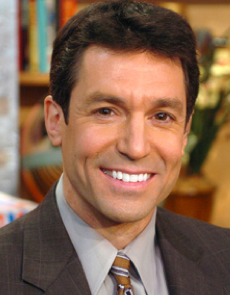
David Katz MDCall me crazy. Or Ishmael, for that matter. I thinkDietary Guidelines for Americans” should be something vaguely like, well, oh I don’t know, maybe: guidelines for Americans. About how to eat well.

What does “dietary guidelines” make you think? Doesn’t it sound an awful lot like: guidelines for people’s diets? Doesn’t that, in turn, sound quite a bit like: here’s what we (whoever ‘we’ is) think you should eat, presumably for health? And doesn’t “guidelines” suggest “guidance” from “guides” who ought to know where they are going, suggesting that the “we” involved should qualify as such?

Yes, that’s exactly what it sounds like. And if we go a step further, and call something “Dietary Guidelines for Americans”- and we don’t say “some” Americans, or Americans in food assistance programs, or Americans eating in school cafeterias- if we just simply say “for Americans”- then doesn’t it sound an awful lot like: this is what we (whoever ‘we’ is) think ALL Americans should be eating?

You bet it does.

And so my friends, we come to it: a steaming mound of misleading BS. Watch where you step.

Continue reading…

The Dismal Science Behind Financial Incentives For Docs

flying cadeucii“It is written: Man shall not live by bread alone.”

Luke 4:4

No matter what you think of the source of that quote, the idea that there may be limits to “aligning incentives” has some merit. In healthcare settings, physicians seem to be  supportive of being fairly compensated for their work, but also seem to be quite skeptical about the use of “carrot and stick” style economic rewards to influence clinical practice.

Case in point is this interesting paper describing the results of a randomized clinical trial that used blood cholesterol-level control to assess the relative merits of a) rewarding just the patients vs. b) rewarding just the doctors vs. c) rewarding both patients and doctors vs. d) usual practice, or a control group.

The study took place in three marquee institutions, involving 340 primary care physicians who were already taking care of 1503 adult patients with 1) elevated cholesterol levels who 2) either had coronary artery disease or were at high risk for coronary artery disease.

About half of the patients were already on cholesterol-lowering pills.

The purpose of the study was to determine if real money could be used to increase the rate and level of prescribing a statin drug aimed at achieving levels of cholesterol control that were consistent with national guidelines.

Continue reading…

What Do We Know About Medical Errors Associated With Electronic Medical Records?

Recently, the Journal of Patient Safety published a powerful and important article on the role of EHRs in patient harm, errors and malpractice claims. The article is open access. Electronic Health Record–Related Events in Medical Malpractice Claims by Mark L. Graber, Dana Siegal, Heather Riah, Doug Johnston, and Kathy Kenyon.  

The article is remarkable for several reasons:

Considerably over 80% of the reported errors involve horrific patient harm: many deaths, strokes, missed and significantly delayed cancer diagnoses, massive hemorrhage, 10-fold overdoses, ignored or lost critical lab results, etc.

Central to this article’ contribution is its data source and an understanding of the direction of causation of the findings: These errors came to light not because a healthcare provider noted an EHR-related problem, but because the patient was harmed, the provider was sued and there was an insurance payment. Continue reading…

Posts on EHRs, Data and Patient Safety

Treating Chest Pain With a Cup of Tea

flying cadeuciiIt is very early.  I am running to the ‘clinical decision unit’ (CDU) to see a patient of mine sent in the night before from a local skilled nursing facility.  Also known as clinical observation units,  ‘obs’ units, or short stay observation units, these units were designed to help decompress busy emergency rooms and divert unnecessary, expensive inpatient admissions.  The units are typically adjacent to emergency departments, and usually are run by emergency physicians.

My particular patient was admitted due to an episode of chest pain at her facility.  A brief conversation the prior night with the emergency room staff revealed chest pain that clinically was not typical for any of the feared diagnoses of a heart attack, pulmonary embolism or an aortic dissection.  An electrocardiogram and cardiac enzymes were also initially unremarkable.  Regardless, the patient was elderly and had multiple other comorbidities, and was somewhat confused.  I recommended a short stay to allow anything malignant to declare itself.

And so, here I was, at the observation unit, digging through pages upon pages of printed gibberish that clearly had achieved the nirvana stage of meaningful use (for those wondering, that’s after stage 3).  Ironically, the most useful piece of information lay in a handwritten progress note describing the episode. I could see why the patient had been brought here to be further evaluated, but after 18 hours of negative biomarkers, electrocardiograms, and no recurrence of symptoms, I felt comfortable letting her go back to where she came from.  I told the ER staff… who cancelled her stress test.  A stress test? Yes, a stress test had been ordered prophylactically.  We practice in a climate where every bad outcome has the potential for litigation – malpractice lawyers would have a field day with the case of anyone going to the ER, being discharged without some type of cardiac imaging study, and having a heart attack.  My recommendation to discharge the patient shifts the liability of an adverse outcome from the ER squarely on to my shoulders, and thus, poof goes the stress test.

Continue reading…

Help Us Build a Hospital In the Cloud

jonathan bushSince 2011, over $13 billion in venture funding has flooded into digital health. 2015 alone saw well over 200 digital health companies raise more than $2 million each. From personal DNA tests to on-demand doctor’s visits, startups are taking a page from technology giants (Google, Apple, Amazon) and digital unicorns (Uber, Slack) to bring health care into the internet age.

The consumerization of health care is en fuego(!), and rightfully so. With the rise of high-deductible plans, we as patients have been forced to take on greater financial responsibility for our own health. Adding fuel to the flame, the widespread adoption of internet and mobile tech has evolved patients from passive recipients of care into active managers of care. Health care’s consumerization wildfire is thrilling, and it’s created a perfect breeding ground not only for new models of care delivery to take root, but for entrepreneurs to introduce new tools and apps for the patient and provider alike.

Continue reading…

Would Patients Pay For This?

Health care in America is fracturing right down the middle, and doctors are going to have to figure out if or how long they can straddle the divide between what patients want and what the Government and Corporate America want them to have.

Up until this point, the momentum has been with the payers, Medicare and the insurance industry. But the more heavy-handed they become, the more inevitable the public backlash is becoming.

It will come down to this, a kind of “straight face test” for health care: Would patients pay for this?

The Annual Wellness visit, better named “Medicare’s Non-Physical” and some forms of “Population Management” are examples. Both are great ideas; an annual health review and planning session as well as doctors maintaining an overview of, and reaching out to, high risk groups of patients – in theory neither would be anything to argue with.


Continue reading…

The War on Death

Screen Shot 2016-01-08 at 11.31.53 AMThomas Hobbes described life as pitifully “nasty, brutish, and short.” Thanks to the free market and the state, life is no longer a Hobbesian nightmare. But death has become nasty, brutish, and long.

Surgeon and writer, Atul Gawande, explores the medicalization of ageing and death in Being Mortal. Gawande points to a glaring deficiency in medical education. Taught to save lives and fight death, doctors don’t bow out gracefully and say enough is enough. We’re not taught about dying. We’re taught about not dying.

In our lexicon, life is a constant war against the Grim Reaper. We say inactivity kills; screening saves lives; an intervention reduces mortality by 5 %—an arithmetic impossibility as mortality for our species, barring select prophets, remains 100%. Words have precise meanings. Words also hide precise desires. It’s not that we can’t distinguish between a murderer and colorectal cancer; but by giving cancer moral agency—we wage war on cancer—we imply that death is an anomaly that must be fought.

And we fight. We fight death in the hospices. We fight death in the hospitals. In many parts of the world, more people die in hospitals than in their homes. Some die, attached to a noradrenaline infusion, in the CAT scan—the last pit stop of hope between the intensive care unit (ICU) and the morgue.

Continue reading…

assetto corsa mods
