Categories

Above the Fold

Why I Left My Health Care Executive Role to Join a Startup

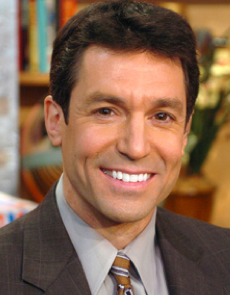
Screen Shot 2016-01-05 at 1.50.48 PMSix months ago, I made the decision to join a digital health startup, after directing the inpatient EHR roll-out at the University of California San Francisco (UCSF) Benioff Children’s Hospital. This may not seem that surprising: there is a lot of discussion lately of the growing dissatisfaction among doctors with the healthcare system, and “digital dropouts” leaving medicine to work in tech.

The difference is that I am neither 28 nor right out of residency. I’m a 40-year-old healthcare executive who is squarely mid-career, and I did not make the change for the usual reasons: the lure of money, job dissatisfaction, etc. I loved my job at UCSF, and in fact, I continue to see patients there. So why did I leave a promising academic career for a riskier role at a startup? Because we need more seasoned clinicians at the front lines of digital health to get us to scale. Our institutions have made huge financial investments, and now it’s time for us to make a more personal commitment.

Continue reading…

Changes In Work Hours and Employer Insurance Not Borne Out

Today, two AHRQ-sponsored studies were released that conclude that the Affordable Care Act (ACA) has not reduced the availability of full-time work or the work incentive for low-wage workers.

In the first study, researchers examined the effects of the requirement in the ACA for employers to provide health coverage to employees working at least 30 hours a week or pay a penalty. Using data from the Census Bureau’s Current Population Survey, an interview of approximately 60,000 households monthly, researchers did not find increases in the frequency of working either 25-29 hours weekly or fewer than 25 hours weekly in 2013, 2014 or the first half of 2015. Researchers also did not find a reduction in 2014 or 2015 in the frequency of working 30-34 hours, further demonstrating that employers have not reduced employee work hours below the 30-hour threshold to avoid the requirement to provide coverage.

In the second study, researchers assessed the impact of the expansion of Medicaid coverage on low-wage workers by analyzing job loss, job switching, and full- versus part-time status. Based also on data from the Census Bureau’s Current Population Survey, researchers compared states that had not expanded the program to states that have done so. The researchers found no statistically significant changes in labor market behavior as a result of Medicaid expansion, contrary to claims that the law would substantially reduce labor supply.

Continue reading…

False Positive Mammograms and Cancer Risk: An Epidemiological Whodunit

I enjoyed Agatha Christie’s Hercule Poirot. Not only did the ingenious Belgian solve the murder so artfully. But someone identifiable is killed and someone identifiable is the killer.

Epidemiological studies are whodunits, too. Except you don’t know who has been killed, what the murder weapon is, or  who the killer is. You only know that a murder may have happened.

A study found a higher incidence of breast cancer with false positive than true negative mammograms. Meaning false positive findings – findings thought to be cancer but aren’t – should lead to vigilance, not celebration.

Here’s an image to help put the absolute difference in perspective: If in the right aisle of a hall there are 600 women with false positive and in the left aisle 600 women with true negative mammograms, one extra woman in the right aisle will develop cancer over 10 years. Once we factor lead time and overdiagnosis, the extra cancer will probably not reduce longevity.

Whether it is the tiny benefit of statins or a tiny absolute risk increase in epidemiological studies, no effect is too small to fret about. The authors, to their credit, handled the results modestly and merely suggested that a false positive status be used in predicting risk of cancer — not that the false-positive result itself somehow causes an increase in cancer risk.

Effect size correlates poorly with media sensationalism. Media coverage was extensive, partly because false positives increasing cancer risk is Twilight Zonish – just when you thought it was safe to go outside.

Continue reading…

Matthew’s Issues & Charities at end 2015, start 2016

Every year (well almost) I write a letter to friends and contacts about which charities I give to and which issues I support, and recently I’ve been posting it on THCB–hey I own the joint so who’s going to stop me!. Here’s this end/start year edition–Matthew Holt

Yes another year with a Matthew issues letter nearly missed but not quite. I’m poolside in Maui winding down as much as possible when on a vacation with little kids and I’ve missed getting this out for end 2015 but because of the weekend 2016 isn’t really here yet, and I’m finally hammering out my end of year news, gossip, charities and issues letter. A couple of weeks ago someone asked me how the new year was shaping up, and I told them I was about ready for 2012….and I still feel the same way. I seem to spend more time reading articles on the habits of productive people than actually being one …thanks Buzzfeed!

If you don’t know, this is a letter I write mostly to myself about what happened in what’s now last year and what I should do about it–in terms of making charitable donations while it’s still 2015, although I must confess that I sometimes give money on Jan 1-2 and claim it on my taxes for the year before, so I hope the NSA isn’t sharing this email with the IRS. People do ask me about it every year, sometimes in advance, so hopefully it’s not a waste, and if you don’t care then hit delete, or go onto the next fascinating Facebook article on 15 celebs that look gross after plastic surgery, or whatever….and I love comments on the blogs/Facebook/Twitter or by email, so please let me know what you think.
 
The main stuff is the issues below, but quick update on me and mine. Aero (1), Coco (4) and Amanda (unspecified) still continue to interrupt my attempts to waste my life away. Amanda says that my appeals for a diaper changing robot are unnecessary as Aero only has about 2,000 changes to go. She does say though that I might soon need one, Health 2.0 had a great year with our biggest ever crowd in Santa Clara plus 2 other successful conferences in the US plus others in Europe (Barcelona) Korea, Latin America  (São Paolo) and Japan, where I had great fun this November. I also snuck in a trip to Finland to talk about Health 2.0 (12 mins of fun here) at the wonderful SLUSH conference and had a cold plunge after a sauna, leading to my most viewed and commented Facebook video post ever! (Thanks to my host Pekka Sivonen). Thanks to everyone who worked for, volunteered at, spoke at or came to a Health 2.0 conference. 
 
In addition due to the work of  my long suffering partner Indu Subaiya, and our New York team led by Graeme Ossey & Jen David we now have a really vibrant business running challenges and pilots, including a huge new project for the World Bank exposing hospitals in India to new technology. You can also very occasionally see me write on The Health Care Blog which I own while John Irvine manages it (well sort of!!)
 
But this email isn’t about that, it’s about about issues, charity and politics—I missed end of 2013 but 2014’s was pretty good, so much of this is a minor update. If you want to see the past editions here’s 20122011 2010 20092008 and you can search back to 2002 (first one was either 2000 or 2001 but either way it was pre-Blogger so I dont have a copy!), As ever, this letter is about my views and suggestions for donations about health care, poverty in developing world, poverty at home, torture, drug prohibition, and other stuff…. And as I said earlier comments/insults are welcome
 
Health care & (poor) women’s & kids care
 
The affordable Care Act is finally established, having survived yet another crazy attack in the Supreme Court. And in the most expensive and inane way basically 10 more million Americans have health insurance than did before. But before you criticize, realize that this was the best that could be done given the insane politics of America and that, other than the disgraceful refusal by many southern Republican governors to expand Medicaid in southern states leaving many of the very poor uncovered, almost everyone now has the chance to be in the system–including those  people who had health conditions who were previously left to go broke or die. America hasn’t done entirely the right thing yet, but we are getting there.
 
What sadly has come into focus this year is the desperate attempts to attack women’s access to health care. If you’re a woman– especially a young or poor one who needs access to contraceptives, mammograms, cervical cancer screening, sexually transmitted disease testing, and all kinds of health procedures including safe abortions, it’s become the mission of mainstream Republicans to stop you getting them–using disgusting, deceitful, and downright illegal methods. And that’s as polite as I can say it. So my biggest bump in funding this year went to the one organization that consistently not only campaigns for but actually provides reproductive health services (including contraception, STD testing, counseling, pregnancy support and, yes, safe abortions), Planned Parenthood. I cannot believe that men want to live in a world where women cannot get these services, although I guess the evidence shows enough do….especially in Texas, Louisiana, Indiana and many more.

Finally Coco’s first pediatrician, the amazing Nadine Burke Harris just got a big grant to study the impact of Adverse Childhood Events.. Worth checking out some information about that here (no donation required!) 

Continue reading…

Think Again: Health Insurers Have No Reason To Reduce the Price of Health Care

If the mega-mergers among health insurers are allowed to go through, it will create insurers with more bargaining power that can hold the line on prices paid to doctors and hospitals.

At least that’s been the standard rationale given in the business press for why Anthem Inc. is trying to buy Cigna Corp. and Aetna Inc. is trying to buy Humana Inc.

It’s also one reason why doctors and hospitals fear the deals. The American Medical Association cited lower prices as one key reason in its request for the U.S. Department of Justice to block the Anthem-Cigna deal.

“When mergers result in monopsony power and physicians are reimbursed at below competitive levels, consumers may be harmed in a variety of ways,” wrote Dr. James Madara, CEO of the American Medical Association, in a November letter urging the U.S. Department of Justice to block both the Aetna-Humana and the Anthem-Cigna deals.

But this fretting over price negotiations is a side show, as everyone in the finance departments of health systems knows—or ought to know.

That’s because health insurers like Anthem and Aetna have little to no incentive to hold down the price of care. Rather, they directly benefit when the price of care rises.

Let me explain how.

Continue reading…

What the Wall Street Journal Tells Us About Complications After Surgery: Not Much

The Wall Street Journal published an article on Christmas day that told the story of an 83 year old woman who suffered a heart attack after a joint replacement at a rural hospital.  The story serves as an introduction to a piece about the higher cost and poorer care delivered at rural hospitals.  There are certainly some very interesting points I was not aware of with regards to financial incentives provided by the government to do procedures at rural ‘critical access’ hospitals, as well as higher 30 day mortality after joint replacement surgery at these rural hospitals.

The Wall Street Journal article does provide this nugget from a Harvard public health researcher: “Patients are getting bad outcomes, probably because they are getting procedures at hospitals without the experience to do it well.”  

This certainly may be true, but no data exists in the article to back-up this assertion.  Are there more infectious complications of the surgery?  Are there more re-operations? Are the surgeons that operate at these centers less experienced?

Continue reading…

21st Century Cures Act: Away From the “Valley of Death”

By STEVEN ZECOLA

Most people would agree that the number of cures for debilitating and costly illnesses such as Alzheimer’s disease, Parkinson’s disease and cancer have been too few and far between.

To address this issue, the U.S. House of Representatives recently passed the 21st Century Cures Act, which now resides in the U.S. Senate for action.  The main thrusts of the Act are to increase government funding for research and to improve several regulatory processes.

Unfortunately, the Act does not address the root cause of the dearth of cures; namely, the inhospitable investment climate for research and development (“R&D”) culminating in the “Valley of Death” for most health-related discoveries.

Continue reading…

How Should Errors In the Patient Medical Record Be Addressed?

This summer an article in USA Today talked about Regina Holliday’s efforts to make the medical record more easily and promptly available to patients so it becomes as a tool patients use as they engage in co-managing their own care. Her cause is just and her story is compelling, so I was dismayed at the pushback saying: Not so fast. There are lots of errors and ambiguities in the record, so it is in everyone’s best interest to make the record hard for patients to obtain.

What a concept.

The commonest examples listed  by opponents of patient access to patient information reflected a combination of poor communication with patients and concern about the extra work that transparency might require for institutions and clinicians. For example:

“…the majority of patients don’t understand differential or provisional diagnoses and want those removed, because they say they are an error. The majority of patients don’t understand trade versus generic drug names, and want those removed because they are an error. The majority of patient’s don’t understand autopopulation of fields (when you click normal) and say the doctor didn’t ask me those things, and want them removed because they are an error; the majority of patients don’t understand spontaneous abortion, and definitely want that removed it, because they never had an abortion; the majority of patients don’t want “dependence on” anything included in their records, and want it removed because it’s an error…. they are very unhappy with all the errors in their medical record. And then, there are the legitimate errors due to poor documentation on admission, hospitalists who see the patient once and don’t review the record adequately, and nursing staff who just want to get their charting done and go home.”

Wow! Everyone who works with medical records knows that the record is full of both errors and ambiguity.  The question is what to do about it. There are two general categories of response.

Continue reading…

The 2016 Regulatory Landscape: A Review For Health Care Watchers

The healthcare industry in the U.S. is highly-regulated at the state and federal levels, and the balance between the two depends on what part of the industry you’re in. To illustrate—

  • Health insurers are overseen by state insurance regulators, but the Affordable Care Act added a new layer of federal oversight. The current tussle between HHS and the National Association of Insurance Commissioners over what constitutes an accessible network of providers is a case in point.
  • The 56,000 retail pharmacies are overseen by states, but drug manufacturers and distributors are overseen by the FDA and FTC, and the 3000 compounding pharmacies find themselves regulated by both.
  • Physicians are primarily self-regulated by their state licensing and disciplinary boards, but federal rules that require transparency (Physician Sunshine Act) about their performance and prescribe limitations in their business dealings (Stark rules) take precedent.

Continue reading…

The Year of the Hacker

flying cadeucii2015 was the year health care got serious about cyber security.

Hackers gave the industry no other choice.

The year started with a massive data breach at Indianapolis-based Anthem Inc., which the health insurer revealed on Feb. 4. Hackers roamed around in Anthem’s computers for six weeks and stole personal and financial information of 78.8 million customers, as well as the information of 8.8 million customers at Blue Cross and Blue Shield plans not owned by Anthem.

There have been 269 data breaches at health care organizations this year, according to statistics collected through Dec. 22 by the Identity Theft Resource Center. That’s actually down from 2014, when health care organizations suffered 333 breaches.

But the number of records stolen has soared to 121.6 million records stolen, up from less than 8.4 million records in 2014. Even without the Anthem breach, there were still 34 million records stolen this year from health organizations.
The health care industry accounted for one out of every three breaches recorded by the Identity Theft Resource Center.

“They can and are trying to break into everything,” Doug Leonard, president of the Indiana Hospital Association, said of hackers. He added, “It’s really on everybody’s radar screen in the health care industry.”

In a survey released in August by consulting firm KPMG, 81 percent of health care executives said their organization had suffered a cyber attack in the previous two years and 13 percent said they were being attacked daily.

Continue reading…

assetto corsa mods