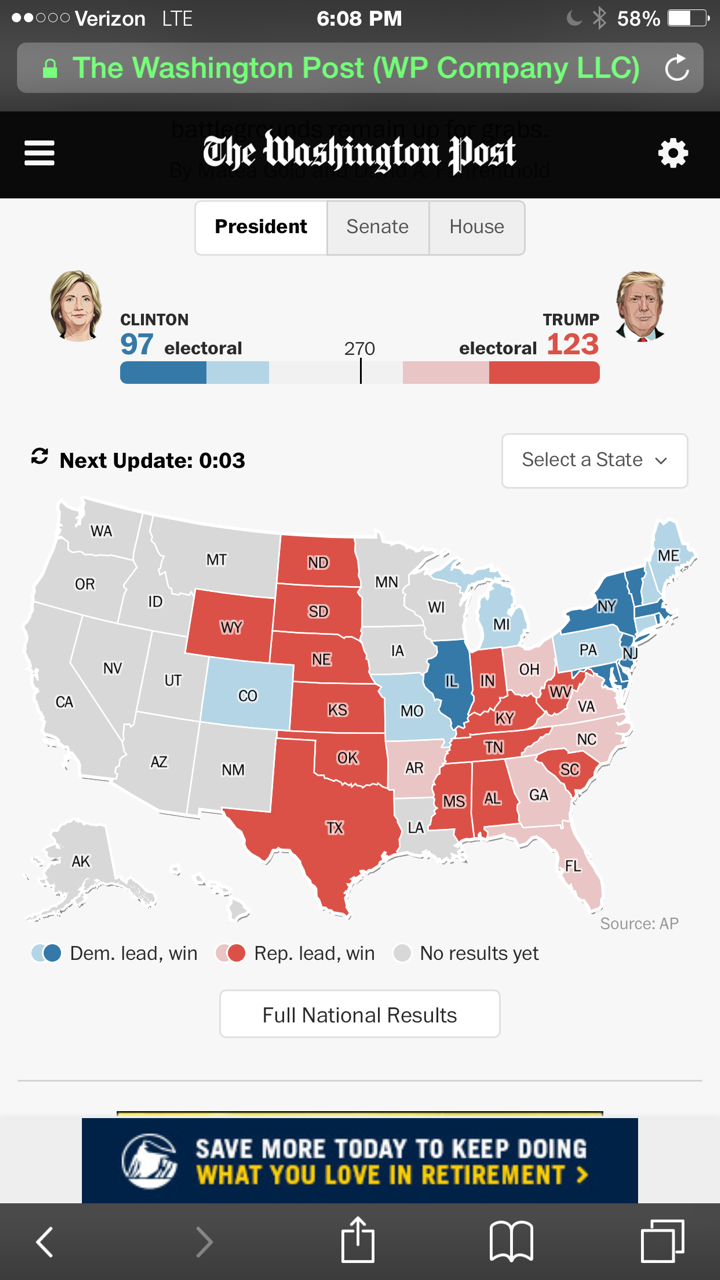
As Donald Trump seeks to build his administration, he will likely struggle with creating a science infrastructure, given his estrangement from the nation’s scientific community.
The distance between Trump and scientists seems to reflect mutual disdain. Trump famously trusts his gut over more data-driven methods. Trump’s success, against most expectations, can be read as a triumph of instinct over science, or at least to reveal the perils of data-driven overconfidence. Trump’s apparent intention to appoint a climate-change skeptic to lead the environmental protection agency suggests to many a disregard for the vast weight of scientific data here, while his comments about vaccinations during one of the Republican debates were charitably described by Steven Salzberg as “wildly inaccurate” and “thoroughly discredited.”
For their part, most scientists take a very dim view of Trump: Science prides itself on being inclusive, international, objective and collaborative–not generally the first adjectives used to describe Trump. (Whether science in practice lives up to these ideals is another question.) Add to this Trump-specific distaste the left-leaning bias of universities (well documented by centrist academics like Jon Haidt, among others–see here and references therein), and the result is a community that seems solidly united against the President-elect. (That said, I’d note that I’ve met more than a few political independents within academia who chafe at current norms.)