By INDU SUBAIYA and MATTHEW HOLT
Important news about my day job at Health 2.0 from my partner Indu Subaiya and me! You can also see the press release here and watch a video discussion with HIMSS CEO Steve Lieber—Matthew Holt
Indu and Matthew are excited to announce that after 10 years of convening the Health 2.0 community through our events and programs around the world, our conference company has found a new home and a partner who will help us exponentially expand our reach and impact. Effective immediately, we are joining forces with HIMSS and will be established as a new Health 2.0 business unit within the enterprise that includes HIMSS North America, HIMSS Analytics, HIMSS Media, HIMSS Europe, HIMSS AsiaPacific and the Personal Connected Health Alliance.
Health 2.0 and HIMSS share a single mission, to improve health outcomes by leveraging the best that technology has to offer. While terms change through the years, that common end goal hasn’t and won’t moving forward.
Our integration with HIMSS is a transformative opportunity to bring the knowledge and expertise from Health 2.0’s global network of entrepreneurs, developers and end-users together with that of clinicians, IT professionals, health care executives, policy leaders and other stakeholders to make a sustainable difference.
We are at a critical inflection point in the evolution of the health technology industry. Exciting advances in data science and AI, precision medicine and genomics, sensors and hardware to name just a few, coupled with the increased rate of adoption of digital health technologies by health care providers, payers, life science companies and communities require a level of collaboration like never before.
And yet, start-ups face barriers to access and distribution while large organizations face challenges in vetting and selecting new technology partners. Working with HIMSS, we will be able to create even more vibrant formats for interaction and more efficient mechanisms for innovation to spread throughout the healthcare system.
Countries around the world want to share models and best practices, to import and export health technology innovation while growing their own markets and their market reach globally. Working with HIMSS, we will be able to combine and expand our global footprint to be better ambassadors as well.
Indu will join HIMSS as executive vice president for the newly established Health 2.0 business unit and continue to co-host Health 2.0’s Annual Fall and Wintertech conferences with Matthew, while he will be our globe-trotting ambassador and continue to host and develop our international business.
Since 1961, HIMSS has focused on its vision of improving health and healthcare with the best use of information technology. Now, more than 55 years later, it continues on this path to improve the quality and affordability of, and access to, healthcare.
Health 2.0 was born from a need for consumers to take charge of their health using new technology frameworks that disintermediated access to health information and services. Over the past 10 years the Health 2.0 community has spawned an ecosystem of companies that helped bridge the gap between the institutional world of care delivery. We were bound to meet in the middle.
As with all great partnership journeys, we know this is not an ending, but a beginning. When it comes to technology, there will always be a new frontier. It’s going to take all of us to explore that frontier together and to translate new ideas into the industry standard. We need both the foundation and the means to continually experiment to make good on our mission to leverage the best technology has to offer in helping us live healthier lives.
Onwards and together,
Indu & Matthew
Indu Subaiya is Co-Chairman & CEO of Health 2.0, and Matthew Holt is Co-Chairman of Health 2.0

 How would you get to an unfamiliar destination without Google Maps, Waze, a GPS or even an old school map? Now how about your health care– how do you determine which road to take when you need local, reliable and affordable services? It can be tough to find the right care, but the RWJF Choosing Care Challenge is changing the game. In Phase I of the challenge, over 60 teams submitted seamless solutions to help patients find the care and services that fit their needs. Each team’s solution simplifies the journey to address the crucial need for personalized and accessible health care.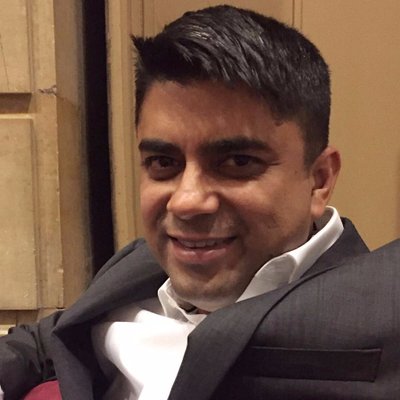
 With the failure of the Republican’s American Health Care Act (AHCA), what’s next? Congressional Republicans face the ugly choice of admitting defeat and funding the Affordable Care Act (ACA), including the cost-sharing reductions (CSRs) that they have tied up in federal court, de-funding the ACA and likely being blamed for its demise, or compromising with Democrats to improve it. In all likelihood, the next set of moves will focus on avoiding/shifting blame for the imminent crisis of health plan withdrawals that failure to fund CSRs would precipitate.






