
Jessica DaMassa asks me about digital health funding, Walmart and PillPack, Blockchain and my sweater — not in that order, but all in less than 2 minutes. Bonus–Farzad Mostashari’s bow tie makes a twitter appearance! — Matthew Holt
Above the Fold
Splitting hairs with Hypertension

Intrigued by many things in my first few days in the U.S., what perplexed me the most was that there seemed to be a DaVita Dialysis wherever I went; in malls, in the mainstreet of West Philadelphia, near high rises and near lower rises. I felt that I was being ominously followed by nephrologists. How on earth could providers of renal replacement therapy have a similar spatial distribution as McDonalds?
After reading Friedrich Hayek’s essay, Use of Knowledge in Society, I realized why. In stead of building a multiplex for dialysis, which has shops selling pulmonary edema-inducing fried chicken, DaVita set shop where people lived or hung out. It wasn’t a terribly clever business plan but its genius was its simplicity, its humility. If the mountain will not come to Muhammed, Muhammed must go to the mountain. DaVita went to the masses.
The link between Hayek’s wisdom and DaVita’s business plan may seem tenuous. But Hayek has been misunderstood, particularly in healthcare. Many a times and oft in the policy world Hayek has been rated about money and usances. This is because of a misperception that Hayek was all about profit and loss, which are anathema to healthcare. Hayek’s message was simple: local knowledge can’t be aggregated. From this premise sprouts others – dispersed agents in certain times and places possess fragments of knowledge which don’t come easily to central planners.
For Hayek, socialism and capitalism weren’t moral but epistemic issues. Socialism would fail because of a coordination problem – markets would succeed because they could use price signals to coordinate. Healthcare doesn’t use price signals to coordinate, not explicitly, at least. Nor does it capitalize on dispersed agents – on local knowledge. Hayek, a supporter of universal healthcare, didn’t specifically discuss healthcare in his essays. Nonetheless, it would be a useful intellectual exercise to speculate how Hayek might have applied his wisdom to modern healthcare.
What does local knowledge in healthcare even mean? Stated in a rather unlettered way, it is the provision of healthcare locally. AEDs are no good if they aren’t located where people congregate. The value of local presence of medical facilities, particularly in poor neighborhoods, is hardly rocket science. Just as great cities grew near rivers, great hospitals germinated in poor neighborhoods. But, with growing centralization of healthcare, with hospitals becoming multiplexes, futuristic cities with a distinct architectural phenotype, different from the neighborhoods they serve, the value of decentralization can be missed.
The Greatest Decision Trump Has Ever Made

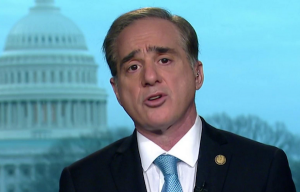 Dr. David Shulkin once gave me this advice, “stop whining and complaining and lead with solutions.” To the many frustrated physicians in this country, this critique is a fair one. I took his words to heart.
Let me start by saying my husband served 20 years in the United States Army and is a proud Veteran. I think our veterans deserve better than Dr. David Shulkin. His ousting as VA Secretary by President Trump this past week is akin to “leading with solutions” from my perspective.
Dr. Shulkin appears to have engaged in considerable double-speak throughout his 13-month tenure in Trump’s Cabinet. In his New York Times op-ed, he wrote, “I will continue to speak out against those who seek to harm the V.A. by putting their personal agendas in front of the well-being of our veterans.”
When it comes to personal agendas, there are few who are as laser focused as this man. Initially endorsing campaign pledges by Trump committing to increased accountability at the VA, his European trip—for which taxpayers paid $122,334—involved more sightseeing and shopping with his wife than “official” government activities. When the Washington Post first reported this story, Shulkin assured the public “nothing inappropriate” took place.
Can Amazon, Chase, and Berkshire Help Medical Malpractice Victims?

A New Era of Amazon Healthcare Should Take a Cue From Germany to Provide Support for Medical Malpractice Victims
Amazon, JP Morgan Chase, and Berkshire Hathaway recently announced plans to form a joint non-profit enterprise aimed at providing affordable, high-quality, transparent healthcare to hundreds of thousands of their U.S. employees. Although a healthcare venture departs from their prior expertise, the companies’ combined wealth, resources, and history of market innovation provide hope that this new alliance can reshape the delivery and cost of healthcare in the U.S. As Amazon and company attempt to tackle America’s healthcare problems with a new delivery model, there is also potential for them to support patients who encounter another critical problem in America’s healthcare system – the problem of medical errors.
Johns Hopkins estimates that 250,000 deaths in the United States are caused each year by preventable medical errors. Eliminating medical errors is admittedly difficult. It requires interdisciplinary collaboration, unlikely political alliances, and changing the longstanding “culture of silence” in healthcare. In contrast, supporting patients who are damaged by medical errors, which can have a larger positive effect on the healthcare system, can be easily achieved. And it doesn’t even require innovation. Germany has implemented a model for patient support that can be adopted in the United States.
In Germany, patients who suspect medical errors have a legal right to assistance from their healthcare insurers. This support can include assistance obtaining medical records, the examination and evaluation of documents submitted by patients, helping patients find an attorney or support groups, and providing patients with a free expert medical assessment. In addition, German public healthcare insurers, which insure 90% of the country’s population, are required to fund the Unabhängige Patientenberatung Deutschland (Independent Patient Counseling Germany – UPD). UPD is established pursuant to German federal law and provides patients with free expert medical and legal consultations. At UPD, patients who suspect that they were injured by a treatment error can receive a free online, telephone, or personal consultation from experts to help them understand their legal rights.
Health in 2 point 00, Episode 14
For Episode 14, Jessica DaMassa asks me all the questions she can about health & technology in 2 minutes. On the docket today, Walmart & Humana, MyFitnessPal’s huge data breach, and Apple in health tech (again!)–Matthew Holt
Exclusive Interview with Chris Boone, CEO of Health Data Consoritum
As the newly appointed CEO of Health Data Consortium, Chris Boone interviews with Matthew Holt on what’s new and exciting at HDC, and how HDC is accelerating the innovative use of health care data.
THCB Exclusive–Trump appoints Holt to run VA
Today Donald Trump pulled a big surprise. He changed the much criticized appointment for his new VA head from over-effusive physician Rear Adm. Ronny Jackson to well known lefty health blogger Matthew Holt. When asked why he wanted Holt to run the VA Trump said, “Look, I’m pretty smart and I’ve appointed now only the best people like John Bolton and Mike Pompeo to run our foreign policy. If I appoint someone else I like, how can I fire him quickly? That Holt guy seems to hate me, and he’s never stayed in one of my hotels, so he’s perfect for the VA–I hear that the accommodation is a bit rough, not exactly a ten.”
When THCB asked Holt why he agreed to take the job running the VA, he suggested that it had a lot to do with his English roots. “As most of my followers know I grew up in England and like the concept of everyone suffering together in a government funded and provided socialized National Health System. The VA and its fellow traveler the DOD is the only health system like that in America and it’s a brilliant place to start”. When asked about his likely future polices for the VA, Holt suggested that massive expansion was the key initiative. In a written statement, his VA spokesman noted “Given the utter lunacy of the Trump Administration and the crazy warmongers now running the show, the chances of total war versus North Korea and Iran are very high. So essentially everyone in the country will soon be called up to the military, which means that soon eventually everyone will be a Veteran. And if Trump loses in 2020, by 2021 we’ll be at war with the Russians so either way my theory pays off.”
Holt was on the Charlie Rose show last week when he told Rose about his philosophy for the future. “When everyone in the country is part of the VA, we can shut down that ineffective and expensive private health system, and instead everyone can get their care the way I think is best. And if they don’t like it Rasu Shrestha will send them their records using the Lighthouse Blue Button Carrier Pigeon system, and we’ll give them a row boat to head to Nepal or somewhere.
When TCHB reached him for comment, Cato health spokesman Michael Cannon said, “if you are going to expand this universal health care stuff, you might as well give it a real go. Lucky for me, I have bone spurs…”
MyFitnessPal and the State of Data Privacy in America

 This week MyFitnessPal announced that it had suffered a massive security breach which exposed or compromised 150 million MyFitnessPal accounts. Data that is affected included usernames, email addresses and hashed passwords. Luckily for those affected, the company claims that the affected data did not include government-issued identifiers or payment card data.
In some good news for MyFitnessPal users, the stolen passwords were encrypted. However, Under Armour continues to be vague about which percentage of the stolen data was protected by bcrypt, a secure algorithm employing key stretching, and what used SHA-1, a legacy hashing algorithm no longer considered to be “any good”.
That such data breaches occur should no longer be a surprise to anyone particularly given other high-profiles breaches involving companies such as Equifax, Yahoo and Target. However, what is surprising in this case is that cybersecurity experts are beginning to commend Under Amour for their “prompt response to the data breach after its discovery and their public announcement alerting users to the danger”.
Such praise for simply engaging in what most consumers would consider obvious moral behavior may shock many Americans. After all, isn’t it intuitive and legally responsible of companies that suffer data breaches to engage in proactive disclosure?
HHS Conscience Rule Would Grant Providers Sweeping Rights to Deny Care

By DAVID INTROCASO PhD
In late January the Trump administration proposed a Department of Health and Human Services’ (DHHS) regulation that would legally protect any health care worker who refuses to provide care directly or indirectly to any individual by claiming a religious, moral or conscientious objection. While the federal government has for decades protected freedoms of conscience and religious exercise, the proposed would vastly expand these protections. No longer would these protections be applied to a very limited number of medical procedures. Think: abortion. Now, for example, a pediatrician could to provide care for a lesbian couple’s newborn or an emergency room nurse could refuse to provide a terminally ill patient palliative sedation.
Criticism of the proposed rule was immediate. Opponents contend if finalized the proposed would allow providers to ignore a patient’s medical needs including emergency needs that in some instances cause the patient further harm. It would undermine a healthcare entity’s effectiveness and patient safety responsibilities and would legally allow a provider to violate both their professional code of ethics and the patient’s civil and human rights. Critics argue the rule constitutes, in sum, an insidious form of bigotry. It would weaponize discrimination particularly against LGBTQs. It would, for example, roll back the Obama administration’s interpretation of the Affordable Care Act’s (ACA) anti-sex discrimination provision that protected gender identity. These, not insubstantial, criticisms aside there appears to have been little discussion of the proposed’s underlying rationale. What is the Christian theological basis, if any, for legally protecting religious exercise in denying health care?
How the VA Colon Cancer Screening Program Fails African-American Males

“It’s a terrible way to die” The oncology fellow told me bluntly as we walked to the room. “There is nothing okay about this.”
Knocking on the open door, we entered his room. The blinds were raised to reveal a stunning view of the area surrounding the VA hospital, and light poured in.
Our patient reclined in bed, his eyes closed although he was not asleep. He opened his eyes at the sound of our entrance, and the eyes seemed to bulge, too large for his shrunken face with wasted muscles. A plastic tube, taped to the bridge of his nose, entered his nostril and disappeared. The other end of the tubing led to a canister filled with dark green liquid that had been suctioned from his gastrointestinal tract. Despite this invasion, his stomach remained distended, protuberant compared with his otherwise frail frame.
The man had an aggressive colon cancer. The tumor in his colon had grown so large that the hollow of his bowel had closed off, allowing no food to pass through. With nowhere else to go, the contents of his bowel backed up, puffing out his stomach and causing terrible nausea and vomiting. Even worse, the tumor invaded outwards too, anchoring tendrils into the surrounding tissue so that there was no longer any hope of removing the tumor surgically. “Palliative” chemotherapy to try to shrink the tumor would be offered, but it had no chance of curing his disease. The oncologist’s note summarized the situation: “Prognosis is extremely poor.”
It was a good learning case, a late presentation of a disease increasingly diagnosed at early stages by screening colonoscopies. This patient had not undergone screening, which might have diagnosed the cancer while there was still time for a cure. As an African American, this patient was more likely to develop this cancer than Caucasian patients his age.






